Bering Sea Luminosity by Karla Linn Merrifield

alaska licensed John Matzick

Bering Sea Luminosity
by Karla Linn Merrifield

thy name is
midnight sun
waning moon
my candle in Time’s window
into ring of fire
tectonic plates
one heart a soul
bodies of influence
what is the skin between us
my shimmer
your mirroring
where my sky light
why your sea deep
coming coming waves
lengths intervals
celestially earthly
novae volcanic
love in the physics
shine shining
to have shone
us in this Universe
once upon glow

PHOTO: Bering Sea, Aleutian Islands, Alaska, with volcano and seabird by John Matzick, used by permission.

NOTE: The Aleutian Islands are a chain of 14 large volcanic islands and 55 smaller islands. Most of the Aleutian Islands belong to Alaska, but some belong to the Russian federal subject of Kamchatka Krai. They extend about 1,200 miles westward from the Alaska Peninsula toward the Kamchatka Peninsula in Russia, and mark a dividing line between the Bering Sea to the north and the Pacific Ocean to the south. The islands, with their 57 volcanoes, form the northernmost part of the Pacific Ring of Fire.
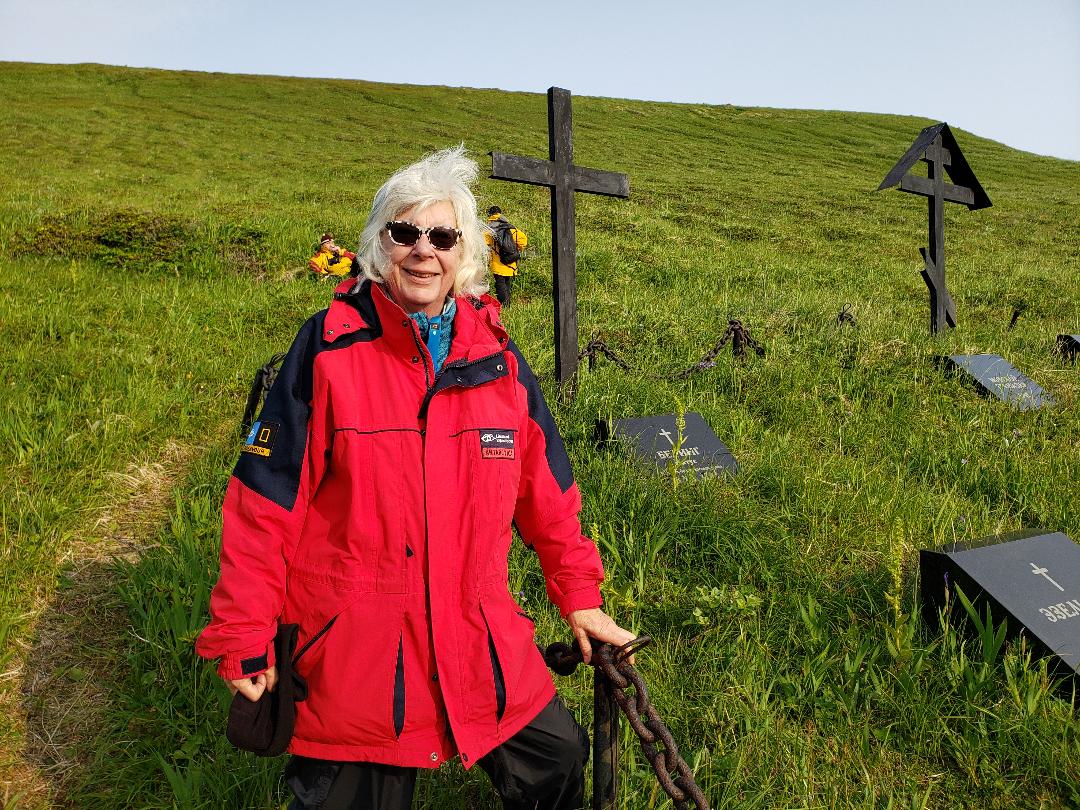
Karla Linn Merrifield on an Island in the Berin Sea

NOTE FROM THE AUTHOR: I wrote this poem aboard the MV National Geographic Orion while on a Lindblad expedition in Summer 2019 across the Bering Sea from Alaska to the Russian Far East and back. We sailed the entire length of the Alaskan Aleutian Archipelago, journeying along the Pacific Rim and passing volcano upon volcano, constantly cognizant of Earth’s shifting plates below the hull and along the horizon.

PHOTO: The author on an Aleutian Island in the Bering Sea (Summer, 2019).

ABOUT THE AUTHOR: Karla Linn Merrifield has had 800+ poems appear in dozens of journals and anthologies. She has 14 books to her credit. Following her 2018 Psyche’s Scroll (Poetry Box Select) is the 2019 full-length book Athabaskan Fractal: Poems of the Far North from Cirque Press. In early 2021, her Half a World of Kisses will be published by Truth Serum Press (Australia) under its new Lindauer Poets imprint. She is currently at work on a poetry collection, My Body the Guitar, inspired by famous guitarists and their guitars; the book is slated to be published in December 2021 by Before Your Quiet Eyes Publications Holograph Series (Rochester, NY). Find her on Twitter @LinnMerrifiel and on Facebook @LinnMerrifiel.
The Igloo by Matthew Sweeney

arctic igloo ivan kmit

The Igloo
by Matthew Sweeney

Outside the igloo he waited
for an invitation to come inside.
There was no knocker, no doorbell.
He coughed, there was no reply.

He crouched down and peered in.
He felt the warm air from a fire
pat his cheeks and ruffle his hair.
Hello he said quietly and repeated it.

The frost in his toes urged him in,
so did the pain in his gut. His knees
one by one welcomed the snow
and brought him into the warmth.

He stood up and breathed deeply.
He held a foot up to the flames
then swapped it for the other foot.
He lay down on the polar bear rug

but a smell yanked him upright again
and led him to a dresser of  bone
where a bowl sat with a cover on it.
He lifted this to reveal dried meat.

He grabbed a chunk and tore at it
with his teeth. It was reindeer.
He devoured all that was in the bowl
and went looking for some more.

He found none, but there was a bottle
of firewater which he swigged.
He swigged again and left it down.
He lay on the bearskin and fell asleep.

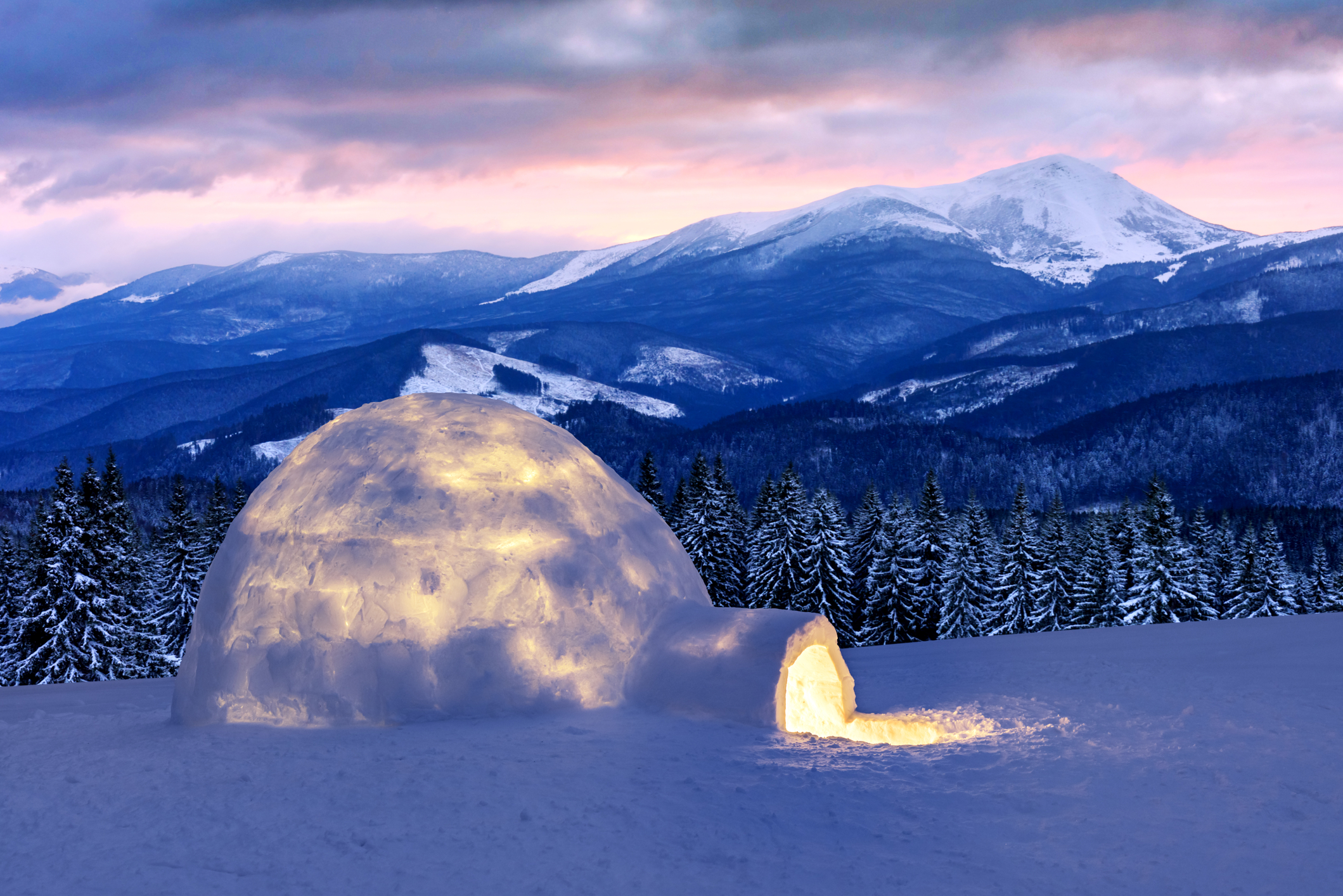
PHOTO: Igloo in winter mountains by Ivan Kmit, used by permission.

NOTE: An igloo is a type of shelter built of snow traditionally used by the people of Canada’s Central Arctic and GreenlandThule area. Inuit people tended to use snow to insulate their houses constructed from whalebone and hides. Snow is used because the air pockets trapped in it make it an insulator. 

Snowy Owl Near Ocean Shores by Duane Niatum

bird-4702499_1920

Snowy Owl Near Ocean Shores
by Duane Niatum

A castaway blown south from the arctic tundra
sits on a stump in an abandoned farmer’s field.
Beyond the dunes cattails toss and bend as snappy
as the surf, rushing and crashing down the jetty.

His head a swivel of round glances,
his eyes a deeper yellow than the winter sun,
he wonders if the spot two hundred feet away
is a mouse on the crawl from mud hole
to deer-grass patch.

An hour of wind and sleet whips the air,
nothing darts or passes but the river underground.
A North Pole creature shows us how to last.
The wind ruffles his feathers from crown to claw

while he gazes into zeroes the salt-slick rain.
As a double-rainbow before us arcs
sky and owl, we leave him surrendering
to the echo of his white refrain.

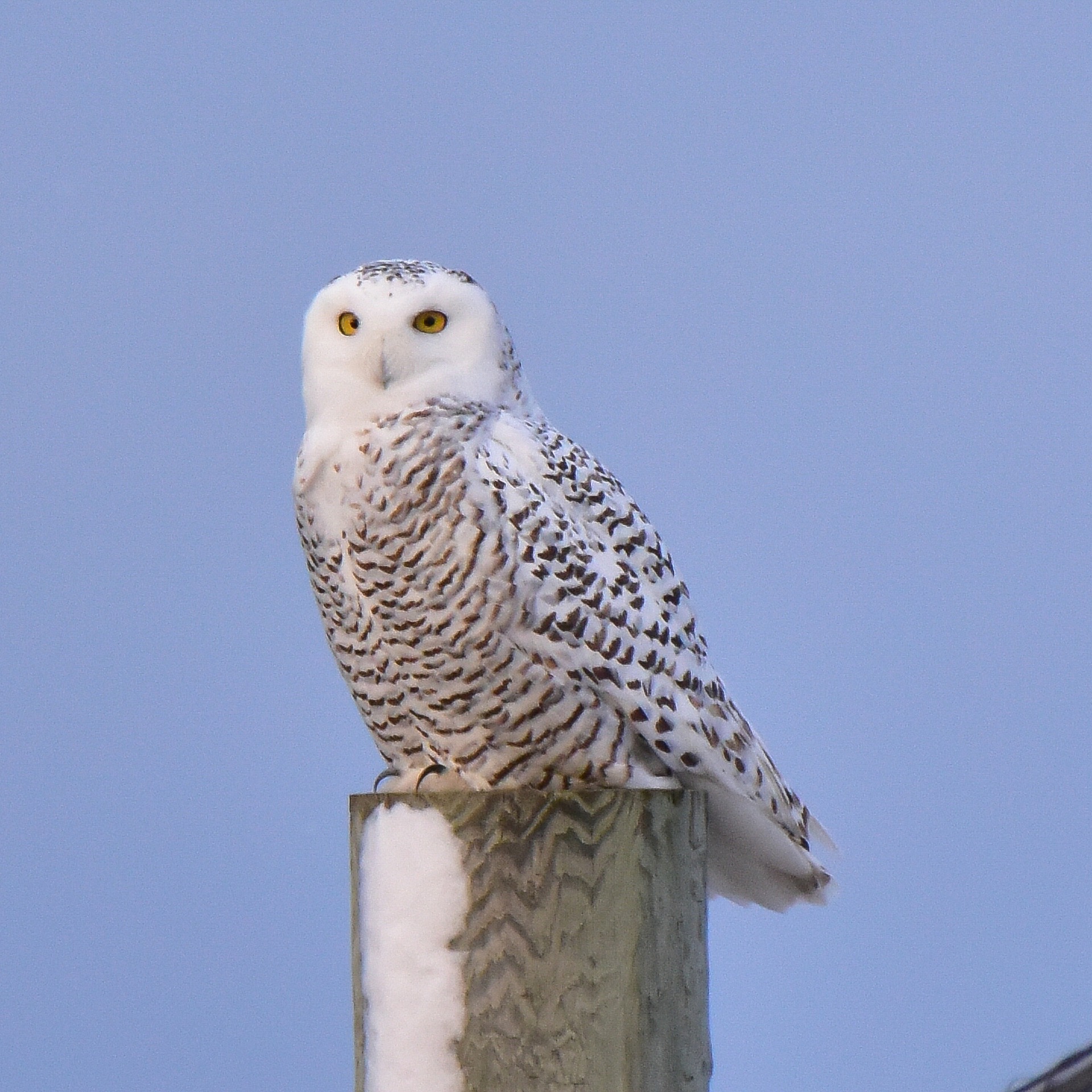
PHOTO: “Snowy owl” by Myriam  Paré, used by permission. 

NOTE: The snowy owl is a large, white owl native to the Arctic regions of both North America and the Palearctic. A migratory bird, snowy owls often wander close to the Arctic region. Global population was once estimated at over 200,000, but recent data suggests a population of fewer than 100,000. Numerous, complex environmental factors associated with global warming are likely responsible for the decline. Learn more about the snowy owl and how you can help at projectsnowstorm.org

American Airlines Put Us in First Class, Miami to Port-au-Prince, After a 24-Hour Delay by Kyle Laws

painting

American Airlines Put Us in First Class,
Miami to Port-au-Prince, After a 24-Hour Delay
by Kyle Laws

Greets us with champagne
as we sit in our seats,
feeds us chilled salmon over greens,
pita chips & red pepper hummus,
wine with our meal.

The warmed cookies for dessert
we share with Roger Jean Charles &
Pere Max who have waited two hours
at the airport damaged in quake.

We depart to rows of men
offering to carry bags—
some with one hand lost
to falling buildings and debris.

As I drizzled sesame dressing
over salmon salad greens,
I was uncomfortable,
aware of extremes,
think about it again
under a drizzle of shower
only a 1/16 inch stream
in a concrete bungalow in Montrouis,
mosquito nets draped over cots,
jalousie windows closed against bugs,
fan rotating until 11 p.m.
when the generator goes off
until morning.

Previously published in Exit 13 and in George Sand’s Haiti (Poetry West, 2013, co-winner of their chapbook award).

IMAGE: “Bird in lush leaves, Haiti” by Wadson Devsainvil. Original available at etsy.com

EDITOR’S NOTE: Haiti is a country located on the island of Hispaniola in the Caribbean Sea, to the east of Cuba and Jamaica and south of The Bahamas. It occupies the western three-eighths of the island which it shares with the Dominican Republic. Haiti has an estimated population of 11.1 million, making it the second-most populous country in the Caribbean after Cuba. Europeans first arrived December 5, 1492 during the initial voyage of Christopher Columbus, who subsequently founded the first European settlement in the Americas, La Navidad, on what is now the northeastern coast of Haiti. The island was claimed by Spain, forming part of the Spanish Empire until the early 17th century. Competing claims and settlements by the French led to Spain ceding the western portion of the island to France in 1697.  In the midst of the French Revolution (1789–99), slaves and free people of color launched the Haitian Revolution in 1791. After 12 years of conflict, French forces were defeated and Haiti was declared a sovereignty in 1804.  

NOTE FROM THE AUTHOR: I made four trips to Haiti, both before and after the 2010 earthquake. The first time I went, I had only one French book on my shelf, George Sand’s Lettres D’un Voyageur, which seemed appropriate to the trip. George Sand was born the same year, 1804, that Haiti gained independence from France. 

Laws2

ABOUT THE AUTHOR: Kyle Laws is based out of Steel City Art Works in Pueblo, Colorado, where she directs Line/Circle: Women Poets in Performance. Her collections include Ride the Pink Horse (Stubborn Mule Press, 2019), Faces of Fishing Creek (Middle Creek Publishing, 2018), This Town: Poems of Correspondence coauthored with Jared Smith (Liquid Light Press, 2017), So Bright to Blind (Five Oaks Press, 2015), and Wildwood (Lummox Press, 2014). With eight nominations for a Pushcart Prize and one for Best of the Net, her poems and essays have appeared in magazines and anthologies in the U.S., U.K., Canada, and Germany. She is editor and publisher of Casa de Cinco Hermanas Press. Visit her on Facebook

Caribbean by Donald Hall

Jamaica licensed

Caribbean
by Donald Hall

Montego Bay
in its quick curve
listens
to the plane, waiting
for the cross of silver to
soften down.
In the air, above,
past the frail
wing and the gauze
glint of propellers,
we see the thick
curve of the green:
the aqua-
marine!
This is the Caribbean
Sea, and the Bay
which gathers into
its shallows all
measures of green,
until, in the sun, the
patches declare
communities of depth, from
bright to sombre.
Touch them.

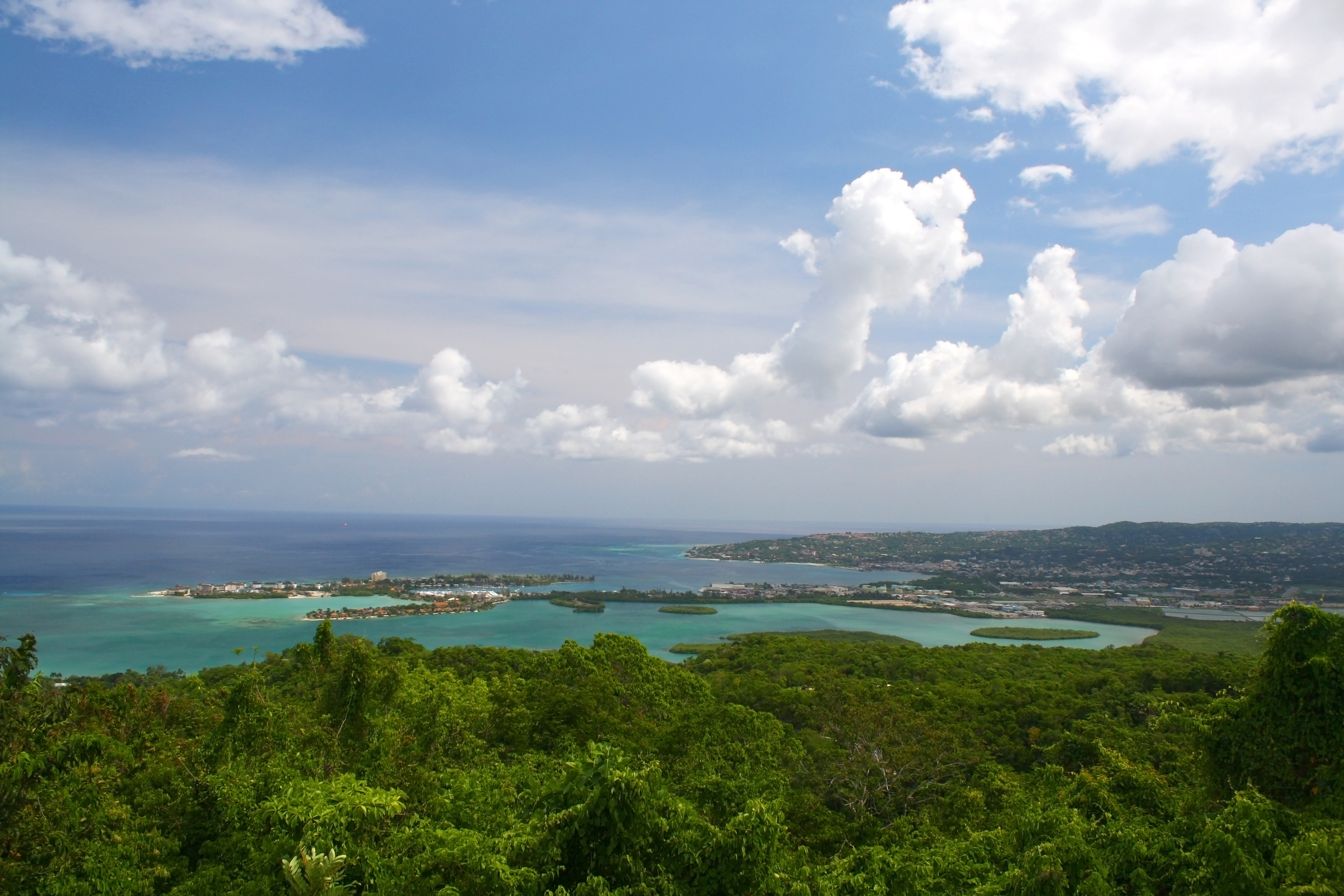
PHOTO: Montego Bay, Jamaica. Photo by Entrum, used by permission.

NOTE: Jamaica, an island country, is the third-largest island in the Caribbean  (after Cuba and Hispaniola). The island came under Spanish rule following the arrival of Christopher Columbus in 1494, and remained a possession of Spain until 1655, when England assumed power. The island achieved independence from the United Kingdom on August 6, 1962.

Caribbean Nights by Richard Butler Glaenzer

jabneel-statia-8po6zR17PqE-unsplash

Caribbean Nights
by Richard Butler Glaenzer

There are too many stars:
They jostle;
They quarrel with the moon
Till she grows sullen.

The fireflies are more quiet,
More generous;
Their little lamps reveal flowers
And love-looks and smiles.

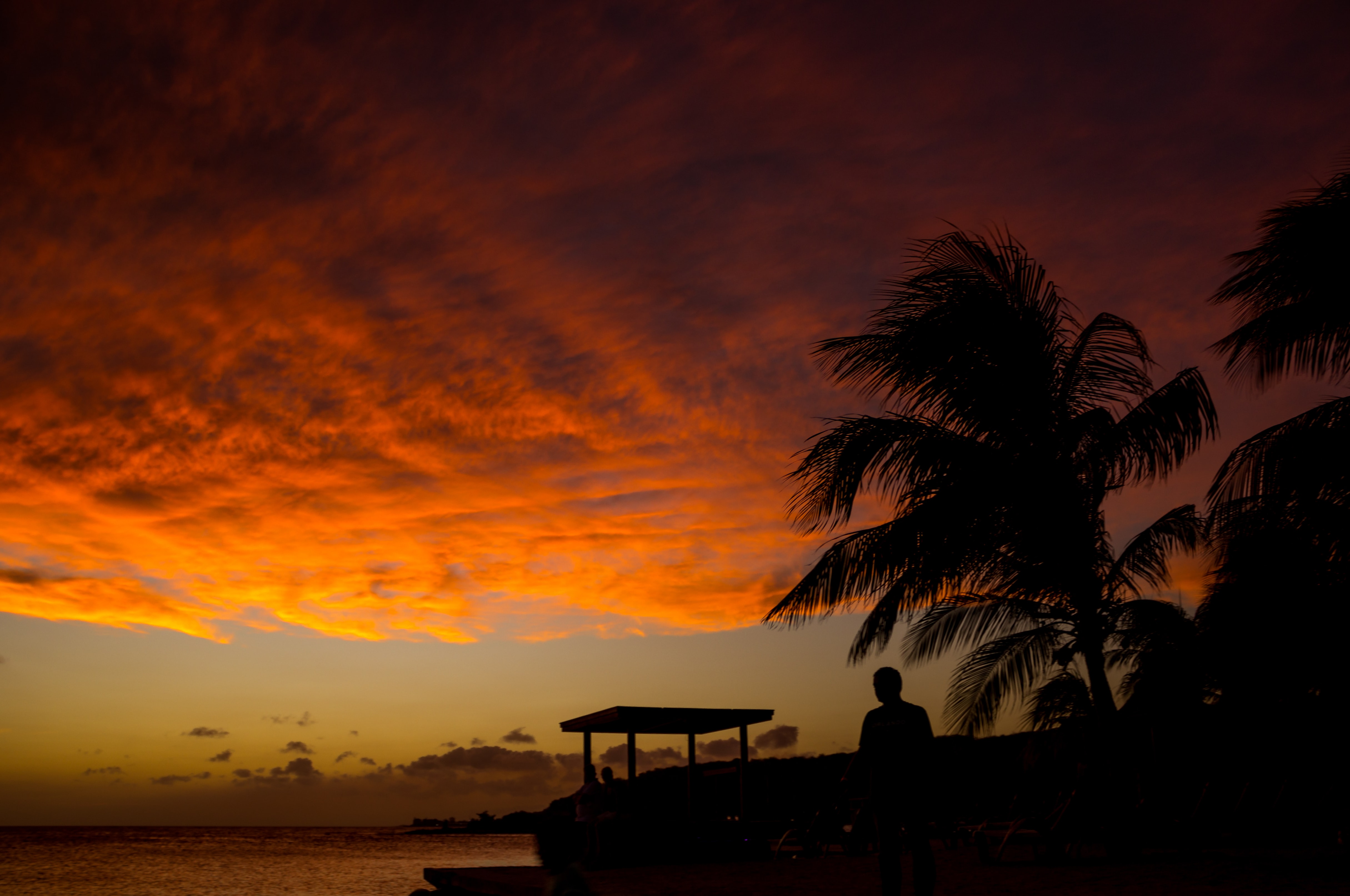
PHOTO: Caribbean island of Curaçao. Photo by Jabneel Statia on Unsplash

NOTE: Curaçao is an island country in the southern Caribbean about 40 miles north of the Venezuelan coast. It is a constituent country of the Kingdom of the Netherlands. Collectively, Curaçao, Aruba, and other Dutch islands in the Caribbean are often called the Dutch Caribbean.

Syracuse at Dusk by Frances Daggar Roberts

luca-n-xF3x-_Dtoh0-unsplash

Syracuse at Dusk
by Frances Daggar Roberts

Seated at art-glass tables
by the muted tug of sea…
lights across the bay
and the feeling of centuries
preceding us.
Battered bases to the buildings
some as old as Grecian conquest.
Rough cobbled stones
and the evening stroll of families.
Wine in our glasses slowly sipped.

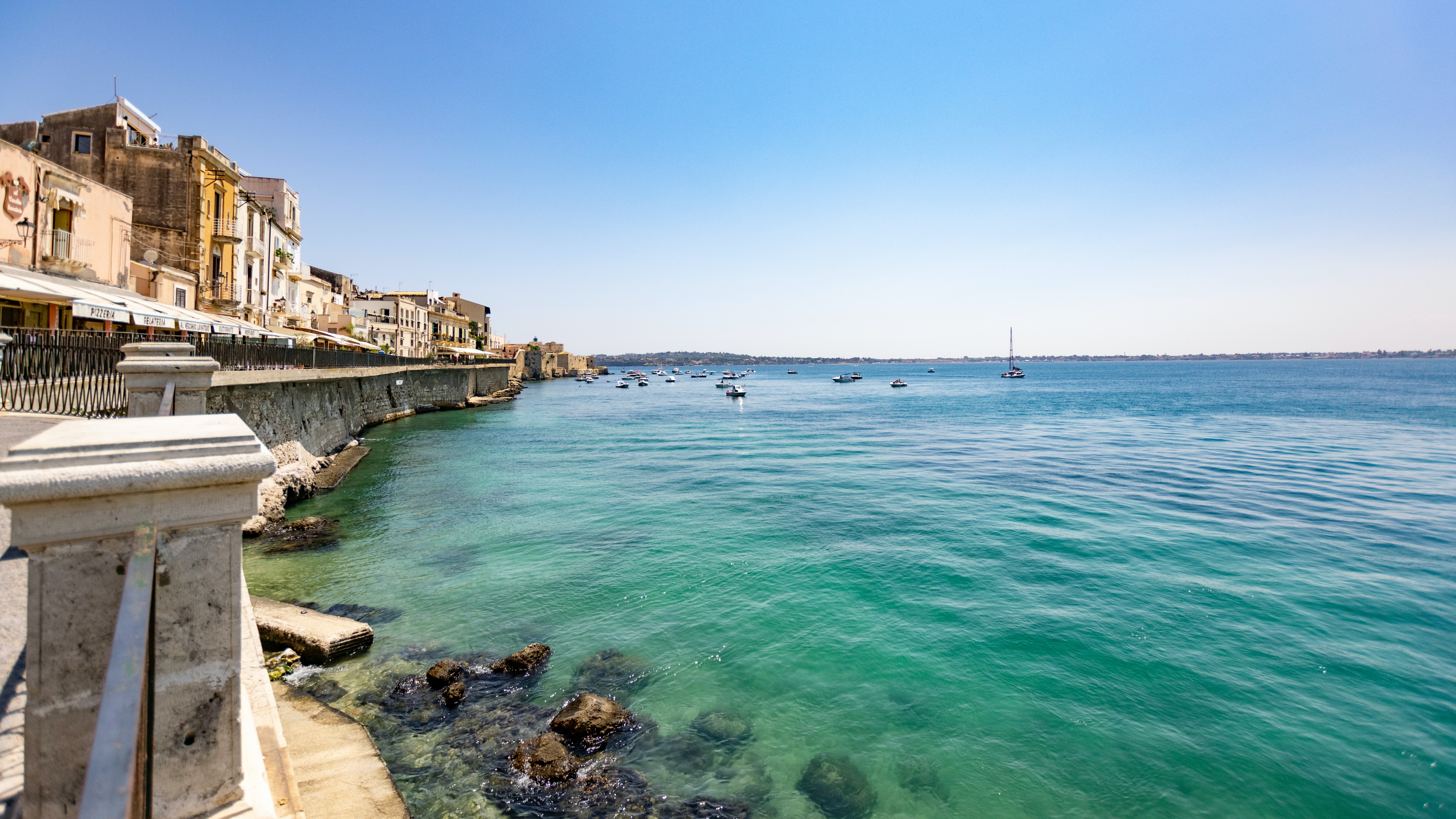
PHOTO: Fountain of Arethusa, Syracuse, Sicily, Italy. Photo by Luca N on Unsplash

NOTE: The Fountain of Arethusa is a natural fountain in the the city of Syracuse in Sicily. According to Greek mythology, the fresh water fountain is the place where the nymph Arethusa, the patron figure of ancient Syracuse, returned to earth’s surface after escaping from her undersea home in Arcadia. Syracuse, a historic city on the island of Sicily, is notable for its Greek and Roman history, culture, amphitheaters, and architecture. The 2,700-year-old city played a key role in ancient times, when it was one of the major powers of the Mediterranean world. Syracuse is located in the southeast corner of the island of Sicily, next to the Gulf of Syracuse beside the Ionian Sea.

F roberts

ABOUT THE AUTHOR: Frances Daggar Roberts is an Australian poet who grew up in a remote area, where she began to write poetry to capture the love she felt for plants, animals, and landscape. She now lives in a bushland setting close to Sydney and works as a psychologist treating significant anxiety and depression.

Tasting Lucca by Joan Leotta

italy lucca licensed

Tasting Lucca
by Joan Leotta

Humming Puccini, we
walk the wide path on top
of Lucca’s circular wall
until we reach the market steps.
I descend to buy red beans, farro,
Parmigiano, tomatoes, pancetta.
In our apartment,
I blend and magnify
flavors with a bit of thyme.
As our soup simmers,
the aroma transports us from
modern Lucca to its days as a
conquered Etruscan outpost of
Rome, soldiers marching
in the old piazza—
sandals slapping on stones
in coordinated stoic rhythm—
likely the local Luccan
battalion heading north
to conquer Gaul for Rome.
Probably fortified by
Lucca’s farro soup,
accompanied, of course,
by warm bread,
Rome’s gift to all its people.

Previously published in Tin Lunchbox (Summer 2019). 

PHOTO: Medieval fortress wall, Lucca, Italy. Photo by Ariadna De Raadt, used by permission. 

NOTE: Lucca is a city in Tuscany, Italy, famous for its intact Renaissance-era city walls.

NOTE FROM THE AUTHOR: I often bring home recipes from my trips—I don’t ask for them, I simply try to recreate from having tasted the dish—and when I make it here at home, we laugh and share memories of that trip. 

joan-leotta-seaglass-necklace

ABOUT THE AUTHOR: Joan Leotta is a writer and story performer. Her poems have appeared in Silver Birch, When Women Write, Verse Visual, Verse Virtual, The Ekphrastic Review, Yassou, Stanzaic Stylings, read at the Ashmolean, and have won an award at the Wilda Morris Challenge. Her first chapbook, Languid Lusciousness with Lemon, is available from Finishing Line Press. Her essays, articles, and stories are also widely published. On stage, she presents folk and personal tales of food, family, and strong women. She loves to walk the beach, cook, and browse through her many travel photos. Visit her at joanleotta.wordpress.com and on Facebook.

Mulberry by Terrence Sykes

sunset-961119_1920

Mulberry
morus nigra — sanctus dominus
by Terrence Sykes

The mulberry struggles
through bricks in the
corner of the piazza
Santa Maria del Carmine
past the Ponte Vecchio
just across the Arno

cusp of day
left then left
prophecy of
double damnation
stepping into darkness
candles & incense

Masaccio fresco
Expulsion
birth of the Renaissance
stillness in the church
laden with history
has my past followed me

Adam & Eve
pastel chiaroscuro
nakedness
sworded angel damning
driven from the Garden
not even a fig leaf
shamed & exiting Eden

priestly voices
echoing annunciations
closure foretold
escorted by robes
cast upon
cobblestone

verdant shadows
dappled light
forbidden fruit
gathered & palmed
sweeter than any apple

temptation on the lips
stigmata hands
marked like Cain
meandering lost
mist & fog upon
streets of Florence

PHOTO: Ponte Vecchio, Florence, Italy, by Kevin Phillips, used by permission. 

NOTE: The Ponte Vecchio is a medieval stone closedspandrel segmental arch bridge over the Arno River, in Florence, Italy. It is noted for the shops built along it, as was once common. Butchers, tanners, and farmers initially occupied the shops; the present tenants are jewelers, art dealers, and souvenir sellers. 

cross

NOTE FROM THE AUTHOR: I found this Thrift Store Cross before my trip and I carried in my satchel …to bless it in the churches of Florence …piazza of Santa Maria del Carmine…. I’m spiritual not religious but lots of my poems speak of faith and the struggles of old and new beliefs.

sykes-1

ABOUT THE AUTHOR: Although Terrence Sykes is a far better gardener-forager-cook . . . his poetry-photography-flash fiction have been published in Bangladesh, Canada, Ireland, India,  Mauritius, Pakistan, Scotland, Spain, and the USA . . . he was born and raised in the rural coal mining area of Virginia and this  isolation brings the theme of remembrance to his creations — whether real or imagined.

Vanishing Relics by Sue Mayfield Geiger

Roadside

Vanishing Relics
by Sue Mayfield Geiger

They seldom come by anymore—
travelers needing to rest,

park their weary backsides on our benches,
spread out a feast of fried chicken,

bottles of Dr. Pepper and Delaware Punch,
all sweaty from being in the cooler.

Air-conditioned cars and the Interstate
did us in.

But a few of us still exist; you just have
to do a little research to find us.

Like, if you get off the highway and take
a back road, you could very well stumble by.

But look carefully because some of us
are hidden behind weeds and crumbling concrete.

You could possibly see a marker letting you know that
you’ve stopped at an historical spot.

Yet, we are slowly deteriorating; no funds to maintain
our woeful facades.

Green algae is growing on our quarried stone
and the grates atop our fire pits are rusty and crumbling.

Mighty timbers were felled to provide overhead canopies;
many still stand, waiting to shelter occupants

that rarely drop by. Yet, they are missing out on
the best picnic of their lives!

We were important once—your grandparents can tell you
how we offered them respite from the road.

Come back to a time when travel was unhurried and genteel
and roadside parks were here for you.

Just like the paper road maps that got you across
Texas, New Mexico, Arizona, the West and East Coasts.

We live in that same boneyard. But some of us are still
around, and we’ll gladly take you in.

PHOTO: Roadside park near Timpson, Shelby County, Texas. Photo by Lord Walt, used by permission. 

NOTE ON THE POEM: We are little offbeat gems that are still around—roadside parks. We are amused at younger generations that stop by out of curiosity, make frowns, kick at our aging structures and haul ass. We snicker to ourselves, as they speed away with technology at their fingertips, and the trees give us a wink.

Sue Mayfield-Geiger

ABOUT THE AUTHOR: Sue Mayfield Geiger is a freelance magazine writer living on the Texas Gulf Coast. When not writing about home décor, fashion, or a new restaurant opening, she reads and writes poetry. Her literary publications include Grayson Books, RiverLit, Dos Gatos Press, The Binnacle (U of Maine), Of Burgers and Barrooms (Main Street Rag), Red Wolf Journal, Waco WordFest Anthology, Perfume River Poetry, THEMA, Silver Birch Press, and forthcoming in Odes and Elegies: Eco poetry from the Gulf Coast, and others.