Closed by Lynn White

Saint-Béat_village_(1)

Closed
by Lynn White

It was a beautiful village,
the sun was shining,
the mountain air pure,
a perfect place for a coffee.
We could see two cafés,
but the first we tried was closed,
closed for a while by the looks.
The second looked hopeful
with tables and chairs outside
but the door was locked.
An elderly man came over and explained.
that it only opened at weekends.
The other had closed because
the people had left the village.
They all want to live in the town,
he told us
and now the houses are empty
and there are just a few tourists
who come at weekends to drink a coffee
or a beer.
He told us to sit at a table
and went into a house
across the street
and returned with a tray
and three good French coffees
made in his own kitchen.
So we sat in the sunshine
breathing in the pure mountain air,
a perfect place for a coffee
with our new friend.

First published in Erothanatos, Vol 2, Issue 4, October 2018

PHOTO: Saint-Béat village, Haute-Garonne department, France. The village is in southern France, near the border of Spain. Photo by Père Igor (2010), used by permission.

NOTE: Haute-Garonne is a department in the Occitanie Region of Southern France. Named after the Garonne River, its prefecture and main city is Toulouse, the country’s fourth-largest.  Haute-Garonne is one of the original 83 departments created on March 4, 1790 during the French Revolution.

NOTE FROM THE AUTHOR: This was written about one of the villages in the Haute-Garonne area, near Toulouse, France, in the spring of 2001.

white2-1

ABOUT THE AUTHOR: Lynn White lives in north Wales. Her work is influenced by issues of social justice and events, places and people she has known or imagined. She is especially interested in exploring the boundaries of dream, fantasy, and reality. She was shortlisted in the Theatre Cloud “War Poetry for Today” competition and has been nominated for a Pushcart Prize and a Rhysling Award. Her poetry has appeared in many publications, including Apogee, Firewords, Capsule Stories, Light Journal, and So It Goes. Find Lynn at lynnwhitepoetry.blogspot.com and on Facebook.

Ode to an Encyclopedia by James Arthur

trevi-2705255_1920

Ode to an Encyclopedia
by James Arthur

O hefty hardcover on the built-in shelf in my parents’ living room,
O authority stamped on linen paper, molted from your dust jacket,
Questing Beast of blue and gold, you were my companion

on beige afternoons that came slanting through the curtains
behind the rough upholstered chair. You knew how to trim a sail
and how the hornet builds a hive. You had a topographical map

of the mountain ranges on the far side of the moon
and could name the man who shot down the man
who murdered Jesse James. At forty, I tell myself

that boyhood was all enchantment: hanging around the railway,
getting plastered on cartoons; I see my best friend’s father
marinating in a lawn chair, smiling benignly at his son and me

from above a gin and tonic, or sitting astride his roof
with carpentry nails and hammer, going at some problem
that kept resisting all his mending. O my tome, my paper brother,

my narrative without an ending, you had a diagram of a cow
broken down into the major cuts of beef, and an image
of the Trevi Fountain. The boarding house,

the church on the corner: all that stuff is gone.
In winter in Toronto, people say, a man goes outside
and shovels snow mostly so that his neighbors know

just how much snow he is displacing. I’m writing this
in Baltimore. For such a long time, the boy wants
to grow up and be at large, but posture becomes bearing;

bearing becomes shape. A man can make a choice
between two countries, believing all the while
that he will never have to choose.

Copyright © 2015 by James Arthur. 

PHOTO: Trevi Fountain, Rome, Italy, by Aza Zelok, used by permission. 

NOTE: The Trevi Fountain in Rome, Italy, is the result of a contest organized in 1730  by Pope Clement XII. Nicola Salvi initially lost to Alessandro Galilei — but after an outcry in Rome over someone from Florence winning the contest, Salvi was awarded the commission. Work began in 1732 and was completed in 1752 by Giuseppe Pannini and several others. At 86 feet high and 161.3 feet wide, it is the largest Baroque fountain in the city and one of the most famous fountains in the world. The Trevi Fountain has been featured in notable films, including Roman Holiday (1953),  Three Coins in the Fountain (1954), and La Dolce Vita (1960).

jarthur

ABOUT THE AUTHOR: James Arthur was born in Connecticut and grew up in Toronto, Ontario, Canada. He is the author of the poetry collection The Suicide’s Son (Véhicule Press 2019) and Charms Against Lightning (Copper Canyon Press 2012). His poems have appeared in The New YorkerPoetry, The New York Review of Books, and The London Review of Books. He has received the Amy Lowell Traveling Poetry Scholarship, a Hodder Fellowship, a Stegner Fellowship, a Discovery/The Nation Prize, a Fulbright Scholarship to Northern Ireland, and a visiting fellowship at Exeter College, Oxford. He teaches at Johns Hopkins University in Baltimore, Maryland. Visit him at jamesarthurpoetry.com.

The World Book by Patricia Hooper

Saginaw_by_MarcinBlus

The World Book
 by Patricia Hooper

When the woman in blue serge
held up the sun, my mother
opened the storm door, taking
the whole volume of S
into her hands. The sun
shown as a sun should,
and we sat down at the table
leafing through silks and ships,
saints and subtraction. We passed
Scotland and Spain, street-
cars and seeds and even
the Seven Wonders until
the woman who owned them skipped
to the solar system and said
it could be ours. My mother
thought, as I held my breath,
and while she was writing the check
for everything, A through Z,
I noticed the room with its stove
and saucers and spoons. I was wearing
a sweater and skirt and shoes
and there at the window the sun
was almost as clear as it was
in the diagram where its sunspots,
ninety-three million miles
from the earth and only a page
from Sumatra, were swirling. The woman
stood up, slamming it shut,
and drove down the street to leave us
in Saginaw, where I would wait
for the world to arrive. And each morning,
walking to school, I believed
in the day it would come, when we’d study
Sweden or stars and I’d stand
at the head of the classroom and take
the words of the world from my satchel,
explaining the secrets.

Copyright © 2003 Patricia Hooper. From Aristotle’s Garden (Bluestem Press, 2003) by Patricia Hooper.

PHOTO: Saginaw, Michigan, historic business district and frozen Saginaw River. Photo by Marcin Błuś, used by permission. 

ad

NOTE: Before Google, before the Internet, there was the home encyclopedia. The first edition of The World Book Encyclopedia was published (as The World Book) in 1917, by the Hanson-Roach-Fowler Company. “As a rule,” wrote Michael Vincent O’Shea, the founding editor, in the preface of that first edition, “encyclopedias are apt to be quite formal and technical. A faithful effort has been made in the World Book to avoid this common defect.” At one time, World Book employed more than 40,000 salespeople, who sold sets of encyclopedias door-to-door to families all over the United States. As more women entered the workforce in the 1970s, and computers became more accessible to consumers in the 1980s, direct sales of encyclopedia sets to families declined. 

PHOTO: World Book Encyclopedia ad, 1950s. Reprints available at etsy.com

NOTE: The city of Saginaw is located in the area known as Mid-Michigan. Saginaw is considered part of the Great Lakes Bay Region, along with neighboring Bay City, Midland and Mount Pleasant. Population is around 50,000. 

Hooper_photo-208x300

ABOUT THE AUTHOR: Born in Saginaw, Michigan, Patricia Hooper received a BA and MA from the University of Michigan. She is the author of five books of poetry, including Wild Persistence (University of Tampa Press, 2019), Separate Flights (University of Tampa Press, 2016), which received the Claire Sharf Award, and Other Lives (Elizabeth Street Press, 1984) recipient of the Norma Faber First Book Award from the Poetry Society of America. Her poems have appeared in The American Scholar, The Atantic Monthly, Poetry, The Hudson Review, The Southern Review, The Iowa Review, Ploughshares, The New Criterion, The Yale Review, The Sewanee Review, Michigan Quarterly Review, Orion, and other magazines and anthologies. She is also the author of four children’s books. 

Oormila Vijayakrishnan Prahlad, Sunset at Bombo

Australia Vlad Zetter licensed

Sunset at Bombo
by Oormila Vijayakrishnan Prahlad

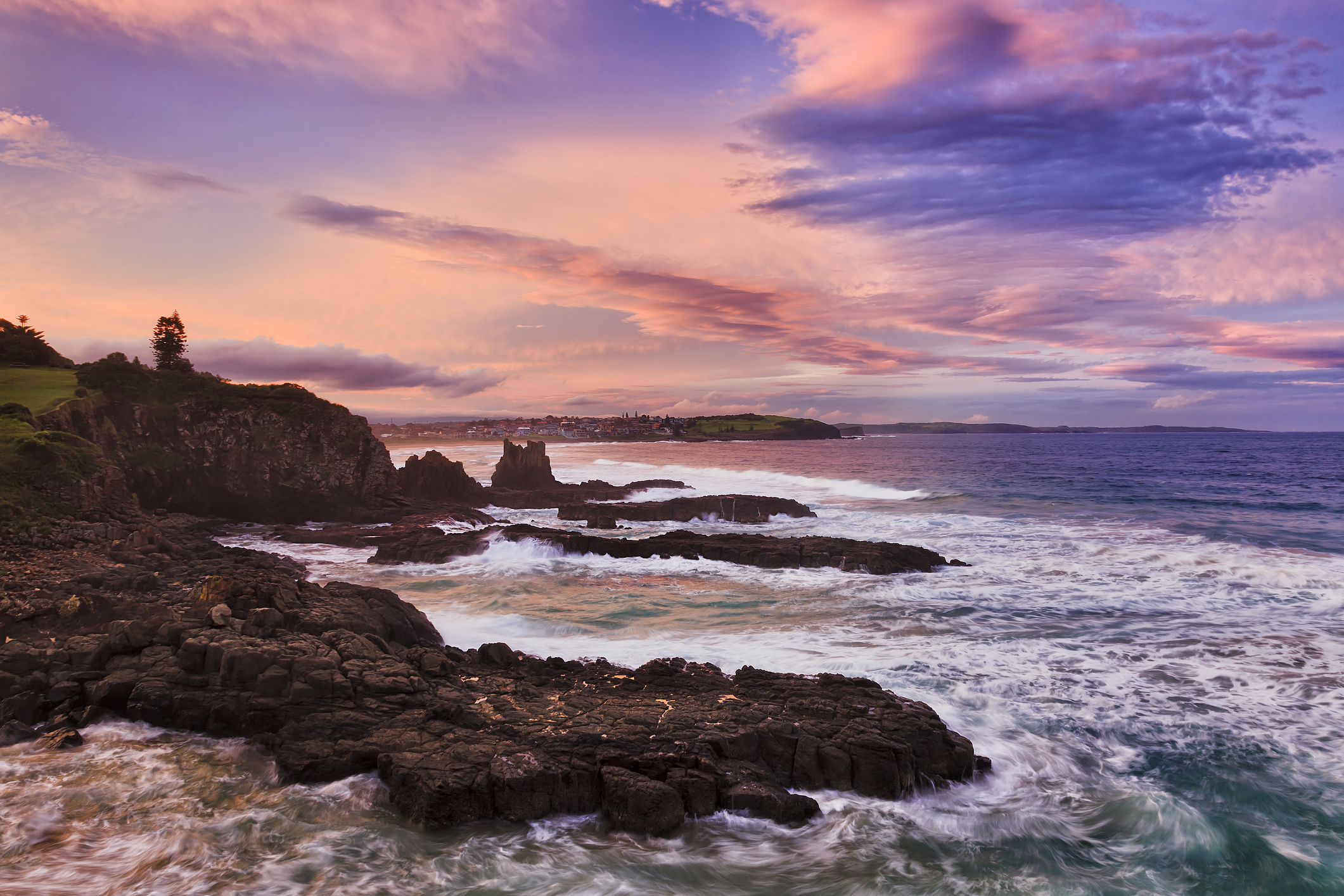
The cliffs of Bombo Headland
burn in a fuchsia sunset
crags and ridges awash
in a medley
of violet and tangerine.

In the depths of the Kiama sea
columns of igneous rock
stamp their ancient weight
night thickens and settles
mottled with astral glitter —
a sprinkling of meteor showers.

On the windswept eastern face
ghost crabs scuttle
abseiling down the basalt
unperturbed by the violence
of the thundering Pacific
lashing at the parapets
of prehistoric caverns.

First published in Plum Tree Tavern (July 22, 2020).

PHOTO: Sunset, Bombo Quarry, Kiama, New South Wales, Australia, by Vlad Zetter, used by permission.

NOTE: Bombo Headland Quarry Geological Site is a heritage-listed former quarry and now geological site at Princes Highway, Bombo, Municipality of Kiama, New South Wales, Australia. It is also known as Bombo Quarry. 

Sunset at Bombo

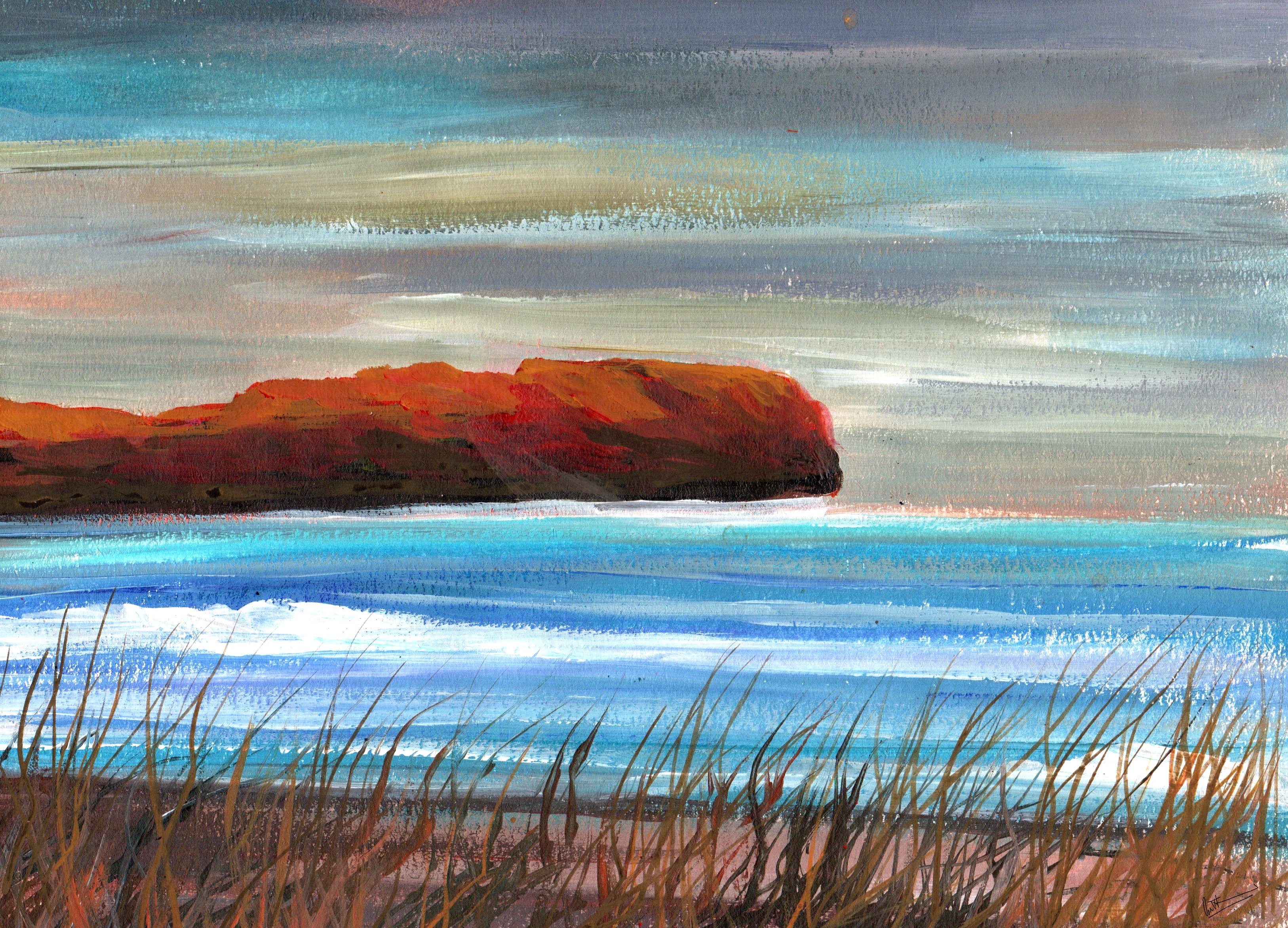
NOTE FROM THE AUTHOR: I used to spend a lot of time painting en plein  air, in the days before the lockdown. I loved taking the train to the South Coast, and the Central Coast of New South Wales, where I enjoyed being in nature and painting breathtaking landscapes by the sea. This poem was inspired by one of my painting trips. Above is the painting.

Prahlad copy

ABOUT THE AUTHOR: Oormila Vijayakrishnan Prahlad is an artist, poet, and pianist of Indian heritage. She was raised in the Middle East. She started writing poetry at the age of seven. In 1990, during the Iraqi invasion of Kuwait, she was a war refugee in Operation Desert Storm. She holds a Masters in English, and is a member of The North Shore Poetry Project. Her recent works have been published in Neologism Poetry, The Ekphrastic Review, Nigerian Voices Anthology, Poetica Review, and several other print and online international literary journals and anthologies. Her poem “Mizpah,” about a mother who hopes for the return of her son who was taken as a prisoner of war, was awarded an Honorable Mention in the Glass House Poetry Awards 2020. She is the co-editor of the Australian literary journal Authora Australis. She regularly performs her poetry and exhibits her art at shows in Sydney.

Great Barrier by Barbara Kingsolver

Australia TH9515 licensed

Great Barrier
by Barbara Kingsolver

The cathedral is burning. Absent flame or smoke,
stained glass explodes in silence, fractal scales
of angel damsel rainbow parrot. Charred beams
of blackened coral lie in heaps on the sacred floor,
white stones fallen from high places, spires collapsed
crushing sainted turtle and gargoyle octopus.

Something there is in my kind that cannot love
a reef, a tundra, a plain stone breast of desert, ever
quite enough. A tree perhaps, once recomposed
as splendid furniture. A forest after the whole of it
is planed to posts and beams and raised to a heaven
of earnest construction in the name of Our Lady.

All Paris stood on the bridges to watch her burning,
believing a thing this old, this large and beautiful
must be holy and cannot be lost. And coral temples
older than Charlemagne suffocate unattended,
bleach and bleed from the eye, the centered heart.

Lord of leaves and fishes, lead me across this great divide.
Teach me how to love the sacred places, not as one
devotes to One who made me in his image and is bound
to love me back. I mean as a body loves its microbial skin,
the worm its nape of loam, all secret otherness forgiven.

Love beyond anything I will ever make of it.

PHOTO: Helicopter view of the Great Barrier Reef, off the coast of Queensland, Australia. Photo by TH9515, used by permission.

NOTE: The Great Barrier Reef is the world’s largest coral reef system, composed of over 2,900 individual reefs and 900 islands stretching for more than 1,400 miles over an area of approximately 133,000 square miles. Located in the Coral Sea, off the coast of Queensland, Australia, the Great Barrier Reef can be seen from outer space and is the world’s biggest single structure made by living organisms. This reef structure is composed of and built by billions of tiny organisms, known as coral polyps. Environmental pressures on the reef and its ecosystem include climate change, increasing ocean temperatures, runoff, mass coral bleaching, and dumping of dredging sludgeAccording to a study published in October 2012 by the Proceedings of the National Academy of Sciences, the reef has lost more than half its coral cover since 1985. To find out how you can help save The Great Barrier Reef, visit barrierreef.org.

An Old City, Czech Republic by Laurel Benjamin

czech michael krsnak licensed

An Old City
Czech Republic
by Laurel Benjamin

I’m standing on a street corner in an old city after dark
where no one appears after midnight—
no couples arm in arm coming from a drinking spot,
no bicyclists, no streetcars.

A black dog enters the street, dragging his owner
who struggles to hold strands of other dogs,
and with one hand steers a baby carriage
the motion a shuffle along cobblestones.

The next morning, daylight and hummingbirds,
green shiny jackets too fine for the sun,
too bejeweled as they suck juice from hotlips sage.

I have gone out to look for arrivals and departures but can only
find them in memories of other places—
the time in a Paris department store
I fell into a chair from low blood sugar,
camping trips with Michael
where we read Indian Tales to each other.

There is no between now—
only here and there, as if we are occupied,
as if we are countlessly alone.

PHOTO: Saint Barbara’s Church, Kutná Hora, Czech Republic. Photo by Michael Kršňák, used by permission. 

NOTE FROM THE AUTHOR: I am haunted in dreams by the towns I visited in the Czech Republic, especially in the dark—like Kutná Hora, where it’s quiet.

NOTE: Kutná Hora is a town in the Central Bohemian Region of the Czech Republic with a population of about 21,000. The center of Kutná Hora and Sedlec Abbey with its famous ossuary are a UNESCO World Heritage Site. Among the most important buildings in the town are St. Barbara’s Church, begun in 1388, and the Italian Court, formerly a royal residence and mint, built at the end of the 13th century. 

benjamin1

ABOUT THE AUTHOR: Laurel Benjamin lives in the San Francisco Bay Area. Her work has appeared in Turning a Train of Thought Upside Down: An Anthology of Women’s PoetryCalifornia Quarterly, The Midway Review, among othersShe is affiliated with the Bay Area Women’s Poetry Salon and the Port Townsend Writers. More of her work can be found at thebadgerpress.blogspot.com.

I Have Seen Terezín by Andrena Zawinski

czech licensed pwam

I Have Seen Terezín
by Andrena Zawinski

(from Frankie’s on the Divisadero in San Francisco
after Friedl Dicker-Brandeis’“Untitled, 1944, Terezin”)

The sign at Frankie’s Bohemian Cafe reads 6,303 miles to Prague.
Inside a shadowed corner I have brambory, rough bread, Pilsner—
the same way I did in the sleepy Bohemian border town of Terezín.
I still hear from here mothers’ voices, appoggiaturas on the wind.

Inside a shadowed corner I have brambory, rough bread, Pilsner,
think of children painting sprawling meadows, their butterfly skies,
and hear from here mothers’ voices, appoggiaturas on the wind.
Now we study this, house fronts tattooed in SS brass plaques,

children painting flowers sprawling meadows, their butterfly skies,
feather quilts airing our sins across the opened window ledges.
Now we study this, house fronts tattooed in SS brass plaques,
the Camp’s mass graves’ numbered markers bedding down in roses,

feather quilts airing our sins across the opened window ledges,
gallows wreathed in candles, slips of prayers tucked under stones,
the Camp’s mass graves’ numbered markers bedding down in roses
for ones hung at the Gate of Death. I walked tunnels from the cells

to gallows wreathed in candles, slipped prayers beneath stones,
jumping at my own shadow darting by me, at how horror twists it,
at those hung at the Gate of Death. I walked tunnels from the cells,
taunted by its dark angels’ voices, quilts and roses, butterfly skies,

jumping at my own shadow darting by me, at how horror twists it,
the way I squared walkways in the sleepy border town of Terezín—
taunted by its dark angels’ voices, quilts and roses, butterfly skies,
while a sign at Frankie’s Bohemian Cafe reads 6,303 miles to Prague.

This poem appears in the author’s collection Something About (Blue Light Press San Francisco).

PHOTO: Entrance to WWII Theresienstadt concentration camp near Terezín, Czechoslovakia, marked “Arbeit Macht Frei” (work sets you free). Photo by Pwan, used by permission. 

Children_playing_at_Theresienstadt_during_the_Red_Cross_visit

NOTE: Theresienstadt was a concentration camp and ghetto established by the Nazi SS during World War II in the fortress town Terezín, located in a German-occupied region of Czechoslovakia. Czech Jews arrived in November 1941; the first German and Austrian Jews arrived in June 1942; Dutch and Danish Jews arrived in 1943. About 33,000 people died at Theresienstadt, mostly from malnutrition and disease. More than 88,000 people were held at the site for months or years before being deported to extermination camps and other killing sites. The Terezín Ghetto Museum is visited by 250,000 people each year.

PHOTO: On 23 June 1944, Red Cross delegate Maurice Rossel was taken on a choreogaphed visit of Theresienstadt concentration camp. He took this photograph during his visit. Most of the children were murdered at Auschwitz in the fall of 1944.

zawinski 1

ABOUT THE AUTHOR: Andrena Zawinski’s latest poetry collection is Landings from Kelsay Books. Others are Something About from Blue Light Press, a PEN Oakland Award and Traveling in Reflected Light from Pig Iron Press, a Kenneth Patchen Prize. She also has several smaller collections. Her poems have received accolades for free verse, form, lyricism, spirituality, and social concern, and have appeared in Aolean Harp, ArtemisBlue Collar Review, Bryant Literary Review, CaesuraPlainsongs, Progressive Magazine, Rattle, and others with work online at Women’s Voices for Change, Writing in a Woman’s Voice, Verse Daily, and elsewhere. Veteran teacher of writing and feminist activist, she founded and runs the San Francisco Bay Area Women’s Poetry Salon and is longstanding Features Editor at Poetry Magazine.

Koi Pond, Oakland Museum by Susan Kolodny

fish-884694_1920

Koi Pond, Oakland Museum
by Susan Kolodny

Our shadows bring them from the shadows:
a yolk-yellow one with a navy pattern
like a Japanese woodblock print of fish scales.
A fat 18-karat one splashed with gaudy purple
and a patch of gray. One with a gold head,
a body skim-milk-white, trailing ventral fins
like half-folded fans of lace.
A poppy-red, faintly disheveled one,
and one, compact, all indigo in faint green water.
They wear comical whiskers and gather beneath us
as we lean on the cement railing
in indecisive late-December light,
and because we do not feed them, they pass,
then they loop and circle back. Loop and circle. Loop.
“Look,” you say, “beneath them.” Beneath them,
like a subplot or a motive, is a school
of uniformly dark ones, smaller, unadorned,
perhaps another species, living in the shadow
of the gold, purple, yellow, indigo, and white,
seeking the mired roots and dusky grasses,
unliveried, the quieter beneath the quiet.

IMAGE: Koi pond, watercolor by Inspired Images, used by permission. 

kolodny 5 copy

ABOUT THE AUTHOR: Susan Kolodny is a recently retired psychoanalyst and teacher. She is the author of two volumes of poetry, Preserve and After the Firestorm. Her poems have appeared in New England Review, Beloit Poetry Journaland in many other journals and several  anthologies and have been featured on American Life in Poetry, Poetry Daily, and the Poetry Foundation’s Poem of the Day. She has an MFA from The Program for Writers at Warren Wilson College. She is Member and Faculty at the San Francisco Center for Psychoanalysis where she founded and chairs the program, Poetry and Psychoanalysis. Visit her at susankolodny.com

NOTE: The Oakland Museum of California (OMCA) opened in 1969, bringing together three historically independent disciplines—art, history, and natural sciences—under one roof. This progressive multidisciplinary approach was to celebrate the many facets of California. The museum’s collections—comprising more than 1.9 million objects including seminal art works, historical artifacts, ethnographic objects, natural specimens, and photographs—and programs explore and reveal the factors that shape California character and identity, from its extraordinary natural landscapes, to successive waves of migration, to its unique culture of creativity and innovation.

Doggie Diner, Geary and Arguello, 1969 by Vince Gotera

doggie diner 2

Doggie Diner, Geary and Arguello, 1969
by Vince Gotera

Out of San Francisco night, the cool fog’s
gray fingers caressing hills and houses,
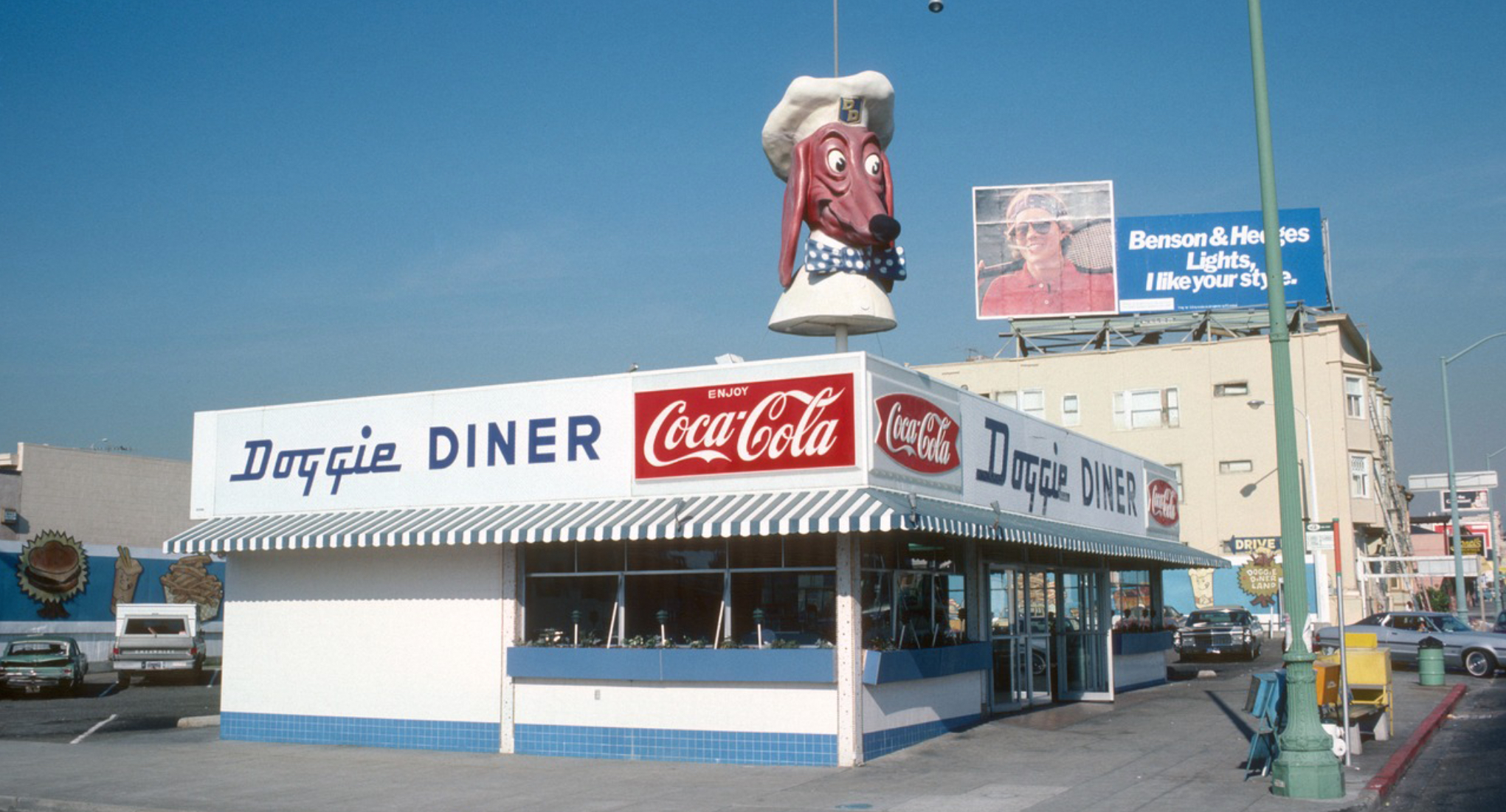
emerged, in chef’s hat and bowtie, the Dog,
ten-foot-tall dachshund’s head in fiberglass.

Tina, my first real high school girlfriend,
and I entered through the shiny glass doors,
holding hands, both in hippie leathers, suede
vests and floppy hats, bellbottom cords.

It smelled like hog heaven, grease-laden air,
scents of amber-gold fries and sizzling thick
burgers, the sharp tang of cole slaw vinegar.
We ordered dogs slathered in chili with pickles

and mustard. The world was copacetic. Above
the diner, the Dog slowly turned, glowing like love.

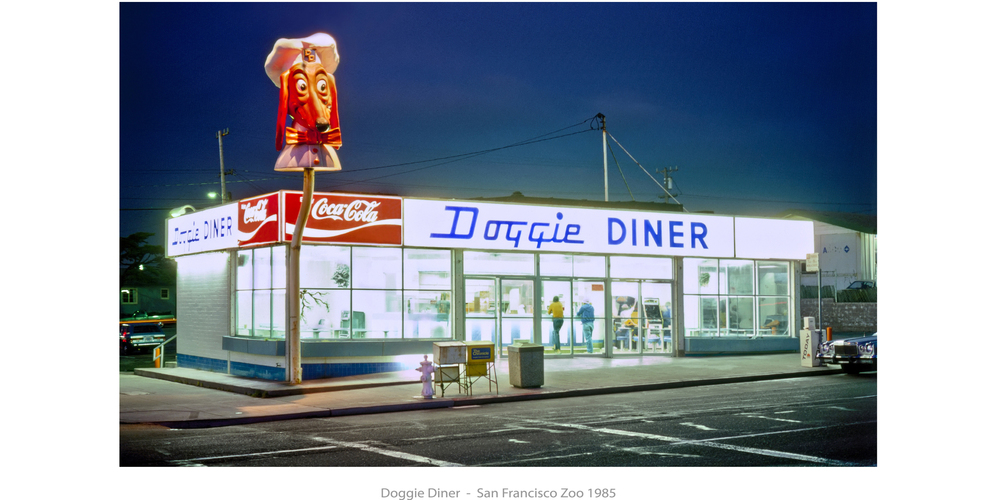
PHOTO: Doggie Diner, San Francisco (1970s).

gotera_yearbook_181x257px

NOTE FROM THE AUTHOR: The Doggie Diner is the iconic San Francisco restaurant chain, open from 1948 to 1986. Since it’s now gone, the Doggie Diner is a pleasant, nostalgic memory for anyone who grew up in The City during those years. Each diner had a sign rotating above the building, a huge grinning dog’s head in a bow tie and chef’s hat. In the documentary Doggie Diner History, someone who lived near a Doggie Diner as a child recalls how the dog head “helped me navigate my way home, like a big doggie-shaped lighthouse.” A 1985 photo by Roy Kaltschmidt titled “Doggie Diner — San Francisco Zoo,” captures this warm sentiment.¶ In the poem, I try to convey this sunny aura along with the optimistic tenor of the ’60s, the feeling among the young that everything and anything was possible. Remember that San Francisco’s Haight-Ashbury district was the epicenter of the Hippie movement. Although that positive ambience pervades the poem, I allude to the Vietnam war, even though it’s not really present to the teenaged couple: I use the phrase “the world,” which was what American soldiers in Vietnam called America. There was “the ’Nam” and there was “the world,” a romanticized paradise. So, although the speaker and his girlfriend feel all is “copacetic,” it’s really not, and they will soon, very soon, grow up into a world of harsh realities. But for now, in the “now” of the poem, life is wonderful. Happiness is a spicy chili dog, and the Doggie Diner is a kind of heaven.

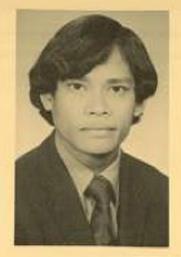
PHOTO: The author’s senior photo in his high school yearbook.

NOTE: Kip Atchley of Napa, California, plans to resurrect Doggie Diner. Read more here.  Visit his website, doggiediner.info.

gotera1

ABOUT THE AUTHOR: Vince Gotera is a Professor of English at the University of Northern Iowa, where he served as Editor of the North American Review (2000-2016). He was also Editor of Star*Line, the print journal of the Science Fiction and Fantasy Poetry Association (2017-2020). His poetry collections include Dragonfly, Ghost Wars, Fighting Kite, The Coolest Month, and the upcoming Pacific Crossing. Recent poems appeared in the journals Abyss & Apex, Altered Reality Magazine, Crab Orchard Review, Dreams & Nightmares, Ekphrastic Review, Philippines Graphic (Philippines), Rosebud, Stone Canoe, and the anthologies Multiverse (UK) and Hay(na)ku 15. He blogs at The Man with the Blue Guitar.

San Francisco by Richard Brautigan

wash club SF

San Francisco
by Richard Brautigan

This poem was found written on a paper bag by Richard Brautigan in a laundromat in San Francisco. The author is unknown.

By accident, you put
Your money in my
Machine (#4)
By accident, I put
My money in another
Machine (#6)
On purpose, I put
Your clothes in the
Empty machine full
Of water and no
Clothes

It was lonely.

PHOTO: The Wash Club laundromat in San Francisco, California. 

brautigan1

ABOUT THE AUTHOR: Richard Brautigan was born in Tacoma, Washington, in 1935. When he was in his twenties, he moved to San Francisco, California. Robert Novak wrote in Dictionary of Literary Biography that “Brautigan is commonly seen as the bridge between the Beat Movement of the 1950s and the youth revolution of the 1960s.” Brautigan wrote of nature, life, and emotion; his unique imagination provided the unusual settings for his themes. Brautigan is the author of the poetry collections June 30th, June 30th (1978), Loading Mercy with a Pitchfork (1975), The Pill Versus the Springhill Mine Disaster (1968), Rommel Drives on Deep Into Egypt (1970), and The San Francisco Weather Report (1969), among others. He died in 1984.