The Turkish Bee by Laurel Trivelpiece

turkey bee licensed

The Turkish Bee
by Laurel Trivelpiece

Like a furry screw a Turkish bee hovers
Above our café table.

Is he here:

to plug up holes made
by blind gods waving sieves?

to celebrate this basket
of fresh bread, balanced
on a pinpoint of time rushing by?

—to unwind his reality,
one quick capsule,
riding his single shot
for all it’s worth?

He sees his way by signs he sets up
as he goes. Wanting and getting one and

the same: no singing, no blurring,
no kiting off after distant glimmers:

those are always half moons of sheep
high on the rocky Anatolian hills.

We watch how he fizzles as the sunlight
Passes through him.

PHOTO: Bee collecting honey from flower in Istanbul. Photo by Ertürk Buluç, used by permission.

Laurel+Trivelpiece+Author+Photo+

ABOUT THE AUTHOR: Laurel Trivelpiece (1926–1998) was an American poet and novelist. She worked in her youth as fruit-picker and, after graduating from the University of California at Berkeley with a bachelor’s degree in English Literature, as an editor and copywriter for Macys and other department stores in the San Francisco Bay Area. She lived in Corte Madera, California. Publications include two poetry collections, four young adult novels, one adult novel, and prize-winning fiction and plays. Her second poetry collection, Blue Holes (1987), won the Beatrice Hawley Award, and one of her poems was included in Best American Poetry 1995. Her poems also appeared in literary journals and magazines including Poetry, The Massachusetts Review, The American Poetry Review, and The Malahat Review.  Her short story “Gentle Constancy” (Denver Quarterly, Fall) was acknowledged in the Distinctive Short Stories, 1970 list in The Best American Short Stories, 1971.

Walking Flashes in Eleuthera Bahamas by Hy Sobiloff

bahamas sarah glashagel licensed

Walking Flashes in Eleuthera Bahamas
                        Governor’s Harbor
by Hy Sobiloff

When the rain finished
I walked barefoot and slid
I walked mostly with myself
Picked wood shapes from the ground
The moisture washed me
My sneakers made a pocket for the stones and pieces
I came upon some grass
And a lovely stone stubbed my toe
I hollered to the tree

I walked for myself
Saw such things that skies will tell
I gazed at the heat colors
Sparkling firework tints
My eyes blinked at its stirring beauty
The things to see walking
Are too true
I held and smelled the grass leaves
Today makes sense to me
My feet are better
My heart is warm
And here I am

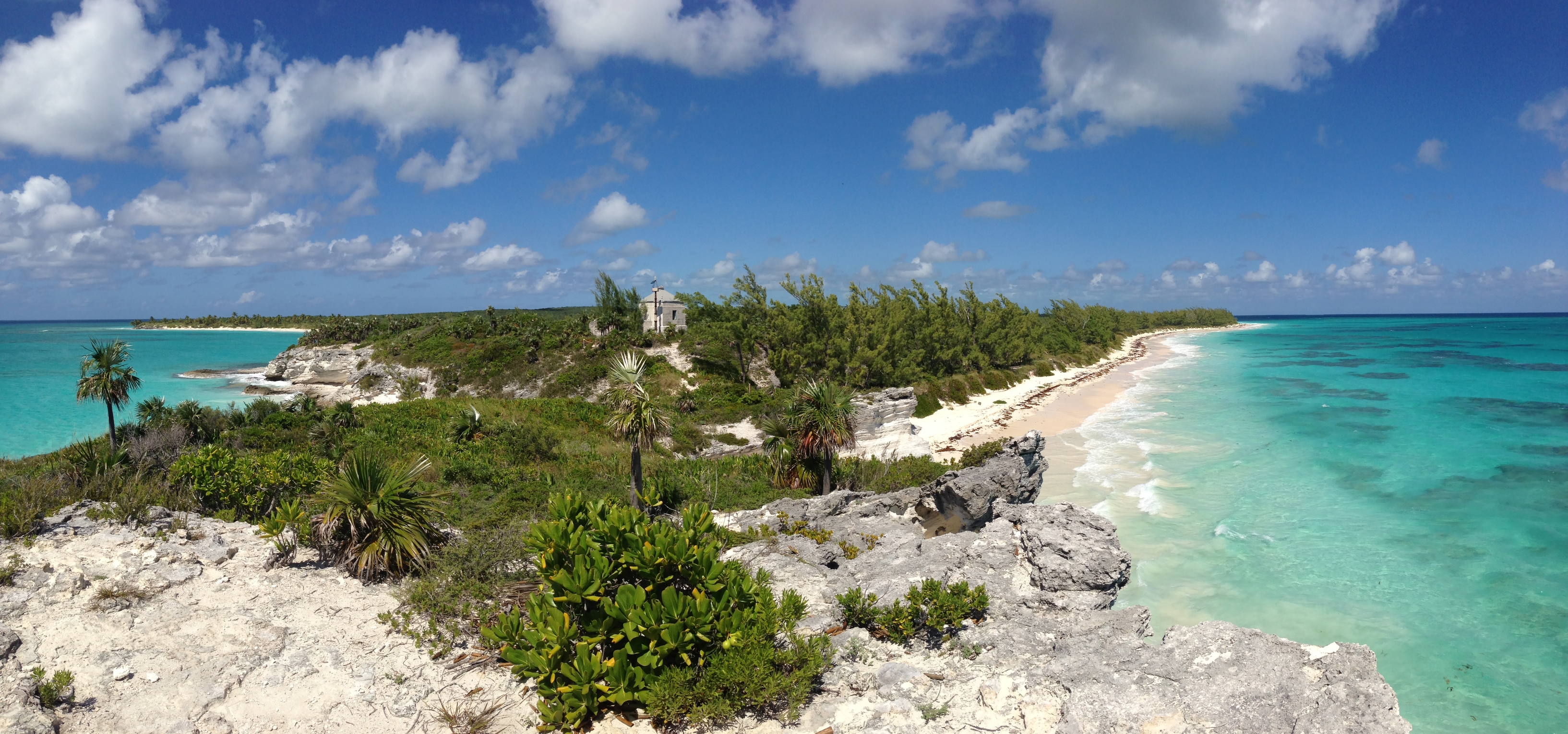
PHOTOGRAPHER’S PHOTO CAPTION: Stunning beaches and abandoned lighthouse at the southern tip of the island of Eleuthera in The Bahamas. Rock formations, caves, palm and casuarina trees, turquoise water, and coral reefs abound. Photo by Sarah Glashagel, used by permission. 

NOTE: Eleuthera refers both to a single island in the archipelagic state of The Commonwealth of the Bahamas and to its associated group of smaller islands. Known in the 17th century as Cigateo, it lies 50 miles east of Nassau. It is long and thin—110 miles long and in places little more than one mile wide. Eleuthera’s eastern side faces the Atlantic Ocean, and its western side faces the Great Bahama Bank. The topography of the island varies from wide rolling pink sand beaches to large outcrops of ancient coral reefs, Its population is approximately 11,000. The first significant number of British settlers arrived in 1648. Under British rule for over 300 years, the Bahamas became independent in 1973.

sobiloff

ABOUT THE AUTHOR: Hy Sobiloff (1912-1970) was film producer, poet, and philanthropist. Born in Fall River, Massachusetts, he attended the University of Arizona, Boston University, and New York University.  His poetry collections include Dinosaurs and Violins, In the Deepest Aquarium, Breathing of First Things, and Hooting Across the Silence. 

Archipelago by Kendel Hippolyte

scott-taylor-mIQdCsttVl8-unsplash

Archipelago
by Kendel Hippolyte

If you really see the Caribbean archipelago, you will see yourself,
the vivid scattered islands stirring to awakening in a sea of reverie and nightmare,
the goldening light lifting green foliage out of darkness into its illumination
and the surrounding blue immensity brooding an unknown creaturing of what can live only in depth

If you hear the Caribbean archipelago, you will hear it talking to you in tongues
of the original tribes of the Americas, Africa, Europe, Asia; you will hear quarrelling, then a blur
and you will hear the simultaneous translation of these languages into the first language,
the sea talking to itself because in the beginning and the end there is no other

If you truly see the Caribbean archipelago, it will become clear
how the fragmented, brittle arc of islands, resisting the onsurge of ocean, makes the sea the sea;
how the ocean, reaching around breached rock, trying to rejoin itself, makes islands islands;
how they both therefore define each other, how they refine your understanding of the selfhood
into an acceptance of the necessary oneness of the known and the unknown

If you can be the Caribbean archipelago, acknowledging that your littoral shape is never final,
that it shifts with your awareness that below the sublunary rise-and-ebb there is an undertow,
a contrary flow that draws you down, deepening to where the separate i-lands reach
beyond the scattered stones of their selves, growing down back into one bedrock, into the original
ground from which the sea, the ocean, the self-dismembered yet defining archipelago rise into their being,
if you can be this, be yond it, you will miracle into impossibility, you will see
how to be broken and yet whole.

From Fault Lines. Copyright © 2012 by Kendel Hippolyte.

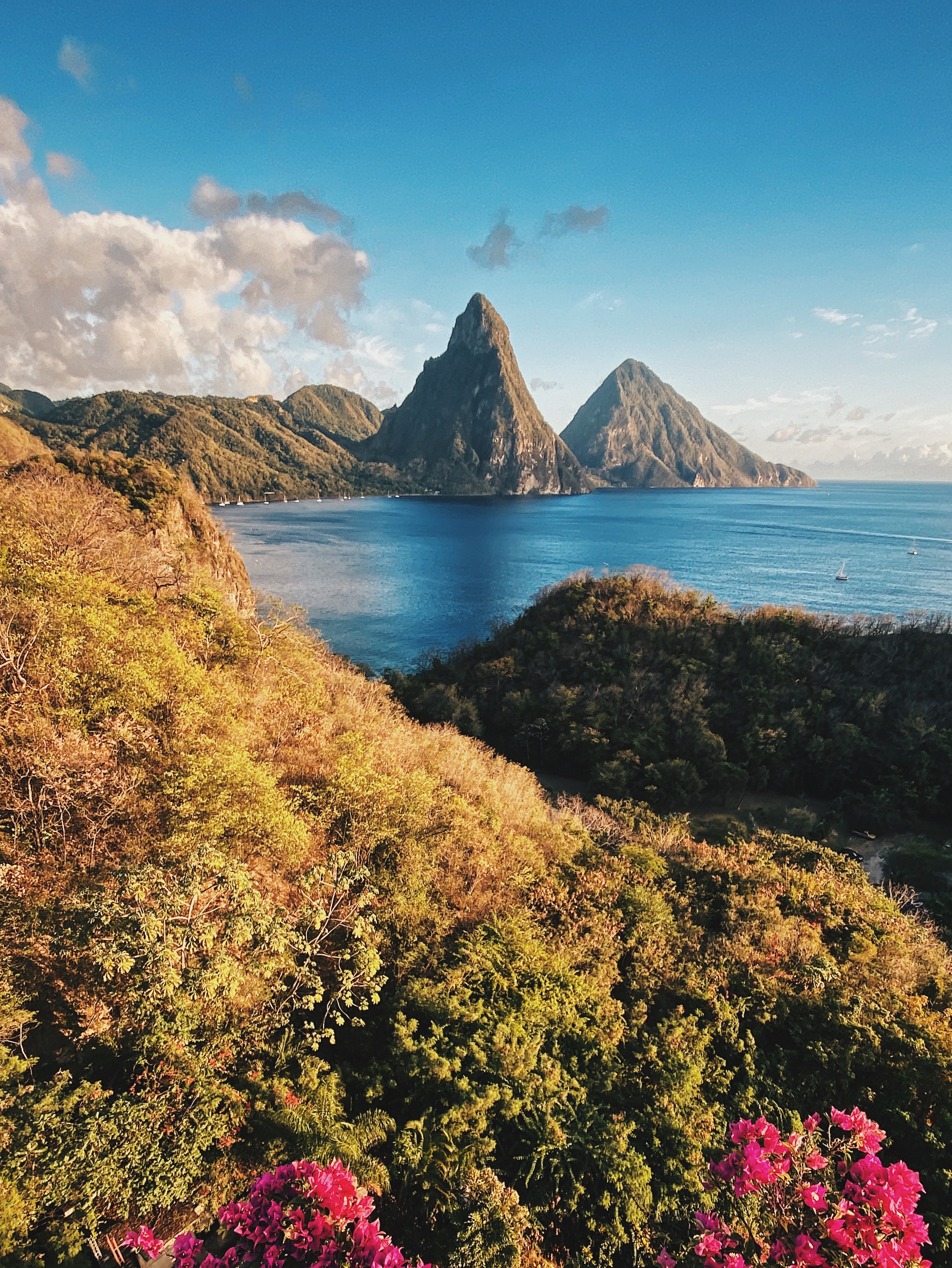
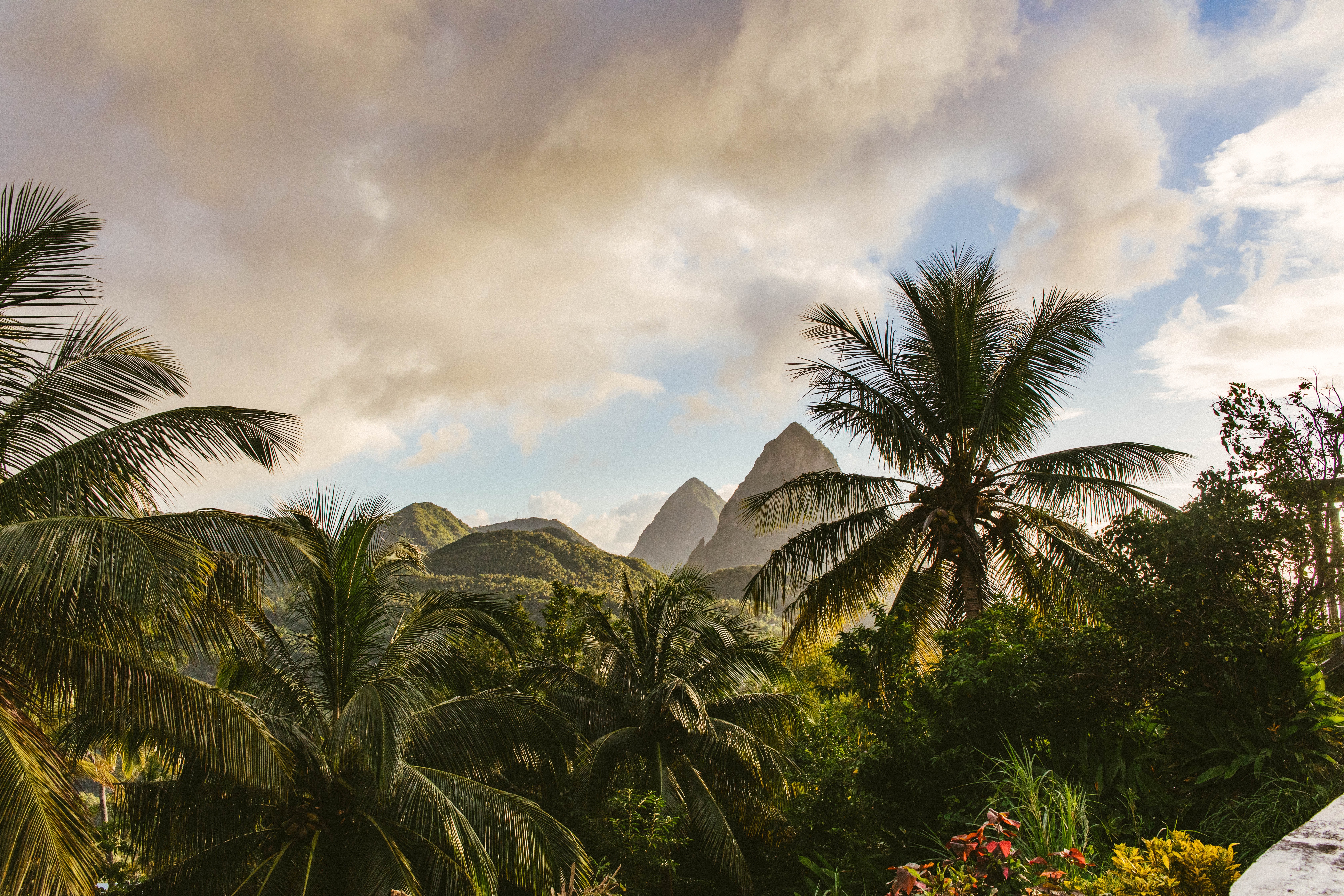
PHOTO: Saint Lucia, West Indies, showing the Gros and Petite Pitons, two volcanic spires, located near the town of Soufrière. Photo by Scott Taylor on Unsplash
corinne-kutz-jiQyGLLZiQs-unsplash

NOTE: Saint Lucia is a sovereign island country in the West Indies in the eastern Caribbean Sea on the boundary with the Atlantic Ocean. The island was previously called Lyonola, the name given to the island by the native Arawaks and later, Hewanorra, the name given by the native Caribs, two separate Amerindian peoples. Part of the Lesser Antilles, it is located north/northeast of the island of Saint Vincent, northwest of Barbados, and south of Martinique. It covers a land area of 238 square miles and reported a population of 165,595 in the 2010 census.  The French were the first Europeans to settle on the island. They signed a treaty with the native Island Caribs in 1660. In ensuing years, the rule of the island changed frequently—it was ruled seven times each by the French and British. In 1814, the British took definitive control of the island. On February 22, 1979, Saint Lucia became an independent state and a member of the Commonwealth of Nations.

PHOTO: West Indies island of Saint Lucia. Photo by Corinne Kutz on Unsplash
KendelPic Nov 2013

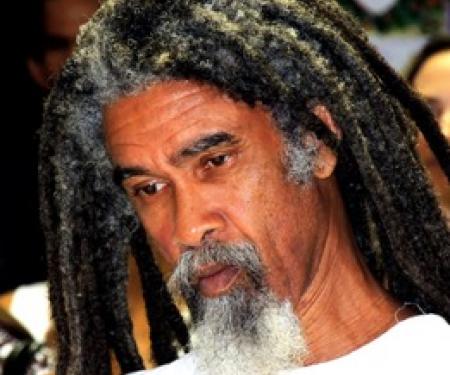
ABOUT THE AUTHOR: Kendel Hippolyte was born in Castries, the capital of St. Lucia, and was educated at the University of the West Indies in Jamaica. He worked as a teacher at St. Mary’s College in Vigie, Castries, and the Sir Arthur Lewis College at the Morne. He is actively involved as a playwright and director with the Lighthouse Theatre Company, which co-founded. He has written eight plays—his best known, Drum-maker, uses idiomatic Caribbean language to explore the indigenous local culture in a political context. He has published several collections of verse, including Birthright and Night Vision, characterized by its modernist free style. He is also the editor of the anthologies Confluence: Nine Saint Lucian Poets (1988) and So Much Poetry in We People (1990). In 2000, he was awarded the St. Lucia Medal of Merit (Gold) for Contribution to the Arts. In 2013 he won the poetry category of the OCM Bocas Prize for Caribbean Literature for his 2012 poetry collection Fault Lines. His latest collection is Wordplanting (Peepal Tree Press, 2019).

Siesta in Cartagena by Daniel Catton Rich

ricardo-gomez-angel-GcHar4P8V_Q-unsplash

Siesta in Cartagena (excerpt)
by Daniel Catton Rich

The city lies, en cabochon,
A black and white Dominican dawn
Gives way to balconies of heat
Down a cerise street,
Mingled everywhere, the smell
Of jasmine, Flit and tuberose,
Under a baroque shell.

SOURCE: Poetry magazine, February 1944. Read poem in its entirety here.

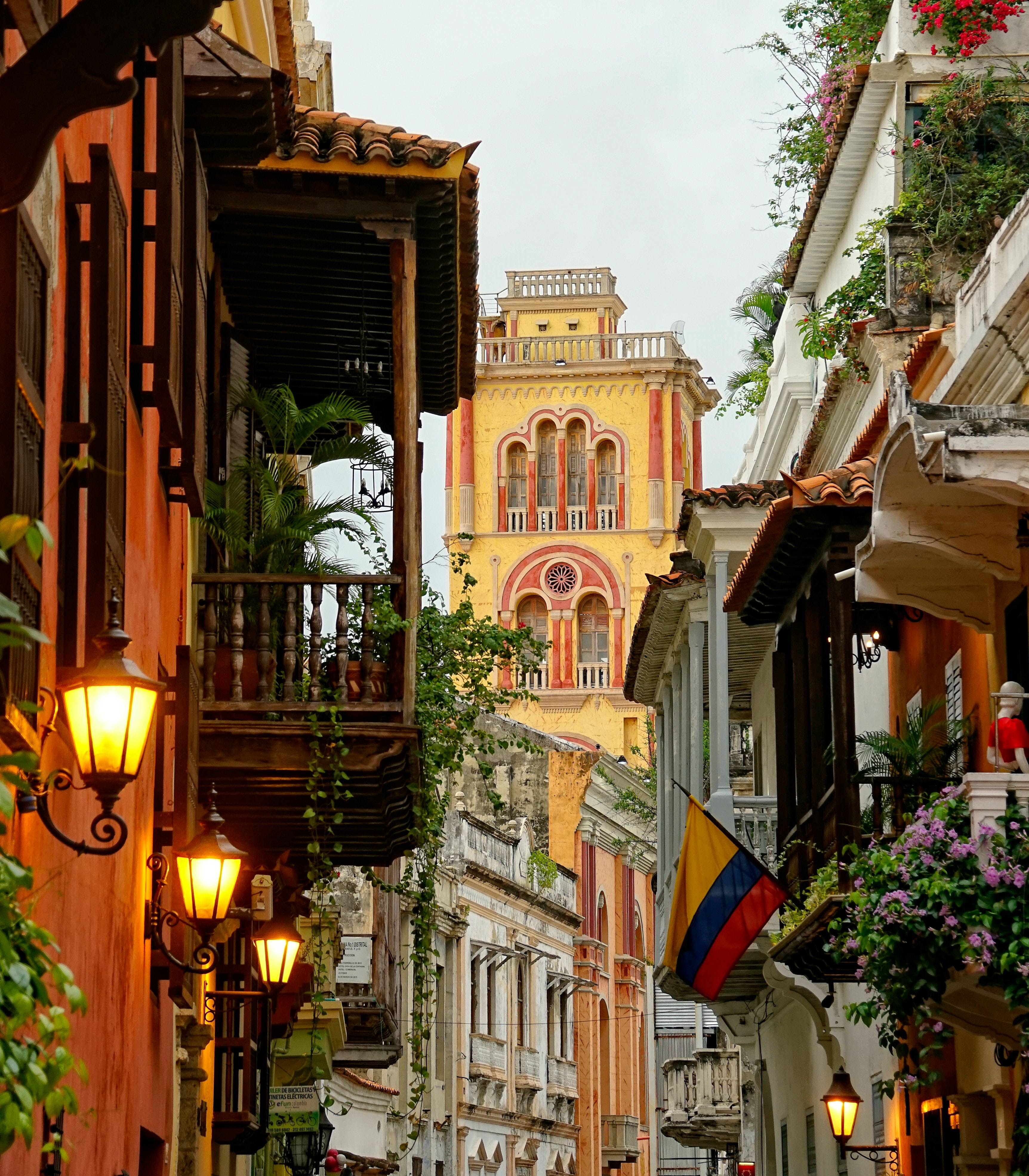
PHOTO: Cartagena Colombia. Photo by Ricardo Gomez Angel on Unsplash

rich 1

ABOUT THE AUTHOR: Daniel Catton Rich (1904-1976) was an American art curator, museum administrator, and educator. He served as director of the Art Institute of Chicago and the Worcester Art Museum, and was president of Poetry Magazine in 1952, as well as a published poet in that magazine. In 1960-61, he served as visiting lecturer in art history at Harvard. He was decorated by foreign governments, including the Legion d’Honneur (France), the order of Orange Nassau (Netherlands), and the Cavalieri Order Merit (Italy).

Cartagena Afternoon by Lorraine Caputo

colombia pablo hidalgo licensed

Cartagena Afternoon
by Lorraine Caputo

In the center of
     Centenary Park
A man & a woman
     clap, singing praises
          unto Jesus
The preacher wipes his
     ebony brow

Vendors roam
     with hand racks of
          coffee thermoses
& all walls, all benches
     men sit drinking tinto*

In one corner of this park
     under the shade of tarps
          strung to acacia trees
Stalls sell rainbows of flowers
     plastic, silk & live

Up on the rampart of worn
     brick & cut coral stone
Lovers meet
     or await the arrival
          of the other
A young man writes a poem
     black hair tousled by the breeze

Down below on a side
     fortification, sitting against
          salt-eaten walls
Three street kids take turns
     sniffing a bottle of glue

The more-yellow sun nears the horizon
     casting a blinding sheen
          upon the water
Waves leap over
     a breakwater

The deeply carved clouds
     snag pale indigo & peach
Men wash the sweat
     of this other day
          off at a spigot fountain
Along the sidewalks artisans
     roll their jewelry into cloths

One young foreigner packs away
     incense into his bag
          an infant sleeping across his lap
His sun-toasted mate holds
     their toddler on her hip

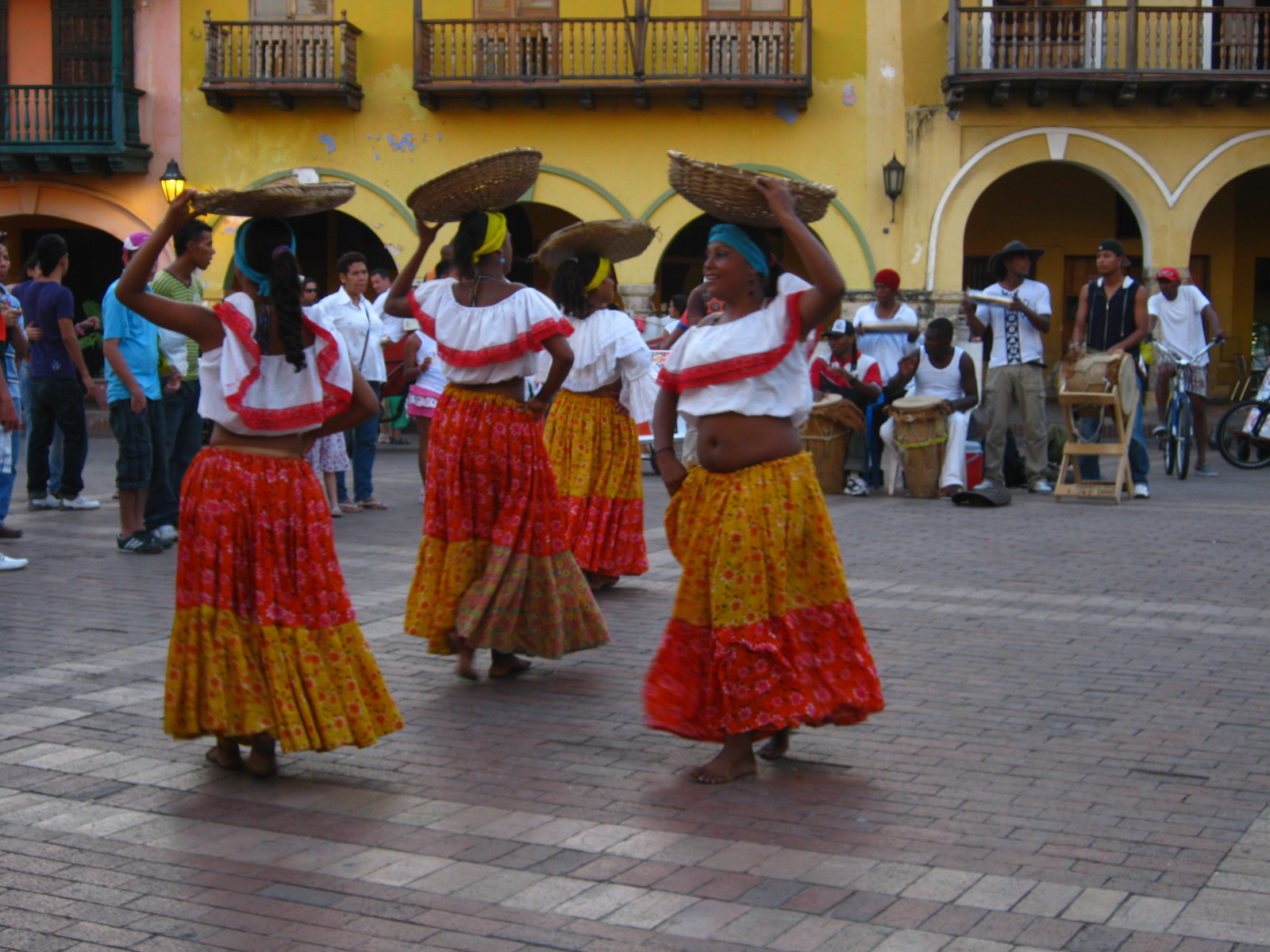
Near the statue of Pedro Heredia
     Afro-Colombian youth
          dance their traditions
The beating drums echo
     through the narrow fortress streets

* tinto—strong, black coffee

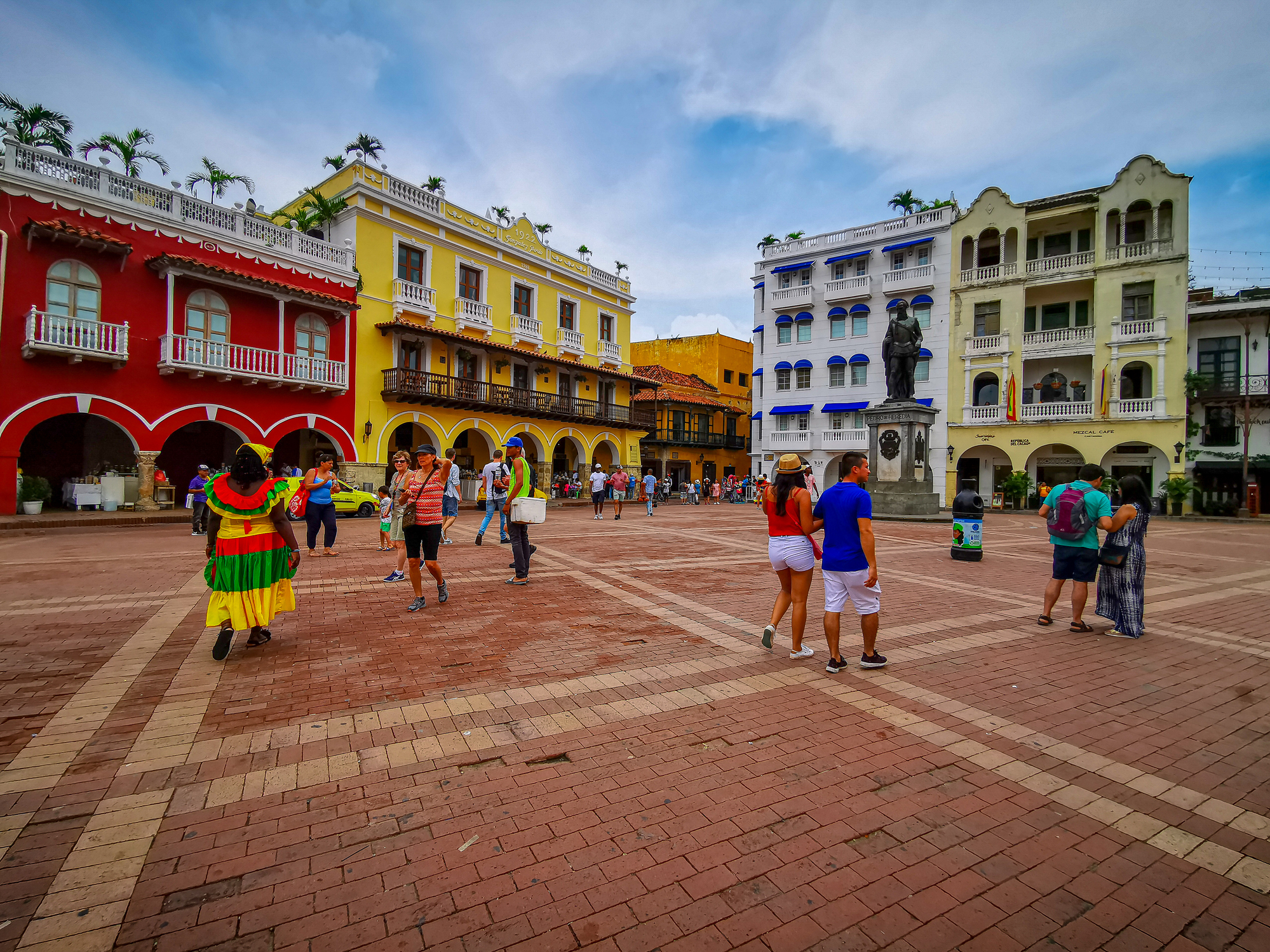
PHOTO: Plaza, Getsemani district, Cartagena, Colombia. Photo by Pablo Hidalgo, used by permission. 

NOTE:  Cartagena is a city and major port on the northern coast of Colombia in the Caribbean Coast Region. Founded on June 1, 1533 by the Spanish commander, Pedro de Heredia, the town was named after the port city of Cartagena, in southeast Spain, where most of Heredia’s sailors had resided. The city’s strategic location between the Magdalena and Sinú Rivers gave it easy access to the interior of New Granada and made it a main port for trade between Spain and its overseas empire, establishing its importance by the early 1540s. During the colonial era it was a key port for the export of Peruvian silver to Spain and for the import of enslaved Africans under the asiento system. 

Caputo 02 -- Cartagena

NOTE FROM THE AUTHOR:  The best way to know Cartagena is to just take off walking. In this hoof-about, I started from my hospedaje (cheap inn) in the Getsemaní part of the city—and old artisan craft neighborhood located outside of the fortress walls—and head for the walled city where the richer classes lived (and still live).

AUTHOR’S PHOTO CAPTION: Youth dance near the statue of Pedro Heredia, on the plaza just inside the Torre del Reloj. Photo by the author. 

caputo01-1

ABOUT THE AUTHOR: Lorraine Caputo is a documentary poet, translator, and travel writer. Her work appears in over 180 journals in Canada, the US, Latin America, Europe, Asia, Australia, and Africa, as well as in 12 chapbooks of poetry – including Caribbean Nights (Red Bird Chapbooks, 2014), Notes from the Patagonia (dancing girl press, 2017), and On Galápagos Shores (dancing girl press, 2019). She also pens travel pieces, with stories appearing in the anthologies Drive: Women’s True Stories from the Open Road (Seal Press, 2002) and Far-Flung and Foreign (Lowestoft Chronicle Press, 2012), and travel articles and guidebooks. In March 2011, the Parliamentary Poet Laureate of Canada honored her verse. She has done over 200 literary readings, from Alaska to the Patagonia, and journeys through Latin America, listening to the voices of the pueblos and Earth. You may follow her Latin America Wander travels on Facebook and at latinamericawander.wordpresscom.

Indian Summer by David Dephy

taxi-988364_1920

Indian Summer
by David Dephy

That’s right, friends, it was an Indian summer.
I was sitting in the New York’s taxi, as I was
sitting in the hammock hanging on the waterfall
and I was thinking about myself on the waterfall…

“When we are not ourselves, we are killing ourselves,”
I thought. “We are the lights when we are ourselves,
but when we aren’t we are killing the lights.
The reflections of us only, remain the same.

It’s impossible to be yourself, but you can,
no one was yourself before you, you’ll be the first,
you always can be yourself.” The cab driver looked
at me in his rear-view mirror, he saw my face with

the sun behind me. The sun was going down, sinking
behind and across and under and above the Manhattan
and Brooklyn bridges and I thought of all the ideas
that maybe I, or maybe we left undone.

The cab driver turned on the radio, Billie was singing
there and the driver said to me: “Yeah bro, as a driver,
I can say that it’s not beautiful to be the second Billie
Holiday and it’s impossible too, right?”

“Exactly,” said I and smiled, of course.

Previously published by Bosphorus Review of Books, May 3, 2020 (USA/Turkey)

PHOTO: Taxi, New York City. Photo by Laura Puig, used by permission. 

david-dephy-1

ABOUT THE AUTHOR: David Dephy is a Georgian/American award-winning poet and novelist. Winner of the Spillwords Poetry Award and finalist of the Adelaide Literary Awards for the category of Best Poem, he was named as A Literature Luminary by Bowery Poetry and The Incomparable Poet by Statorec. His work has been published and anthologized in the USA, UK, and all over the world by many literary magazines, journals, and publishing houses. He lives in New York.

Woods by Joan McNerney

sudhagar-shanmugasigamani-S8q8LkMO3FE-unsplash

Woods
by Joan McNerney

Sliding through arches
of elms…sunshine
yellow and warm as honey.

Moss crawls over mudstone
while squirrels skip
around tree stumps

Imagine to be a bird
in blue wind pushing
air through your wing.

After the long rain
pine trees bending
with cones.

Branches etch evening sky
turning razzle dazzle
purple red citron.

Leaves drop like butterflies
filling the floor of forest
with crunchy foliage.

PHOTO: Bear Mountain State Park, New York, in autumn, with view of the Hudson River.  Photo by Sudhagar Shanmugasigamani on Unsplash

NOTE FROM THE AUTHOR: “Woods” is about Bear Mountain, New York, in late October. I have also seen great white owls in this area.

NOTE: Bear Mountain State Park is a 5,205-acre state park located on the west bank of the Hudson River in Rockland and Orange counties, New York. The park offers biking, hiking, boating, picnicking, swimming, cross-country skiing, cross-country running, sledding, and ice skating. It also includes several facilities such as the Perkins Memorial Tower, the Trailside Museum and Zoo, the Bear Mountain Inn, a merry-go-round, pool, and a skating rink. 

joanatpool-copy1

ABOUT THE AUTHOR: Joan McNerney’s poetry is found in many literary magazines, such as Seven Circle Press, Dinner with the Muse, Poet Warriors, Blueline, and Halcyon Days, as well as in four Bright Hills Press anthologies, several editions of the  Poppy Road Review, and numerous Spectrum Publications.  Her latest title, The Muse In Miniature, is available on Amazon.com and Cyberwit.net.  She has four Best of the Net nominations.


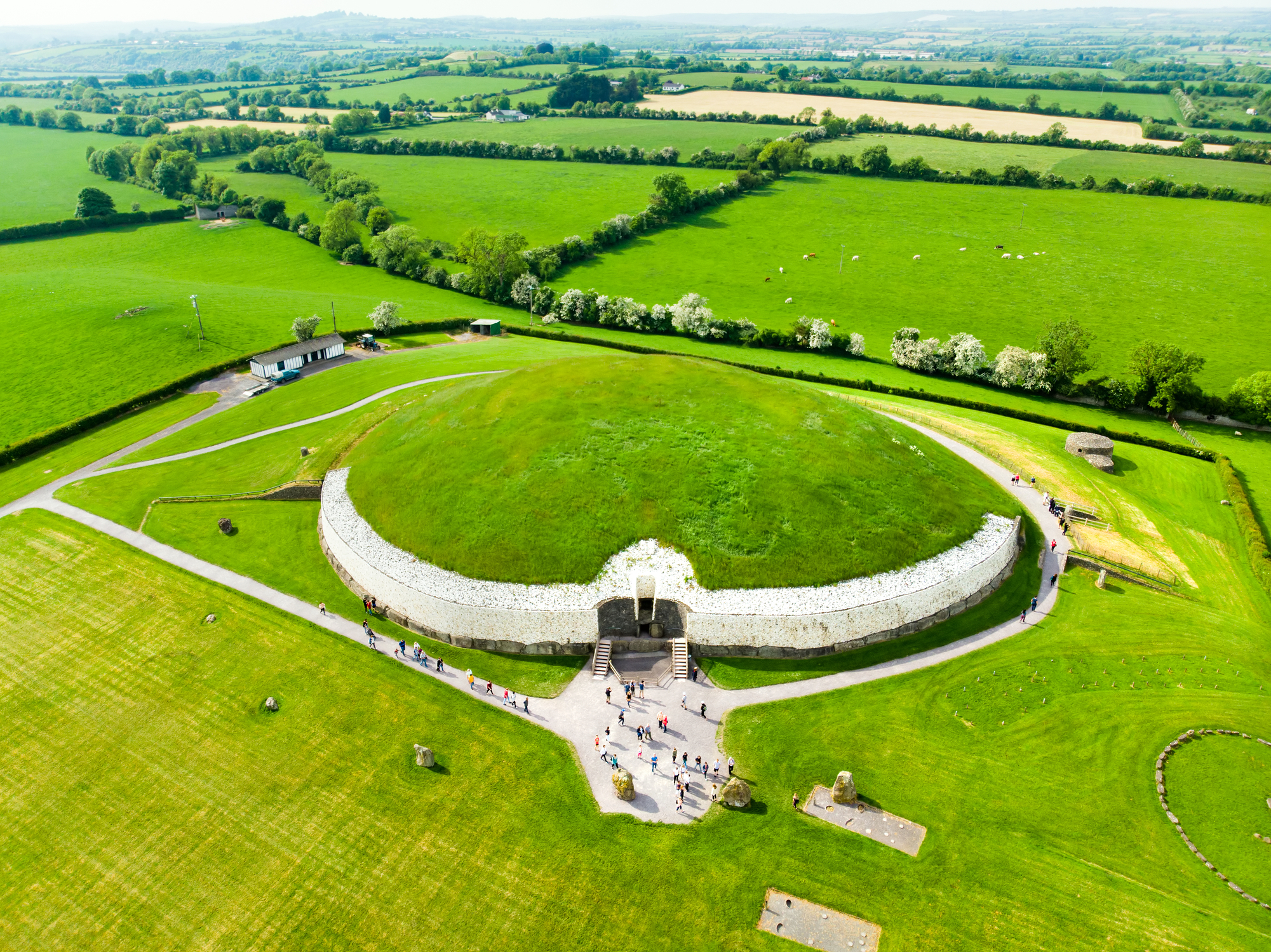
Newgrange by Julie A. Dickson

Ireland county meath mnstudio licensed

Newgrange
Newgrange, County Meath, Ireland, 2015
by Julie A. Dickson

To stand before an ancient mound
on the Irish countryside,
stones hewn and balanced,
silent structure stands sentinel,
cavern in deep darkness—
but for the winter solstice, waiting
for early morning light to
Illuminate the ritual altar.

If I almost close my eyes
I can imagine the Druid priests
rowing across deep blue water,
walking on rough paths
to the sacred mound
as the early morning light enters.
I stood where they stood once
awaiting their illumination

PHOTO: Newgrange passage tomb, County Meath, Ireland. Photo by MNStudio, used by permission.

Newgrange,_Meath

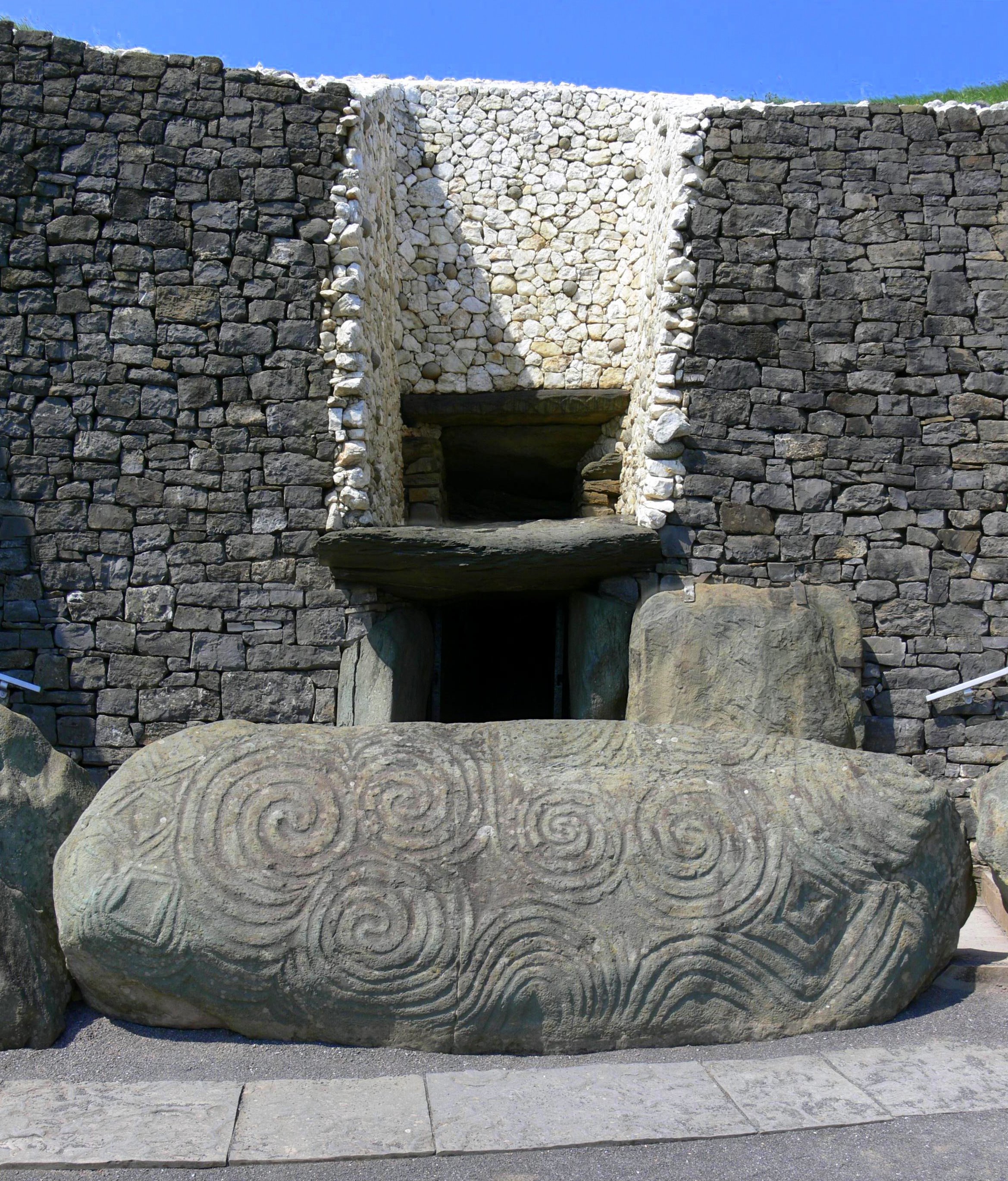
NOTE: The Newgrange site consists of a large circular mound with an inner stone passageway and chambers. Human bones and possible grave goods or votive offerings were found in these chambers. The mound has a retaining wall at the front, made mostly of white quartz cobblestones, and it is ringed by engraved kerbstones. Many of the larger stones of Newgrange are covered in megalithic art. The mound is also ringed by a stone circle. Its entrance is aligned with the rising sun on the winter solstice, when sunlight shines through a roofbox located above the passage entrance and floods the inner chamber. Watch a National Geographic video about the site here.

PHOTO: Entrance to Newgrange, and one of the site’s stones engraved with megalithic art. Photo by spudmurphy, used by permission.

NOTE FROM THE AUTHOR: The 5,000-year-old Stone Age, Neolithic Newgrange passage tomb is located in Boyne Valley, County Meath, Ireland. At the Winter Solstice, sunlight illuminates the inside of the tomb, which is believed to be part of an ancient burial ceremony. It was a fascinating place to visit, knowing that Newgrange is older than Stonehenge and the pyramids in Egypt.

kickin the wall in Ireland_Dickson

ABOUT THE AUTHOR: Julie A. Dickson is a New Hampshire poet whose work addresses nature, current events, animal welfare, elephants in captivity. Her poetry has appeared in various journals, including Ekphrastic Review, Poetry Quarterly, Blue Heron Review, The Avocet and The Harvard Press. She is a member of the Poetry Society of New Hampshire, and has coordinated workshops as well as 100 Thousand Poets for Change. Her full-length works of poetry and Young Adult fiction can be found on Amazon.

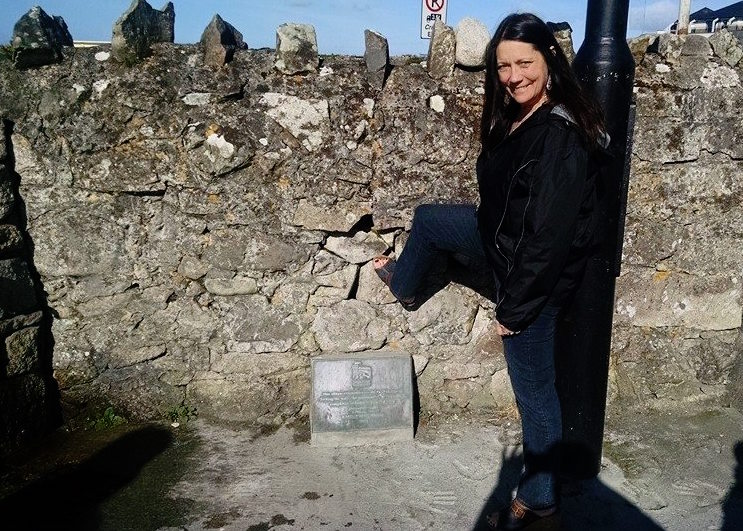
PHOTO: The author as she kicks the wall, Blackrock Point, Salthill Promenade, County Galway, Ireland. The tradition is supposed to bring good fortune.

Irish Cow Circle by Maureen Grady

cows circle

Irish Cow Circle
by Maureen Grady

I sat in a field of damp grass,
in the very center
of a Neolithic stone circle,
imagining a piece of theatre
I’d love to direct there

when eight cows approached
from the far edges of the field,
came right up to me,
until their big brown heads
encircled me,
crowded above me.

And one by one,
each lay down in the softness,
their soulful eyes
asking something of me.

I breathed in
the heat of their bodies,
the clouds of warm breath,
the sweet smell of grass,
munched in perfect rhythm.

And then,
a pure peace pervaded,
one that came from
ancient animal wisdom,
and field, stone circle, and sky.

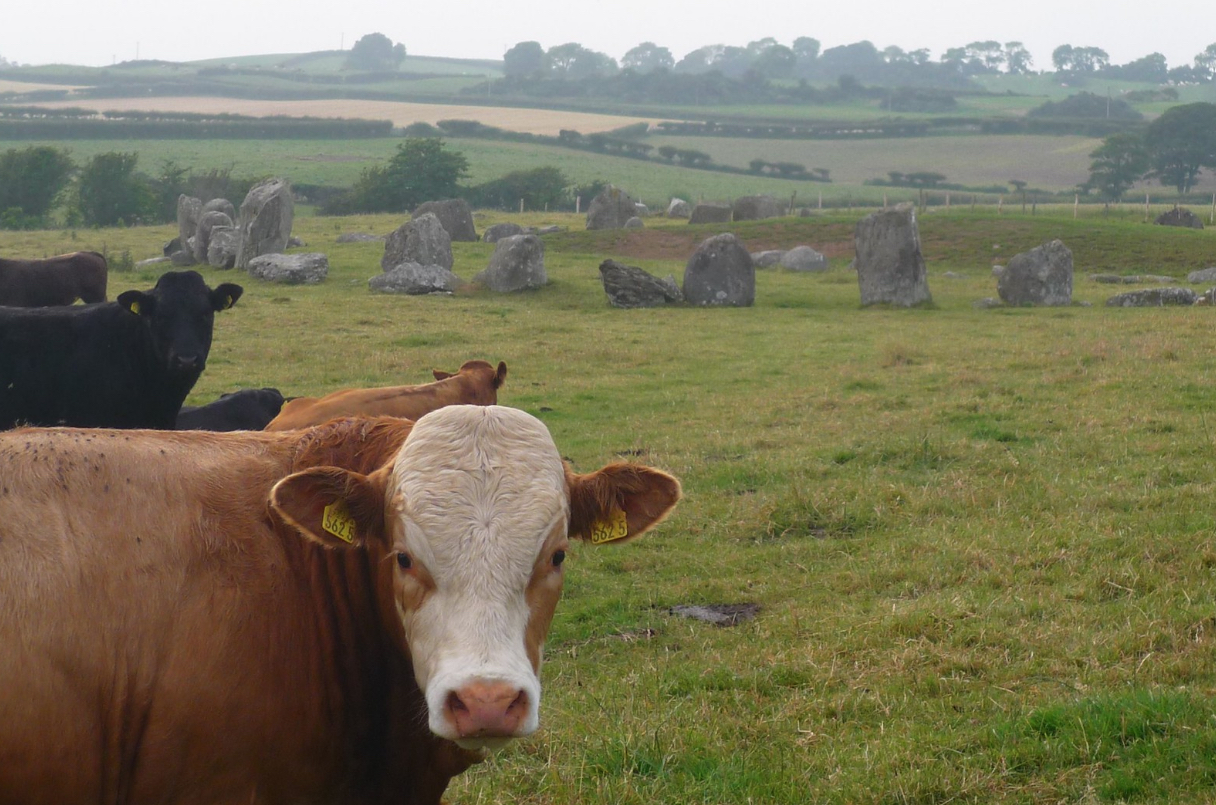
PHOTO: Cows in field with ancient stone circle, Ireland. Photo by MookManMcMook, © All rights reserved. 

stone-circle-1477834_1920

NOTE:stone circle is a circular alignment of standing stones. They are commonly found across Northern Europe, Great Britain, and Ireland, and typically date from theLate Neolithic and Early Bronze Age eras, with most concentrations appearing from 3000 BCE.  Many theories have been advanced to explain their use, usually related to providing a setting for ceremony or ritual, but there is no consensus among archaeologists as to their intended function. Their construction often involved considerable communal effort, including specialist tasks such as planning, quarrying, transportation, laying the foundation trenches, and final construction.There are approximately 1,300 stone circles in Britain and Ireland.  Although stone circles are widely distributed across the island, Ireland has two main concentrations: in the Cork/Kerry area and in mid-Ulster. 

PHOTO: Stone circle, County Down, Ireland. Photo by Klaus Hausmann, used by permission. 

IMG_8396

ABOUT THE AUTHOR: Maureen Grady is author of two books of poetry: Unpack My Heart With Words (2015), and Land of Dream and Dreamer, Poems of Ireland (2019).  Maureen is a writer, teacher, actor, producer, and private writing coach. She has taught British and Irish Literature, Shakespeare, and Creative Writing for many years. Her private creative writing conservatory has nurtured many young women writers. Maureen was fortunate to have John L’Heureux as a mentor at Stanford, and studied with Seamus Heaney  and Eavan Boland.  She has won two teaching prizes: the student-nominated “One of LA’s Most Inspiring Teachers,” and a national recognition for teaching Creative Writing from Scholastic Books given at Carnegie Hall by Tony Kushner. Maureen is a graduate of Stanford University with a BA in Literature, minor in History/Art History. She also has a Masters in Theatre. Maureen is an Irish citizen and divides her time between Ireland and America.

To My Son Upon His First Visit to Lebanon by Hedy Habra

Lebanon Anna Om Licensed

To My Son Upon His First Visit to Lebanon
by Hedy Habra

He wanted to see our summerhouse
            in the mountains of Baabdat,
enter the pictures
                          where a young woman his age,
            her long hair flowing in the wind,
guided his first steps on the terrace of the villa.
He wanted to dream in a language never learned,
            see himself reflected in familiar faces,
recapture smells and fragrances.

He finally saw the orchard his father planted
            tree after tree, green and black figs, cherries,
peaches, plums, pears, apples and almonds…
                         One hundred fruit trees
            we would not see blossoming
                         spring after spring.
            And the purple grape seeds from Japan,
the miniature green seedless Banati from Egypt,
            covering the trellis, tempting clusters hanging low,
casting shadows on the shaded patio.

The cut stone house with its tiled roof
            seemed out of place.
What ever happened
            to the one in the family album?
No longer surrounded by green mountain slopes,
nor an open view to the horizon.
            Erratic buildings sprouted like mushrooms
during the civil war.
Concrete was biting the flanks of the mountains,
            spreading like a contagious disease.

He rang the doorbell.
The tenants were friendly, inviting him in.
            They said the present owner was very proud
of his orchard, that he himself
            had planted each one of these tall, imposing trees…
He called us excited, said he wanted to buy
the house back. We could spend summers there.
Time regained, he thought,
            eager to relive our dream,
retrieve its lost broken pieces,

I tried to explain what does belonging mean exactly?
And does it really matter?

First published by Pirene’s Fountain

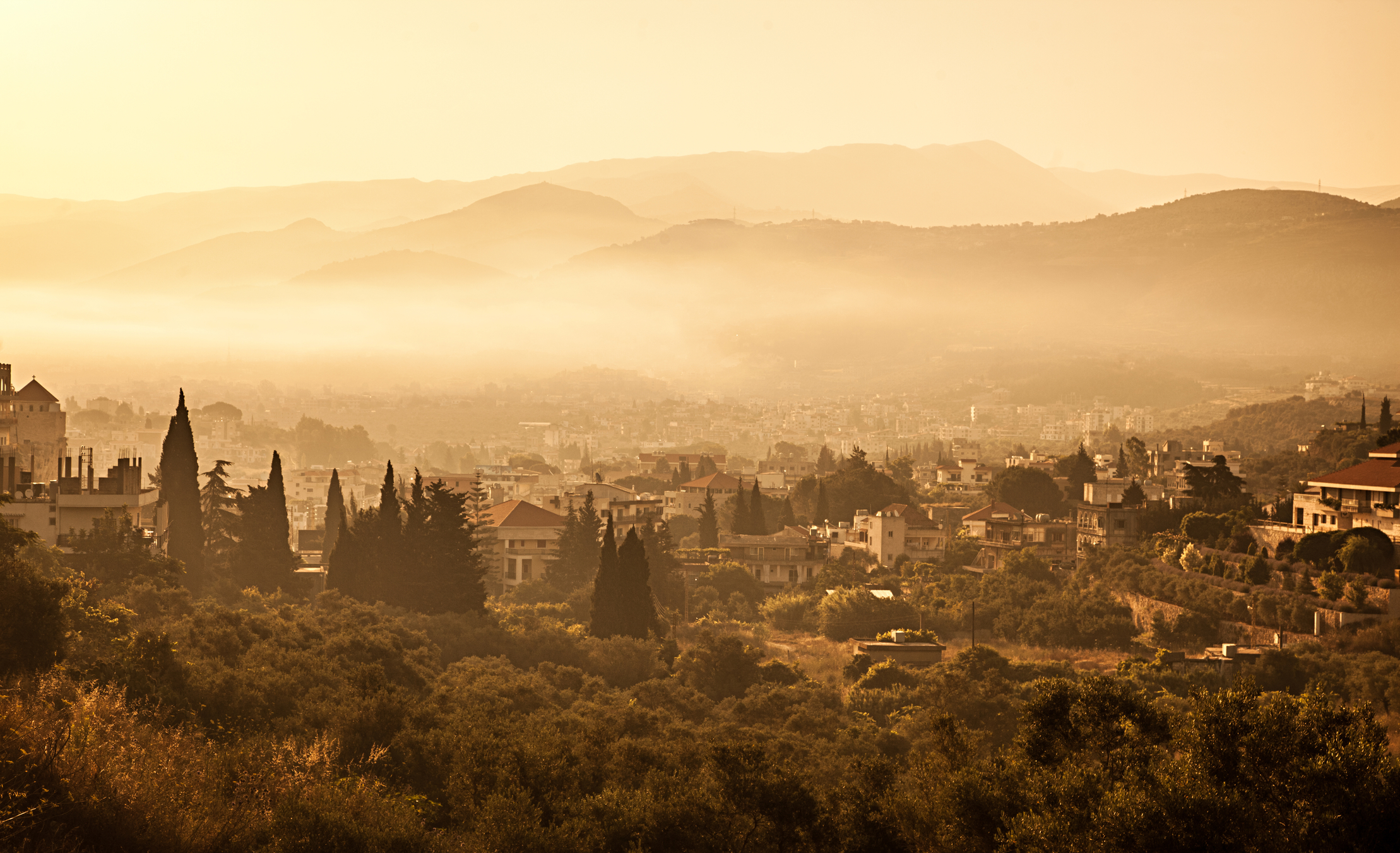
PHOTO: Mountain village, Lebanon, by Anna Om, used by permission. 

Photo of our summerhouse in Baabdat, Lebanoncopyright Hedy Habra

NOTE FROM THE AUTHOR: We left Lebanon at the onset of the civil war and lived in Europe before coming to the United States in 1981. 

AUTHOR’S PHOTO CAPTION: Our summerhouse in Baabdat, Lebanon. Copyright Hedy Habra

Habra AUTHOR PIC

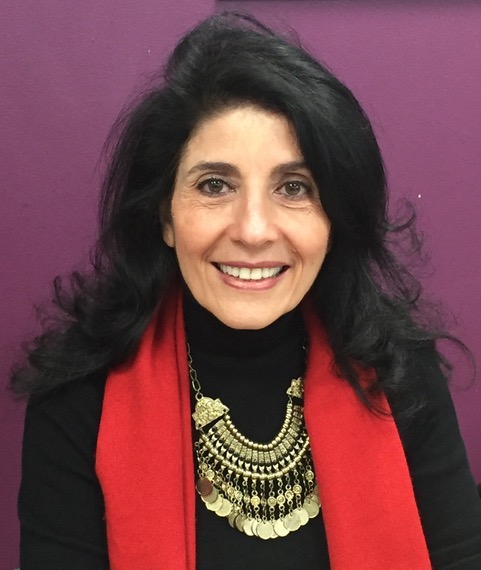
ABOUT THE AUTHOR: Hedy Habra is a poet, artist and essayist. She has authored three poetry collections, most recently, The Taste of the Earth (Press 53 2019), Winner of the Silver Nautilus Book Award, Honorable Mention for the Eric Hoffer Book Award, and Finalist for the Best Book Award. Tea in Heliopolis won the Best Book Award and Under Brushstrokes was finalist for the Best Book Award and the International Book Award. Her story collection, Flying Carpets, won the Arab American Book Award’s Honorable Mention and was finalist for the Eric Hoffer Award. Her book of criticism, Mundos alternos y artísticos en Vargas Llosa, examines the visual aspects of the Peruvian Nobel Prize Winner’s narrative. A 15-time nominee for the Pushcart Prize and Best of the net, and recipient of the Nazim Hikmet Award, her multilingual work appears in numerous journals and anthologies. Visit her at hedyhabra.com