Jeannie E. Roberts, Phoenix Park in Summer

Phoenix Park at the Confluence_Jeannie E. Roberts

Phoenix Park in Summer
by Jeannie E. Roberts

—near the confluence of the Eau Claire and Chippewa Rivers

In late December
when snow drifts and icicles freeze
when horizon’s cold haze
sparks a remembrance

I recall
each buoyant note
the vocal float
of quartets blending
mending

sowing joy across crowds
couples strolling
as rock ‘n’ roll fills the air
and children dancing—

defining beats
in the heat
on the labyrinth
at Phoenix.

Here
everything rises
shines
as community and current unite.

“Phoenix Park in Summer” appears in Nature of it All (Finishing Line Press, 2013) and was first published in the Wisconsin Poets’ Calendar, 2012.

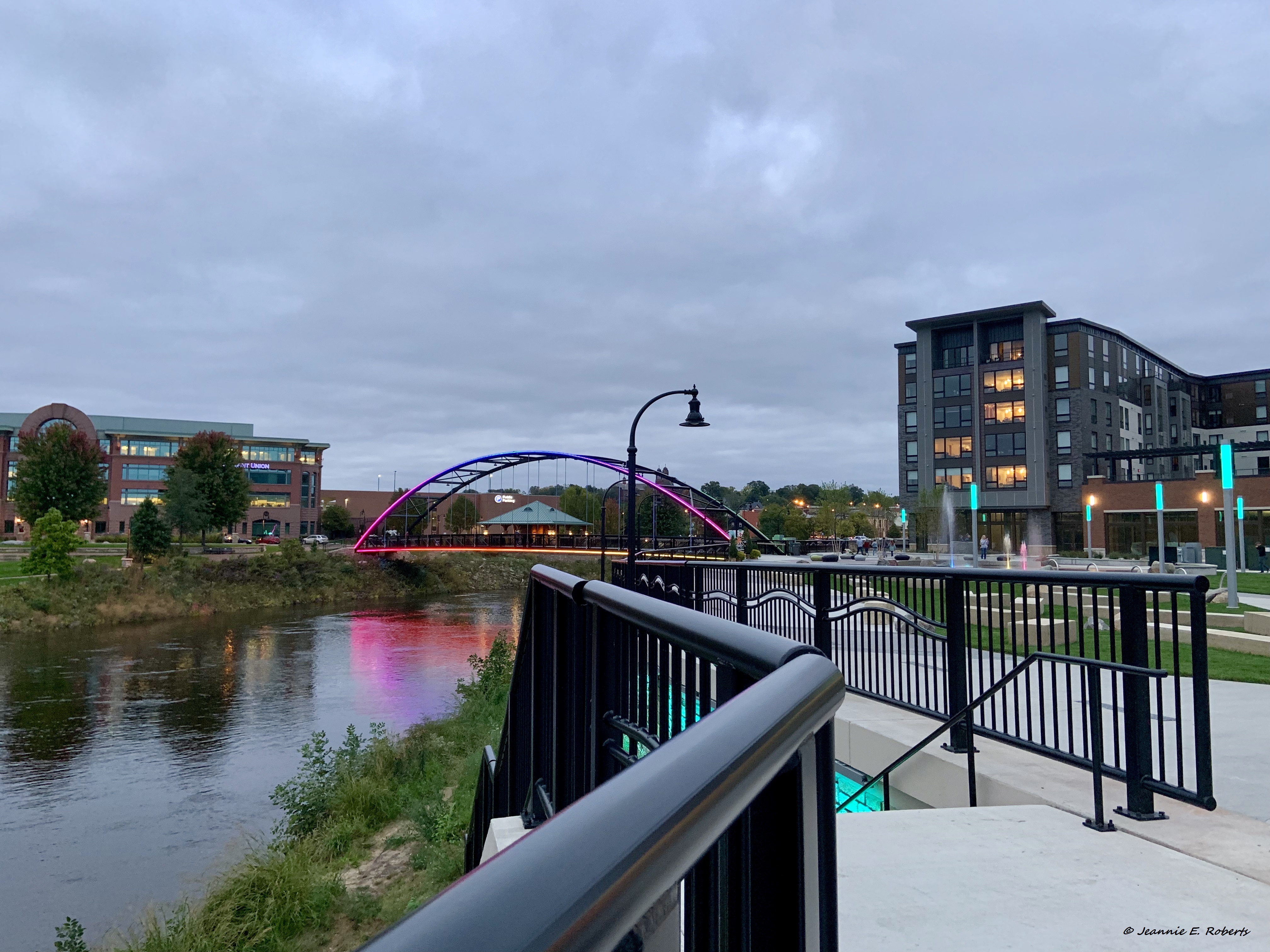
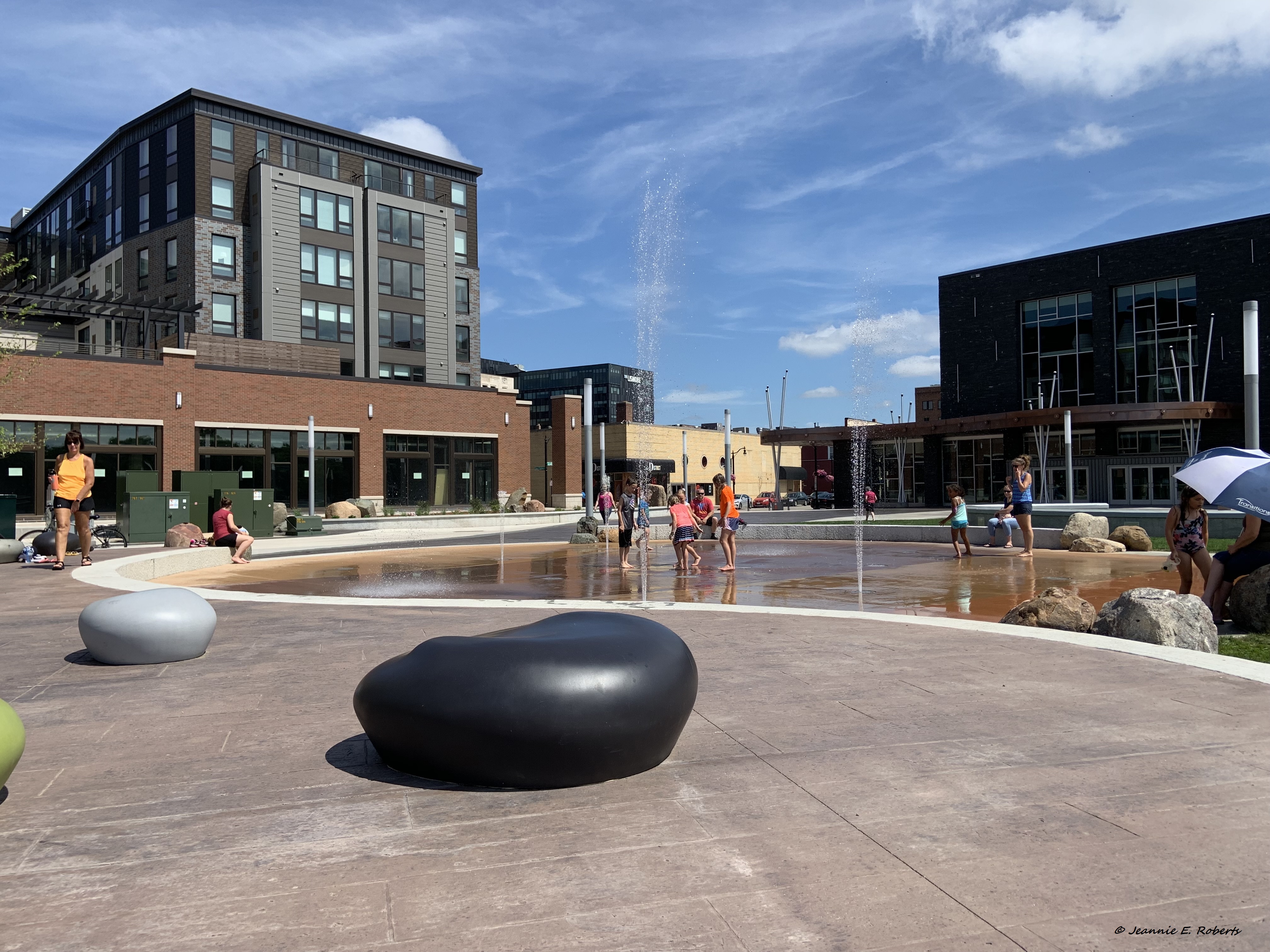
PHOTO: Phoenix Park, Eau Claire, Wisconsin, at the confluence of the Eau Claire and Chippewa Rivers. Photo © Jeannie E. Roberts, used by permission. 
Phoenix Park with Children_Jeannie E. Roberts

NOTE: Phoenix Park is a public space in downtown Eau ClaireWisconsin, located on a former brownfield site at the confluence of the Chippewa River and the Eau Claire River. In 1994, the city of Eau Claire and the Wisconsin Department of Natural Resources worked jointly to remediate the soil contamination from almost a century of industrial operations on the site. The remainder of the brownfield on the Eau Claire River frontage, owned by Northern States Power (later Xcel Energy), was remediated in 2002. Covering approximately nine acres, the park offers a walking labyrinth, a natural amphitheater, and a farmer’s market. These amenities make Phoenix Park a major gathering spot, especially during the summer months when the park hosts concerts. The park is owned and operated by the City of Eau Claire.

PHOTO: Children playing in Phoenix Park, Eau Claire, Wisconsin. Photo © Jeannie E. Roberts, used by permission. 
eauclaire wi 1

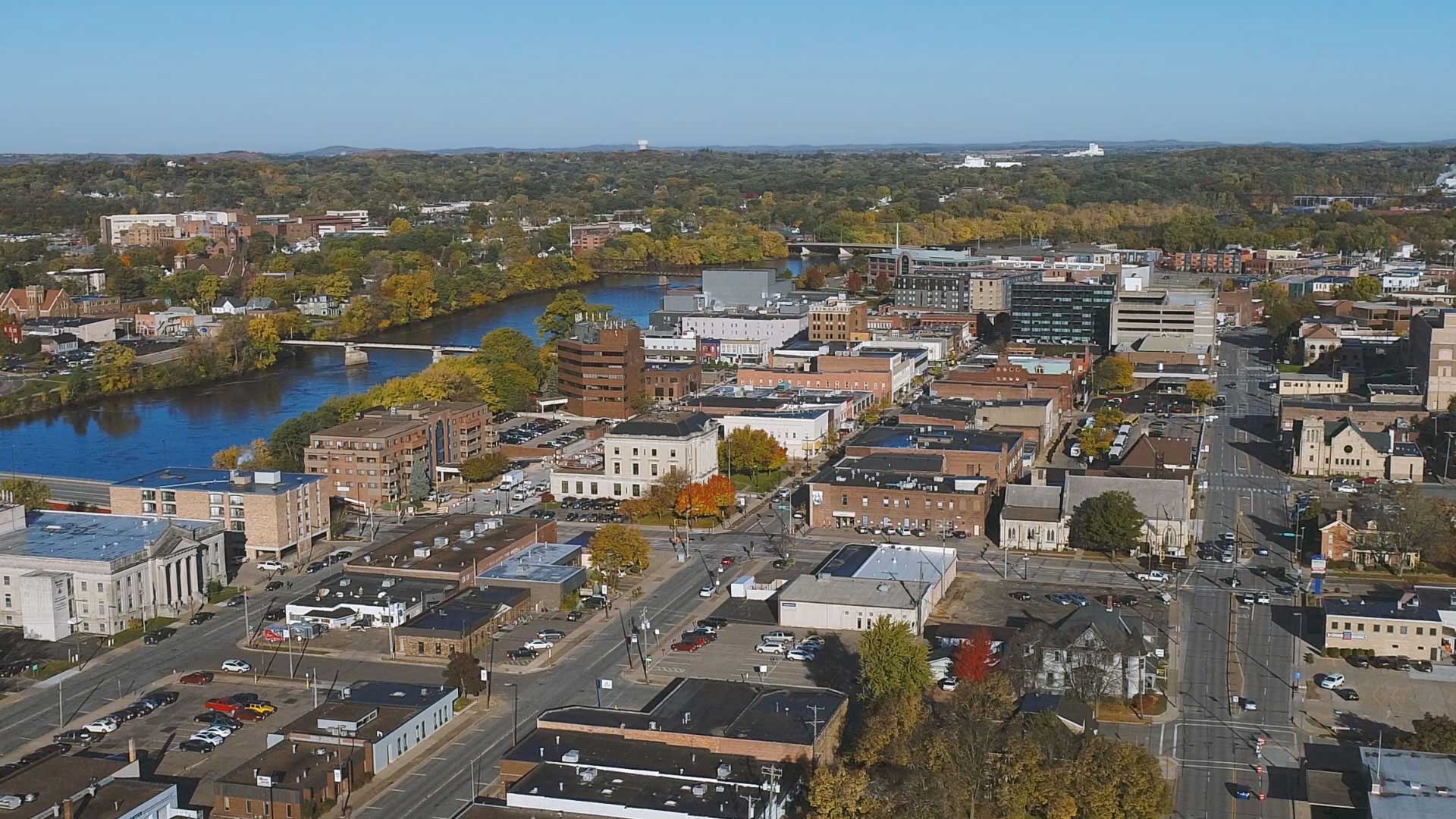
NOTE: Eau Claire, a city in west-central Wisconsin, has a population of about 65,000. It is home to the University of Wisconsin-Eau Claire. The terrain is characterized by the river valleys, with steep slopes leading from the center to the eastern and southern sections of the city. In 2007, America’s Promise named the city as one of the 100 Best Communities for Young People. Eau Claire was among the first Tree Cities in Wisconsin, first cited in 1980, and in 2017 was recognized as a national leader in advancing solar energy.  For 2014, Eau Claire was selected as one of ten All-America City Award winners.

PHOTO: Drone view of Eau Claire, Wisconsin. Image by thinkeauclaire.com

NOTE FROM THE AUTHOR: This poem was inspired by Volume One’s Thursday Night Summer Concert Series at Phoenix Park. 
Jeannie E. Roberts_AuthorShot_10.12.2020

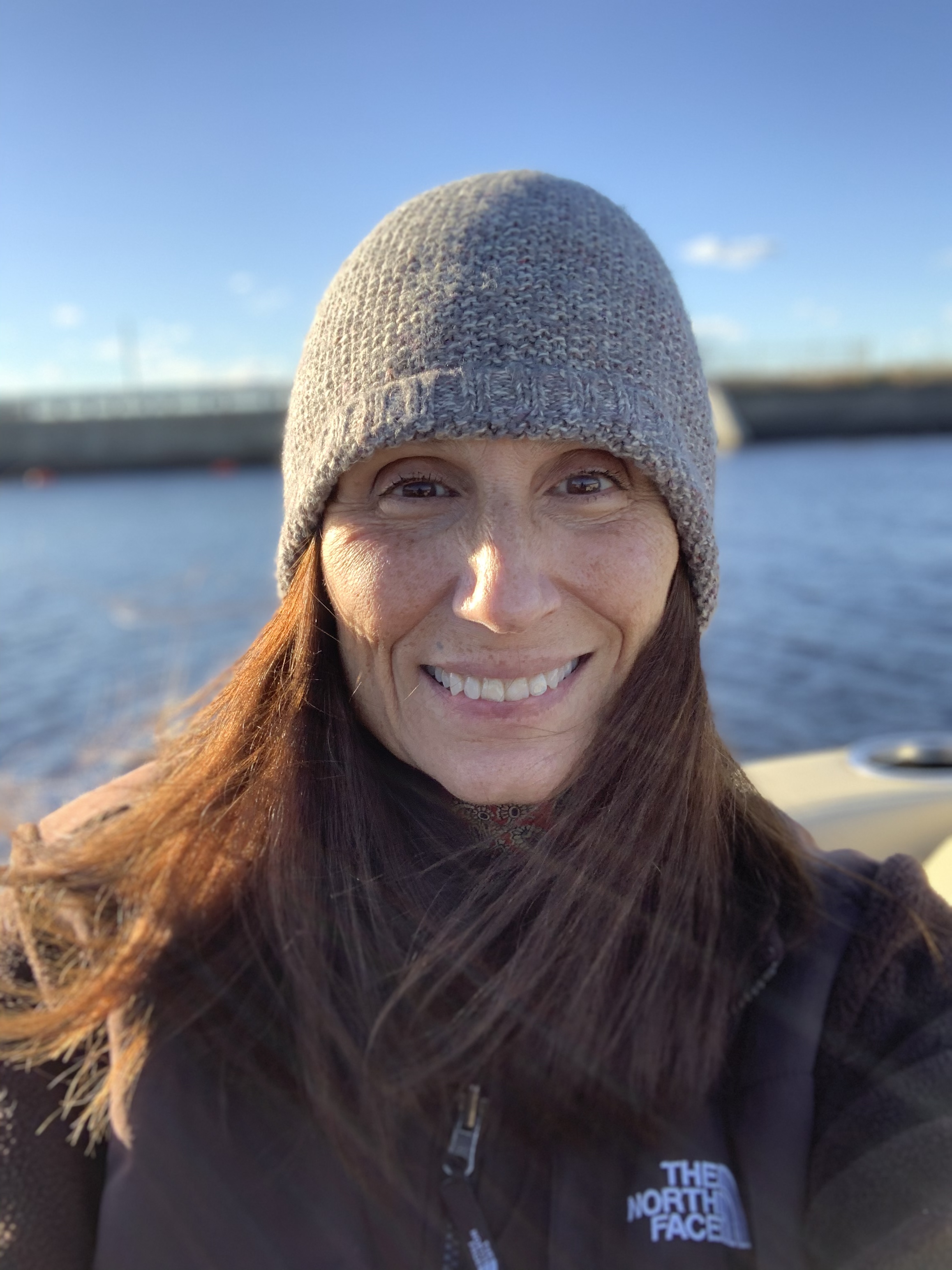
ABOUT THE AUTHOR: Jeannie E. Roberts has authored six books,  including The Wingspan of Things (Dancing Girl Press, 2017), Romp and Ceremony (Finishing Line Press, 2017), Beyond Bulrush (Lit Fest Press, 2015), Nature of it All (Finishing Line Press, 2013), and Rhyme the Roost! A Collection of Poems and Paintings for Children (Daffydowndilly Press, an imprint of Kelsay Books, 2019). Her work appears in North American and international online magazines, print journals, and anthologies. She is poetry reader and editor of the online literary magazine  Halfway Down the StairsWhen she’s not reading, writing, or editing, you can find her drawing and painting, or outdoors photographing her natural surroundings.
Poem for Oneonta, New York by Joan McNerney

NY Ruth Peterkin licensed

Poem for Oneonta, New York
by Joan McNerney

We sleep with trains
dreaming in Indian names.
Otsego, Otsego long lake
of night trailing
snow showers of light.

In black wells of
solitude through
silent fixed stars
we search for trains
brightened by Indian names.

Neahwa Neahwa shadows
of Indian names filled
with fragrant spruce and
cooling winds of trains.

Whistling this winter
long lonely trains
freight trains boxcar trains
riding past avenues marked
with Indian names.

We sleep with train
dreaming in Indian names.
Susquehanna Susquehanna
long hill of light trailing
this December night.

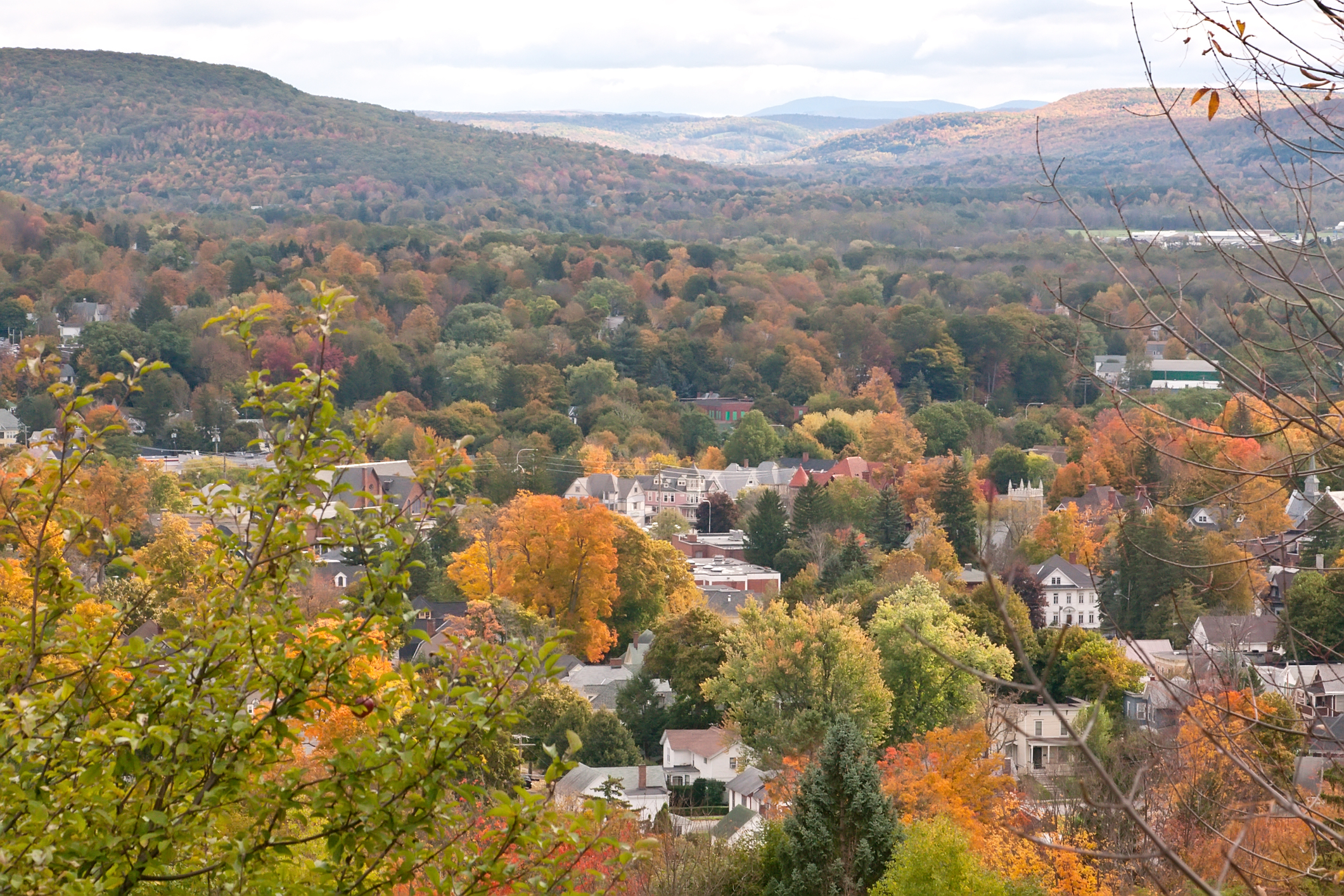
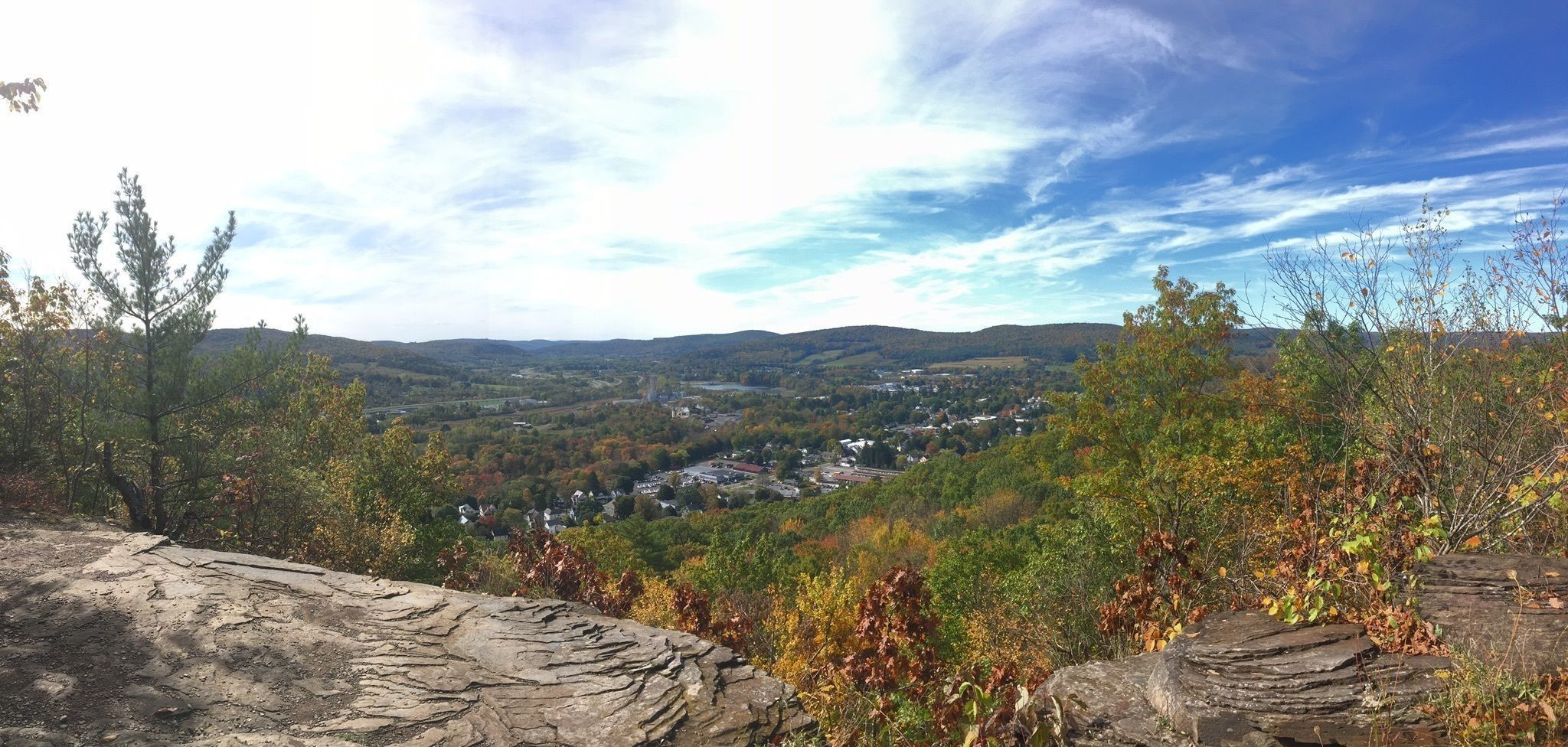
PHOTO: Aerial view of Oneonta, New York, in autumn. Photo by Ruth Peterkin, used by permission.

nan crews table rock copy

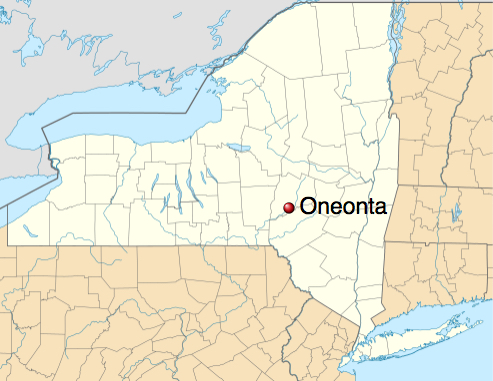
NOTE: Oneonta, a city in southern Otsego County, New York, is one of the northernmost cities of the Appalachian Region. The 2010 U.S. Census listed Oneonta’s population at 13,901. Its nickname is “City of the Hills.” While the word “oneonta” is of undetermined origin, it is popularly believed to mean “place of open rocks” in the Mohawk language. This refers to a prominent geological formation known as “Table Rock” at the western end of the city. The city is surrounded by the town of Oneonta, a separate municipal and political jurisdiction.

PHOTO: View of Oneonta, New York, from Table Rock (private property). Photo by Nan Crews, All Rights Reserved.

2014-South-End-photo-credit-Tony-Photo

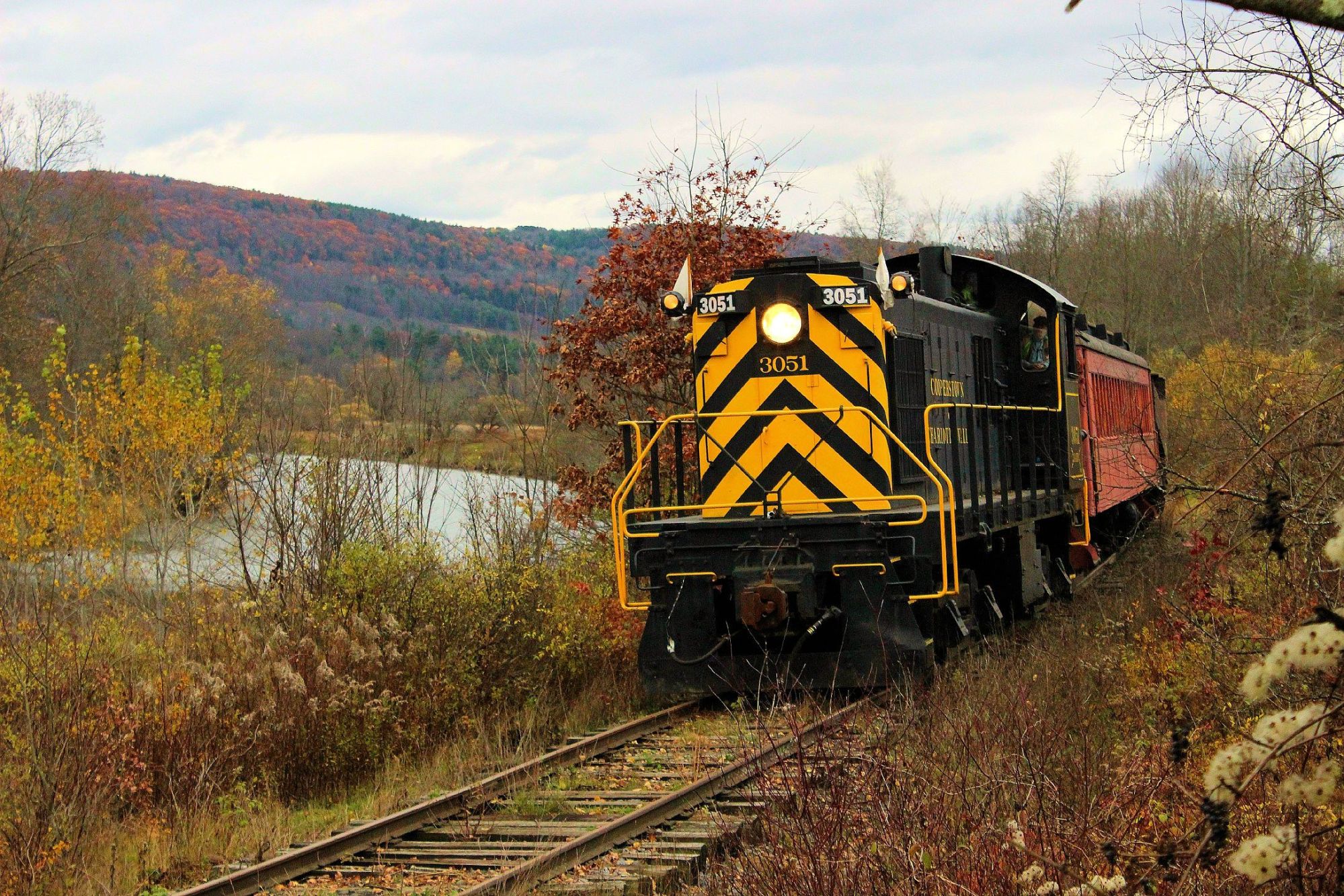
In pre-pandemic days, the Cooperstown and Charlotte Valley Railroad, built in 1869, offered a fall foliage tour in upstate New York. The journey began at Milford Depot in Oneonta, New York, and the 2.5-hour ride took passengers through the Susquehanna River Valley with rolling hills, farm fields, and dazzlingly forests. Here’s hoping the train will be up and running in 2021!

PHOTO: Cooperstown and Charlotte Valley Railroad train near Oneonta, New York. Photo by Tony Photo, All Rights Reserved.

oneonta ny map

NOTE FROM THE AUTHOR: For a few years, I lived in Oneonta after leaving New York City.  It is a lovely sleepy town.  I moved to another town, Ravena, which is even smaller and quieter.

Joan

ABOUT THE AUTHOR: Joan McNerney’s poetry is found in many literary magazines, such as Seven Circle Press, Dinner with the Muse, Poet Warriors, Blueline, and Halcyon Days, as well as in four Bright Hills Press anthologies, several editions of the  Poppy Road Review, and numerous Spectrum Publications.  Her latest title, The Muse In Miniature, is available on Amazon.com and Cyberwit.net.  She has four Best of the Net nominations.

Author photo illustration by Scot Moorhouse

Shoes by Rafaella Del Bourgo

Hungary Ilona Bradacova licensed

Shoes
by Rafaella Del Bourgo

The cruise ship slides down the River Danube,
past tree-lined banks,
small villages, each punctuated with a church spire,
and clifftop ruins of castles,
pockmarked and crumbling.
We are wending our way through a map
of bruises and scars
where flesh has been opened,
where it has been sewn shut,
opened and sewn shut,
again and again.

Near Nuremberg,
Hitler’s parade ground,
thousands of leather soles
crunching on gravel, squelching on grass.
Walls white as ash,
the rubble and soot have long since
been washed away.

In front of the Imperial Hotel,
where Hitler stayed in Vienna,
the local guide says
Thank you for saving us from them.
We stand in the shade of trees
where hidden sparrows
greet the morning.
Those of us who have forgiven,
but not forgotten, wonder –
who will sing us through the next war?

At the Chain Bridge in Budapest,
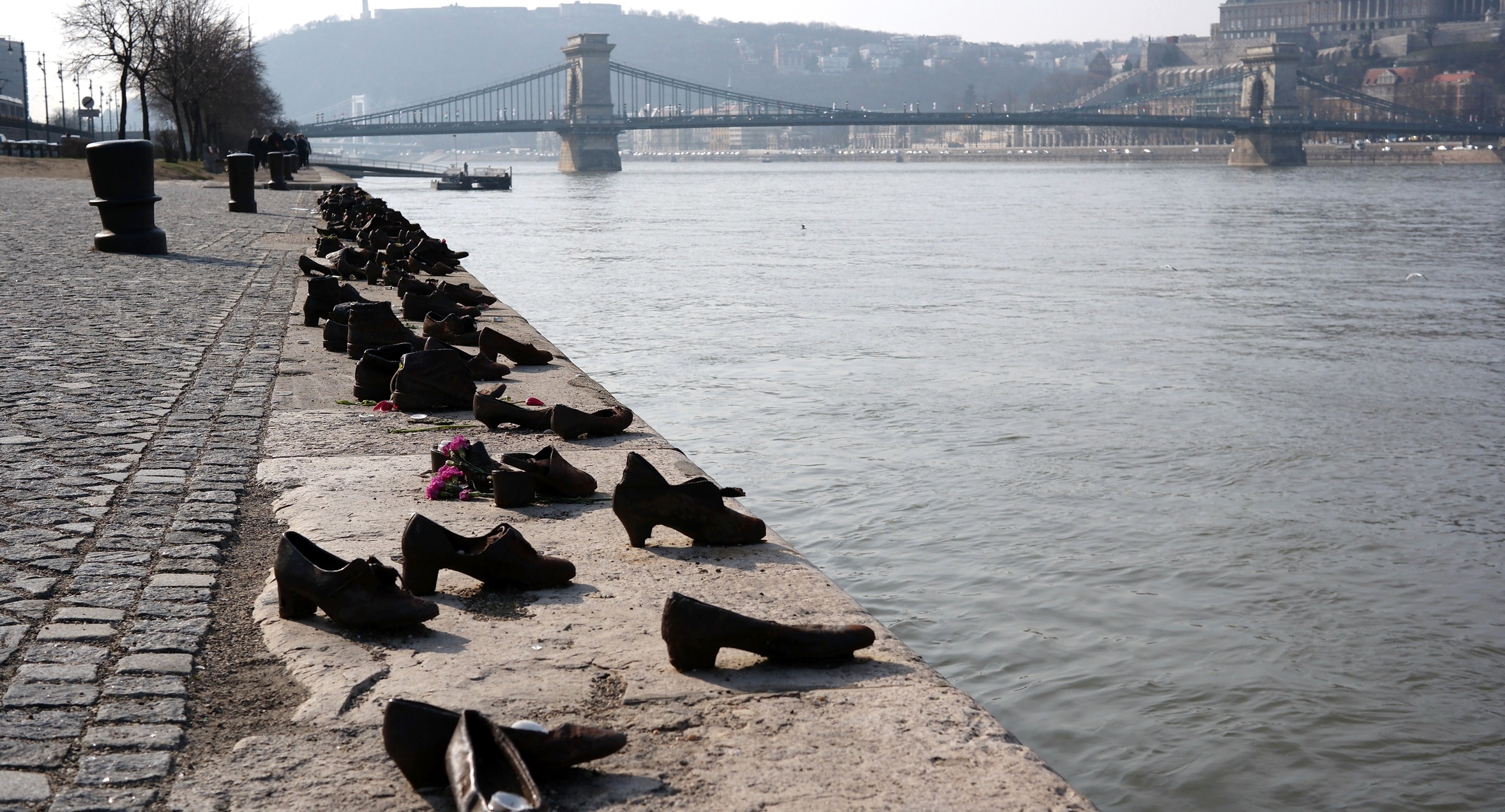
a Holocaust memorial –
60 pairs of bronze shoes
secured to the bank of the river.
Men’s work boots,
women’s high heels,
a small child’s lace-ups
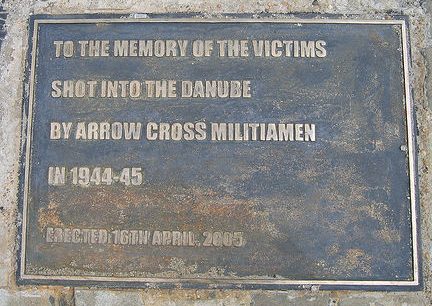
commemorate those shot at the edge of the Danube
during the Arrow Cross terror,
their fallen bodies
polluting the water for many miles
downstream.

PHOTO: Shoes on the Danube Bank Memorial, Széchenyi Chain Bridge, Budapest, Hungary. The Széchenyi Chain Bridge spans the River Danube between Buda and Pest, the western and eastern sides of Budapest. (Photo by Ilona Bradacova, used by permission.)

Memory-Text-shoes

NOTE: The Shoes on the Danube Bank Memorial was erected on April 16 2005, in Budapest, Hungary. Film director Can Togay conceived the project, and created it on the east bank of the Danube River with sculptor Gyula Pauer. The memorial includes 60 pairs of metal shoes, which are attached to the stone embankment. Cast iron signs that are featured at intervals in Hungarian, English, and Hebrew read: To the memory of the victims shot into the Danube by Arrow Cross militiamen in 1944–45. Most of the murders took place in December 1944 and January 1945, when the members of the Hungarian Arrow Cross Party police removed as many as 20,000 Jews from the newly established Budapest ghetto and executed them along the river bank. The captors ordered the victims to take off their shoes, and then shot them at the edge of the water so that the bodies fell into the river and were swept away. 

PHOTO: Sign at Shoes on the Danube Bank Memorial (Budapest, Hungary).

hungary karen foley licensed

NOTE FROM THE AUTHOR: In 2015, my husband and I took a Viking River Cruise down the Danube through Germany, Austria, and Hungary. At each of the frequent stops, a local guide gave us a tour. We saw things we never would have found on our own, and we learned a lot about the history of the region, especially WWII. Many buildings and people still bear scars from that time.

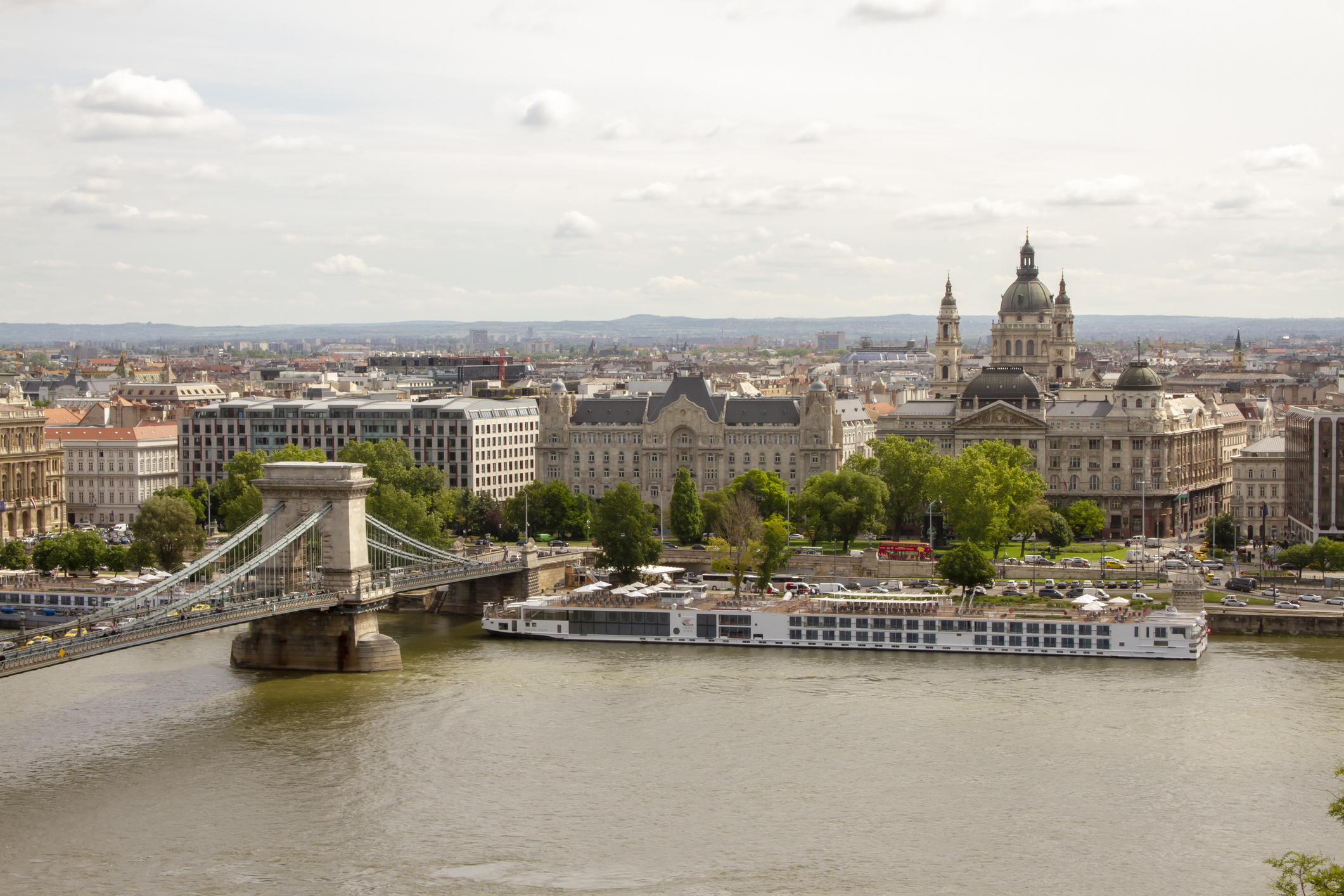
PHOTO: Aerial view of River Danube, the Szécheny Chain Bridge, and cruise boat in Budapest, Hungary. The domed St. Stephen’s Basilica appears in the background. (Photo by Karen Foley, used by permission.) Budapest is the capital and the most populous city of Hungary, with an estimated population of 1,750,000. Hungary is located in Central Europe, bordering Slovakia to the north, Ukraine to the northeast, Romania to the east and southeast, Serbia to the south, Croatia and Slovenia to the southwest, and Austria to the west. 

del-bourgo

ABOUT THE AUTHOR: Rafaella Del Bourgo’s writing has appeared in Puerto Del Sol, Rattle, Oberon, Nimrod, and The Bitter Oleander. She has won many awards including the League of Minnesota Poets Prize in 2009. In 2010, she won the Alan Ginsberg Poetry Award. She was also the 2010 winner of the Grandmother Earth Poetry Award.  In 2012 she won the Paumanok Poetry Award.  In 2013 she was the recipient of the Northern Colorado Writers first prize for poetry and in 2014, the New Millennium Prize for Poetry.  In 2017 she won the Mudfish Poetry Prize and was nominated for the third time for a Pushcart Prize.  Her chapbook Inexplicable Business: Poems Domestic and Wild was published by Finishing Line Press.  She lives in Berkeley, California, with her husband and cat.

Approaching Dublin — Coming Home by Ken Hartke

Poolbeg_lighthouse,_marking_the_sea_end_of_Great_Bull_Wall_at_the_entrance_of_Dublin_Port

Approaching Dublin — Coming Home
by Ken Hartke

I
The first smudge of low hills revealed themselves.
We approached across a calm and sunlit sea.
A few islands. Then an old tower. Then a lighthouse.
Then we arrived — to a safe harbor,

We came to Dublin and Ireland by sea — on purpose.
That is the way my people left — by sea. A few at a time.
That was the way the Vikings and the Celts first saw it.
That was my Irish ancestors’ last glimpse of home.

I was thinking about them as I retraced their steps.
My first visit, I did not expect it to feel like a returning.
As soon as I saw it, it seemed like coming home.
The passage was easy, and the place seemed familiar.

There were no gruff queries of “Who are you?” and
“What are you doing here?” Just a spoken welcome.
I’m used to crossing borders — it isn’t always easy.
This was a different experience: “Of course, you’re here.”

II
I’m a good part Irish. Not necessarily “the” good part
if you knew the whole story. My people survived the
potato famine and left for America to find tenements
and tuberculosis and staggering infant mortality.

The parents left grown children behind and never returned.
They were from Kerry, the “Wild West,” and dubbed “illiterate,”
at least in English. They knew the old language, old ways.
They knew old superstitions. I still never put shoes on a table.

The Irish remember. They know grudges and stories.
The so-called “Luck of the Irish” is a fiendish old lie.
Only a few of my folks lived to put down new roots.
In a clutch of ten kids only three ever really made it.

III
The curious locals asked, “Where are you from?” We’re obviously
Americans so they meant in Ireland. Were they waiting for someone?
We said Kerry there was always a response. “Ah…you are in for it.”
We wondered: was that good or bad? We pressed on.

Our own history and locations are murky. We knew Tralee
and we knew about Scartaglen and suspected Dingle and
Ballyferriter. All were beautiful places, even in the rain.
The people were friendly, but the weather was not.

An Atlantic storm was thrashing the coast. Wind and fog.
They said, “You surely didn’t come here for the weather.”
The wind nearly blew us away and the waves were crashing.
We are desert dwellers. We know wind but not like this.

IV
The pandemic arrived in Dublin one day before we did.
It chased us across Ireland. We bumped elbows in Galway.
The schools all closed, and the hospital numbers added up.
We stayed a week in a cottage in Ballyferriter, waiting.

The weather improved every day. We roamed the headlands.
We visited a couple of Dingle pubs and restaurants before they
all closed. We burned peat in the stove to keep warm.
Moving on, Cork City was shut tight — no St. Patrick’s Day.

We attended the last Mass at a large church in Cork City.
The priest dragged it out long for the few worshipers there.
Dublin, in shock, was mostly locked up when we returned.
Our hotel closed, and they moved us to a different place.

The news from America was not good and hard to believe.
Things were getting out of hand, but we had to go home.
A few asked us to stay as if that was an option. So tempting.
Approaching was easy but leaving Dublin was hard.

The Irish might wander but never forget and are never forgotten.

PHOTO: Poolbeg Lighthouse, located at the mouth of the River Liffey, near Poolbeg—an artificial peninsula extending into Dublin Bay. First established in 1767, the lighthouse initially operated on candlepower, and changed to oil in 1786. The building was redesigned and rebuilt into its present form in 1820.

Ireland stefano valeri licensed

NOTE FROM THE AUTHOR: My daughter and I went to Ireland in March 2020 to walk the Dingle Way and to search for family roots in County Kerry. This was our first trip, spending three weeks in Ireland, and it was a great experience. We crossed by sea from Wales to Dublin after a few days in London. The pandemic caught up with us there, but the Irish seemed particularly calm and steadfast in their reactions. They have a sense that they have seen worse and came through it. Fifty thousand people volunteered to be “on-call” health workers while we were there.

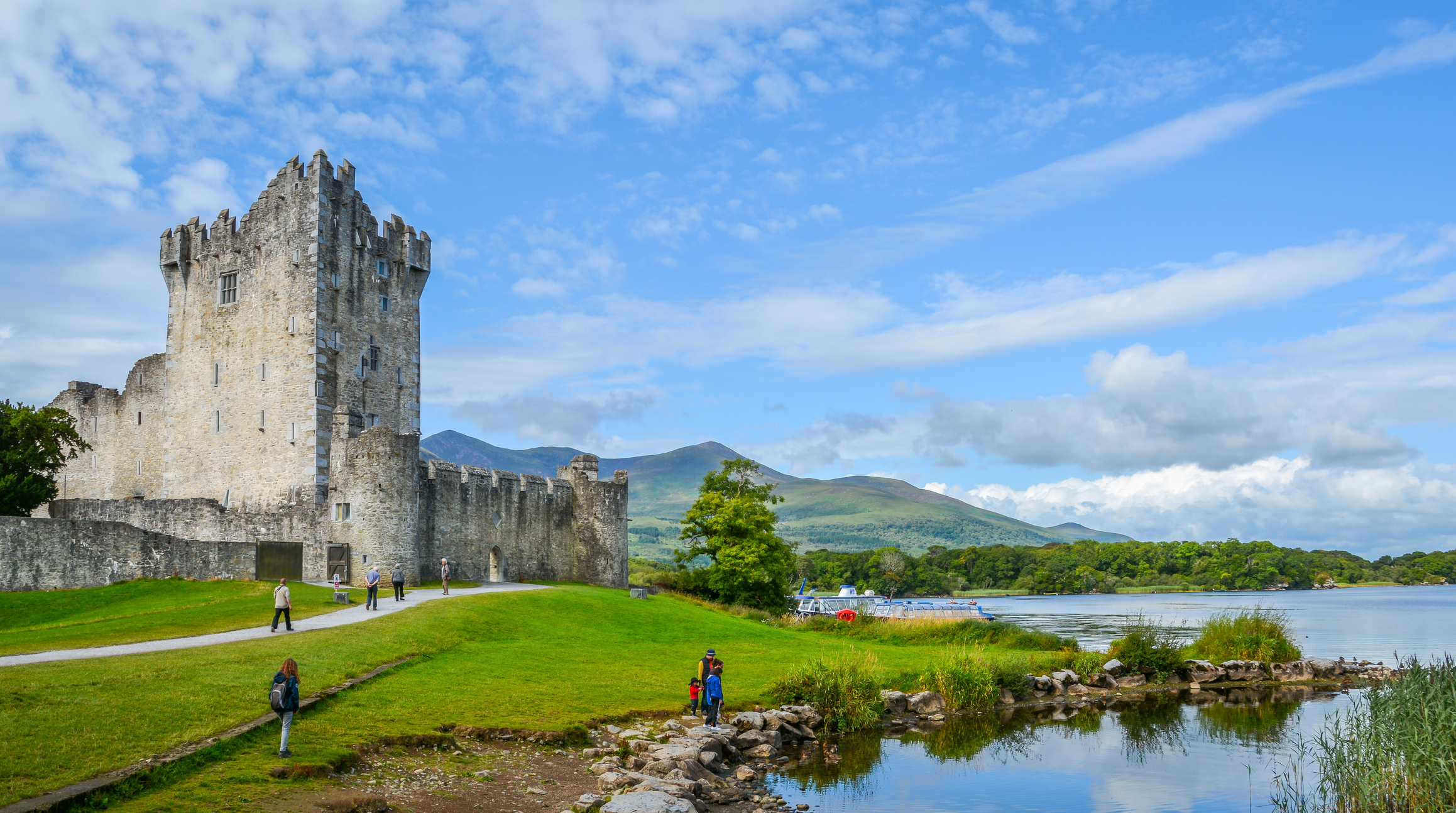
PHOTO: Ross Castle, a 15th-century tower house and keep on the edge of Lough Leane, in Killarney National ParkCounty Kerry, Ireland. The castle is the ancestral home of the Chiefs of the Clan O’Donoghue.  Photo by Stefano Valeri, used by permission. 

hartke-3 (1)

ABOUT THE AUTHOR: Ken Hartke is a writer and photographer from the Rio Grande Valley in New Mexico, but was originally planted and nourished in the Midwest’s big river valleys. Always a writer, his writing was mainly work-focused until he landed in New Mexico in 2013 seeking a new second act. The state has been very welcoming. His New Mexico photography now inspires much of his writing — and sometimes the other way around. The great backcountry continually offers itself as a subject. He has contributed work for the Late Orphan Project’s anthology, These Winter Months (The Backpack Press), Silver Birch Press, and Foliate Oak Literary Magazine. He keeps an active web presence on El Malpais.

The Words, Distant Now, and Mitred, Glint                 by Jonathan Yungkans

England licensed

The Words, Distant Now, and Mitred, Glint
               after John Ashbery
by Jonathan Yungkans

A silent, exploding kaleidoscope, set in stone and set in anything but stone—
the glassine whirl—white and red and a blue that could only be Winchester,
its West Window shattered—Biblical scenes captured like insects in amber

scattered by vandalizing Roundheads when they chucked the bones of kings,
with their divine right, to wind and clatter, left splayed on the cathedral floor.
Partitioners gathered and secreted the glittering fragments, precious as relics,

later piecing them together into a Rashomon to defy Humpty Dumpty wisdom
while departing, prescient, toward Picasso and Braque—it’s not what you see
but what you know is there which you decide to show. In all its sharp angles,

a cutting truth—each dear image and account, held together in leaded, shatters
within the brain’s cathedral. We reassemble the flying jumble the best we can.
Perhaps that’s its true, intrinsic beauty—the pregnancy of meaning my pastor

claimed the Bible has—a constant rebirthing like so many leaves and flowers
the sun brings through this Gothic arch, framed in long, thin, elegant traceries
that have since become my mind. A face, fragment of a crown, robe or hand—

it’s like when depression struck me so hard, I couldn’t remember the alphabet,
read past a letter’s straight lines and curves—firm and cerebral, like a stroke.
What reassembled in my mind in enforced silence, was like this some time—

a crimson fabric swath, a rectangle of sky, a bright yellow padded armchair—
hues that glimmer before me in tinted glass, patterns unset and reconvened
into the occasional familiar image flashing back to me in afternoon sunlight.

PHOTO: Winchester Cathedral, Hampshire, England, with the West Window at the center of the building’s facade. Photo by Andy Mayes, used by permission. 

NOTE: Winchester Cathedral was founded in 642 on a site immediately to the north of the present building, which was consecrated in 1093. Following the outbreak of the Civil War in 1642, Cromwell‘s forces smashed the cathedral’s renowned stained glass West Window. After the restoration of the monarchy in 1660, artisans assembled the broken glass at random, with little attempt to reconstruct the original images. 

england david benton licensed copy

NOTE FROM THE AUTHOR: This poem came through two events—a visit to Winchester Cathedral in 1980, when I saw the West Window for myself, and a severe depressive episode in 2006, which left me incapacitated and unable to hear anything other than complete silence. In retrospect, I realized the window’s total import—to cherish beauty where we can, in what might not be reassembled perfectly from its former glory but which still has its own validity and import. The poem’s title, “The Words, Distant Now, and Mitred, Glint,” is a line from John Ashbery’s book-length poem Flow Chart.

PHOTO: Portion of Winchester Cathedral’s West Window. Photo by David Benton, used by permission. 

yungkans_author_pic-1

ABOUT THE AUTHOR: Jonathan Yungkans is a Los Angeles-based writer and photographer with an MFA from California State University, Long Beach. His work has appeared in San Pedro Poetry Review, Synkroniciti, West Texas Literary Review, and other publications. His second poetry chapbook, Beneath a Glazed Shimmer, won the 2019 Clockwise Chapbook Prize and is slated for release by Tebot Bach Publishing in 2020.

A Champs-Élysées Stroll, 1980 by Jeanie Greenfelder

lawless1-capture-PA3NrjNhLtE-unsplash copy 2

A Champs-Élysées Stroll, 1980
by Jeanie Greenfelder

On a torrid day, traffic and tourists sweat
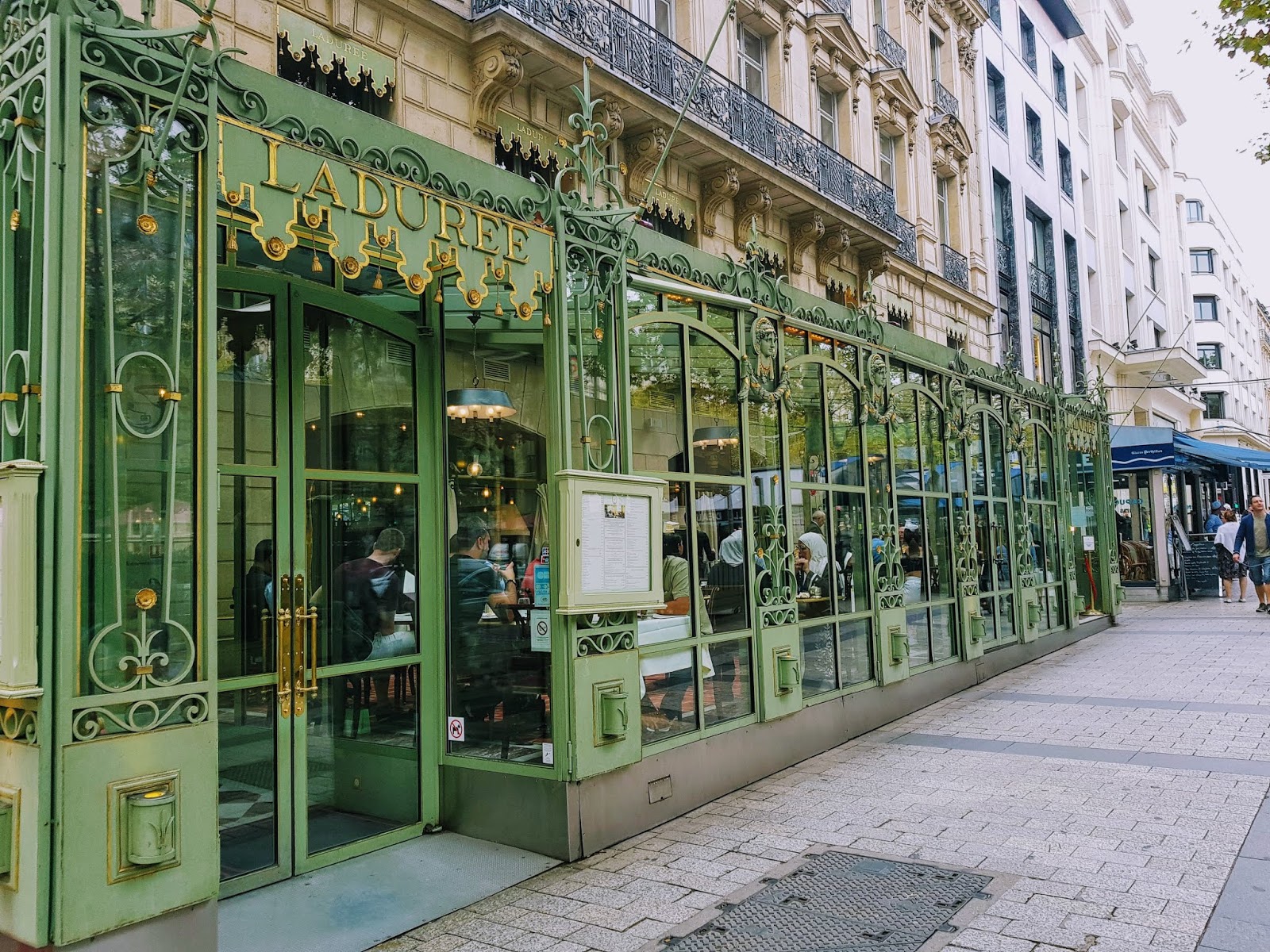
and we trudge toward Café Ladurée.
I’m determined to taste the famed macarons
my friend raved about. 

My husband sights a nearby brasserie
and wants to skip the Café Ladureé,
souring my Paris magic.
I hurl vintage hurts at him:
You don’t love me. You never loved me.
His eyes flare and his lips quiver.

Then his body snakes across ten lanes of cars,
leaving me gilded in guilt, scared and stranded,
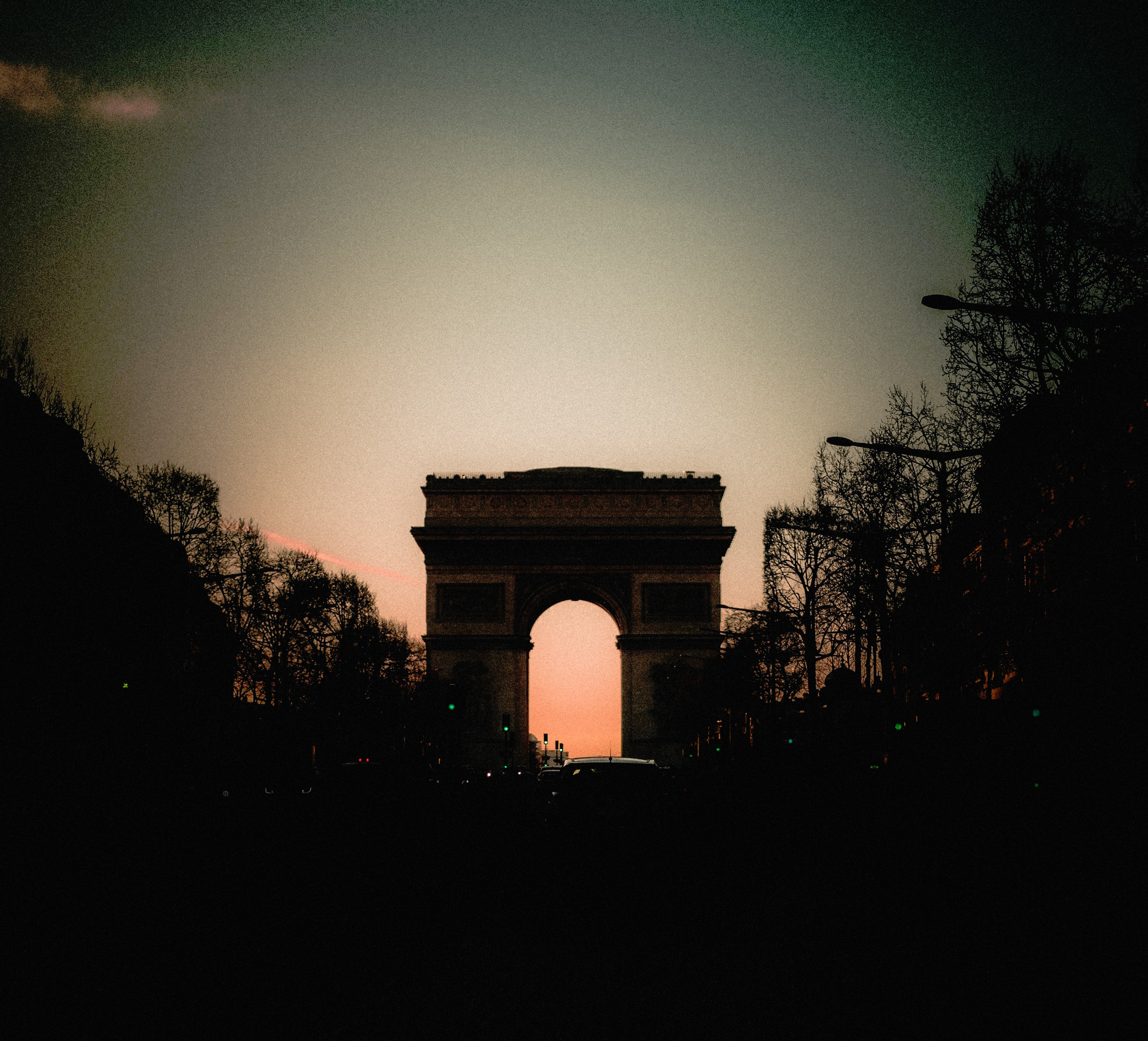
staring at the Arch of Triumph.
He had stopped smoking,
and returns, puffing a cigarette,
punishing me, hurting himself.

Two tired tourists call a truce.
We march in league down the Champs
toting a memory, a slice of time
toasted with heat, hot words, and smoke.

This poem appears in the author’s collection Biting the Apple (Penciled In, 2012).

PHOTO: Arc de Triomphe, Avenue des Champs-Élysées, Paris, France. Photo by Lawless Capture on Unsplash

Avenue_des_Champs-Élysées_July_24,_2009_N1

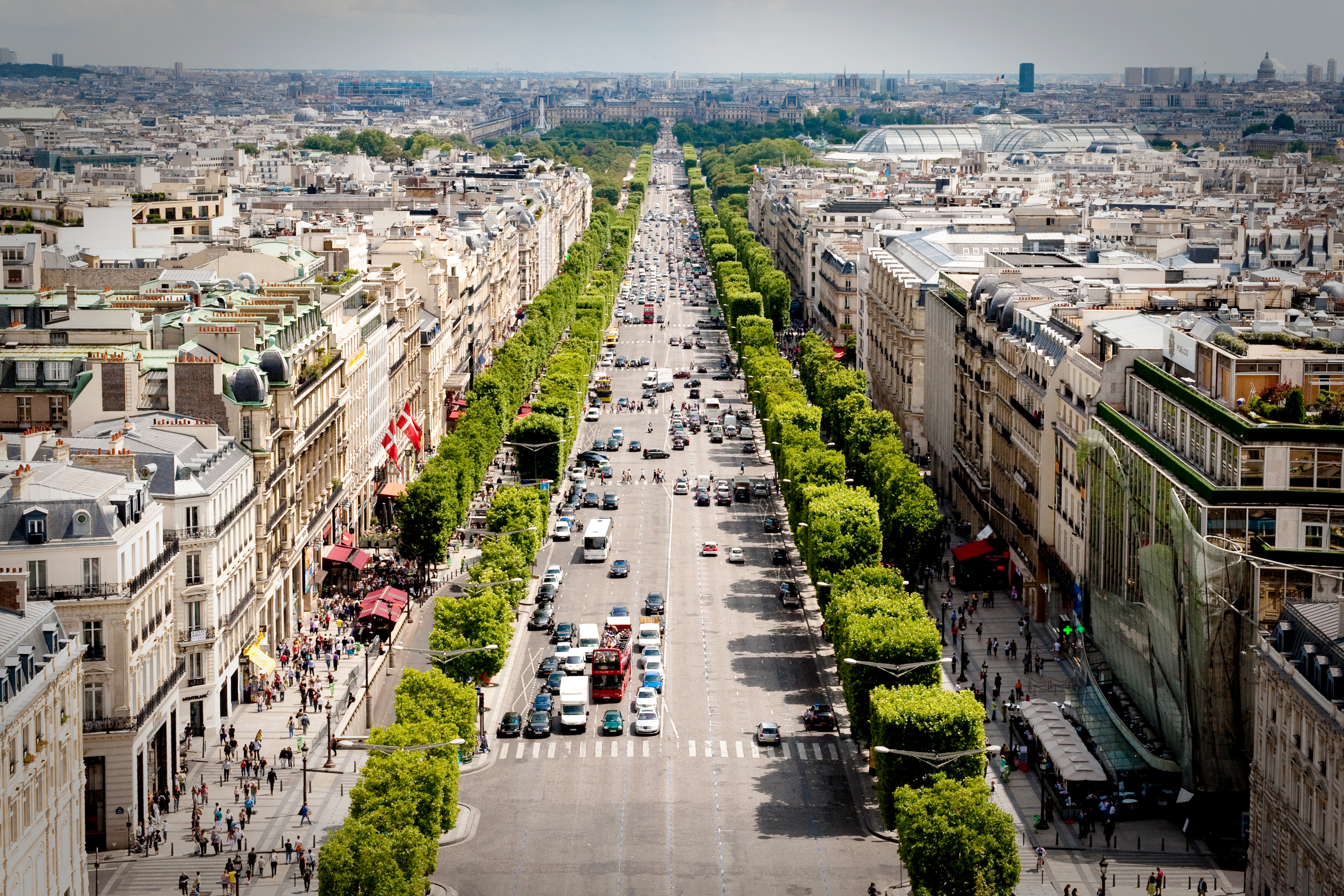
NOTE: Avenue des Champs-Élysées is a street in Paris that runs for 1.2 miles between the Place de la Concorde and the Place Charles de Gaulle, where the Arc de Triomphe is located. The street is known for its theaters, cafés, and luxury shops, as well as the annual Bastille Day military parade and as the finish of the Tour de France cycling race. The name is French for the Elysian Fields, the place for dead heroes in Greek mythology. 

PHOTO: Avenue des Champs-Élysées, Paris, France. Photo by Josh Hallett, used by permission. 

Laduree 9

NOTE: Ladurée is a French luxury bakery established by Louis-Ernest Ladurée in 1862. Known for its premium macarons, with locations around the world, the shop referenced in the poem is located  at 75 Avenue des Champs-Elysées, Paris.

PHOTO: Ladurée, 75 Avenue des Champs-Elysées, Paris. Find out more at  laduree.fr. 

Macarons-Ladurée

PHOTO: The Ladurée macaron originated in the middle of the 19th century with Pierre Desfontaines, who first thought of taking two macaron shells and joining them with a ganache filling. The recipe remains the same.  Available flavors currently include Rose Petal, Orange Blossom, Salted Caramel, Framboise, Pistachio, Strawberry Candy Marshmallow,  Coffee, Vanilla, Black Currant Violet, Lemon, Marie Antoinette,  and Chocolate.

PHOTO: Gift box of macarons from Ladurée

green-4

ABOUT THE AUTHOR: Jeanie Greenfelder’s poems have been published at American Life in Poetry and Writers’ Almanac; in anthologies: Paris, Etc., Pushing the Envelope: Epistolary Poems; and in journals: Miramar, Thema, Askew, Persimmon Tree, and others. The San Luis Obispo County poet laureate, 2017,2018, Jeanie’s books are: Biting the AppleMarriage and Other Leaps of Faithand I Got What I Came ForTo read more of her poems, visit  jeaniegreensfelder.com

The Naked Desert by David Del Bourgo

palm-trees-5047331_1920

The Naked Desert
by David Del Bourgo

Coming home from a sales call
at the Naval Weapons Center,
China Lake, stop at McDonalds
in Mojave for take-out coffee.
Winds gusting from the west at
sixty-miles an hour slash
around the tail-end of the Sierras.
It’s too damned hot to be wearing
a long sleeve shirt & tie,
even out of some misplaced
sense of modesty.

Up the last ridge on the crest
of Antelope Valley, a dust cloud appears
a dingy wall of sky that stops dead
as if held in check by an unseen hand
just before the dry lake bed
at Edwards Air Force Base.
It’s picked up all the rich loose silt
from Lancaster & Palmdale,
invading sheet-rock boxhouses & tilt-up
warehouses & strafing vacant lots bare of
everything save scrub & bottle brush.

It’s simple to strip this already bare
landscape in my mind, imagining what it
was like before us, letting my eye
roam the skin-smooth sand sloping over
the jutting rock clavicles,
mountain tops hidden beneath
the microcosmic death of a billion years
buried by brackish prehistoric seas,
& get dizzy in the drunken face
of rust-reeling rock buckled & thrust
absolutely oblivious to my speculations.

Wheel over the south ridge past
Angeles Crest Hwy.,
the sky clears & headlights are
doused. Finally get smart
& loosen my tie, then kick it
up to 75, keeping my eyes peeled,
never the fastest on the road.

Get to Pasadena half an hour early
for the workshop & stop at Continental
Burger, a college hangout.
Order a Greek souvlaki pita sandwich
& sit at an outside table
drenched in the loud, demanding
voices from pretty young faces,
suddenly annoyed by their
perpetual, senseless laughter,
trying to count the drives
down mountains & other things
I don’t normally count.

I’m still in shirt sleeves
when night falls, unjacketed
like the kids who don’t seem to
give a damn about the cold.
I sit stubbornly in the dark
thinking of that dust
& how heavy it looked
on the ancient valley floor.

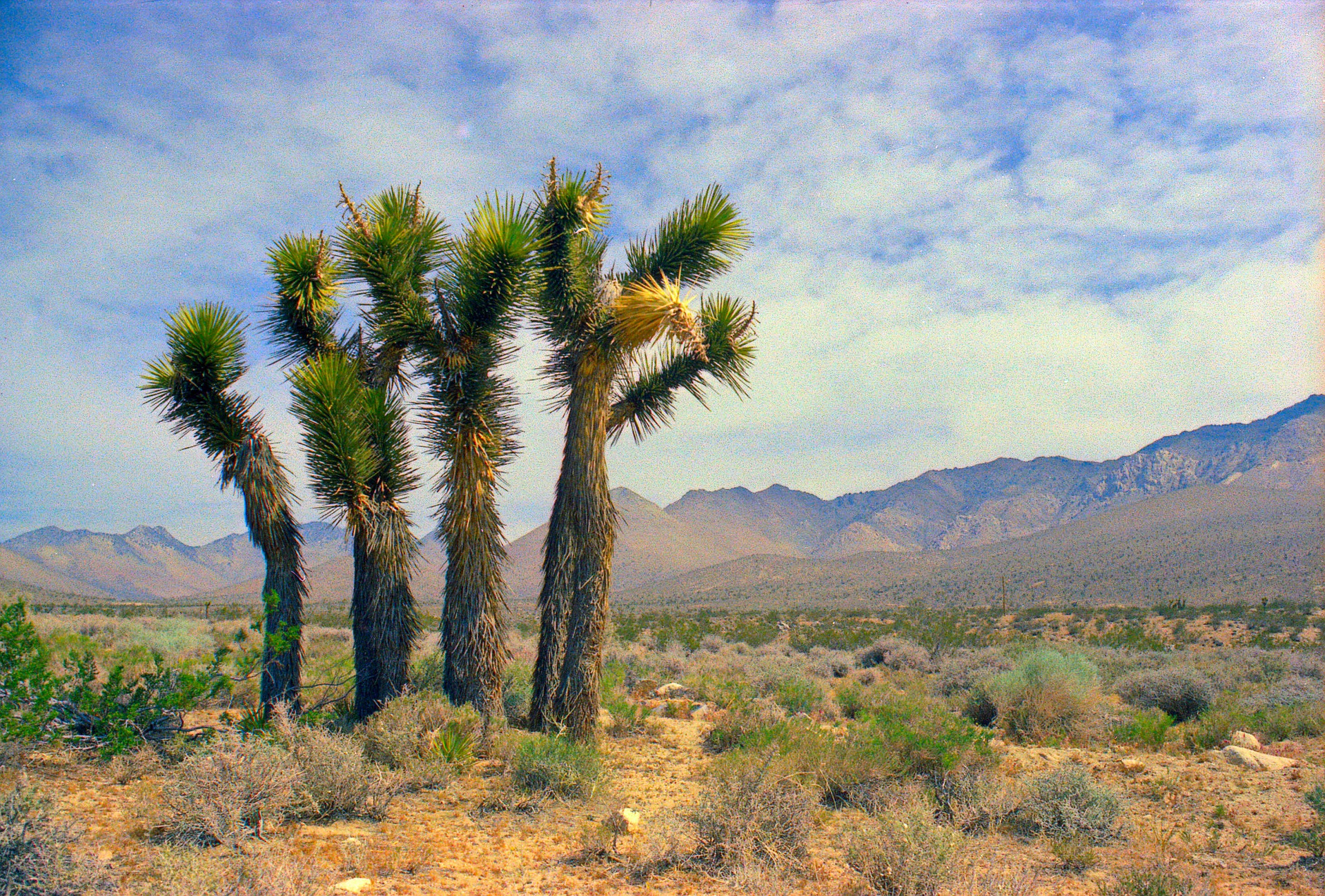
PHOTO: Mojave Desert, California. Photo by AltoBob, used by permission.

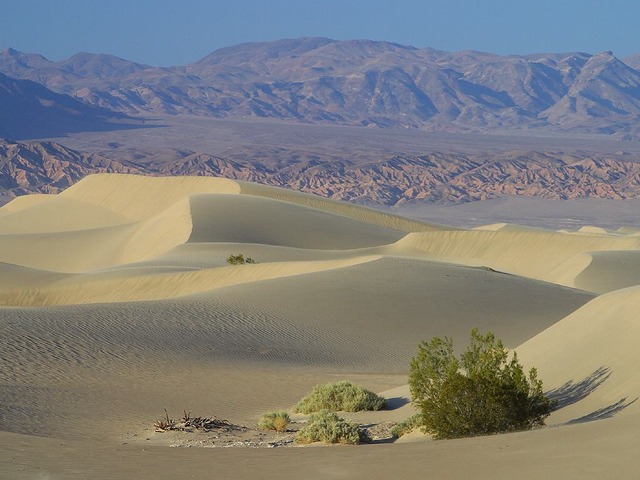
NOTE: The Mojave Desert occupies 47,877 square miles in the Southwestern United States, primarily within southeastern California and southern Nevada, with small areas extending into Utah and Arizona. Its boundaries are generally noted by the presence of Joshua trees, native only to the Mojave Desert. With elevations ranging from 2,000 to 5,000 feet, the Mojave Desert also includes the lowest and hottest place in North America: Death Valley, 282 feet below sea level, with temperatures that often exceed 120°F from late June to early August.

dunes-3713_640

NOTE FROM THE AUTHOR: “The Naked Desert” was written while I worked at Hewlett Packard as a sales executive and traveled to a navy base in the Mojave Desert. At the same time I ran a poetry workshop at Cal Tech, so I used to race across the desert to get there on time. After several years I noticed how flat the desert was with mountains seeming to grow out of the sand. I asked a geologist at the navy base how the desert was formed, and he explained to me that this area used to be covered by a sea and the flat sand was silt deposited on top of the mountains over millions of years.

PHOTO: Sand dunes, Mojave Desert, Death Valley, California. Photo by PDPhotos, used by permission.

David8 copy

ABOUT THE AUTHOR: David Del Bourgo has published over a hundred poems in literary journals such as EposCalifornia Quarterly, and The Tiferet Journal. His work has also been  featured in anthologies, including Sephardic Voices, The Literature of Work, and Three Los Angeles Poets, a Spanish translation of American poetry. Two books of his poetry have been published through small presses.  Elie Weisel wrote the cover note for one of those books. He is also a member of Squaw Writers. He lives with his wife in Los Angeles, where he is presently working on a novel about the feminine divine.

Welsh Tea with Dylan Thomas by Margaret Duda

LaugharneBoatHouse

Welsh Tea with Dylan Thomas
by Margaret Duda

We hiked Cliff Road from Laugharne,
noticed a peregrine perched on a grassy cliff
scanning the small waders in the tidal marsh,
stalking his prey in the estuary of the Taf.

Approaching the writing shed, robin’s egg blue,
we peered through a small window to see where
the high school dropout composed lyrical lines
to keep southwest Wales in our minds forever.

A scarred pine table someone painted red,
two mismatched chairs, one missing slats,
crinkled strips of paper with words he loved
tacked to the simple whitewashed walls.

Windows placed to capture seascape and sunset
light the crumpled pages of failure on the floor,
there since he and Caitlin, forever locked in conflict,
strode to Brown’s Hotel for their nightly pints.

The sky turned misty, the air cold, as the
biting winds of fall pierced our jackets,
warning us to move down the footpath to
the boathouse tucked into the coastline cliff.

We approached the two-story house bought
by a patron just four years before Dylan died
of pneumonia, a morphine overdose, and
eighteen whiskies on his thirty-ninth birthday.

Pushing open the front door, we explored a museum,
the living room with his father’s desk, and moved to
the dining room/tearoom that offered scones,
bara brith fruit bread, and two kinds of Welsh tea.

We opted for the small table beside a window
overlooking water birds wading in mudflats,
the only tourists to hear Dylan’s voice imploring
his aging father to rage against the dying of the light.

Tea and hot scones arrived. Glancing at my husband,
I saw his eyes brimming, his mind far away,
focused on his own father trapped in dementia,
his brain turned to dust years before his body.

Sipping Glengettie tea, we watched the peregrine
As he pulled back his wings, dove towards the Taf,
And snatched a long-billed curlew for dinner.
Some deaths are easier than others.

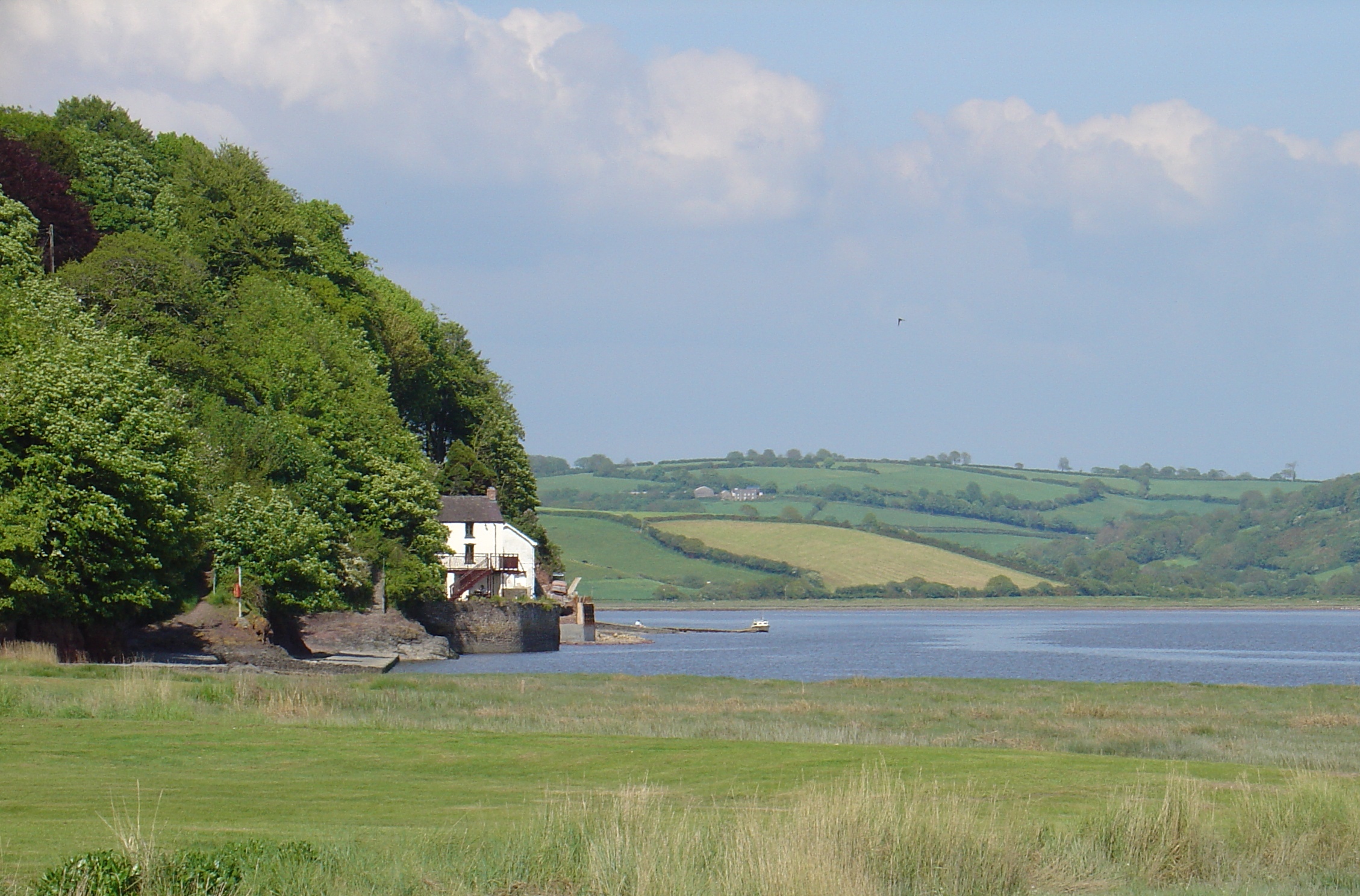
PHOTO: Boathouse (left) in Laugharne, Wales, where poet Dylan Thomas lived with his family for the last four years of his life (1949-1953).  The house, set in a cliff overlooking the Tâf estuary, is where Thomas wrote many of his major pieces. For more about the site, visit dylanthomasboathouse.com. Photo by LinguisticDemographer, used by permission. 

NOTE: The Boathouse is now owned by the Carmarthenshire County Council and serves as a museum, open to the public for most of the year. The house features Thomas memorabilia and some of the original furniture, including Dylan Thomas’s father’s desk. The house receives about 15,000 visitors a year. The interior has been returned to its 1950s appearance, with a recording of Thomas’s voice playing in the background.  The exhibits include a bust of Dylan Thomas, formerly owned by Richard Burton and Elizabeth Taylor, a letter from former U.S. President Jimmy Carter, and a 1936 photograph of Thomas taken into space in 1998 onboard the Space Shuttle Columbia.

Wales_Laugharne_Dylans_writing_hut

PHOTO: A reconstruction of the writing hut used by Dylan Thomas, close to the Boathouse, overlooking the estuary of the River Taf. Photo by Tony French, used by permission. 

wales leighton collins licensed

PHOTO: Interior of Dylan Thomas’s writing shed, Laugharne, Wales. Photo by Leighton Collins, used by permission.

m-duda

ABOUT THE AUTHOR:  A professional author, photographer, and jewelry designer, Margaret Duda has had her work published in The Kansas Quarterly, the Michigan Quarterly Review, Crosscurrents, The South Carolina Review, The Green River Review, The University Review, Fine Arts Discovery, The Green River Review, Venture, and Silver Birch Press. One of her short stories made the distinctive list of Best American Short Stories. She also had a play produced in Michigan, has had several books of nonfiction published, including Four Centuries of Silver and Traditional Chinese Toggles: Counterweights and Charmsand took travel photographs for the New York Times for 10 years. She lives in Pennsylvania, and is working on the final draft of an immigrant family saga novel set in a steel mill town from 1910 to 1920. She is also writing poetry to find a shred of sanity during this pandemic.

Textures and Hues by Merrill Farnsworth

borger img_5311

Textures and Hues
by Merrill Farnsworth

I did not choose the texture and hues
or build the loom
I simply entered the world.
Fate chose the fabric
spun from tumbleweeds and tornadoes,
carbon black creeping under windowsills
burnt orange flames licking the sky
like tongues of thirsty dragons
reaching from the belly of the oil refinery
where my father staked his claim
on a bright future at age twenty-two
with his chemical engineering degree,
and his new wife, both hearts brimming
with post-war optimism.
My young mother gifted me
with hues of sun-bleached cow skulls,
dirt brown horned toads
amber fire ants and soft gray tones
of mockingbird feathers gathered from the land
where she learned to rope wayward calves
and pin squealing bodies tight to the ground
as the red-hot shape of the family brand
burned deep into their hides.
My tapestry began spinning one harsh December morning
near Amarillo where I would see
the bright yellow yolk of an egg
frying on the sidewalk in summer,
the halcyon blue of translucent icicles
hanging from cottonwoods in winter,
the gathering storm in my mother’s eyes,
the flashing sunshine in my father’s smile
as he walked through the door
somewhere past five to rescue us all:
my mother with a kiss and a cocktail,
me with a playful toss in the air,
my sister with a nuzzle to neck,
my unborn brother with an open hand
spread full on my mother’s belly,
my soon-to-be conceived brother
with a twinkle in his eyes,
himself with a hope the American Dream
would out-spin the six o’clock news.

PHOTO: Oil refinery, winter, Borger, Texas. Photo by PreppySG, all rights reserved. 

boomtown-thomas-hart-benton1

NOTE: Borger is located in the Texas Panhandle, about 50 miles north of Amarillo. On May 2, 1921, the first Panhandle oil well was drilled in the Borger area on on the Four Sixes Ranch of S.B. Burnett. Later wells in Borger and nearby Pampa spurred the petroleum boom. After a major oil strike in 1926, real estate promoter “Ace” Borger purchased land, advertised the area as full of “black gold,”  and created the town whose population, in just ninety days, soared from zero to 30,000. Artist Thomas Hart Benton depicted this period of Borger in his painting Boomtown.

IMAGE: Boomtown by Thomas Hart Benton (1928).

NOTE ON THE PAINTING:  Boomtown by Thomas Hart Benton (1889-1975) was the result of a summer sketching trip that took the artist to Borger, Texas. Benton wrote of Borger, Texas: Out on the open plain beyond the town a great thick column of black smoke rose as in a volcanic eruption from the earth to the middle of the sky. There was a carbon mill out there that burnt thousands of cubic feet of gas every minute, a great, wasteful, extravagant burning of resources for momentary profit. All the mighty anarchic carelessness of our country was revealed in Borger. But it was revealed with a breadth, with an expansive grandeur, that was as effective emotionally as are the tremendous spatial reaches of the plains country where the town was set. One did not get the feeling, in spite of the rough shacks and dirty tents in which the people lived, of that narrow cruelty and bitter misery that hovers around eastern industrial centers. There was a belief, written in men’s faces, that all would find a share in the gifts of this mushroom town…. Borger on the boom was a big party…where capital…joined hands with everybody in a great democratic dance. 

merrill 1

ABOUT THE AUTHOR: Merrill Farnsworth was born on December 13, 1956 in Borger, Texas. Following a career in Nashville’s music industry, she completed her Masters in Developmental Psychology at Vanderbilt University. After starting a private practice, she created Writing Circles, a therapeutic practice that inspired writers of all skill levels to find their voices and discover community through weekly creative writing groups. Merrill is also known for her work as a writer and artist. Her published works include Jezebel’s Got the Blues and Kissing My Shadow. She passed away on September 14, 2017. Merrill inspired all those around her to write honestly, dance frequently, and live life passionately.

NOTE FROM THE EDITOR: Happy birthday, dear friend. You have left a beautiful legacy in your work, your spirit, and your family. Your light shines on.

Pacific Rim by Laurel Benjamin

Canada Vancouver Elena Gwynne licensed

Pacific Rim
Pacific Rim National Park, Vancouver Island
by Laurel Benjamin

Gold foam on the shore laces with
currents from the rainforest
minerals clear blue and green.

Choked roots decompose
sending runoff across the sand in a deep cut.
Brown and crackly, mossy, smoothly
covered in mud.

The forest at water’s edge opens to a bog
where moss hampers growth
yet sloth-like apparitions of moss
hang from boughs in protective shade.

We stay two more days
buy lunch at a crab shack in Tofino
pick out the meat with little fork tines
watch tourist planes swish around the inlet.

They cut out campsites from the brush
in a key-hole shape
removed from the familiar
afraid of fading into the forest.
A morning ritual,
women like birds flittering
preen themselves in the bathroom mirror
hair and teeth must remain shiny.

If you were to reach your hand
into the wall of trees
break through
would it come out layered
and when you peeled off the flakes, what
would your hand say?
Your legs would turn to cedar logs,
nurse the seedlings growing upright around them
the roots a spiny table.

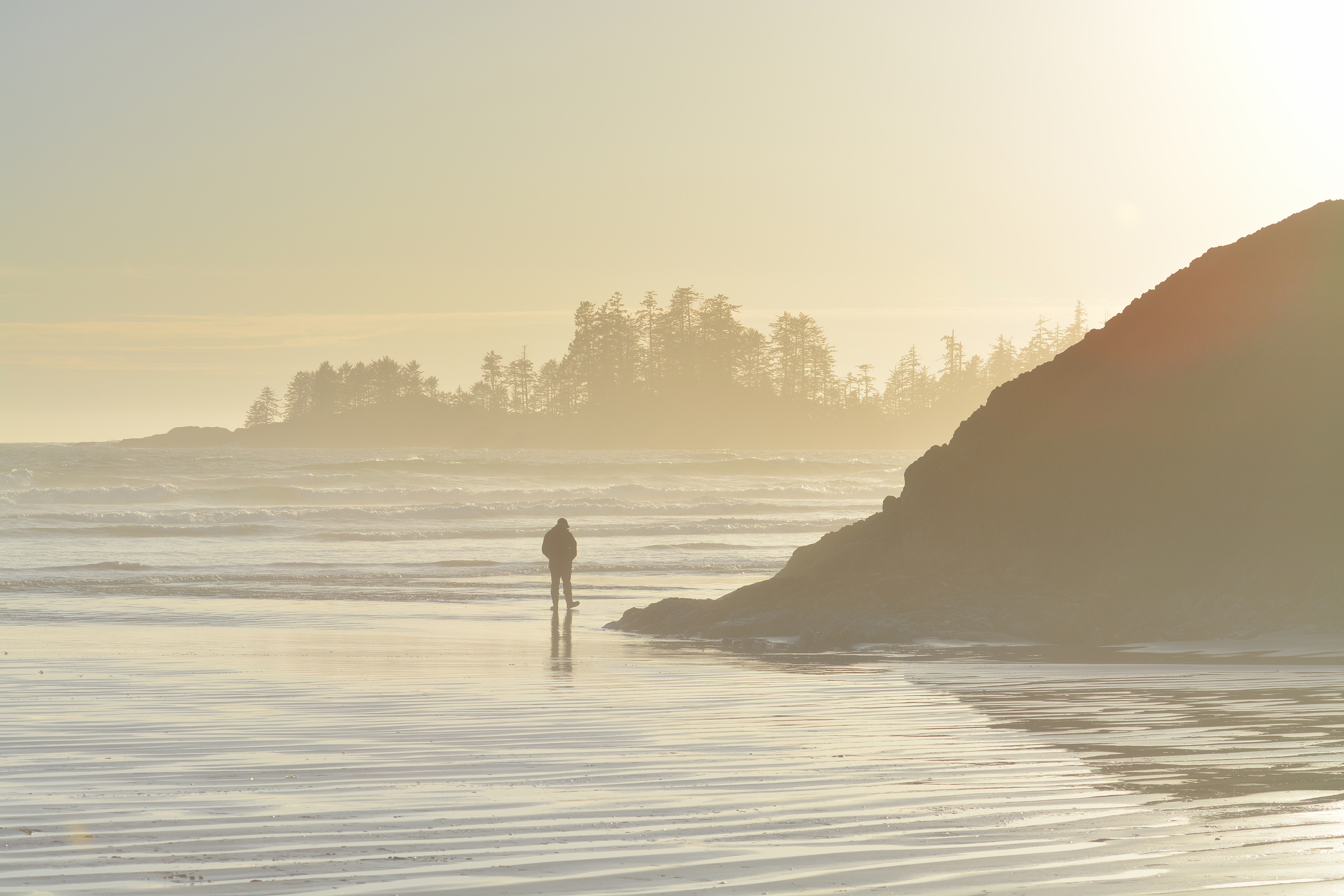
PHOTO: A pale winter sunset looking towards Schooner`s Point on Long Beach in the Pacific Rim National Park Reserve on Vancouver Island, British Columbia. Photo by Elena Gwynne, used by permission.

Rainforests_of_Pacific_Rim_National_Park_Reserve,_Canada

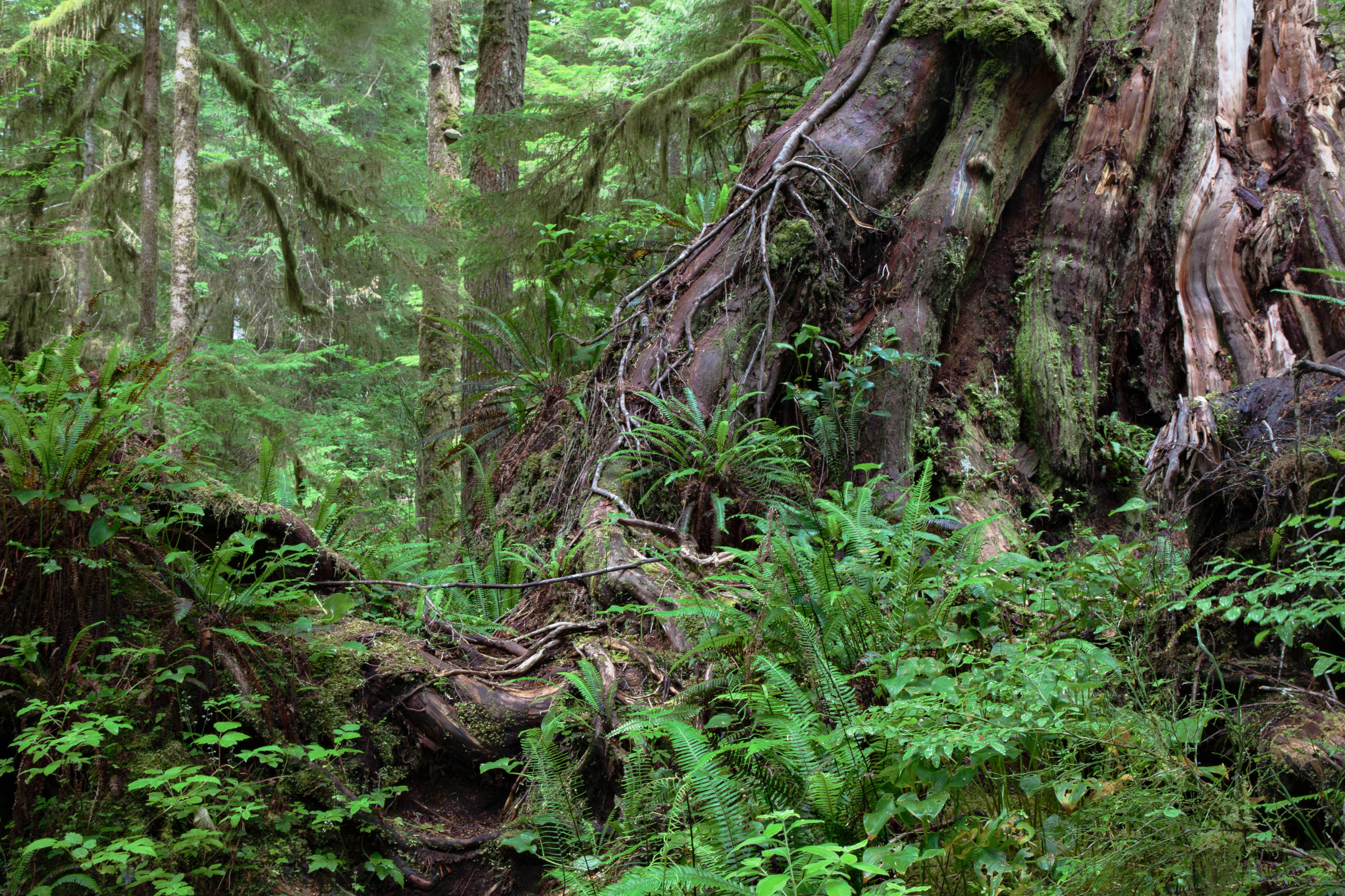
NOTE: Pacific Rim National Park Reserve, a 197-square-mile park located in British Columbia, Canada, consists of three separate regions: Long Beach, the Broken Group Islands, and the West Coast Trail. Features include mountains, rugged coasts, and temperate rainforests.

PHOTO: Rainforest of Pacific Rim National Park Reserve, Canada. Photo by ~jar{}, used by permission.

NOTE FROM THE AUTHOR: The west coast of Vanouver Island is hard to reach, with a winding road from the east coast. This is the area artist Emily Carr painted, where people have gone to disappear from civilization. It’s spooky and stunning.

benjamin1-1

ABOUT THE AUTHOR: Laurel Benjamin lives in the San Francisco Bay Area. Her work has appeared in Turning a Train of Thought Upside Down: An Anthology of Women’s PoetryCalifornia Quarterly, The Midway Review, among othersShe is affiliated with the Bay Area Women’s Poetry Salon and the Port Townsend Writers. More of her work can be found at thebadgerpress.blogspot.com.