Lines Written on a Seat on the Grand Canal, Dublin by Patrick Kavanagh

Patrick_Kavanagh_monument_at_Grand_Canal,_Dublin

Lines Written on a Seat on the Grand Canal, Dublin
by Patrick Kavanagh

O commemorate me where there is water,
Canal water, preferably, so stilly
Greeny at the heart of summer. Brother
Commemorate me thus beautifully
Where by a lock niagarously roars
The falls for those who sit in the tremendous silence
Of mid-July. No one will speak in prose
Who finds his way to these Parnassian islands.
A swan goes by head low with many apologies,
Fantastic light looks through the eyes of bridges—
And look! a barge comes bringing from Athy
And other far-flung towns mythologies.
O commemorate me with no hero-courageous
Tomb—just a canal-bank seat for the passer-by.

Copyright © Estate of Katherine Kavanagh

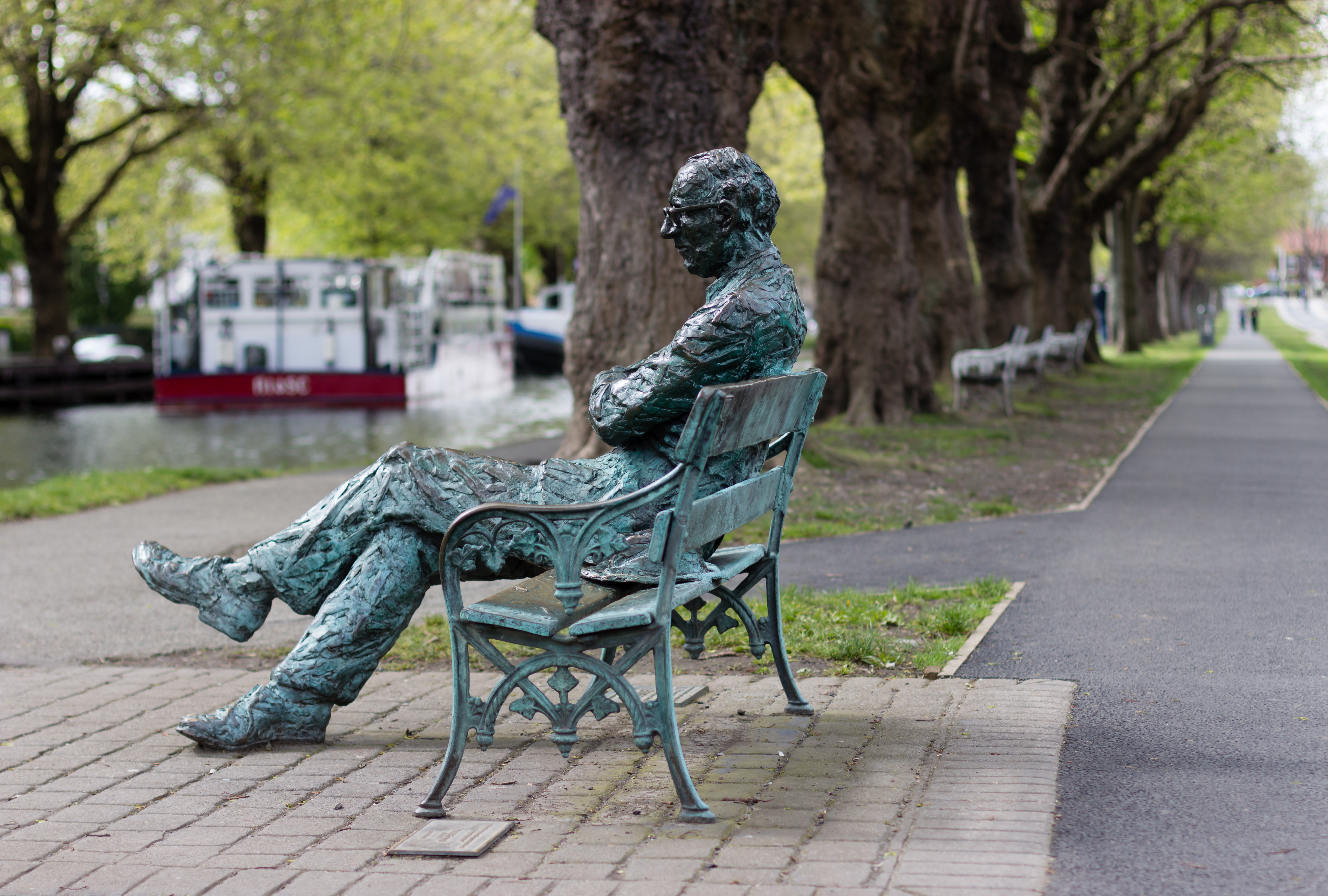
PHOTO: Monument for Patrick Kavanagh, Irish poet and novelist, located at the bank of Grand Canal in Dublin, Ireland. Photo by Peierls, used by permission. 

ABOUT THE SCULPTURE: Situated on the north bank of the Grand Canal on Mespil Road in Dublin, Patrick “Paddy” Kavanagh is one of John Coll‘s most prominent works of art.  Inspired by Kavanagh’s poem “Lines written on a Seat on the Grand Canal, Dublin,”  the sculpture was built as part of Dublin 1991 European City of culture celebrations. Patrick Kavanagh found solace beside the Grand Canal and often sat there to contemplate his life.
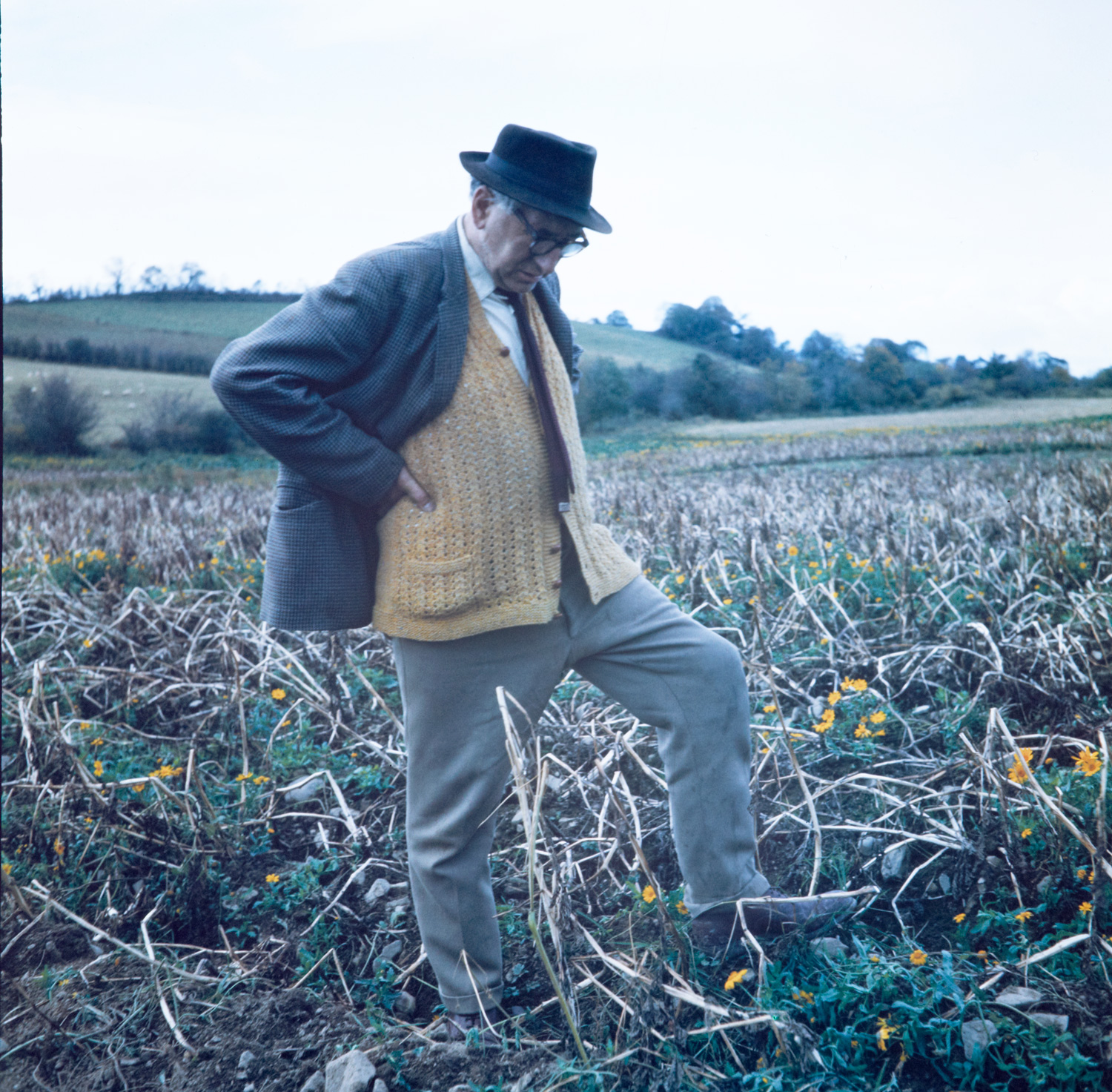
Poet_Patrick_Kavanagh

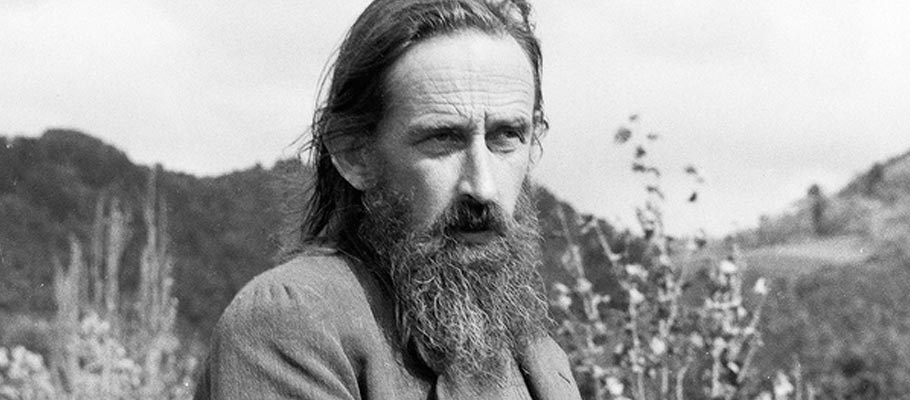
ABOUT THE AUTHOR: Patrick Kavanagh (1904-1967) was an Irish poet and novelist. His best-known works include the novel Tarry Flynn, and the poems “On Raglan Road and “The Great Hunger”. He is known for his accounts of Irish life through reference to the everyday and commonplace. 

PHOTO: Patrick Kavanagh in his native Inniskeen, County Monaghan, Ireland.  Photo courtesy of National Library of Ireland, used by permission. 
Spring in Belfast by Derek Mahon

Ireland belfast licensed roman zaremba

Spring in Belfast
by Derek Mahon

Walking among my own this windy morning
In a tide of sunlight between shower and shower,
I resume my old conspiracy with the wet
Stone and the unwieldy images of the squinting heart.
Once more, as before, I remember not to forget.

There is a perverse pride in being on the side
Of the fallen angels and refusing to get up.
We could all be saved by keeping an eye on the hill
At the top of every street, for there it is,
Eternally, if irrelevantly, visible—

But yield instead to the humorous formulae,
The spurious mystery in the knowing nod;
Or we keep sullen silence in light and shade,
Rehearsing our astute salvations under
The cold gaze of a sanctimonious God.

One part of my mind must learn to know its place.
The things that happen in the kitchen houses
And echoing back streets of this desperate city
Should engage more than my casual interest,
Exact more interest than my casual pity.

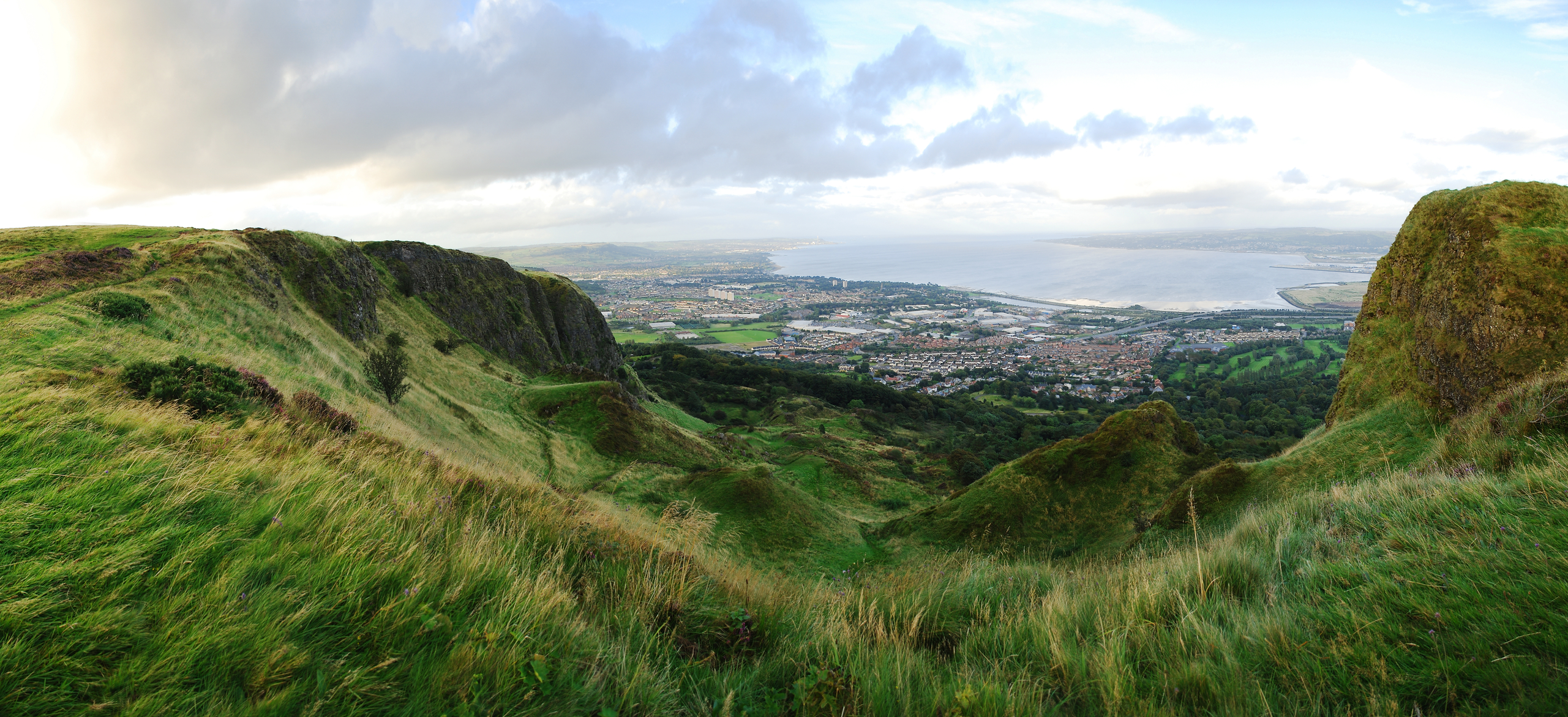
PHOTO: Cavehill, with a view of Belfast, Northern Ireland by Roman Zaremba, used by permission. 

ABOUT THE PHOTO: Cavehill overlooks the city of Belfast, Northern Ireland. It is distinguished by its “Napoleon’s Nose,” a basaltic outcrop that resembles the profile of the emperor Napoleon. All of Belfast can be seen from its peak, as can the Isle of Man and Scotland on clear days. Cavehill is thought to be the inspiration for Jonathan Swift‘s Gulliver’s Travels. Swift imagined that the Cavehill resembled the shape of a sleeping giant safeguarding the city.

NOTE: Belfast has been the capital of Northern Ireland since its establishment in 1921 following the Government of Ireland Act 1920. It has been the scene of conflict between its Catholic and Protestant populations. The most recent example was known as the Troubles — a civil conflict that raged from around 1969 to 1998. Belfast city centre has undergone expansion and regeneration since the late 1990s. However, tensions and civil disturbances still occur despite the 1998 peace agreement. Belfast and the Causeway Coast were together named the best place to visit in 2018 by Lonely Planet. Tourist numbers have increased since the end of The Troubles, boosted in part by newer attractions such as Titanic Belfast and tours of locations used in the HBO television series Game of Thrones.


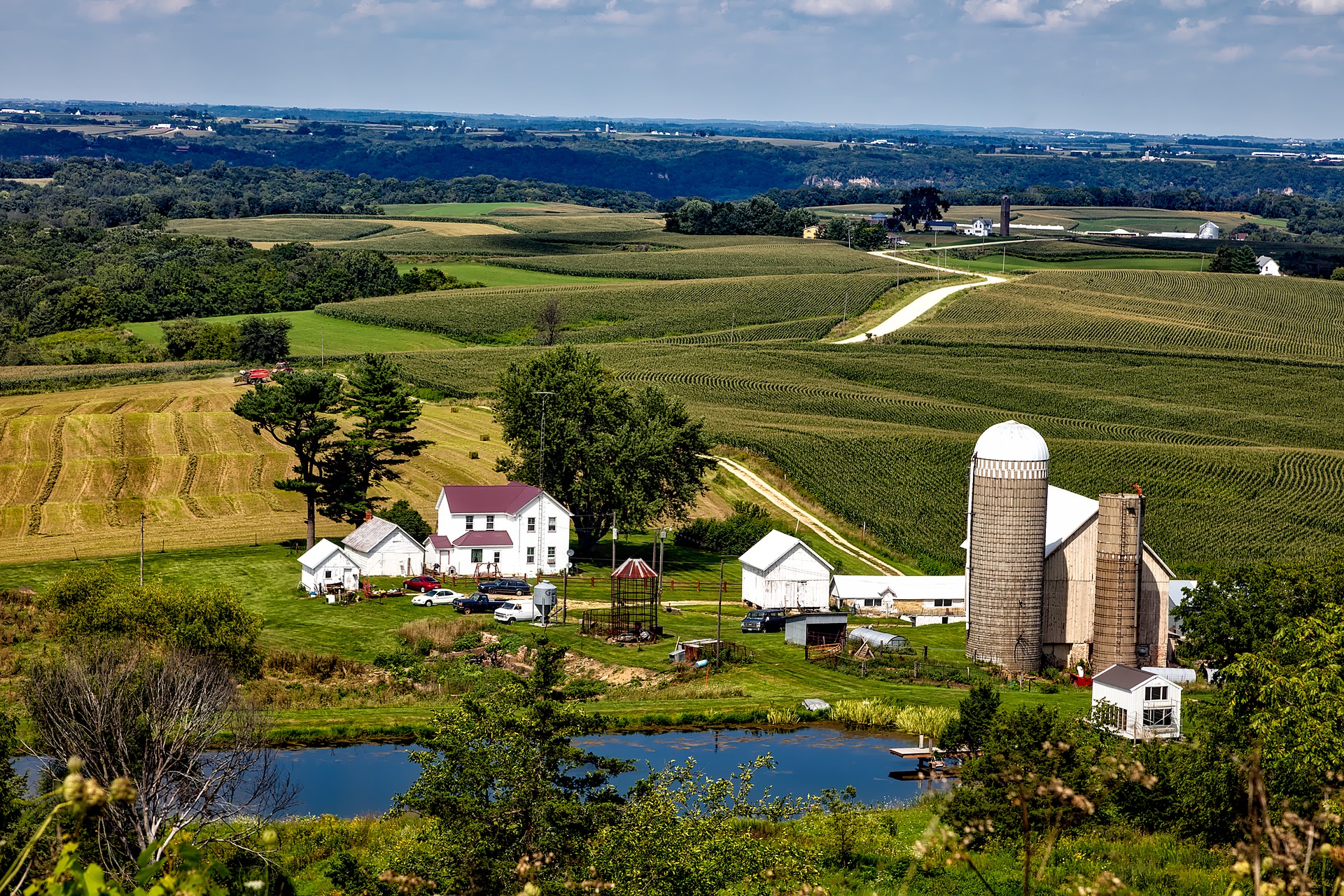
Speaking of Iowa: The sun at noon by James Hearst

iowa-1738283_1920

Speaking of Iowa: The sun at noon
by James Hearst

No country leads so softly to nowhere
as those slow shoulders that curtain the horizon
let us hold the sun at noon in this valley
for morning will not come again.
We will watch the trees grow up and the flowers stiffen
and brightly dressed desires
fade like women we have missed
no, morning will not come again
but here at noon I stand above my shadow
and balance on time’s edge—

PHOTO: Farm in Iowa valley by David Mark, used by permission.

Dubuque, Iowa by Eve Triem

dubuque-1751444_1920

Dubuque, Iowa
by Eve Triem

Travelers notice this town for its bricks,
(warehouse and mill) sun-and-snow weathered
to apricot and dahlia.

And then that it is a port,
the streets in waves winding from a river
and flying the side of a hill, like gulls.

They will climb the stair-sprayed hill—
the hill, a ball-player’s arm swung up for a catch
                                   lost in the sun.
The townsmen below are as small as bees,
and as bright as bees in their summer clothes.

Travelers notice,
steering their cars by elm-showered stoplights,
adding more boats, this might be Providence or Bangor:
cupolas, lookouts, widow-walks,
but for the glowing brick, the balconies,
the French Provincial shape to the meanest houses.

It is New Orleans,
swept up from the Delta before the railroad time,
the black faces, the Creole place-names.

New Orleans, in the ironwork fencing the balconies,
a foliage of iron over the double glass doors,
wintry twigs of iron rimming the cornices.

For travelers,
missing the fighting cocks, the steeple pigeons,
the mills’ steam whistles will startle
numerous jays into cornet calls,
will send them like a trellis of morning glories
into the thick of a pin-oak,
to drop for the reassurance of travelers
three clear notes
like river-clam pearls.

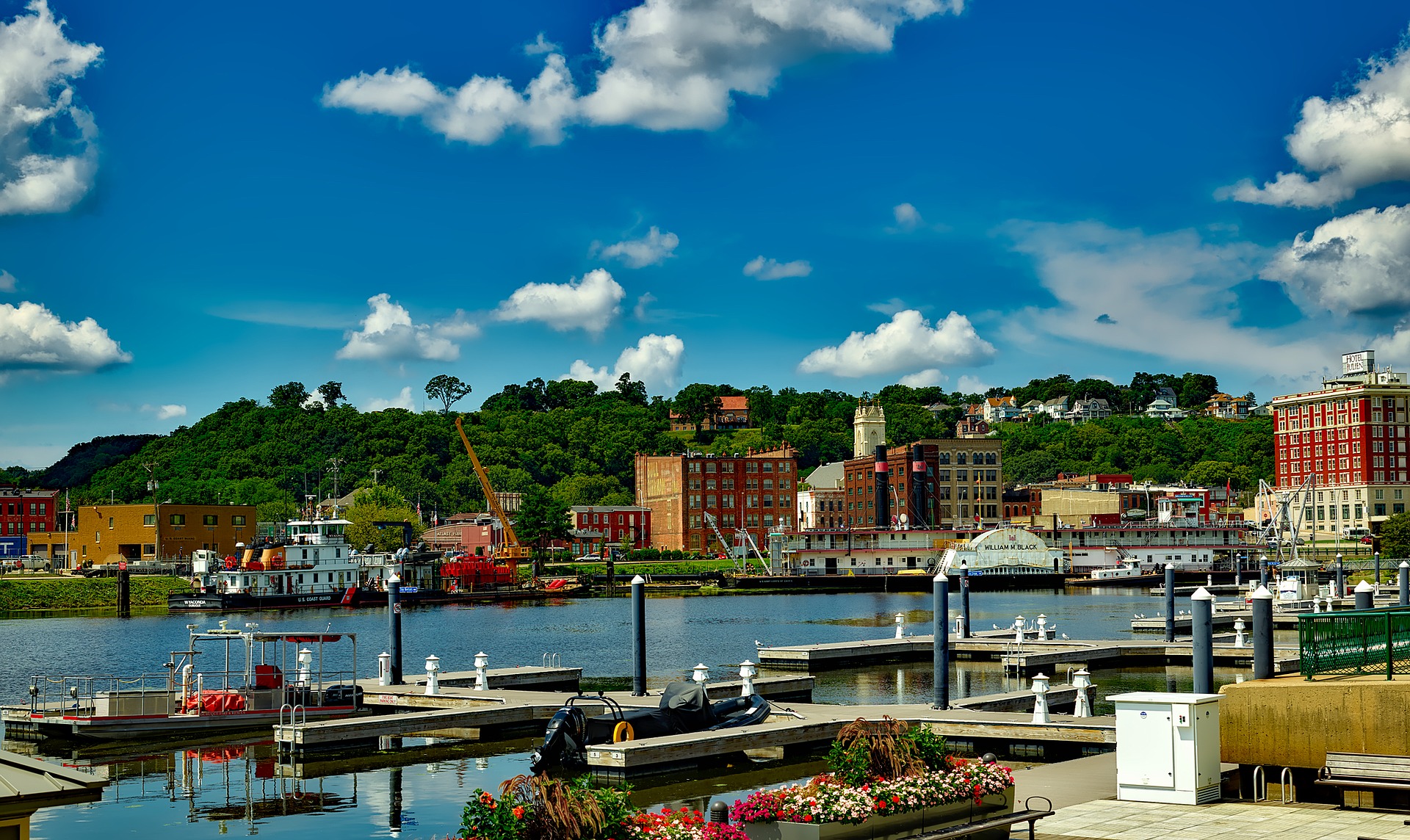
PHOTO: Dubuque, Iowa, riverfront. Photo by David Mark, used by permission. 

dubuque-1731521_1920

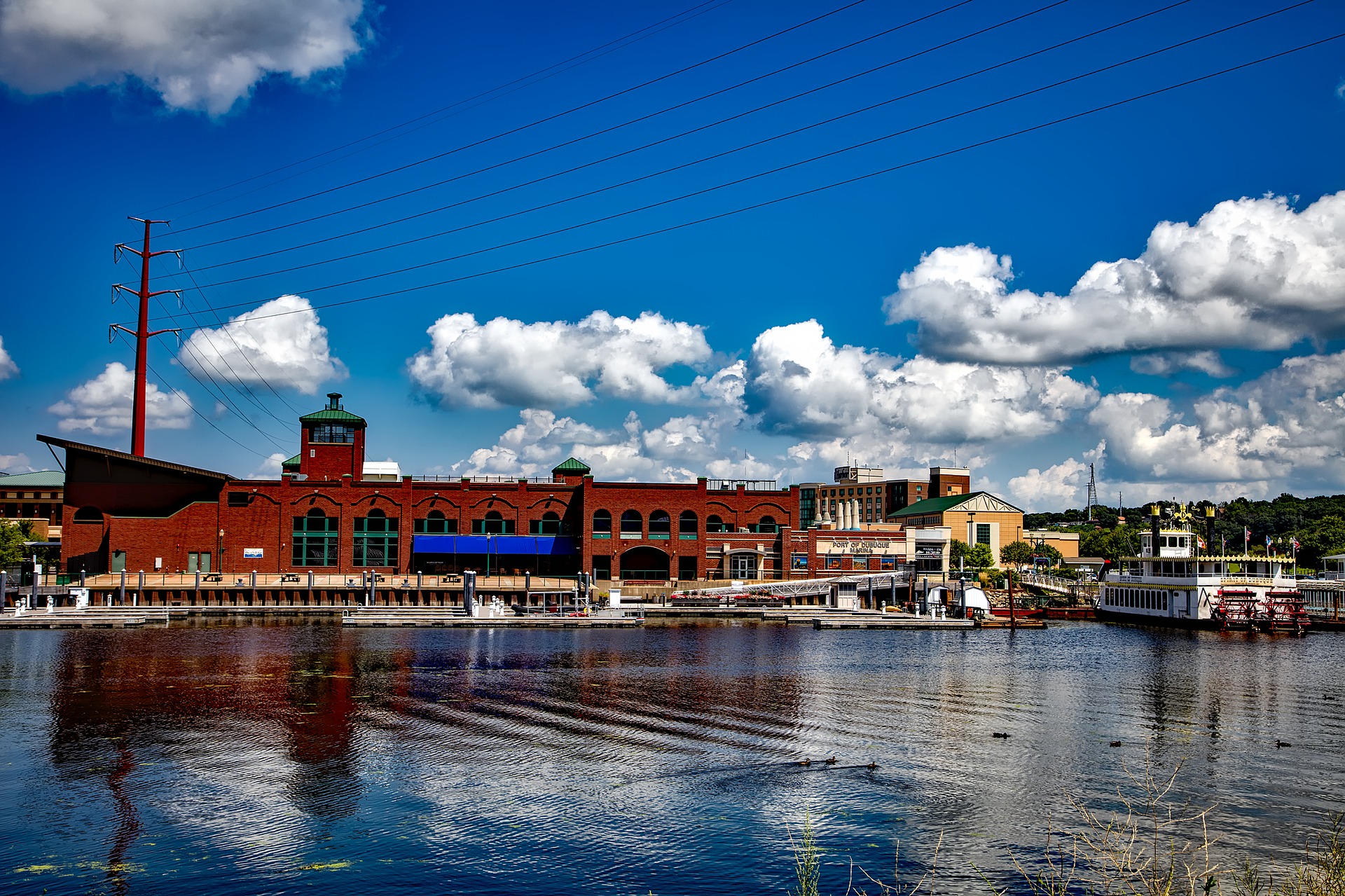
NOTE: Dubuque, Iowa, is located along the Mississippi River, at the junction of Iowa, Illinois, and Wisconsin. A tourist destination thanks to the city’s unique architecture and river location, the population stands at about 58,000.  The first permanent European settler was Quebecois pioneer Julien Dubuque, who arrived in 1785. In 1788, he received permission from the Spanish government and the local Meskwaki Native Americans to mine the area’s rich lead deposits. Control of Louisiana and Dubuque’s mines shifted briefly back to France in 1800, then to the United States in 1803, following the Louisiana Purchase. The city of Dubuque was officially chartered in 1833, located in unorganized territory of the United States. The region, designated as the Iowa Territory in 1838, was included in the newly created State of Iowa in 1846. 

PHOTO: Dubuque, Iowa, Mississippi Riverfront, by David Mark, used by permission. 

Butter by Andrea Cohen

Iowa licensed abby elam

Butter
by Andrea Cohen

I’ve never seen the land
of milk and honey, but at

the Iowa State Fair I glimpsed
a cow fashioned of butter.

It lived behind a window
in an icy room, beneath klieg lights.

I filed past as one files
past a casket at a wake.

It was that sad: a butter cow
without a butter calf. Nearby I spied

a butter motorcycle, motorcycle-
sized, a mechanical afterthought

I thought the cow might have liked to ride.
You don’t drive a motorcycle; you ride it.

But not if you’re a butter cow, not
if you’re a butter cow who’s seen, if

not the land of milk and honey, the land
of milk, and dwelled within it.

It had a short life span, the butter cow.
Before it died, I looked

deep into its butter eyes. It saw
my butter soul. I could

have wept, or spread myself,
for nobody, across dry toast.

PHOTO: Butter cow at Iowa State Fair. Photo by Abbey Elam, used by permission. 

NOTE: The first butter cow in Iowa was made by sculptor John K. Daniels at the 1911 Iowa State Fair. The exhibit, designed as a way to promote dairy products in the area, was a big hit with fairgoers. Because of its success, the butter sculpture was continued each year, with different sculptors assuming the role. In total, about 500-600 pounds of butter is used. The butter is placed on a wooden-and-wire armature, at first in large amounts to achieve the general shape of the cow, and later in smaller quantities to fine-tune the form. The process takes between two days and a week, depending on the artist. Though the sculptors claim it was never a secret that the butter cow is built on a wooden armature, many people assumed the sculpture was solid, and made entirely from butter, despite the logistical impossibilities.

New Zealand by James K. Baxter

maria michelle arrowtown-276846_1920

New Zealand
by James K. Baxter

for Monte Holcroft

These unshaped islands, on the sawyer’s bench,
Wait for the chisel of the mind,
Green canyons to the south, immense and passive,
Penetrated rarely, seeded only
By the deer-culler’s shot, or else in the north
Tribes of the shark and the octopus,
Mangroves, black hair on a boxer’s hand.

The founding fathers with their guns and bibles,
Botanist, whaler, added bones and names
To the land, to us a bridle
As if the id were a horse: the swampy towns
Like dreamers that struggle to wake,

Longing for the poets’ truth
And the lover’s pride. Something new and old
Explores its own pain, hearing
The rain’s choir on curtains of grey moss
Or fingers of the Tasman pressing
On breasts of hardening sand, as actors
Find their own solitude in mirrors,

As one who has buried his dead,
Able at last to give with an open hand.

PHOTO: Near Arrowtown, New Zealand by Maria Michelle, used by permission. 

NOTE: New Zealand is an island country in the southwestern Pacific Ocean. It consists of two main landmasses—the North Island and the South Island and around 600 smaller islands, covering a total area of 103,500 square miles. It is located about 1,200 miles east of Australia across the Tasman Sea. The country’s varied topography and sharp mountain peaks, including the Southern Alps, owe much to tectonic uplift and volcanic eruptions. Between about 1280 and 1350, Polynesians began to settle in the islands, and developed a distinctive Māori culture. In 1840, representatives of the United Kingdom and Māori chiefs signed the Treaty of Waitangi, which declared British sovereignty over the islands. In 1841, New Zealand became a colony within the British Empire and in 1907 it became a dominion; it gained full statutory independence in 1947 and the British monarch remained the head of state. 

James-K-Baxter

ABOUT THE AUTHOR: James Keir Baxter (1926–1972) was one of New Zealand’s most celebrated poets. He was also known as an activist for the preservation of Māori culture. In 1968,  a dream instructed him to go to “Jerusalem.” Persuaded by his vision, Baxter gave up his job to move to a small Māori settlement known as Hiruharama, or “Jerusalem,” on the Whanganui River. For the remaining years of his life, Baxter lived sparsely in the Māori settlement, writing poetry that explored his strong social and political convictions. After his death in 1972, Baxter was buried at Jerusalem on Māori land.

Mana by Karlo Mila

makalu kawarau river

Mana
by Karlo Mila

when you flow through my body
I know
I am caught in the current of a river
larger than the length of my own lifetime
it bends where we have all been before
same rapids
other waters
our veins
my blood
I know
I am in the flow
of something greater than my own self

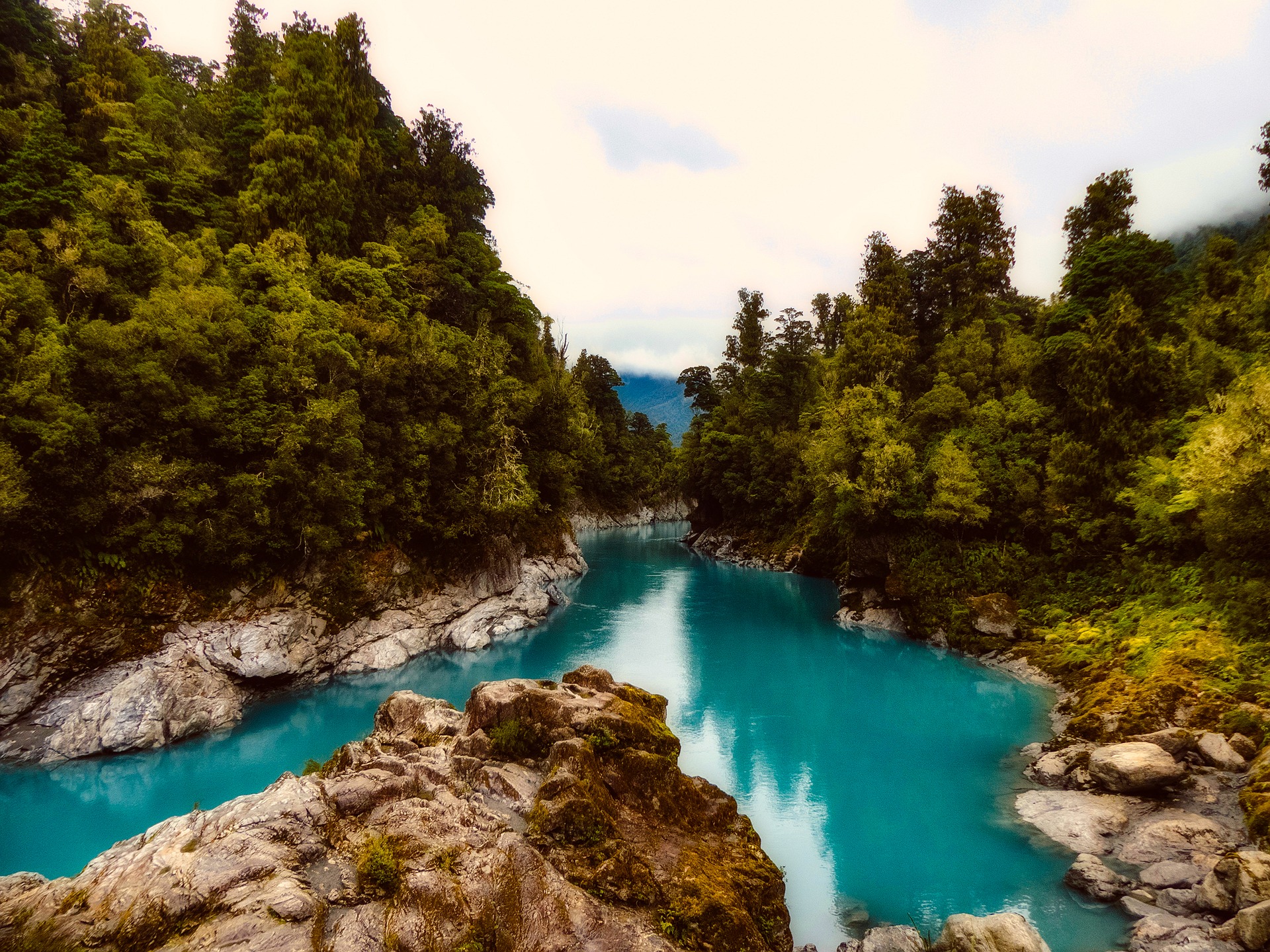
PHOTO: Kawarau River, New Zealand. Photo by Makalu, used by permission. 

NOTE: The Kawarau River is a river in the South Island of New Zealand. With many rapids and strong currents, the river can be dangerous and has claimed many lives: it is also popular for bungy jumping and kayaking. A natural bridge, “Whatatorere,” where the river narrows to 3.9 feet, was important first to early Māori and then to gold miners as the only place the Clutha and Kawarau Rivers could be crossed without boats. Māori were heading to the Haast Pass to seek pounamu. The miners were seeking gold in the Arrow Goldfields.

Although it is small it is greenstone by Louise Wallace

david mark new-zealand-2666076_1920

Although it is small it is greenstone
by Louise Wallace

I am orchids
fruit trees
I can bear more than you think
I am a river stone
and I choose a ring made of pounamu
to remind me

PHOTO: River in New Zealand by David Mark, used by permission.

NOTE: Pounamu (or “greenstone“) are several types of hard and durable stone found in southern New Zealand. They are highly valued by the Māori, and hardstone carvings made from pounamu play an important role in Māori culture. Geologically, pounamu are usually nephrite jadebowenite, or serpentinite.

The Winter by Dafdd ap Gwilym

winter-19455_1920

The Winter
by Dafdd ap Gwilym 

Across North Wales
The snowflakes wander,
A swarm of white bees.
Over the woods
A cold veil lies.
A load of chalk
Bows down the trees.

No undergrowth
Without its wool,
No field unsheeted;
No path is left
Through any field;
On every stump
White flour is milled.

Will someone tell me
What angels lift
Planks in the flour-loft
Floor of heaven
Shaking down dust?
An angel’s cloak
Is cold quicksilver.

And here below
The big drifts blow,
Blow and billow
Across the heather
Like swollen bellies.
The frozen foam
Falls in fleeces.

Out of my house
I will not stir
For any girl
To have my coat
Look like a miller’s
Or stuck with feathers
Of eider down.

What a great fall
Lies on my country!
A wide wall, stretching
One sea to the other,
Greater and graver
Than the sea’s graveyard.
When will rain come?

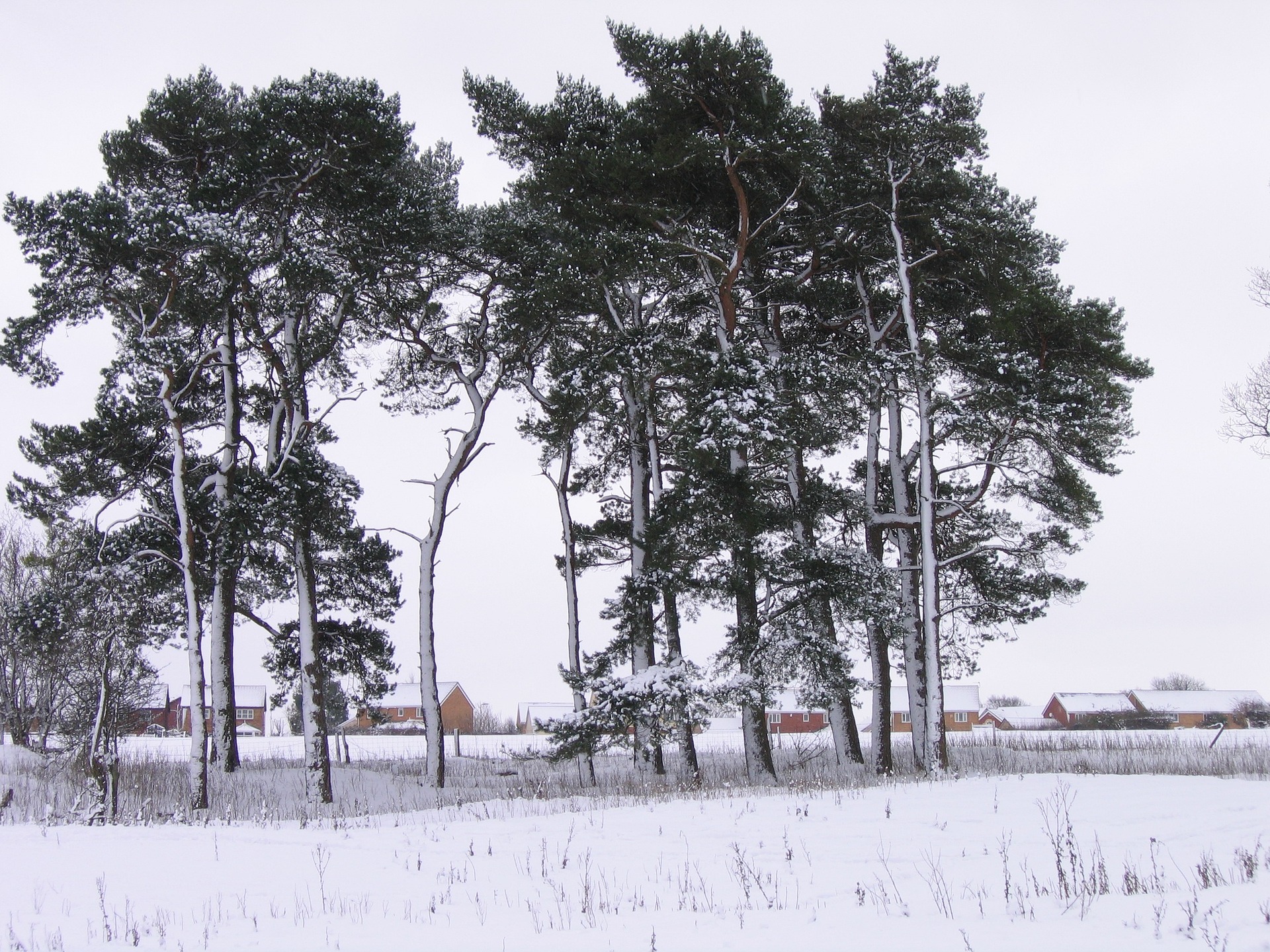
PHOTO: Wales in winter. Photo by Pixabay. 

ABOUT THE AUTHOR: Dafydd ap Gwilym (c. 1315/1320 – c. 1350/1370) is regarded as one of the leading Welsh poets and among the great poets of Europe in the Middle Ages.  It is believed that about 170 of his poems have survived, though many others have been attributed to him over the centuries. He was an innovative poet whose greatest innovation was to make himself the main focus of his poetry. Most of the traditional Welsh court poets kept their personalities far from their poetry, the primary purpose of which was to sing the praises of their patrons. Dafydd’s work, in contrast, is full of his own feelings and experiences, and he is a key figure in this transition from a primarily social poetic tradition into one in which the poet’s own vision and art is given precedence.

Only Exmoor by Kim Whysall-Hammond

exmoor-3809629_1920

Only Exmoor
by Kim Whysall-Hammond

Only Exmoor stretches out to embrace the whole sky in its immensity
Reflects its moods and colours, its nurture and destruction
Only the moor is as fickle as the sky

Today the moor is swallowed as clouds subsume the uplands
Yesterday it shed water like the clouds themselves
Tomorrow it will shimmer with heat, dry and unforgiving

Trees hide in hollows, afraid to stand in the open
Sheep bones litter the spring hillsides
Peaty silty bogs nestle with gorse, bracken and heather

Only Exmoor reaches out to bleed the very rain from the sky
To lie seeming gentle with its folds and billows, green fields abutting the heather
Then to gladly accept the gifts of deadly snow, killing floods, baking heat

First appeared in Peacock Journal in 2017.

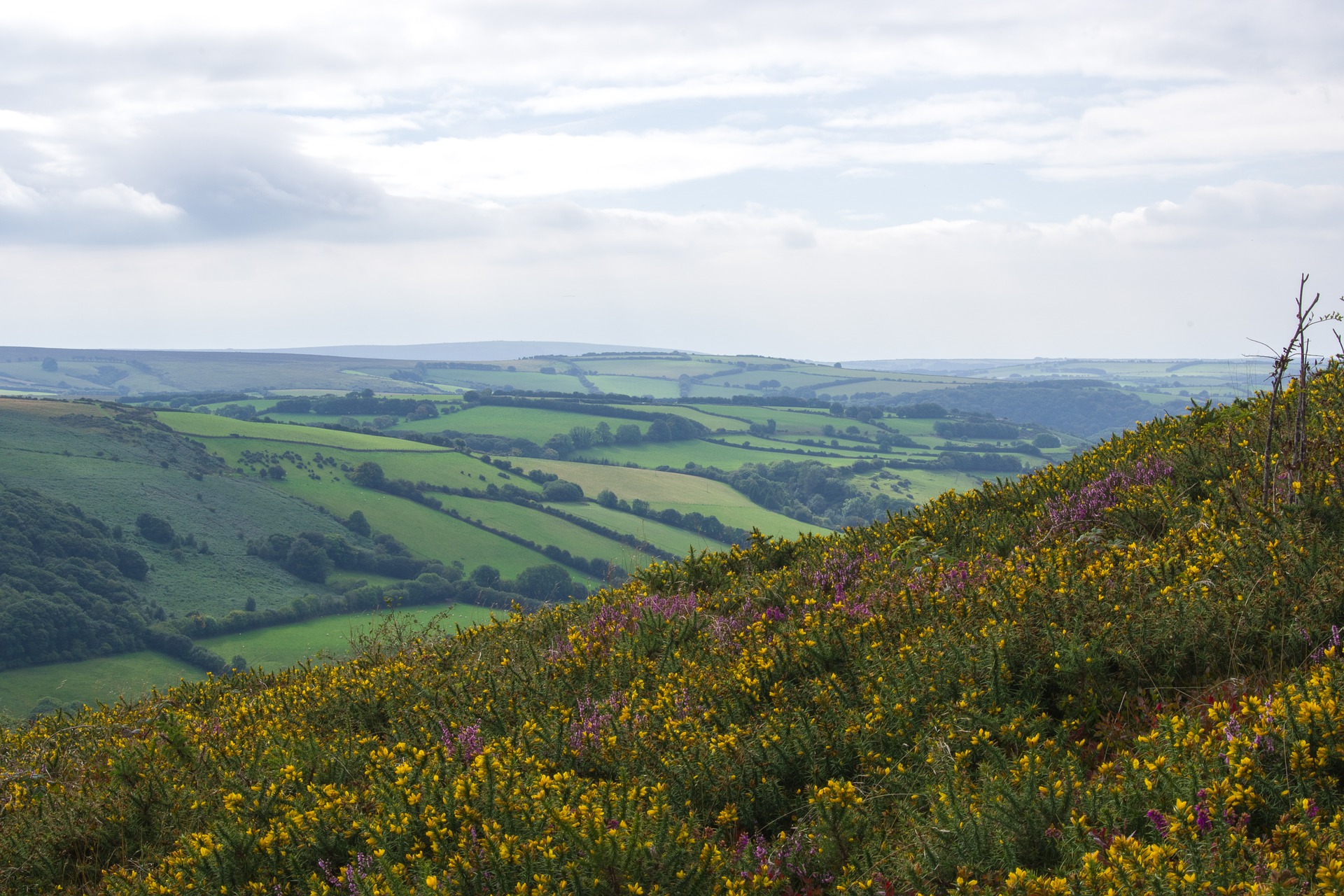
PHOTO: Exmoor, England. Photo by Julia Schwab, used by permission.

NOTE: Exmoor is an area of hilly open moorland in west Somerset and north Devon in South West England. The terrain supports lowland heath communitiesancient woodland and blanket mire which provide habitats for scarce flora and fauna.

NOTE FROM THE AUTHOR: Exmoor is the place of many happy holidays with our two sons. It can be bleak and softly beautiful all on the same day, has several herds of wild ponies roaming free, and is littered with lovely villages with cosy tearooms. Beware, though, people die on the lonely moorlands even in summer. 

kim headshot

ABOUT THE AUTHOR: Kim Whysall-Hammond is a Londoner living in a country town in Southern England. She has been published by Ink, Sweat and Tears, Amaryllis, Allegro, Fourth and Sycamore, The Blue Nib, London Grip, and Crannóg among others.  She has two poems, “Winter in Concrete” and “Glimpse,” in the anthology New Towns edited by Robert Francis,  published by Wild Pressed Books.  She shares poetry on her blog, thecheesesellerswife.wordpress.com.