New Year’s Eve by Warren Woessner

oak bar nyc

New Year’s Eve
by Warren Woessner

5 p.m., corner booth
Oak Bar, Plaza Hotel,
New York City, Center
of the World of all
that matters.

Where a Belvedere martini,
up with a twist, contemplates you
like a languid goldfish
in a clear garden pool,
or a suspended tear

that you can take back inside,
like that first full breath,
in case you need it,
as the world gets ready
to start all over again again.

Poem copyright ©2019 by Warren Woessner, “New Year’s Eve,” from Exit-Sky, (Holy Cow! Press, 2019).

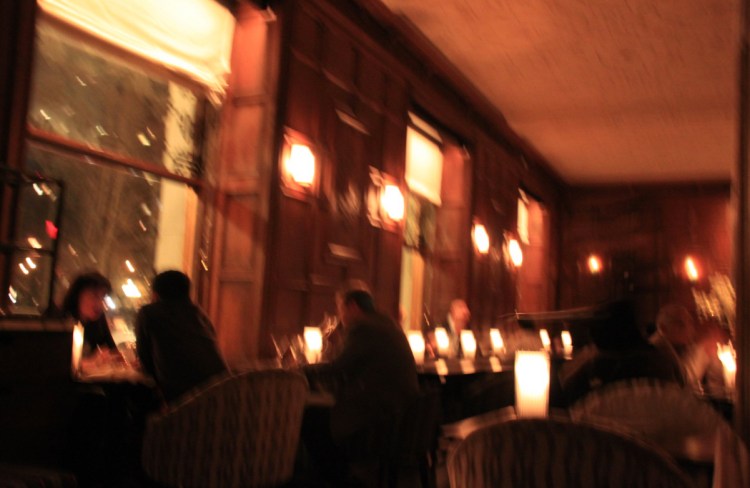
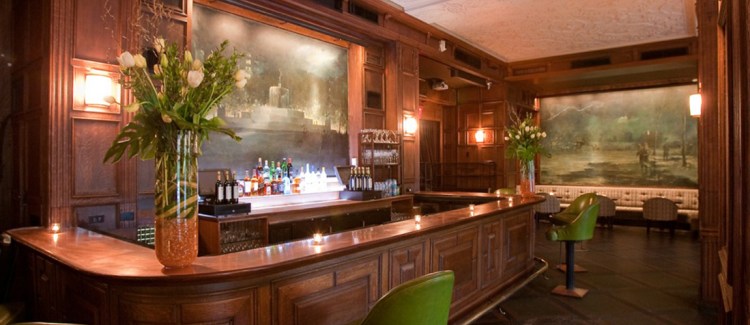
PHOTO: Oak Bar at The Plaza Hotel, Fifth Avenue at, 10 Central Park S, New York City (Dec. 27, 2009) by Tony, © All Rights Reserved.
TheOakBar_02

NOTE: The Oak Bar was established in its current location on the northwest corner of the Plaza Hotel in 1945, when the hotel was under the ownership of Conrad Hilton. For the 1945 opening, a 38-foot oakwood bar was installed, along with three Everett Shinn murals, which remain in place—at a current estimated value of one million dollars each. The Oak Bar is designed in Tudor Revival style, with a plaster ceiling, strapwork, and floral and foliage motifs. A sign on the Oak Bar’s Central Park South windows reads, “Since 1907,” but the bar has been closed since 2011 except for private events.

Belvedere-Vodka-Martini

PHOTO:  Belvedere Classic Martini prepared with Belvedere vodka, dry vermouth, and a pink grapefruit twist, the “languid goldfish” from the poem. (Courtesy photo from belvederevodka.com)

Plaza_Hotel_Birthday_Celebration

NOTE: New York City’s Plaza Hotel, a French Renaissance-inspired château-style building, contains 21 stories and is 251.92 feet tall. The building, which faces Central Park, was designed by Henry Janeway Hardenbergh and built in 1907, with a later addition by Warren and Wetmore from 1919 to 1922. Since its inception, the Plaza Hotel has been an icon of New York City, and has appeared in numerous books and films. The New York City Landmarks Preservation Commission designated the hotel’s exterior and some of its interior spaces as city landmarks, and the building is also a National Historic Landmark.

PHOTO: The Plaza Hotel, New York City in 2007, the year that marked its 100th birthday. Photo by Matt Weaver, used by permission.
warren w

ABOUT THE AUTHOR: Warren Woessner is a poet and patent lawyer in Minneapolis, Minnesota. He earned a BA from Cornell, where he studied with A.R. Ammons, and later earned both a JD and a PhD in organic chemistry from University of Wisconsin-Madison. In 1968, he co-founded Abraxas Magazine in Madison, Wisconsin, with poet James Bertolino. He was also a founder of WORT-FM and hosted its poetry program. His poetry has appeared in PoetryPoetry NorthwestThe NationMidwest QuarterlyCutBankPoet Lore, and 5 A.M.  He is the author of many books, including Clear All the Rest of the Way (The Backwaters Press, 2008), Greatest Hits 1965-2000 (Pudding House Publications, 2003), and Our Hawk (The Toothpaste Press, 2005). His awards and honors include fellowships from the National Endowment for the Arts and the Wisconsin Arts Board. He was a Loft-McKnight Fellow in 1985 and won the Minnesota Voices Competition sponsored by New Rivers Press in 1986.
Federico García Lorca, Little Ballad of Three Rivers

guadalquivir-868945_1920

Little Ballad of Three Rivers
by Federico García Lorca

The Guadalquivir river
Flows between orange and olive.
Two rivers of Granada
Come down from snow to wheat field.

Ah, Love, the unreturning!

The Guadalquivir river
Has banks of ruddy garnet.
Two rivers of Granada—
One weeps, and one is bloody.

Ah, Love, lost in the air!

Seville has a highway
For stately sailing-vessels.
But for Granada water
Only the sighs go rowing.

Ah, Love, the unreturning!

Guadalquivir, high tower,
Wind among orange-blossoms.
Genil and Darro, lowly
And dead among the marshes.

Ah, Love, lost in the air!

Who says the water breeds
Will-o-the-wisps at twilight?

Ah, Love, the unreturning!

Bear olive and orange-blossom
Seaward, O Andalusia!

Ah, Love, lost in the air!

Translated by Rolfe Humphries

SOURCE: Poetry, April 1937 

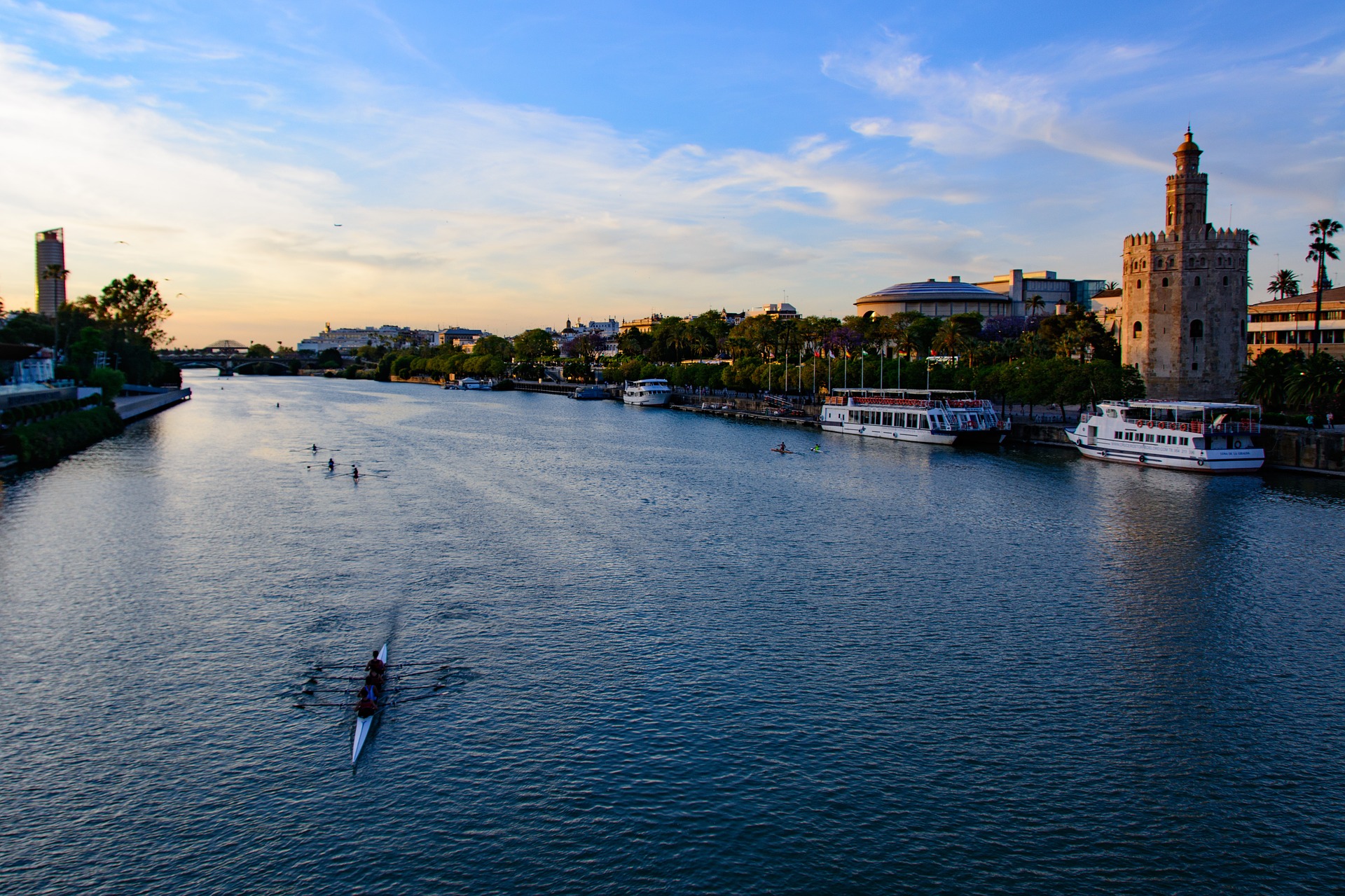
PHOTO: Guadalquivir River, Seville, Spain. Seville is the capital and largest city of the Spanish autonomous community of Andalusia and the province of Seville. The city is situated on the lower reaches of the Guadalquivir River, in the southwestern part of the Iberian Peninsula. At 408 miles, the Guadalquivir is the second longest river in Spain, and the country’s only river navigable by large ships, currently navigable from the Gulf of Cádiz to Seville. Photo by Gerhard Bögner, used by permission. 

spain erlantz perez licensed

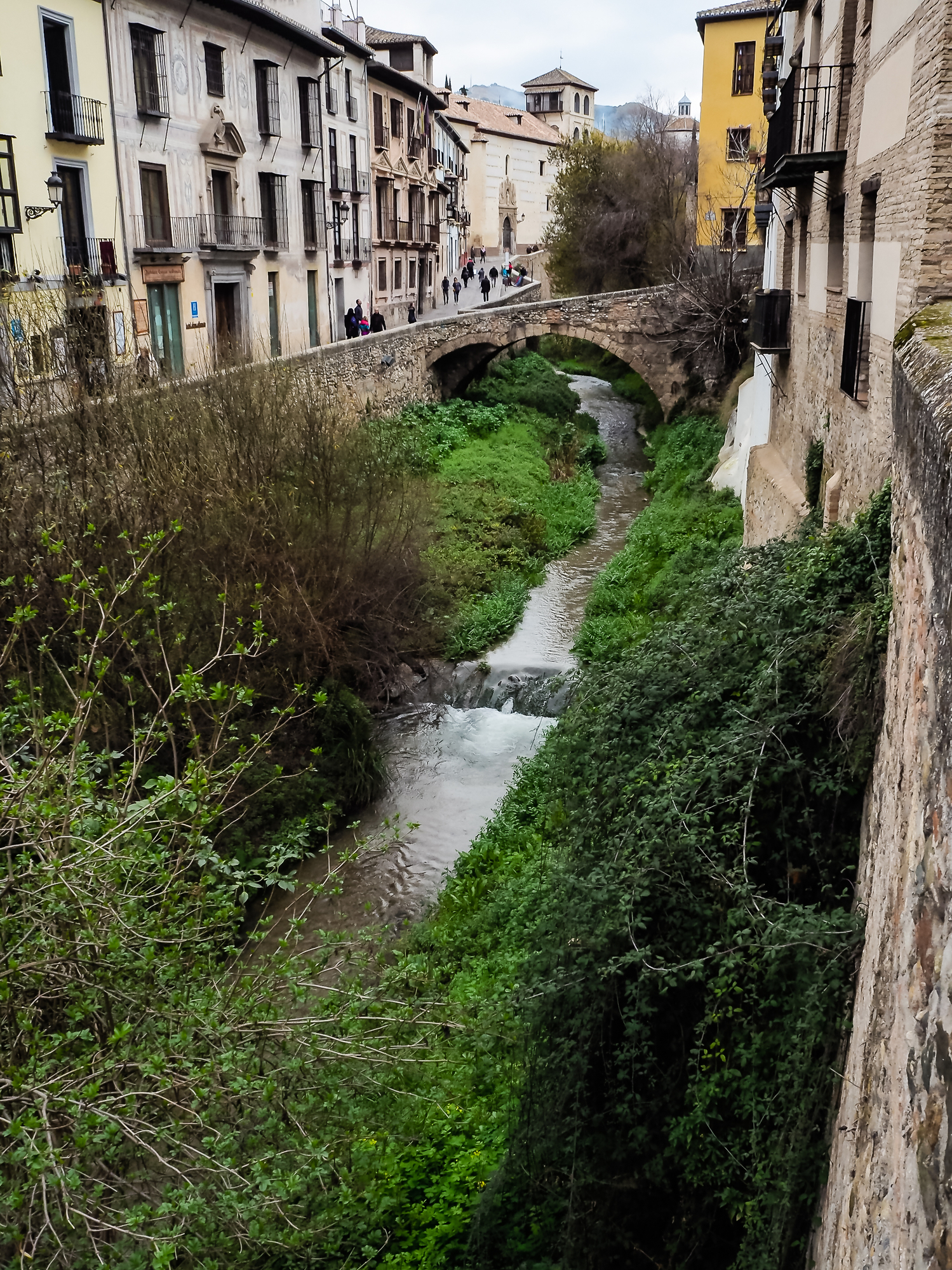
FROM Granadainsider.com: As the city of Granada, Spain, expanded in the 18th Century, the Darro River was paved over to control its flow and prevent floods. Another of Granada’s rivers, the Genil, travels from its source as spring melt in the Sierra Nevada Mountains, and is dammed upstream and channeled into reservoirs supplying the city.  After picking up the Darro, the Genil continues its journey west out of the city, where it is joined by a smaller tributary, the Monachil, before merging with the Guadalquivir—one of Spain’s foremost rivers. These three rivers, the Darro, Genil, and Guadalquivir form the basis of one of Federico García Lorca’s most famous poems, “Baladilla de los tres ríos.” In the poem, the poet contrasts the expansive, free-flowing Guadalquivir with the paved-over Darro and dammed-up Genil. (Adapted from “The Two Rivers of Granada” by Derek Dohren, Granadainsider.com.)

PHOTO: Darro River, Granada, Spain. Photo by Erlantz Perez, used by permission. 

lorca-4

ABOUT THE AUTHOR: Federico García Lorca  (June 5, 1898-August 19, 1936) was a Spanish poet, playwright, and theatre director. García Lorca achieved international recognition as an emblematic member of the  Generation of ’27, a group consisting of mostly poets who introduced the tenets of European movements (such as symbolism, futurism, and surrealism) into Spanish literature. He is believed to have been killed by Nationalist forces at the beginning of the Spanish Civil WarHis remains have never been found. 

Cold Cabin by David Bachner

lake cabin 1

Cold Cabin
by David Bachner

The Maine winter set in. Up until then, we would find isolated
places outdoors to make love, our two sleeping bags zipped together.
But when it got too cold for that our options were limited: neither
of us had a car; all of our friends lived in dorms, like us; we were
too young to get a motel room; and even if we had somewhere to go,
in Maine, circa 1962, you could be arrested for having unmarried sex.

Then we had a windfall. The family of Marsha, Phyllis’s roommate,
had a cabin on Mooselookmeguntic Lake, near Rangeley. “You can
use it this weekend,” Marsha said. “Pete”—her boyfriend—“and I
are kind of taking a break from each other. The cabin’s not heated,
and there’s no electricity, but it’s got a fireplace. Just make sure
you have enough wood. And don’t let the fire die out.”

Marsha dropped us off that Saturday night, lit a fire, said she’d be
back to get us in the morning, and drove away. Later, sated and
drowsy from wine, Phyllis and I fell asleep in our zipped-together
sleeping bags. We awoke to the terrible cold. The fire was out.
There was no other source of light. The only wood I could find was
hard and frozen. Soon there were no more matches.

We considered walking our way out. But walk where? We couldn’t
see, and the closest village, Oquossoc, was miles away. We figured
the sleeping bags were our best bet and huddled there like one body.
“We’ll die here,” Phyllis said. But she wasn’t crying, so I tried
not to. We spent the hours talking, whispering our regrets for what
we would never be or do, sharing our most intimate secrets.

A flashlight woke us up. “It’s freezing in here,” Marsha said
as she poured two mugs of hot coffee from a thermos. “I was
at a family friend’s house down the lake and got worried when I
didn’t see any smoke or firelight here. Damn lucky I came back.
What were you two thinking? This is Maine.”

The three of us walked to the car. Marsha drove and searched
for music on the radio. In the back seat, Phyllis and I covered
ourselves with the sleeping bags and held each other. Outside,
the black Rangeley night encompassed us. No one spoke.

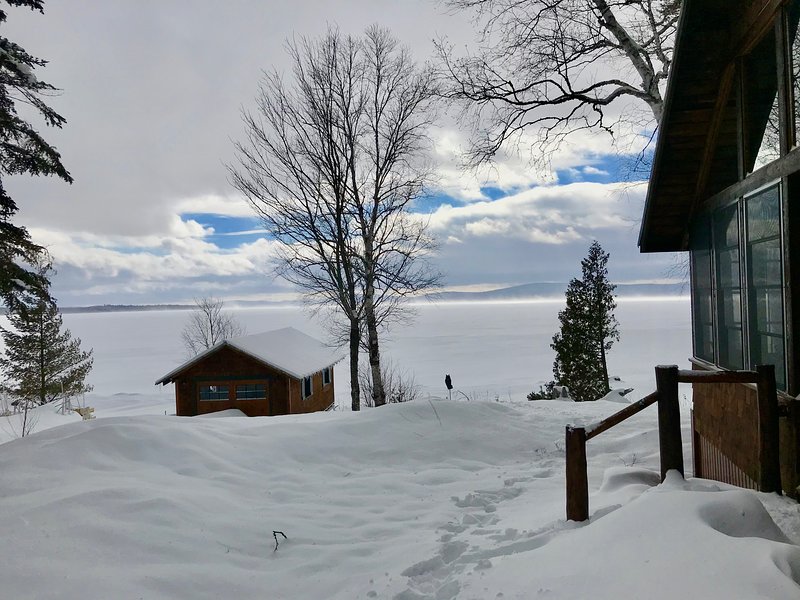
PHOTO: Cabin and boathouse on Mooselookmeguntic Lake, western Maine, in winter, with frozen lake in background. Photo by tripadvisor.com, All Rights Reserved.

Maine haveseen licensedjpg

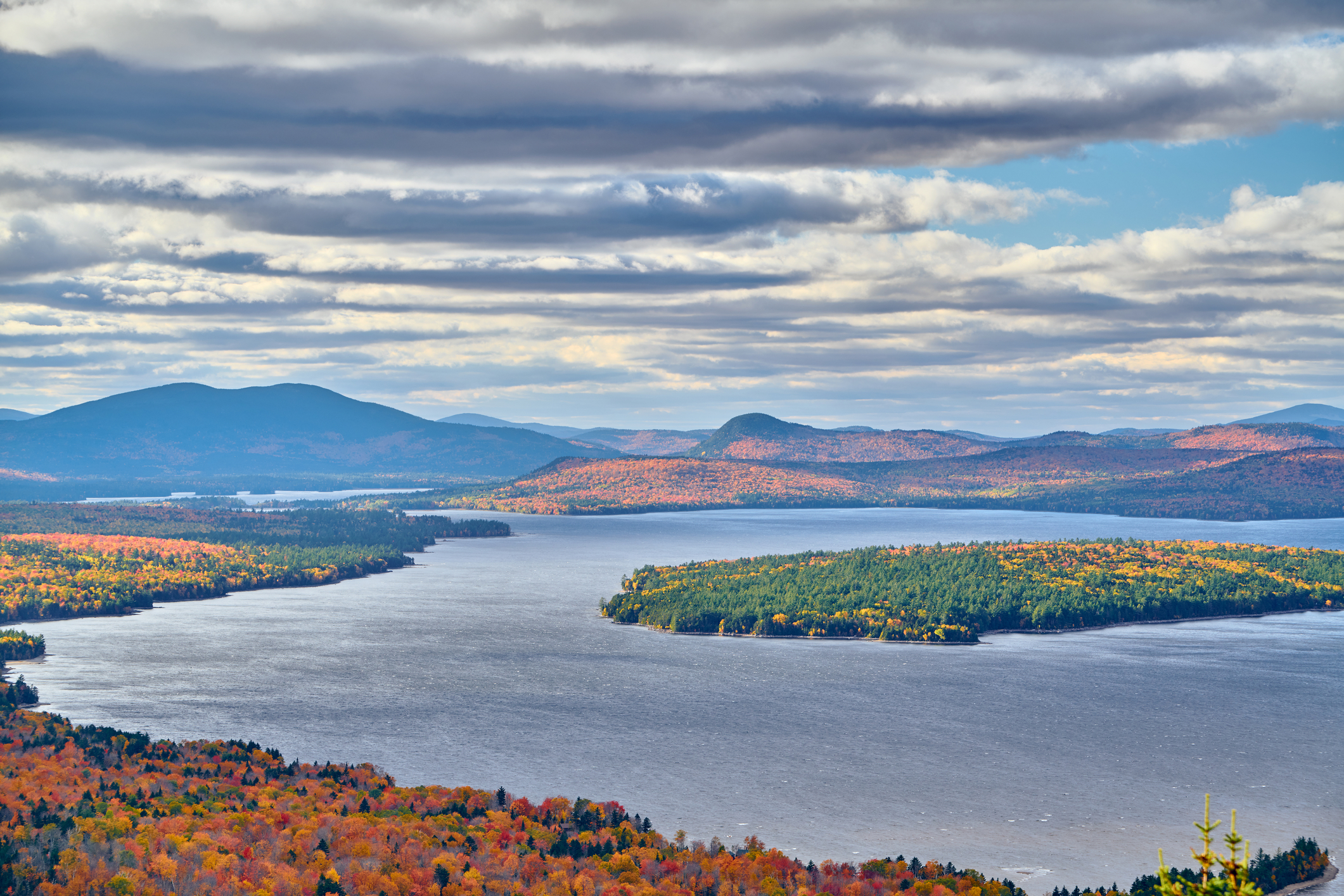
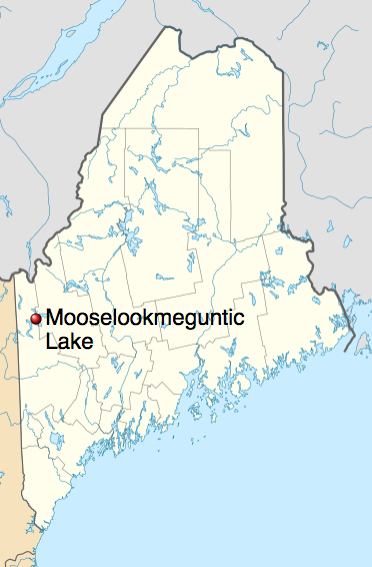
NOTE: Mooselookmeguntic Lake’s maximum depth is 132 feet and its surface area is 25.5 square miles, making it the fourth largest lake in Maine. Located just a few miles from the Appalachian Trail, the southern portion of the lake features two islands—Toothaker Island and Students Island. At 17 letters, Mooselookmeguntic, an Abnaki word for “moose feeding place,” is tied for the longest place name in the United States, along with Kleinfeltersville, Pennsylvania. Mooselookmeguntic Lake is the location of the action in Magic Thinks Big, an illustrated children’s book by Elisha Cooper, that features paintings of one of the islands in the lake, as well as a panorama of the lake.

PHOTO: Mooselookmeguntic Lake in autumn, with one of its two islands visible and Maine’s Western Mountains in the background. Photo by Haveseen, used by permission.

map1

NOTE FROM THE AUTHOR: Mooselookmeguntic is one of six large lakes in the Rangeley Lakes region of western Maine, close to the state’s borders with New Hampshire and Quebec.  It’s a beautiful area, but bleak and forbidding in winter, when nighttime temperatures regularly drop below zero.  This was weather I was hardly prepared for as a first-year student, from New Jersey, at Bates College in the 1960s.

BACHNER

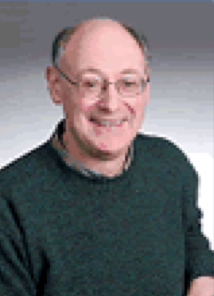
ABOUT THE AUTHOR: David Bachner is a retired college dean and professor, most recently at American University’s School of International Service. His research, teaching, and program administration focused on international education and intercultural relations, career-long specializations that were deeply influenced by his experiences as a university student in Japan and Peace Corps volunteer in Korea. David lives in Washington, DC, and is a frequent visitor to upstate New York, where he participates in an ongoing poetry workshop sponsored by Bright Hill Press and Literary Center of the Catskills. His recent publications include Capital Ironies: Washington, DC Poetry and Prose (Woodland Arts Editions, 2020) and four poems selected for Seeing Things: An Anthology of Poetry (Woodland Arts Editions, 2020).  Several of his haiku will be published in Sequestrum in 2021.

Robert N. Coats, Searching for Arborglyphs

Kent Vertrees 1

Searching for Arborglyphs
by Robert N. Coats

In the Jarbidge Range, my seventeenth year,
I drove up dusty dirt roads,
across clanging cattle guards,
hiked into high meadows and aspen groves.
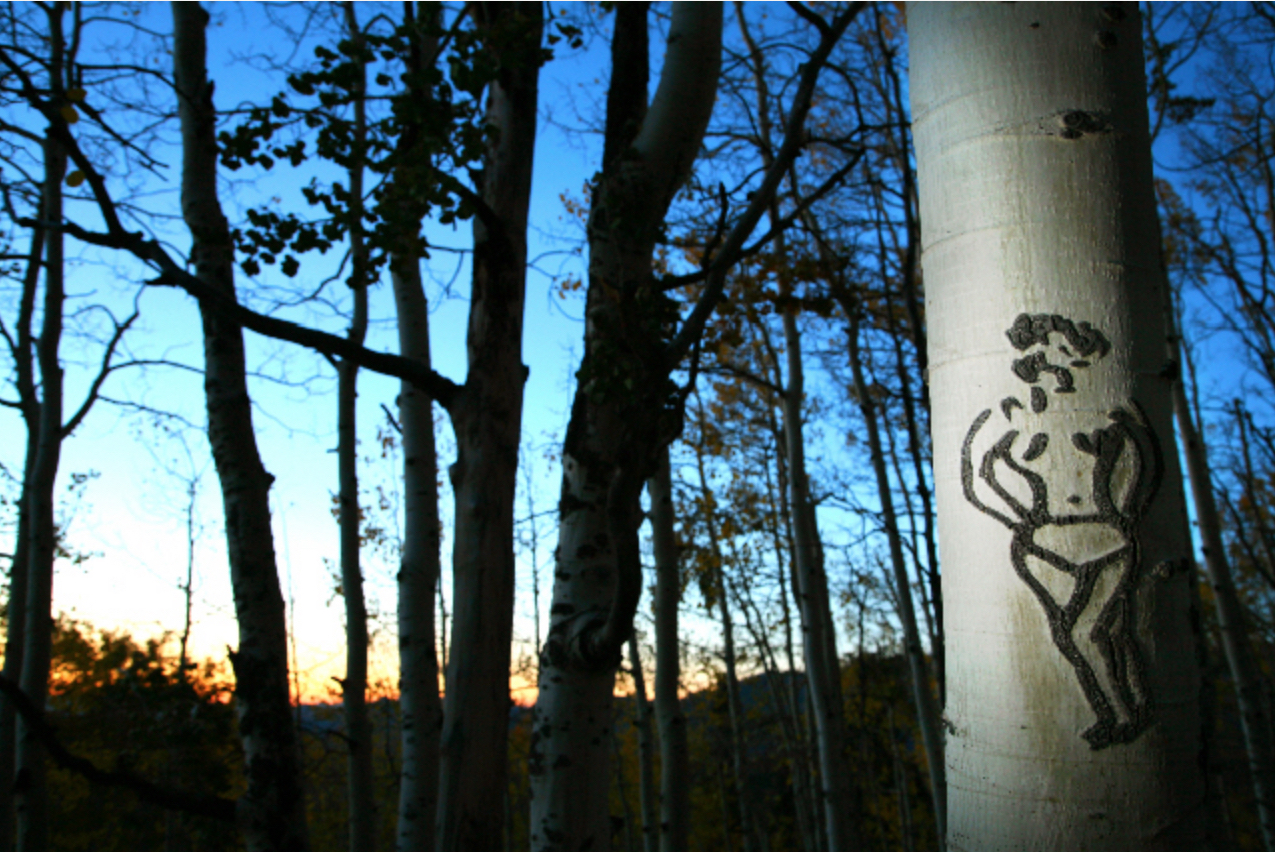
There I found the spot
where in 1929, Efrain Madariaga
of Iparralde, Spain scribed his name,
and a record of his loneliness and desire:
a Picassoesque image of a woman
drawn with great skill
in explicit and erotic detail.

At every chance now, in the watersheds
of the Humboldt, Carson, Truckee, and Walker
I look in aspen groves for the records
left by Basque sheepherders
who worked alone all summer,
gazed out across the arid valleys,
thinking of family left behind.

Those men, their dogs and longing
are gone now. All that remain
are the silent testimonies of men uprooted
and these will not last.
Still, cobwebs of virga hang
from afternoon thunderclouds.
The up-canyon wind shivers the aspen leaves,
carrying the scent of sagebrush and Wyethia.

Previously published in the Fall 2014 issue of Windfall, and in the author’s collection The Harsh Green World (Sugartown Publishing, 2015).

PHOTO: Arborglyph carved by a Basque sheepherder on an aspen tree. Photo by Kent Vertrees, All Rights Reserved.

basque country

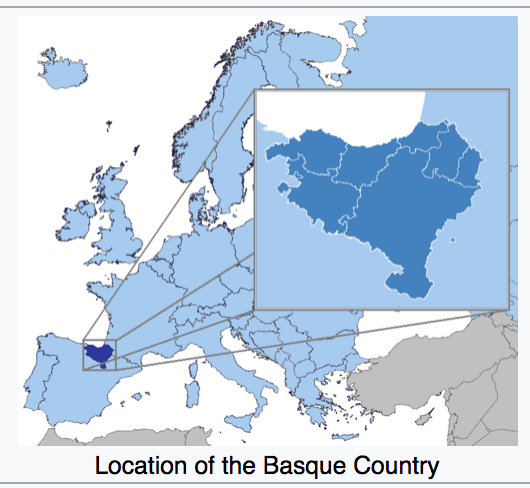
NOTE: The Basque are known as Europe’s first family since their language and culture is more ancient than any other on the continent. Basques are indigenous to and primarily inhabit an area traditionally known as the Basque Country, a region located around the western end of the Pyrenees Mountains on the coast of the Bay of Biscay that straddles parts of north-central Spain and southwestern France. Starting with the 1849 Gold Rush, Basques sought their fortune in the American West. After failing to find gold, most of were employed in the sheep business. To express their feelings, Basque sheepherders carved words an images on aspen trees. Today, there are very few aspen carvings dating before 1900, since aspen trees only live about 100 years. Most of the carvings are names and dates, and many are in the Basque language, Euskara.  The Basque sheepherders skillfully carved without injury to the living tree.

colorado teri verbickis

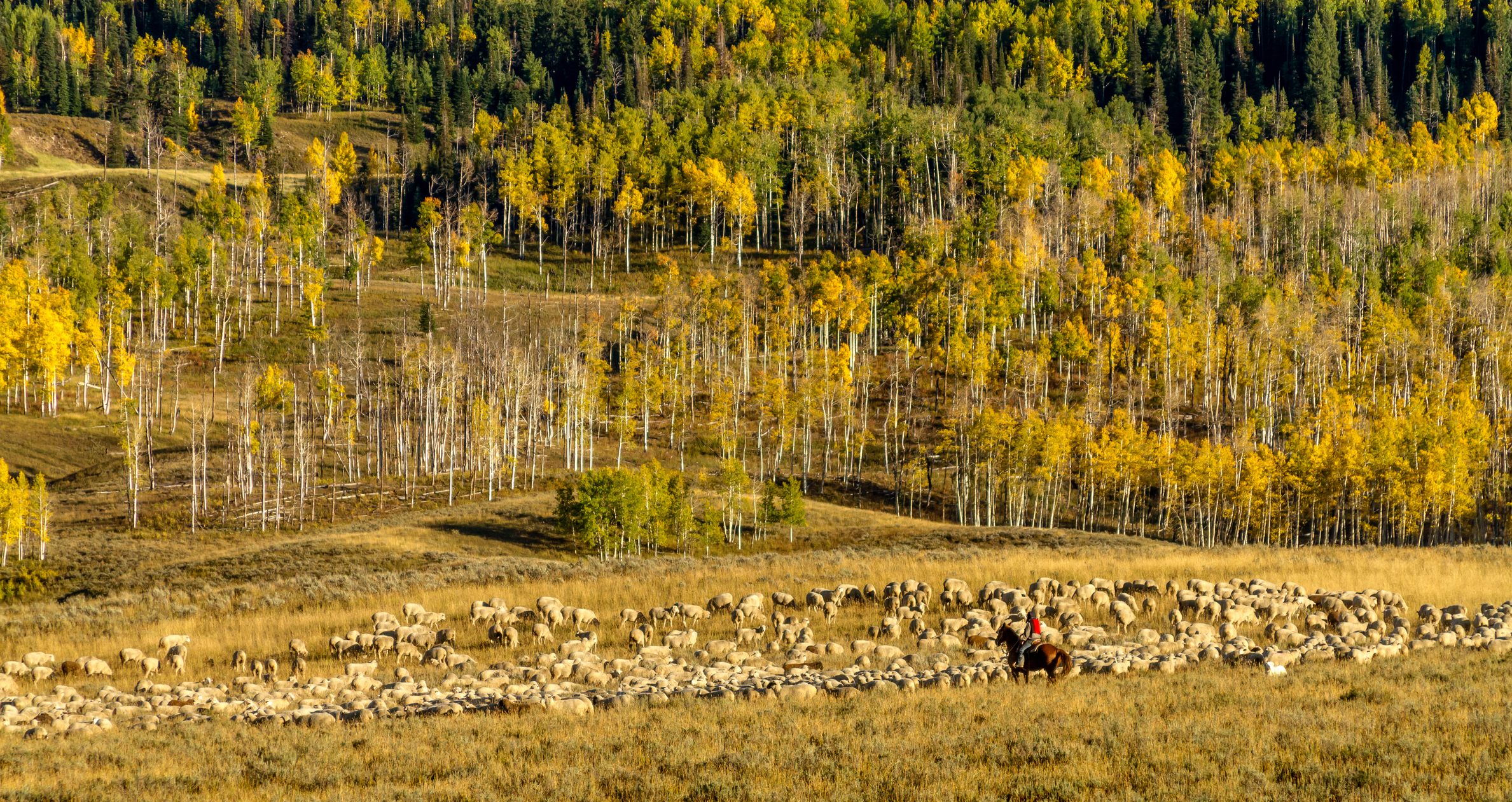
Excerpt from “Basque Sheepherding in the American West” by William A. Douglass: By the 1940s, the sheep industry was experiencing a severe labor crisis. To remedy this situation, the U.S. Congress passed a series of “Sheepherder Laws” conferring permanent residence on Basques who were herding sheep as illegal aliens. Sheepherders created the Western Range Association to recruit herders (mainly in Spain) for three-year labor contracts in the American West. From 1950 until the mid-1970s the system introduced several thousand Basques workers into the United States. The struggle over access to public lands between ranchers and environmentalists that limited livestock grazing permits, along with the improved economic conditions in Europe’s Basque Country shifted the recruiting efforts toward Latin America (Mexico, Peru and Chile). By the mid-1970s there were fewer than 100 Basque sheepherders in the American West.

PHOTO: Basque sheepherder on horseback with his flock on mountainside with aspen trees, near Steamboat Springs, Colorado. Photo by Teri Virbickis, used by permission.

1943

NOTE FROM THE AUTHOR: In the first half of the 20th Century, ranchers in the Great Basin recruited men from the Basque villages in Spain and France to work as sheepherders. For information about the tree carvings and the Basque communities in the Intermountain West, see: Speaking Through the Aspens, by J. Mallea-Olaetxe (University of Nevada Press, 2000). The poem is based on my experience in a remote area in northern Elko County, Nevada, where I was fortunate to spend summers during my teenage years.

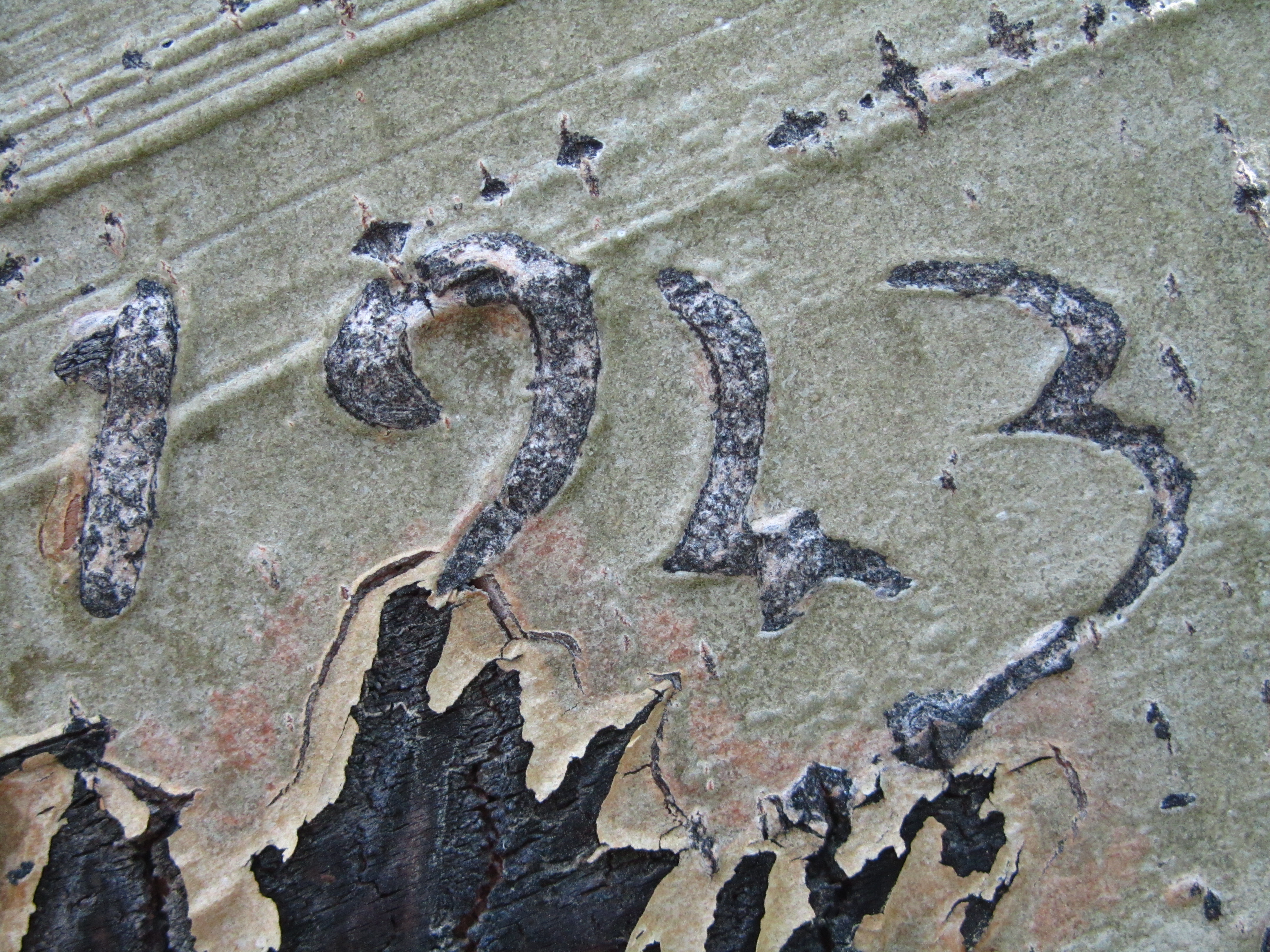
PHOTO: Basque tree carving of highly stylized numerals on an aspen tree near Bridgeport, California. Photo by the author.

coats1

ABOUT THE AUTHOR: Robert N. Coats has been writing poetry for more than 40 years. His poems have appeared on the Canary Website, in Orion, Zone 3, Windfall, Song of the San Joaquin, in two anthologies (Fresh Water: Poems from the Rivers, Lakes and Streams and Fire and Rain: Ecopoetry of California, and in his book The Harsh Green World, published by Sugartown Publishing.  He is a Research Associate with the University of California Davis Tahoe Environmental Research Center.

Native Village by Fuyuji Tanaka

japan zeptems licensed

Native Village
by Fuyuji Tanaka

A smell of dried flounder broiling
At lonely noon-time in my native village

Houses, their shingled roofs
Weighted down with stones…
Frugal smell of dried flounder broiling
This lonely noon-time in my native village.

On the empty white road
A snow-vendor from the mountains walks alone.

SOURCE: Poetry, May 1956

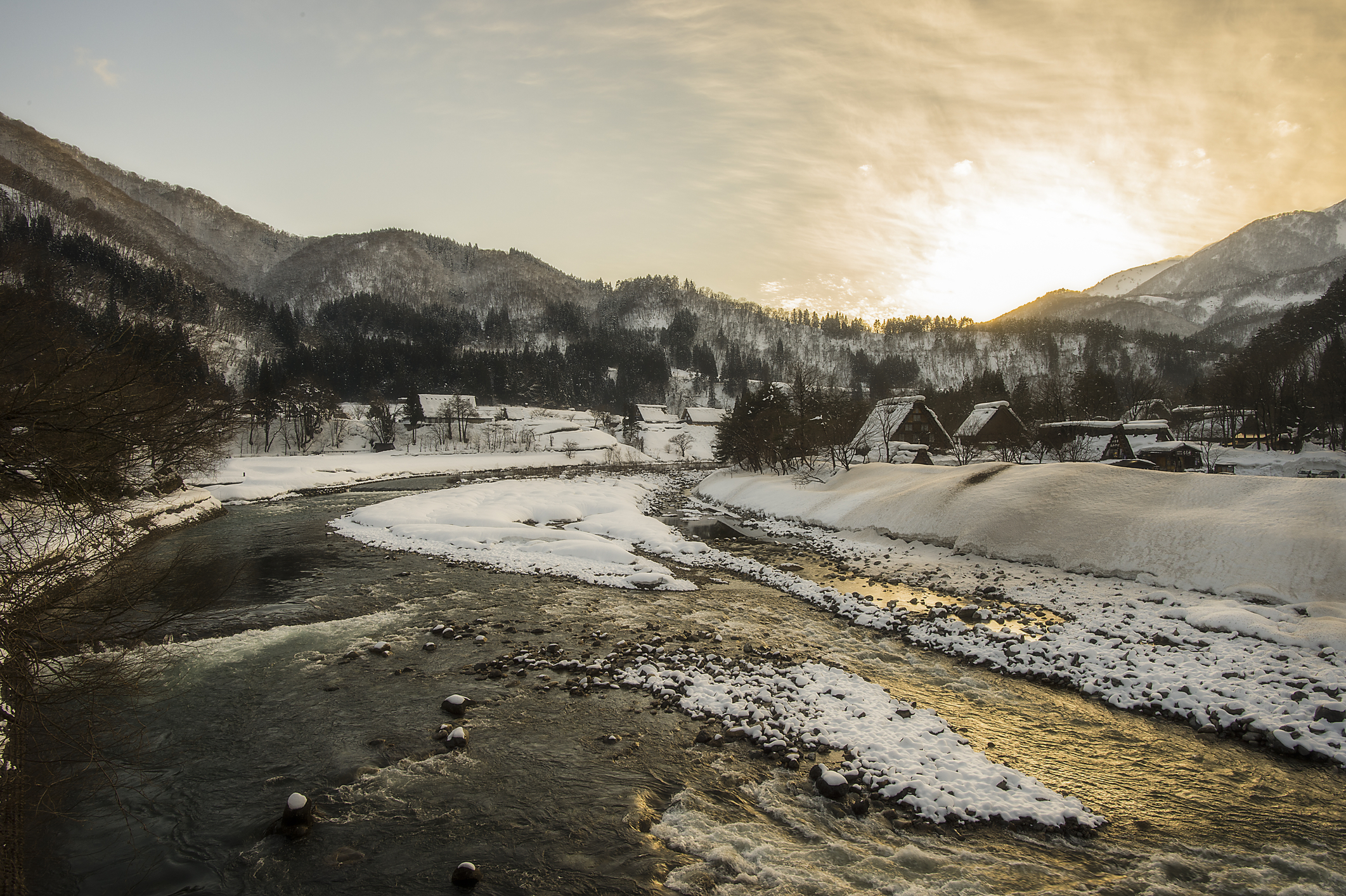
PHOTO: Shirakawa-gō village, Japan. Photo by Zeptems, used by permission.

Ogimachi_Village-01

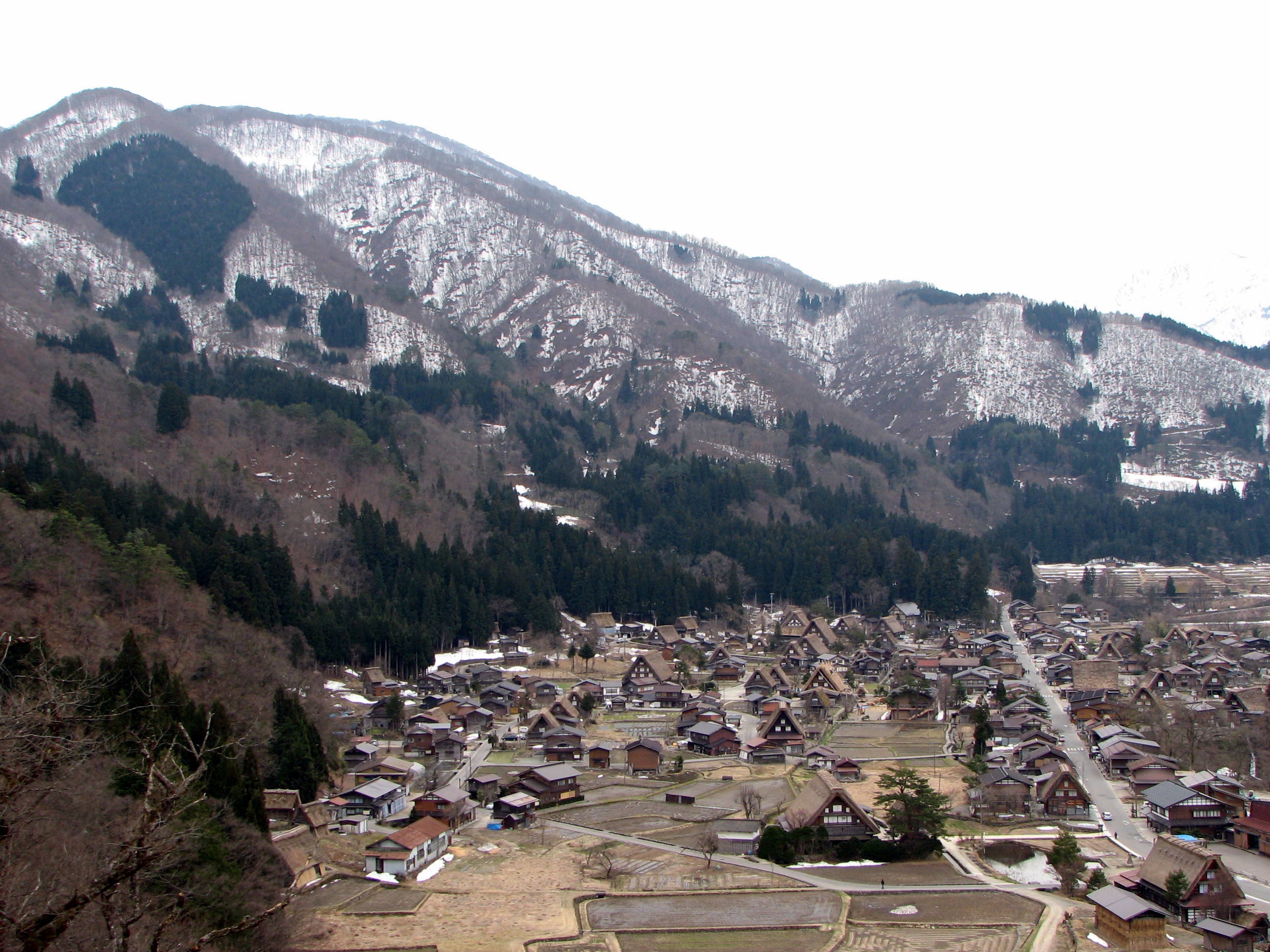
NOTE: The Historic Villages of Shirakawa-gō and Gokayama are one of Japan’s UNESCO World Heritage Sites. The cultural property consists of three historic mountain villages over an area of 170 acres in the remote Shogawa river valley in central Japan. Shirakawa-gō  translates to “White River Old-District.”

PHOTO: Ogimachi Village, from Shiroyama viewpoint, Shirakawa-gō, Gifu Prefecture, Japan. Photo by Bernard Gagnon, used by permission.

hiroshige snow

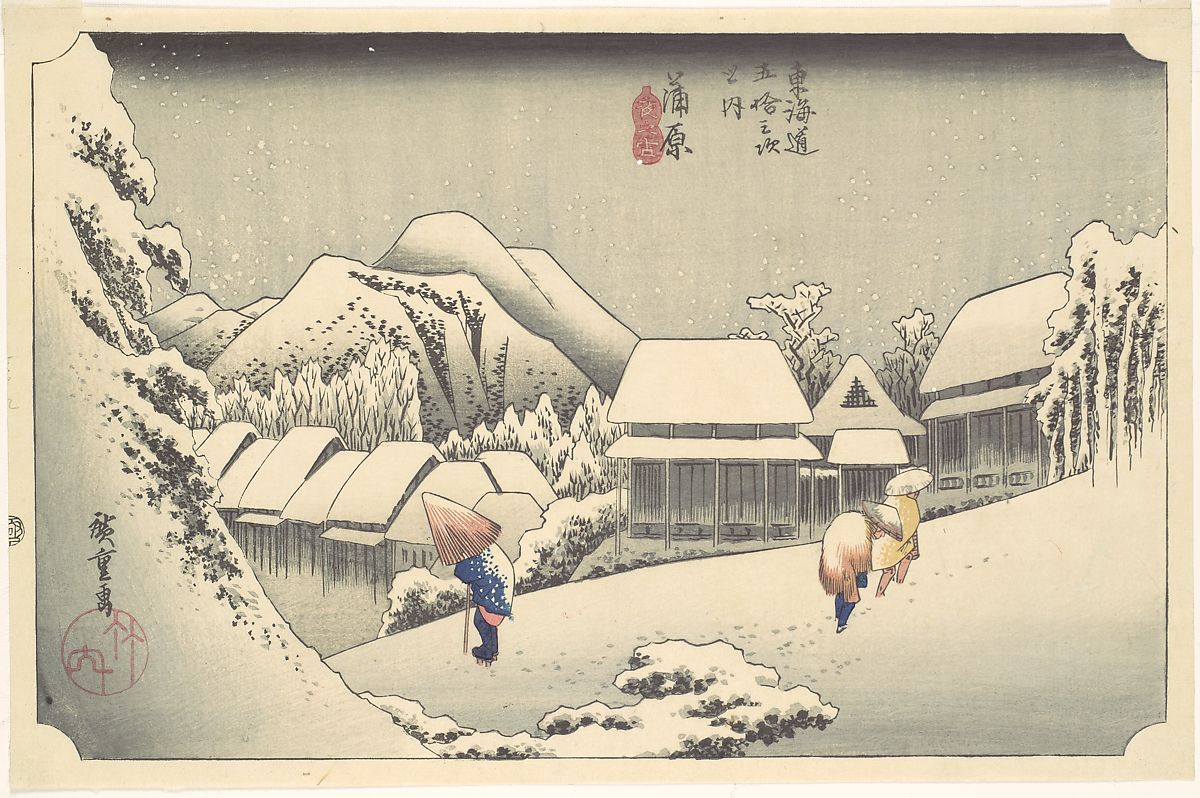
IMAGE: Evening Snow at Kanbara by Utegawa Hiroshige (1833), part of The Fifty-Three Stations of the Tōkaidō, a series of woodcut prints created by Hiroshige after his first journey along the Tōkaidō road in 1832. During the winter months, the village dwellers subsisted on dried fish, as mentioned in the poem. 

fish drying rack

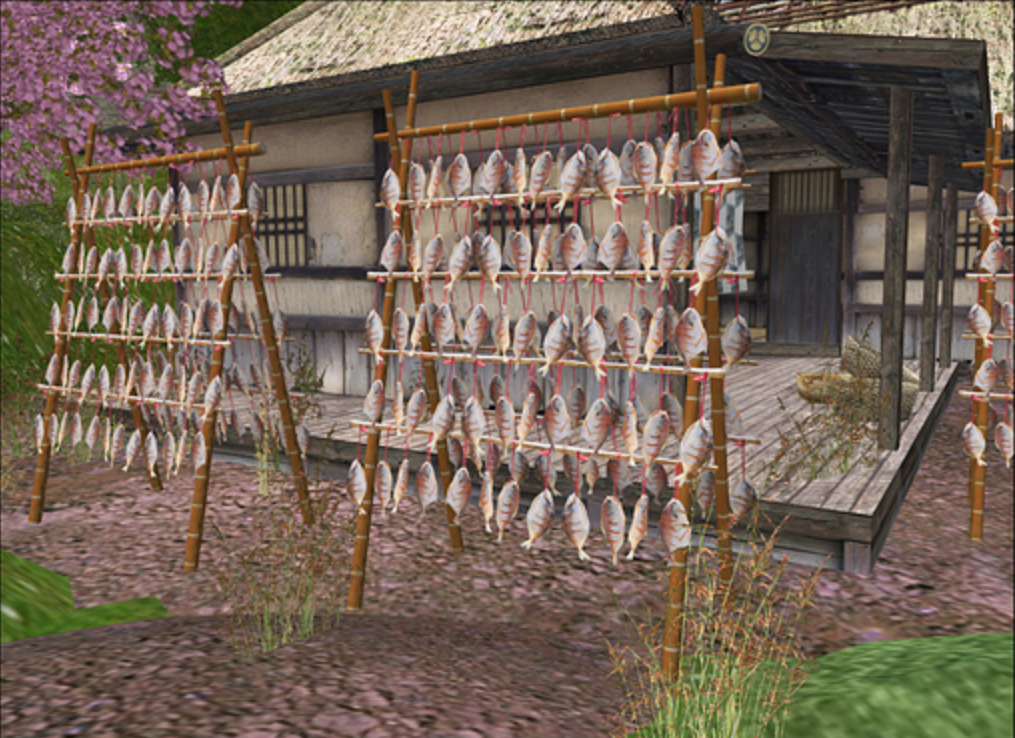
FROM The Japan Times: Japan is famous as a nation that loves raw seafood. But dried fish has a much longer history and has played an important role in Japanese society for hundreds of years. There are basically two kinds of dried fish products in Japan. The first, which goes by various names, is dried (sometimes after fermenting) for a long period until it’s rock-hard and keeps very well, such as katsuobushi—fermented and dried skipjack tuna or bonito that is shaved like wood and used in dashi stock. The other type is usually called himono (roughly translates as “dried things”), which is typically grilled and eaten as-is. (Excerpt from “Before Japan ate raw fish, there was himono” by Makiko Itoh, The Japan Times, Nov. 20, 2015.)

PHOTO: Fish drying on bamboo rack in Japanese village. Photo by marketplace.secondlife.com, All Rights Reserved.

ABOUT THE AUTHOR: Fuyuji Tanaka (1894-1980) was a poet from Japan. Seven of his poems appeared in the May 1956 edition of Poetry. 

December 1991 by David Hare

france pascalkfl licensed

December 1991
by David Hare

She drove me to Trouville in her black Volkswagen droptop
Leaving Paris early by the Peripherique and getting there by noon
There was frost even on the inside of the slanted back window
And the laughable so-called heater pretty soon

Gave out. The tyres rocked on the brittle brown concrete.
The car shook. The frozen air thickened like a knife,
Pellucid, and we left a trail of hot breath through Northern France.
As we travelled I thought “New life.”

New life. Deauville went by, with its curious timbered medieval
Travesty of a hotel. Thank God we’re not lunching there.
We prefer to head for white-tiled, cheap and cheerful,
A neon-lit, salty lunch at Les Vapeurs where

Our idea of what is good, pithy little peppered shrimp and oysters,
Dredged from the bed, sole, chips, beer, coincided. “Oh this is what she likes.”
The mud-brown beach stretching away beyond
And the silver sea motionless, trapped, unchanging, painted; estuaries, dykes

Small boats, dredgers, abandoned, the weather
Too raw for anyone, however calloused by experience, to pass red hands over rope.
This is the place, bracing then, where I find what it turns out I’ve been looking for,
By the sand, by the water, the what-you-don’t-even-know-you’re-missing: hope.

Originally appeared in The Guardian (December 7, 2012).

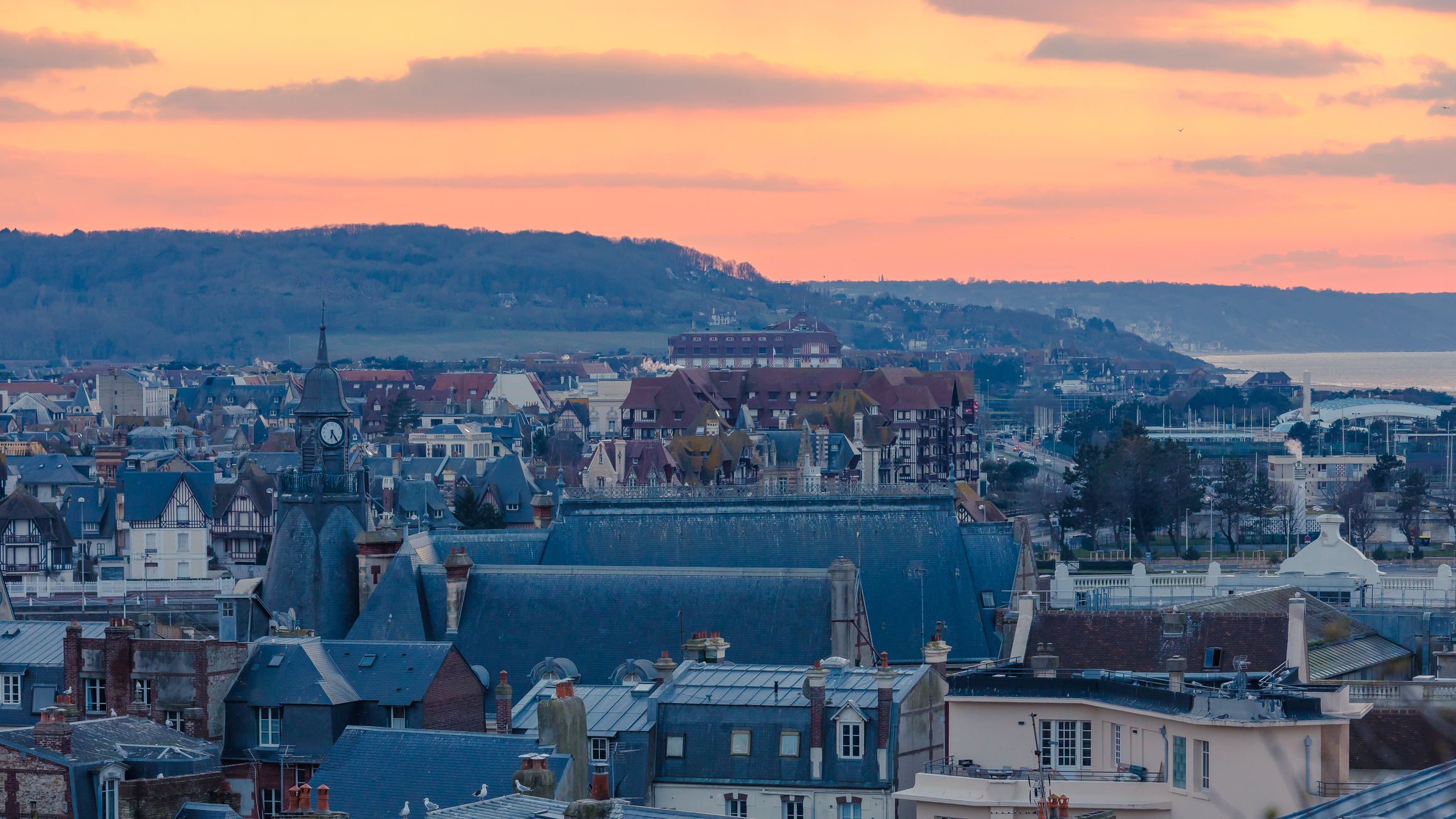
PHOTO: Sunset over the cities of Deauville and Trouville-Sur-Mer in the Normandy Region, Northern France. Photo by Pascalkfl, used by permission.

NOTE: Trouville-sur-Mer is seaside resort and port in Northern France, about 300 miles from London, England, and two miles from Deauville-les-Bains.  Wooded hills above Trouville give way to a magnificent sandy beach and yield picturesque views of the twin towns. Near the beach is a casino, with a theatre and a local history museum. The combined towns are among the most frequented French resorts on the English Channel.

france philippe halle licensed

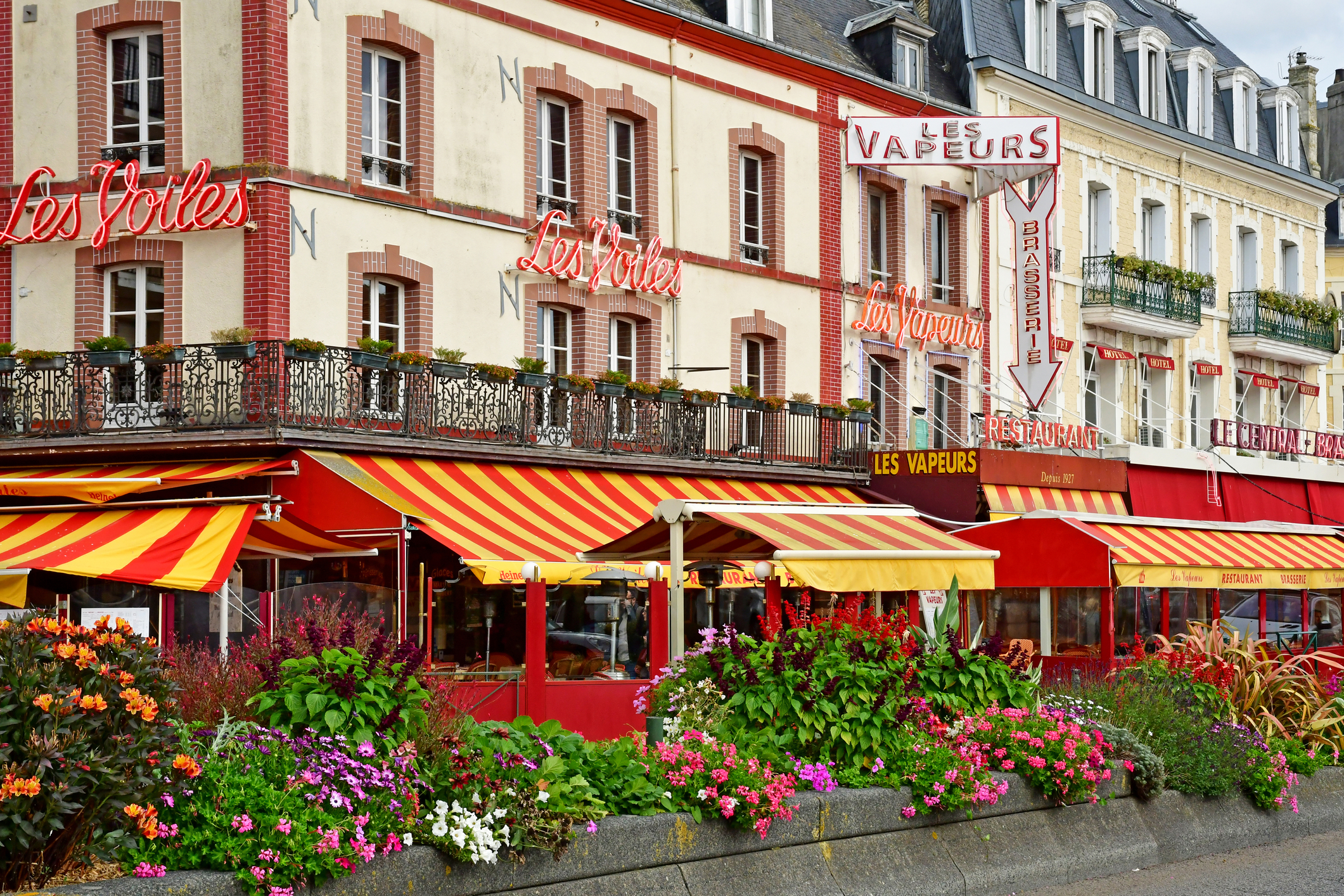
PHOTO: Les Vapeurs, Trouville-Sur-Mer, France, the restaurant mentioned in the poem. Photo by Philippe Halle, used by permission.

1024px-David-Hare-edinburgh-film-festival-2018_(cropped)

ABOUT THE AUTHOR: David Hare is a British playwright, screenwriter,  and theatre and film director. He received Academy Award nominations for Best Adapted Screenplay for writing The Hours in 2002 and The Reader in 2008. London West End productions of his plays include Plenty (1978), Racing Demon (1990), Skylight (1997), and Amy’s View (1998). The four plays ran on Broadway, earning Hare three Tony Award nominations for Best Play and two Laurence Olivier Awards for Best New Play. His recent television projects include the BBC productions Collateral (2018) and Roadkill (2020). In 2010, Hare started writing poetry for his own pleasure, occasionally reading a poem aloud to mark celebrations. When he turned 70 on June 5, 2017, he decided to give himself a birthday present: the private publication, for friends only, of his selected poetry, under the title December 1991 and Other Poems. Hare was knighted in 1998, and his memoir, The Blue Touch Paper, was published in 2015. He recently recovered from Covid-19, and wrote about the experience in theater piece featuring Ralph Fiennes, Beat the Devil: A Covid Monologue, that ran from August 27-October 31, 2020 at The Bridge Theatre, London. The Guardian reviewer said, “Hare’s illness brings terrors but it is also transformative. ‘I’m so glad to be alive,’ he says, and we glimpse a man…who has gone through delirium and despair and come out the other side empathetic, grateful, changed.” The monologue is available in book form at Amazon.com.

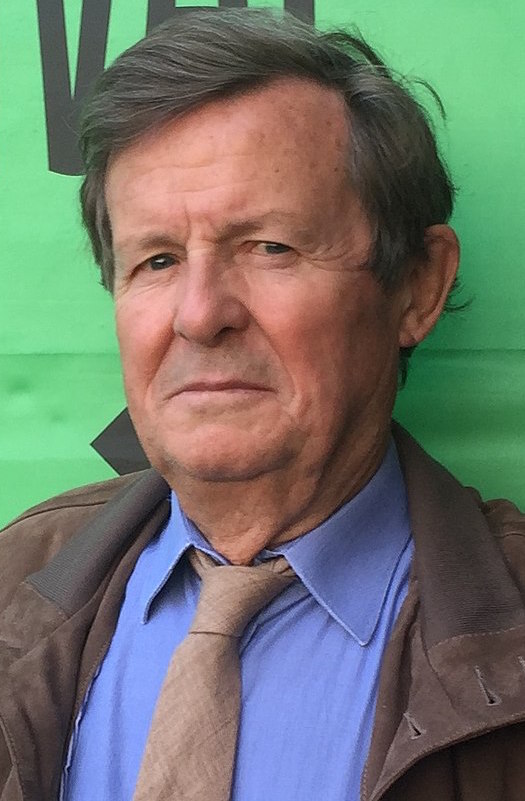
Author photo by Peter Burnett, used by permission. 

Some kind of nut by Charles Bukowski

thr3-eyes-bQao7AV7Ilk-unsplash

Some kind of nut
by Charles Bukowski

the best Christmas I can remember
I was in a tiny room in
Philadelphia
and I pulled down all the
shades
and went to bed
and pulled up the
covers.

there was no telephone.
there were no Christmas cards.
there was no family.
there were no gifts

and I believe that I felt better
than anybody in that
city
and almost anybody
in any of the
cities.

and I celebrated New Year’s
Eve in the same
manner.

SOURCE: Unpublished poem, December 27, 1989. (Bukowski.net.)

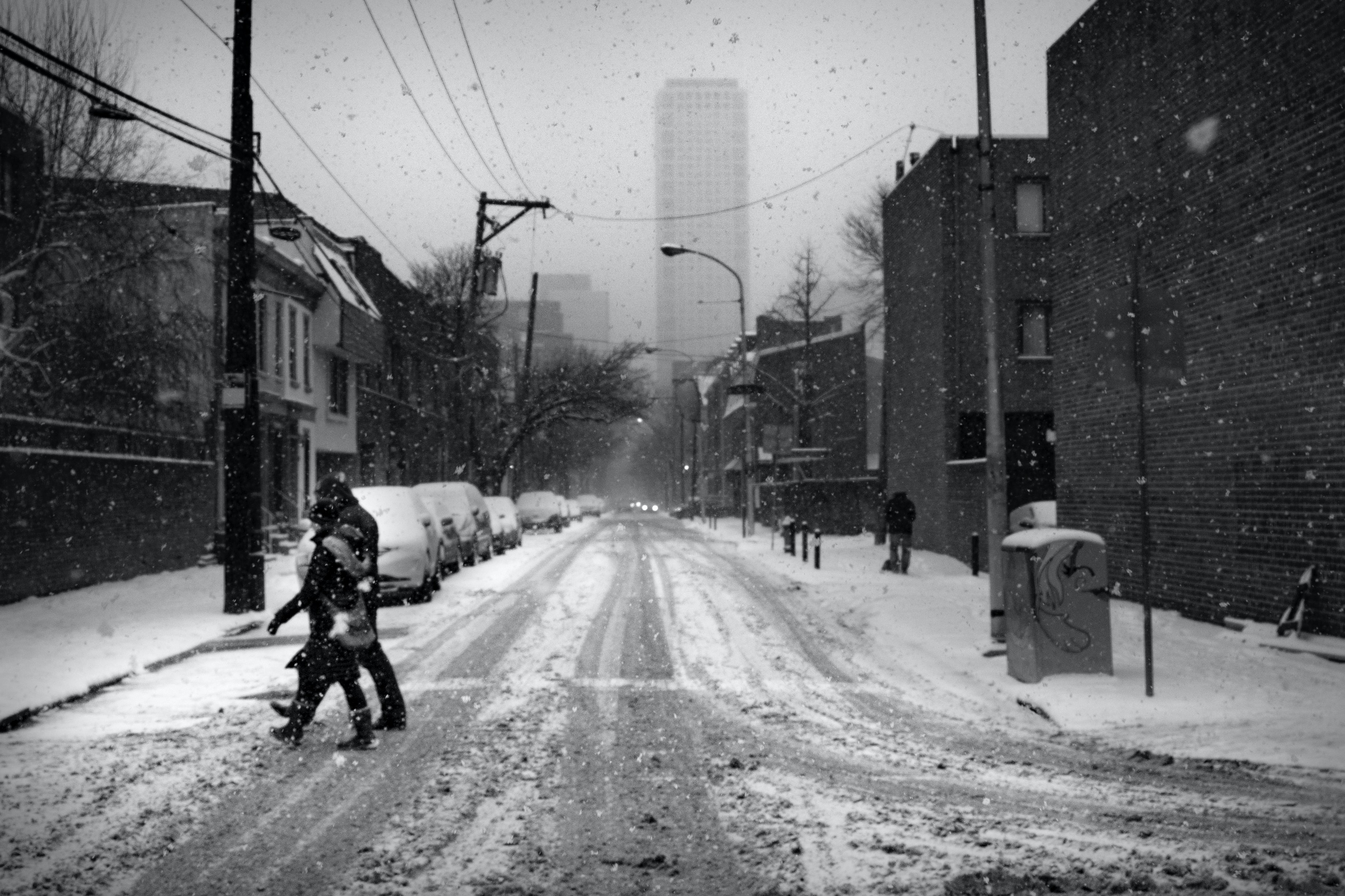
PHOTO: Winter snowfall on South Street, Philadelphia, Pennsylvania. Photo by thr3 eyes on Unsplash

1501 fairmount

NOTE: Charles Bukowski is best known as a Los Angeles writer and poet. But from 1944-1947, he lived in Philadelphia, Pennsylvania, where he worked at Fairmount Motors (1501 Fairmount St), the Nabisco plant (1325 West Glenwood Ave),  and at the Snap-On Tool warehouse (1601 Fairmount Ave). While in Philadelphia, Bukowski lived at a variety of North Philly and Fairmount addresses, including: 3545 N Camac St, 1623 Green St, 603 N. 17th St, and 2020 Mt. Vernon St. On July 22, 1944, with World War II raging, 23-year-old Charles Bukowski was arrested by F.B.I. agents in Philadelphia on suspicion of draft evasion. The United States was then at war with Germany and many Germans and German-Americans in the U.S. were suspected of disloyalty—and Bukowski’s background troubled the U.S. authorities. (Bukowski was born in Andernach, Germany, on August 16, 1920, and emigrated with his parents to the U.S. on April 29, 1923.) After his arrest, Bukowski was held for 17 days in Philadelphia’s Moyamensing Prison. Sixteen days later, he failed a psychological examination that was part of his mandatory military entrance physical test and was given a Selective Service Classification of 4-F (unfit for military service).  (Source: wikipedia.org)

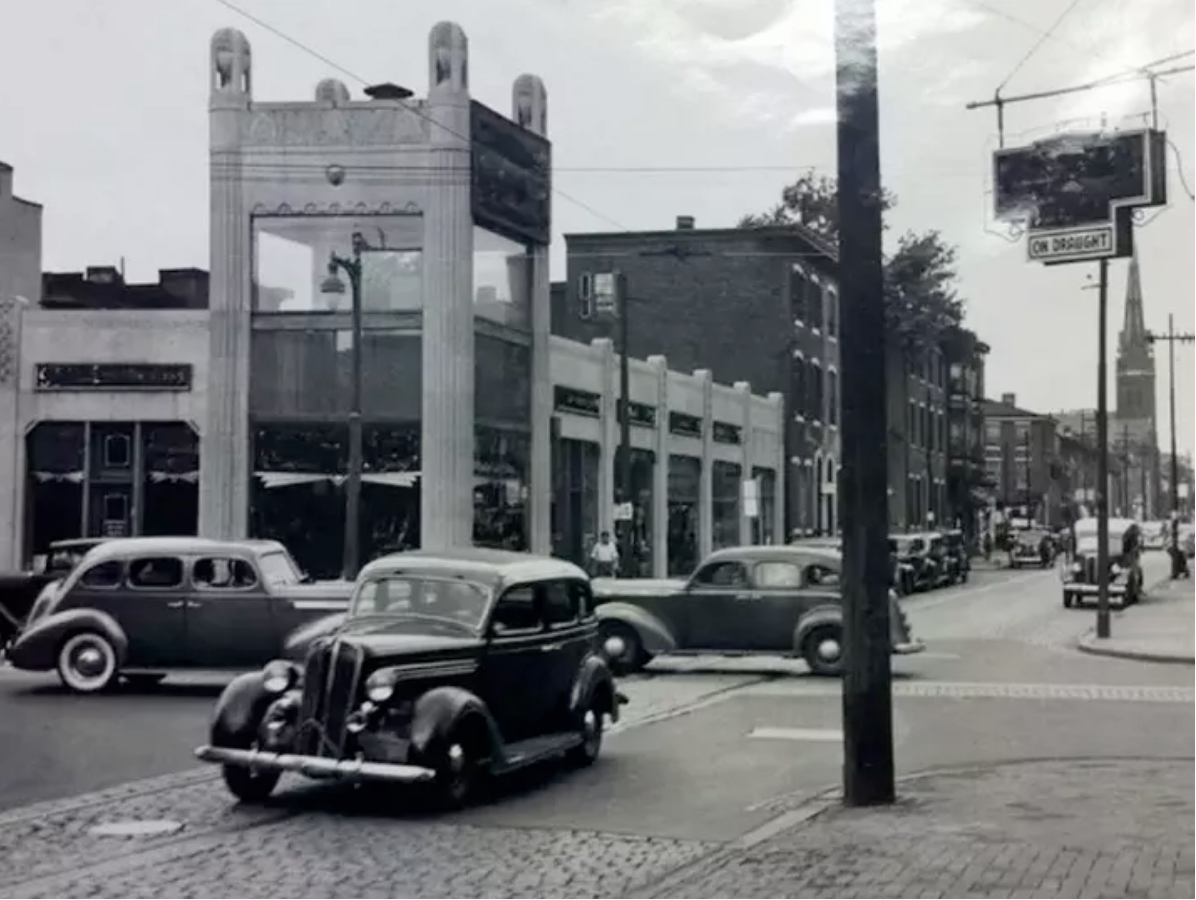
PHOTO: Fairmount Motors auto showroom (left), where Charles Bukowski worked for 65 cents per hour after moving to Philadelphia in 1944. The building was designed by Samuel Brian Baylinson in 1929, and in 2015 the city’s Historic Commission agreed to list the building in the Philadelphia Register of Historic Places for its distinctive Art Deco architecture.  (Photo, circa 1930s: Philadelphia Historical Society, all rights reserved)

bukxmas

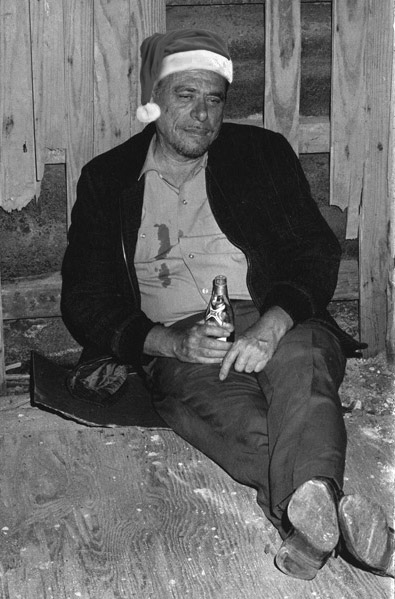
ABOUT THE AUTHOR: Charles Bukowski was a prolific writer who used his poetry and prose to depict his life in working class America. “Without trying to make himself look good, much less heroic, Bukowski writes with a nothing-to-lose truthfulness which sets him apart from most other ‘autobiographical’ novelists and poets,” commented Stephen Kessler in the San Francisco Review of Books, adding: “Firmly in the American tradition of the maverick, Bukowski writes with no apologies from the frayed edge of society.” Michael Lally in Village Voice maintained that “Bukowski is…a phenomenon. He has established himself as a writer with a consistent and insistent style based on what he projects as his ‘personality,’ the result of hard, intense living.” Bukowski wrote more than forty books of poetry, prose and novels. He died in 1994 at age 74, and his work continues to give hope to the down-and-out, depressed, and downtrodden. We celebrate Charles Bukowski’s life and work on this Christmas Day 2020, during his centennial year. It is widely believed that Bukowski’s writing has given hope to the hopeless, saving many lives—especially among those who feel isolated and alone during the holidays. We take off our Santa hat to you, Hank! Cheers!

Christmas, Mexico by Conrad Hilberry

mexico william perry licensed

Christmas, Mexico
by Conrad Hilberry

December here, with sun and the faint smell
of wood smoke in the air—
a late September day. The jasmine drops
a few last blooms; limes swell

and ripen, one by one, outside the door.
Dusk comes a little earlier.
Here, we will have months or years to eat
the apple of our hearts down

to the dark seeds. How leisurely the fall.
How slow the holy cold comes on.

SOURCE: Poetry (December 1980).

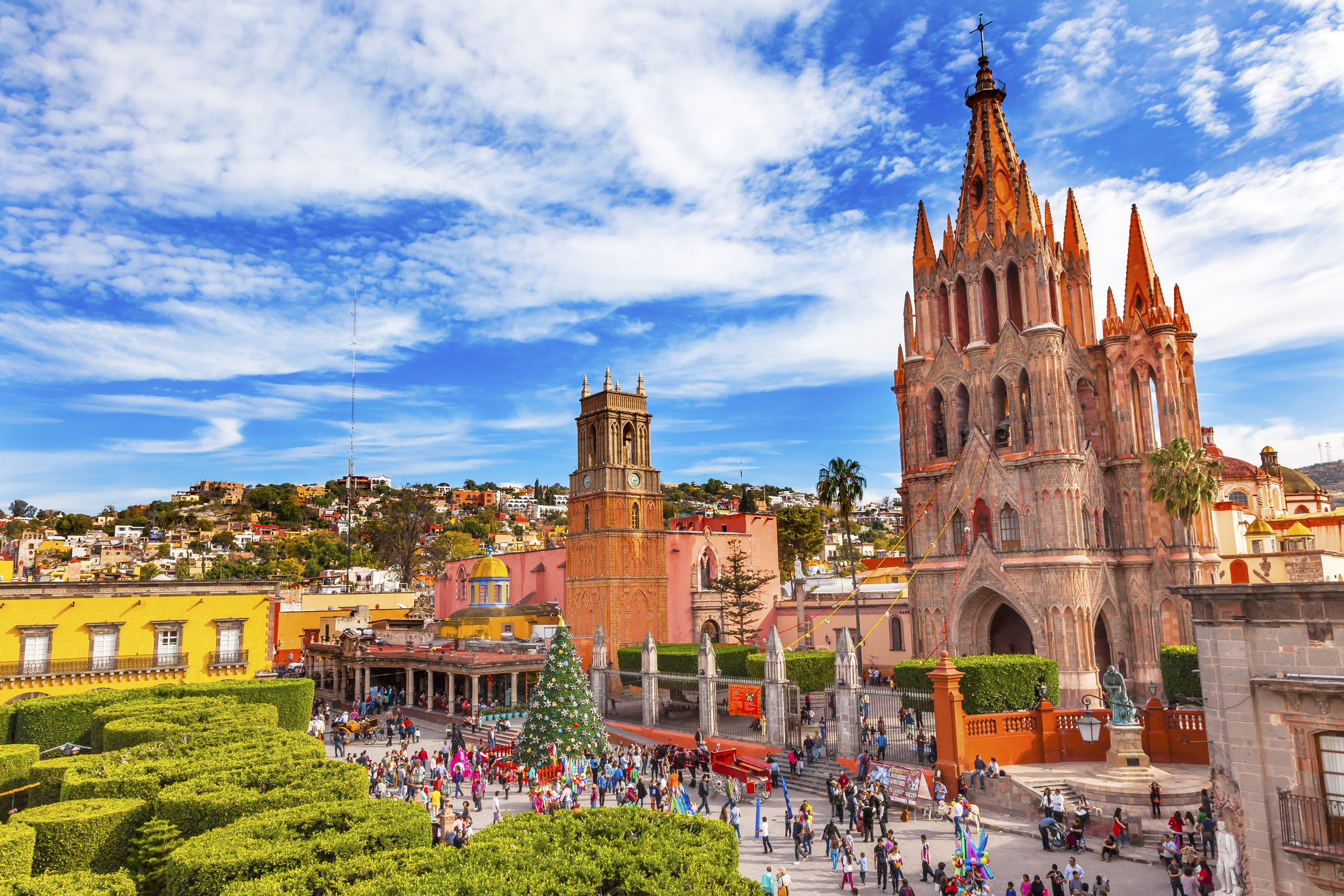
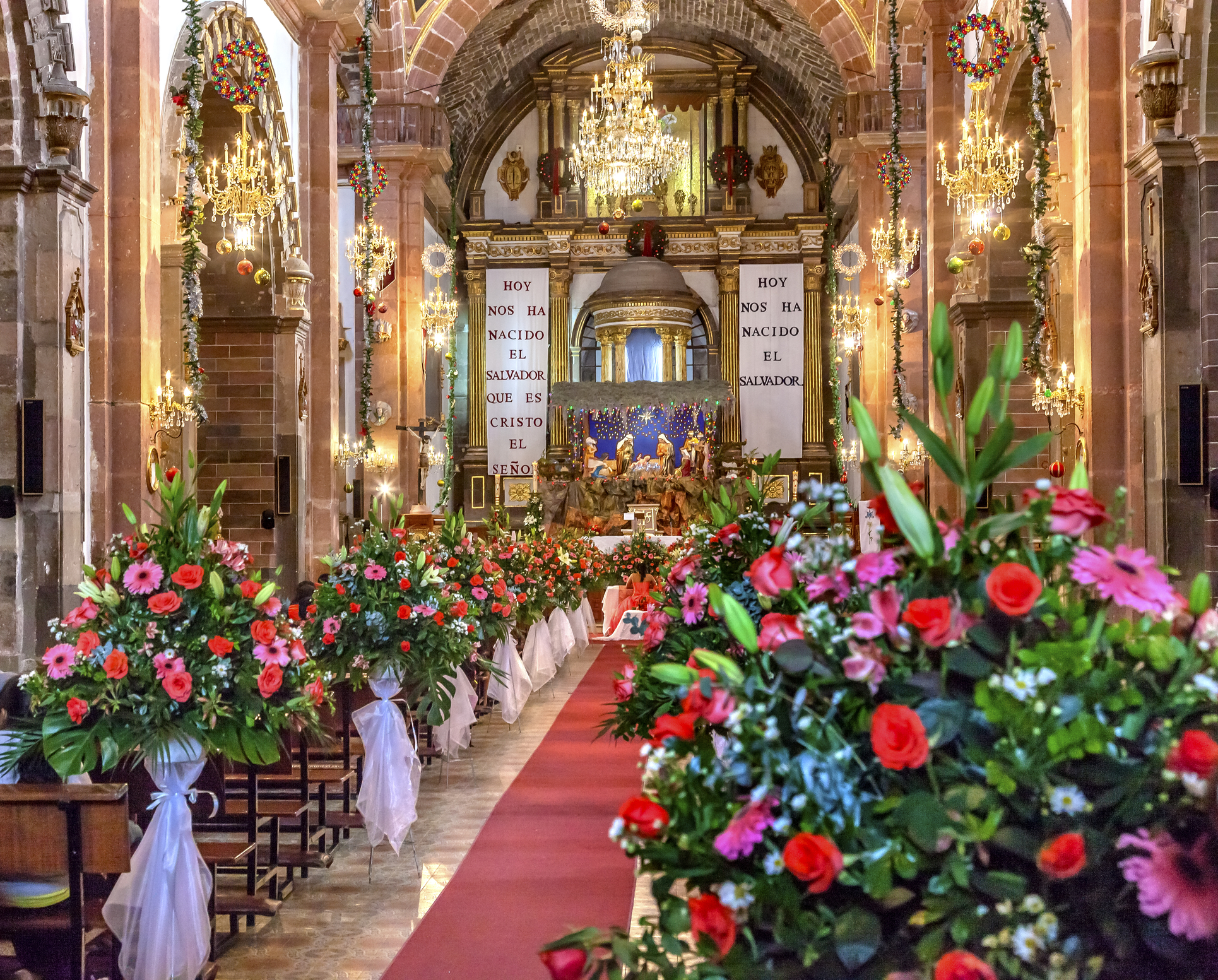
PHOTO: Town Square, San Miguel de Allende, Mexico. La Parroquia de San Miguel Arcángel Cathedral (photo, right) is one of the most-photographed churches in Mexico, and the towers of its neo-Gothic façade can be seen from most parts of town. Built in 1683,  the cathedral’s current Gothic façade was constructed in 1880 by Zeferino Gutierrez, an indigenous bricklayer and self-taught architect. Gutierrez’s inspiration came from postcards and lithographs of Gothic churches in Europe, with the result more a work of imagination than a faithful reconstruction. (Photo by William Perry, used by permission.)

mexico william perry1 licensed

NOTE: San Miguel de Allende is located in Central Mexico, about 170 miles from Mexico City.  At the beginning of the 20th century, the town was in danger of becoming a ghost town after an influenza pandemic. Gradually, its Baroque/Neoclassical colonial structures were “discovered” by foreign artists who moved in and founded art and cultural institutes. This gave the town a reputation, attracting artists and foreign art students,  especially former U.S. soldiers studying on the G.I. Bill after World War II. Since then, the town has attracted a significant number of foreign retirees, artists, writers, and tourists, shifting the economy from agriculture and industry to commerce catering to visitors and residents. San Miguel de Allende’s historic center, a UNESCO World Heritage site, is filled with well-preserved buildings from the 17th and 18th centuries. The 2020 Condé Nast Traveler Readers’ Choice Awards named San Miguel de Allende as the “Best Small City in the World,” a designation the city also achieved in 2017 and 2018. 

PHOTO: Christmas wedding decorations at La Parroquia de San Miguel Arcángel Cathedral in San Miguel de Allende, Mexico. Photo by William Perry, used by permission.

hilberry_conrad (1)

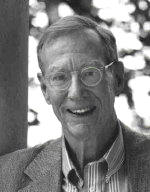
ABOUT THE AUTHOR: Conrad Hilberry (1928-2017) earned a BA from Oberlin College and an MA and PhD from the University of Wisconsin, Madison; he was a professor of English at Kalamazoo College in Michigan from 1962 to 1998. Hilberry’s poetry collections include Encounter on Burrows Hill and Other Poems (1968), Rust (1974), Man in the Attic (1980), Knowing Rivers, You Know the Shape and Bias (1980), The Moon Seen as a Slice of Pineapple (1984), Jacob’s Dancing Tune (1986), Sorting the Smoke: New and Selected Poems (1990), winner of the Iowa Prize, Player Piano: Poems (2000), The Fingernail of Luck (2005), and Until the Full Moon Has Its Say (2014). He also co-authored This Awkward Art: Poems by a Father and Daughter (2009) with the poet Jane Hilberry, his daughter. His awards include a National Endowment for the Arts Fellowship in poetry and a Michigan Arts Award.

Chicago and December by W.S. Di Piero

matt maidre chicago

Chicago and December
by W.S. Di Piero

Trying to find my roost
one lidded, late afternoon,
the consolation of color
worked up like neediness,
like craving chocolate,
I’m at Art Institute favorites:
Velasquez’s Servant,
her bashful attention fixed
to place things just right,
Beckmann’s Self-Portrait,
whose fishy fingers seem
never to do a day’s work,
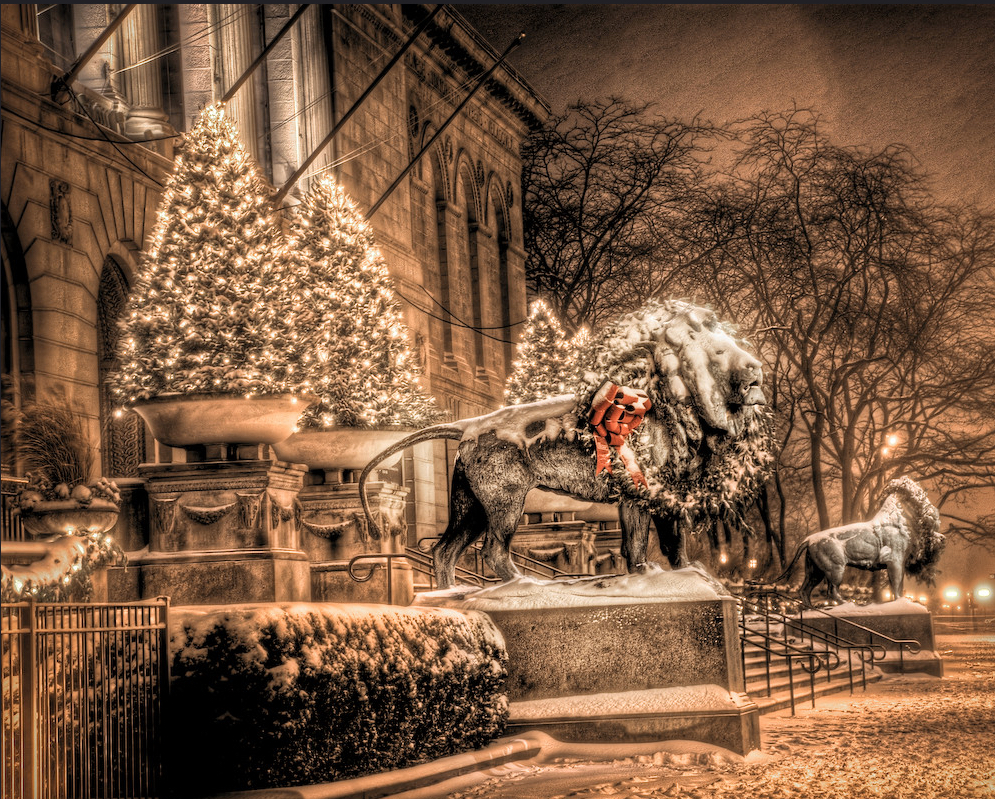
the great stone lions outside
monumentally pissed
by jumbo wreaths and ribbons
municipal good cheer
yoked around their heads.
Mealy mist. Furred air.
I walk north across
the river, Christmas lights
crushed on skyscraper glass,
bling stringing Michigan Ave.,
sunlight’s last-gasp sighing
through the artless fog.
Vague fatigued promise hangs
in the low darkened sky
when bunched scrawny starlings
rattle up from trees,
switchback and snag
like tossed rags dressing
the bare wintering branches,
black-on-black shining,
and I’m in a moment
more like a fore-moment:
from the sidewalk, watching them
poised without purpose,
I feel lifted inside the common
hazards and orders of things
when from their stillness,
the formal, aimless, not-waiting birds
erupt again, clap, elated weather-
making wing-clouds changing,
smithereened back and forth,
now already gone to follow
the river’s running course.

SOURCE: Poetry (June 2006)

PHOTO: The Art Institute of Chicago during the 2008 winter holidays. Photo by Matt Maidre, All Rights Reserved.

nighthawks

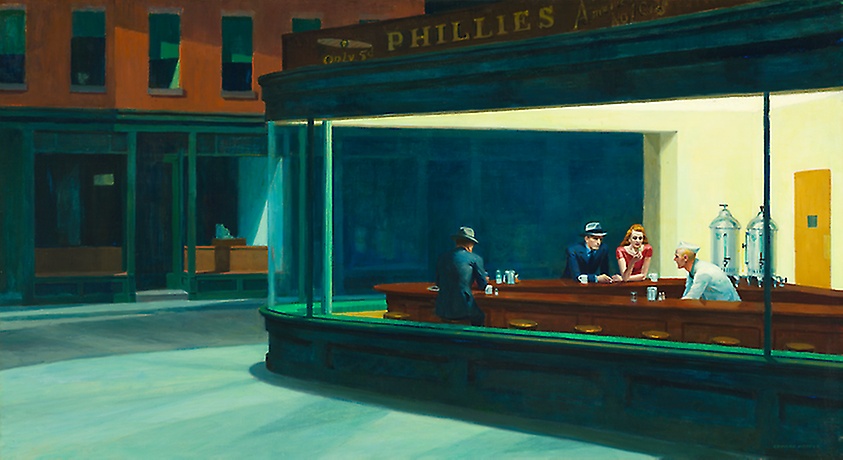
NOTE: The Art Institute of Chicago, founded in 1879, is one of the oldest and largest art museums in the United States. Recognized for its curatorial efforts and popularity among visitors, the museum hosts approximately 1.5 million people each year. Its collection includes iconic works such as Georges Seurat‘s A Sunday on La Grande JattePablo Picasso‘s The Old GuitaristEdward Hopper‘s Nighthawks, and Grant Wood‘s American Gothic. Its permanent collection of nearly 300,000 works of art is augmented by more than 30 special exhibitions mounted yearly that illuminate aspects of the collection and present cutting-edge curatorial and scientific research. The growth of the collection has warranted several additions to the museum’s 1893 building, which was constructed for the World’s Columbian Exposition. The most recent expansion, the Modern Wing designed by Renzo Piano, opened in 2009 and increased the museum’s footprint to nearly one million square feet, making it the second-largest art museum in the United States, after the Metropolitan Museum of Art. The Art Institute is associated with the School of the Art Institute of Chicago, a leading art school, making it one of the few remaining unified arts institutions in the United States. Students include Georgia O’Keeffe, Claes Oldenburg, and Grant Wood.

IMAGE: Nighthawks by Edward Hopper (1942), Friends of American Art Collection, the Art Institute of Chicago.

dipiero

ABOUT THE AUTHOR: W.S. Di Piero was born in 1945 in South Philadelphia, Pennsylvania, and earned his BA from St. Joseph’s College and MA from San Francisco State College. A poet, essayist, art critic, and translator, Di Piero has taught at institutions such as Northwestern University, Louisiana State University, and Stanford, where he is professor emeritus of English and on faculty in the prestigious Stegner Poetry Workshop. Elected to the American Academy of Arts and Sciences in 2001, Di Piero was awarded the Ruth Lilly Poetry Prize in 2012. W.S.  He has been awarded fellowships from the Guggenheim Foundation, the Ingram Merrill Foundation, and the Lila Wallace-Reader’s Digest Fund. He lives in San Francisco, California.

Oneness by Vijaya Gowrisankar

nature-stay47

Oneness
by Vijaya Gowrisankar

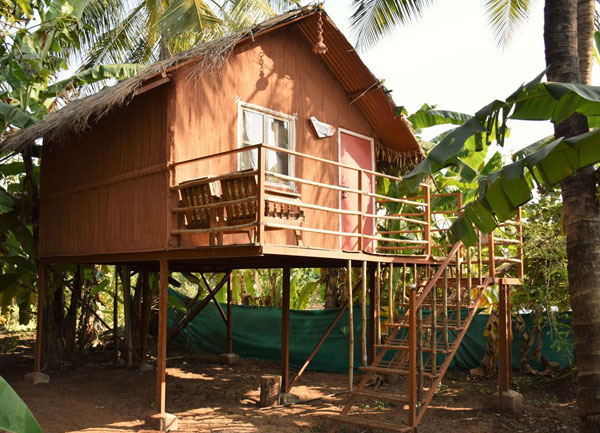
We had come for a weekend getaway to Nature Stay,
around hundred miles away from the city
The treehouse cottage was made of teakwood and
stood tall and proud, symbolizing strength and grit

We had porridge for breakfast before we left home
Given the heatwave warning, we carried bottles of
water as we drove to our destination…Our holiday
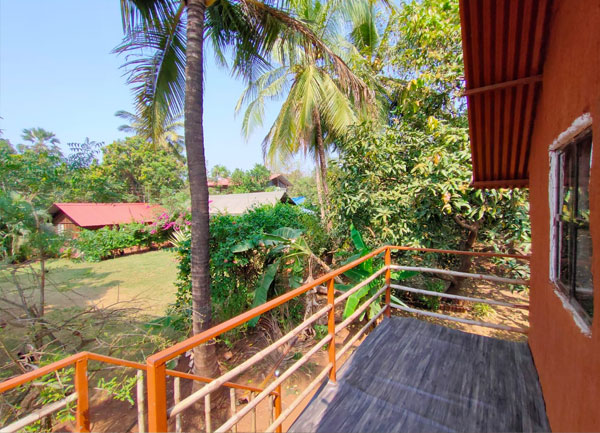
cottage was on a small hill…and we could see

lemon trees, chickoo trees, and mango trees from the
window of our cottage. Our close friends were surprised
at our sudden and strange plan…and insisted
on a Zoom call to ensure we were doing fine…

Given my friend had just come from outside, he was wearing
a mask…til we reminded him to remove it…we all
had a hearty laugh at his absentmindedness…and we
were grateful for his love and concern for us

The food provided at Nature Stay, as a part of the package
was simple and delicious. At a distance, we could see
other mountains and the vague mix of green and brown treeline
We had bonfire at night…and watched the fireflies dancing

as we lay on the cot outside…the buzzing sounds of insects
gave us company…as we relaxed and the lethargy of being
one with Nature lulled us into a deep sleep, devoid of worries

PHOTO: Cottage at Nature Stay resort, Saphale, India.

Mumbai-india-time-zone-map

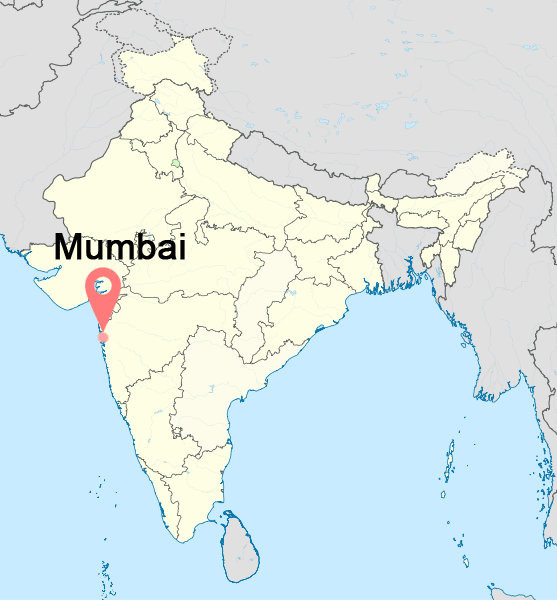
NOTE: Saphale is located about 90 miles north of Mumbai, in western India, close to the Arabian Sea.

nature-stay60

NOTE FROM THE AUTHOR: Nature Stay at Saphale, India, is a resort in the arms of nature. Each stay option is unique and the area is covered with organic plantation of various fruits, flowers, and trees. About a two-hour drive from Mumbai, it’s a great weekend getaway.

PHOTO: View from cottage at Nature Stay resort, Saphale, India.

Gowrisankar

ABOUT THE AUTHOR:  Vijaya Gowrisankar is the author of the poetry collections InspireReflectExploreSavour–Art and Poetry meetEvolve, Shine, and Unlikely Friendships, and Cherish. Her blog Grow Together shares insights from the greatest influencers and focuses on personal growth. She has been published in over 60 anthologies, has been awarded the AZsacra International Poetry Award (December 2015), and was one of the winners of Inspire by Gandhi competition, organized by Sampad, a UK organization. Visit her blogFacebook page, and Amazon Author page, and find her on Twitter.

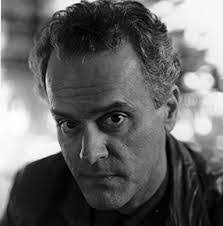
PHOTO: The author during her travels.