Leaving Denali by Sarah Russell

Wonder_Lake_and_Denali copy

Leaving Denali
by Sarah Russell

You must leave Denali as you would a lover,
before dawn, while he is blanketed in clouds,
while the sentry spruce and larch, dwarfed
and crippled by his hand, still drowse in mist.
For if they wake, they will whisper your leaving
on the wind. Then Denali will woo you with wild iris
and forget-me-nots, his streams will murmur
your name, and moss will give you velvet for a gown.

But you know Denali’s treachery. You’ve felt
his rimy fingers and the muscle of his rage, climbed
to touch his face until your lungs burned and your feet
gave way, until he proved he was never yours.

PHOTO: Denali and Wonder Lake, Denali National Park and Preserve, Alaska. Photo courtesy of Denali National Park and Preserve.

Mount_McKinley_Shrouded_2048px

NOTE: Denali (also known as Mount McKinley, its former official name) is the highest mountain peak in North America, with a summit elevation of 20,310 feet above sea level. Denali is the third most prominent and third most isolated peak on Earth, after Mount Everest and Aconcagua. Located in the Alaska Range in the state of Alaska, Denali is the centerpiece of Denali National Park and Preserve. For centuries, the Koyukon people who inhabit the area have referred to the peak as “Denali.” In 1896, a gold prospector named it “Mount McKinley” in support of then-presidential candidate William McKinley; that was the official name recognized by the Federal government from 1917 until 2015. In August 2015, 40 years after Alaska had done so, the United States Department of the Interior announced the change of the mountain’s official name to Denali.

PHOTO: Denali shrouded in clouds. The mountain is high enough to create its own localized weather. Photo ©2006 Derek Ramsey (Ram-Man).
denali 7

NOTE FROM THE AUTHOR: On a trip to Alaska in 2016, I fell in love with a mountain named Denali—The Great One. Although Denali is generally covered in mist even on sunny days, we were blessed with seeing his grandeur clearly during our stay. I had tears as I left to travel on, and I wrote the first line of this poem. I kept coming back to the writing, but I couldn’t find words that would express what I felt. I finally finished the poem this year. I’m still not sure I did justice to The Great One, but it will have to do for now.

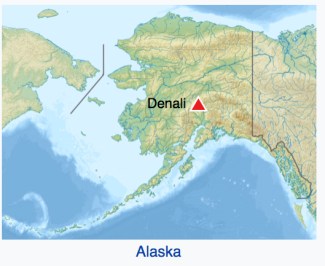
IMAGE: Location of Denali within Alaska.

russell

ABOUT THE AUTHOR: Sarah Russell’s poetry and fiction have appeared in Kentucky Review, Misfit Magazine, Rusty Truck, Third Wednesday, and many other journals and anthologies. A Pushcart Prize nominee, two of her poetry collections have been published by Kelsay Books, I lost summer somewhere  and Today and Other Seasons. Find more of her work at SarahRussellPoetry.net.
The Canticle of Jack Kerouac by Lawrence Ferlinghetti

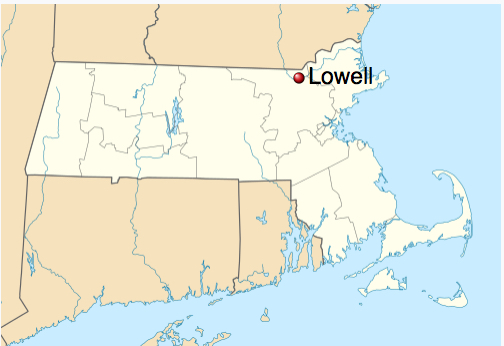
lowel ma

The Canticle of Jack Kerouac (Part 2)
by Lawrence Ferlinghetti

There is a garden in the memory of America
There is a nightbird in its memory
There is an andante cantabile
in a garden in the memory
of America
In a secret garden
in a private place
a song a melody
a nightsong echoing
in the memory of America
In the sound of a nightbird
outside a Lowell window
In the cry of kids
in tenement yards at night
In the deep sound
of a woman murmuring
a woman singing broken melody
in a shuttered room
in an old wood house
in Lowell
As the world cracks by
                                 thundering
like a lost lumber truck
                                    on a steep grade
               in Kerouac America
The woman sits silent now
                                     rocking backward
      to Whistler’s Mother in Lowell
                         and all the tough old
                                          Canuck mothers
                              and Jack’s Mémère
And they continue rocking

      And may still on stormy nights show through
          as a phantom after-image
                            on silent TV screens
             a flickered after-image
                              that will not go away
                in Moody Street
                  in Beaulieu Street
                   in ‘dirtstreet Sarah Avenue’
    in Pawtucketville
       And in the Church of St. Jean Baptiste

SOURCE: “The Canticle of Jack Kerouac” from These Are My Rivers: New and Selected Poems (New Directions Publishing Corporation, 1993). Copyright © 1993 by Lawrence Ferlinghetti.

NOTE: Read “The Canticle of Jack Kerouac” in its entirety at poetryfoundation.org.

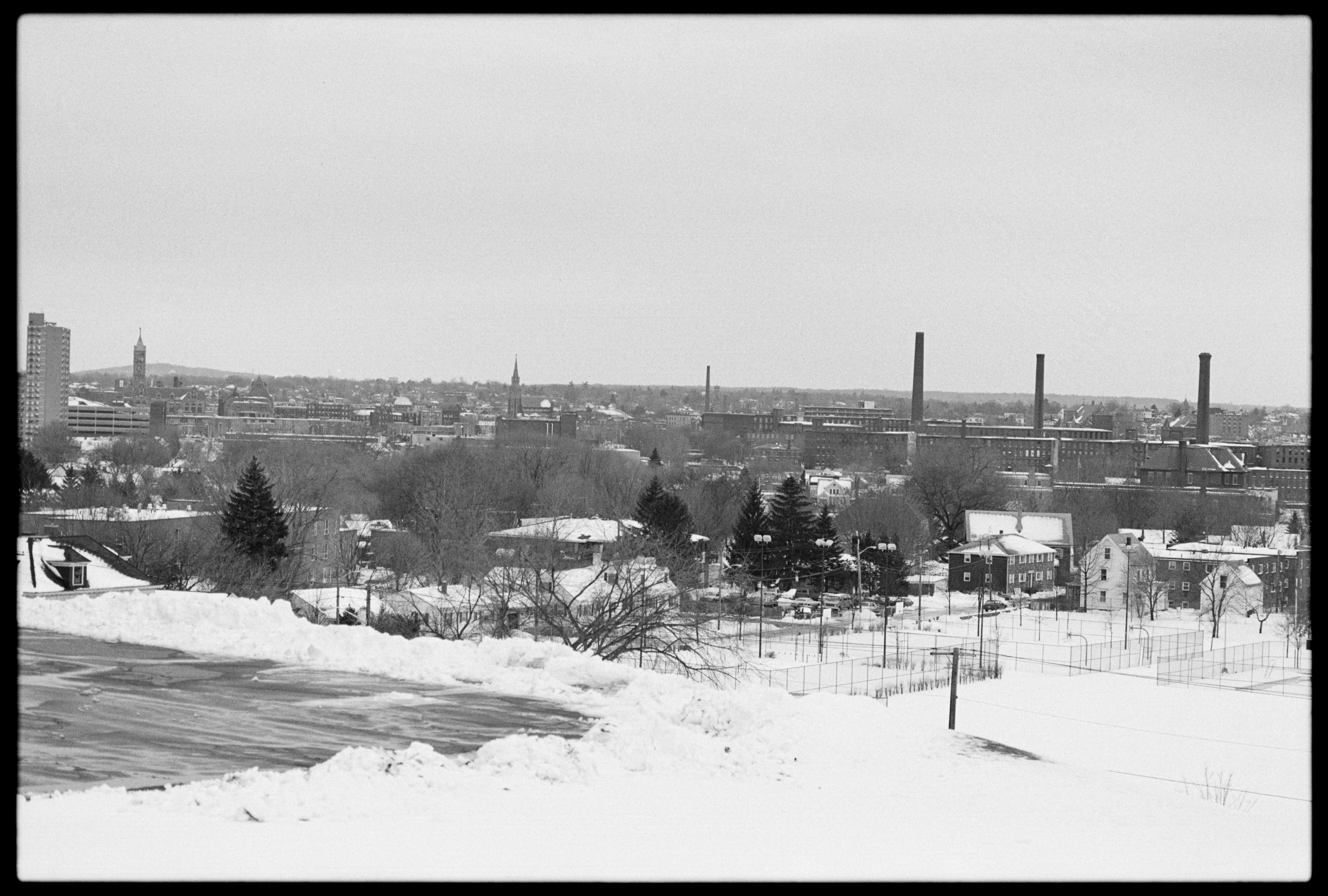
PHOTO: Lowell, Massachusetts; view of city from top of hill by Robinson School—the view described in the opening passages of The Town and the City by Jack Kerouac. Photo by Douglas DeNatale (1988), courtesy of Library of Congress.

lowell 1

Kerouac_by_Palumbo_2_(cropped)

NOTE: Incorporated in 1826, Lowell, Massachusetts, was named after Francis Cabot Lowell, a local figure in the Industrial Revolution. The city became known as the cradle of the American Industrial Revolution, due to a large series of textile mills and factories. Many of the Lowell’s historic manufacturing sites were later preserved by the National Park Service to create Lowell National Historical Park. The city’s most famous son, author Jack Kerouac, was born on March 12, 1922 to French Canadian parents in a house at 9 Lupine Road. From 1922 until 1943, Kerouac’s family lived in Lowell, then a city of about 100,000 people, including 30,000 French-speaking immigrants. Kerouac spoke French exclusively until he was seven years old, when he was enrolled in elementary school.  At age 17, Kerouac received a scholarship to Columbia University in New York City, where he studied for two years before joining the Merchant Marine during WWII. During his 30-year writing career, Lowell served as a backdrop for many of Kerouac’s books. A pioneer of the Beat Movement, Kerouac was prolific author best known for his 1957 novel On the Road. He died in 1969 at age 47. 

IMAGE: Map showing the location of Lowell within the State of Massachusetts, a few miles south of the New Hampshire border. 

PHOTO: Jack Kerouac (1956) by Tom Palumbo, used by permission. 

lf city lights

ABOUT THE AUTHOR: Lawrence Ferlinghetti, born March 24, 1919, served in the U.S. Navy during World War II, and subsequently earned an M.A. at Columbia University and a doctorate in literature at the University of Paris, Sorbonne. In 1953, Ferlinghetti co-founded San Francisco’s City Lights Booksellers & Publishing, the original publisher of Allen Ginsberg‘s poem Howl. In 1956, Ferlinghetti was arrested on obscenity charges for publishing Howl; after a lengthy trial, he was acquitted the following year in a landmark First Amendment case. In 1998, Ferlinghetti was named San Francisco’s Poet Laureate. He has been the recipient of many awards, including the Los Angeles Times’ Robert Kirsch Award, the BABRA Award for Lifetime Achievement, the National Book Critics Circle Ivan Sandrof Award for Contribution to American Arts and Letters, the American Civil Liberties Union’s Earl Warren Civil Liberties Award, the Robert Frost Memorial Medal, and the Authors Guild Lifetime Achievement Award. In 2003, he was was elected to the American Academy of Arts and Letters, and in 2005 the National Book Foundation gave him the inaugural Literarian Award for outstanding service to the American literary community. Ferlinghetti’s poetry collections include A Coney Island of the Mind, one of the best-selling books of poems ever published, with over a million copies in print. Ferlinghetti, a long-time friend and colleague of Jack Kerouac, has released many books by or about the author through City Lights Publishing. For nearly 70 years, City Lights Bookstore has served as a literary meeting place for writers, readers, and artists, but struggles to stay afloat during the pandemic—and a GoFundMe campaign has been established to help. On March 24, 2019, Ferlinghetti celebrated his 100th birthday. He resides in San Francisco, California. He has written, “The state of the world calls out for poetry to save it. / If you would be a poet, create works capable of answering the / challenge of apocalyptic times…”

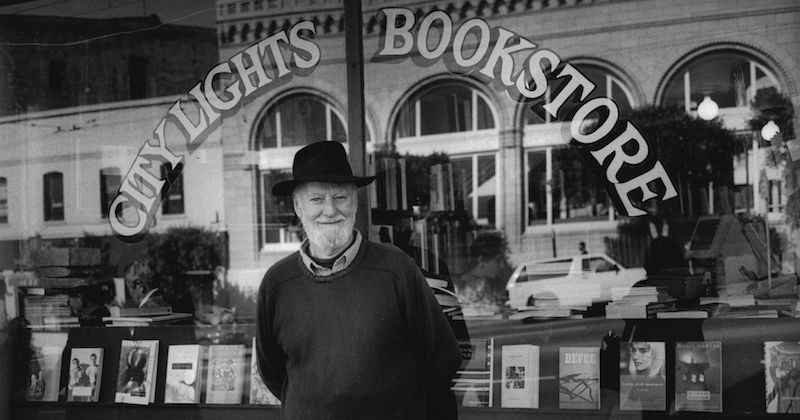
PHOTO: Lawrence Ferlinghetti, late 1980s, outside City Lights Bookstore, 261 Columbus Avenue, San Francisco, California. 

January in Detroit or Search for Tomorrow Starring Ken and Ann by Ken Mikolowski

city-1124507_1920

January in Detroit or Search for Tomorrow Starring Ken and Ann
by Ken Mikolowski

I think it is interesting
though not exactly amusing
how we go from day to day
with no money. How do we
do it, friends ask, suspecting
we really have some stash
stacked away somewhere.
But we certainly do not
and we also do not know
how we do it either.
You sure are lucky,
some of our friends say. I am
none too sure of that though,
as I wait for the winning
lottery numbers to be announced
on CKLW. Thursday in Detroit
is the day of dreams. We have
been dreaming of a place
in the country lately and I’m
none too sure that is very healthy.
And speaking of health that’s
also been a problem that probably
has something to do with no money,
since we’ve all been sick lately,
taking turns politely of course.
Could you bring me some more
tea one of us will ask,
and the other will.
In between the coughing and
worrying our thoughts
have often turned to crime.
We seriously wonder how we can
get away with a bundle with
as little risk as possible.
Last week we took our last
$12 out of the bank
and noticed how much more
they had there though
we had none. Of course
we wouldn’t rob that bank,
they know us there
as the ones who bring
the rolls of pennies in.
And just yesterday they
fish-eyed us for trying
to cash our son’s xmas bond
from his grandparents
after only one month.
So we wouldn’t try to rob that bank,
but I do know of one up north
that may be possible. . .
I know this just seems like
romantic dreaming
but I practically make a career
of reading detective stories,
and God knows, I have no other.
Anyway if the right opportunity
comes along, we are more
than ready to meet it.
But this is a time of waiting,
the I Ching says, though it does
not say how we are to eat
while waiting. And soon
we will have another mouth to feed—
Ann now in her seventh month,
and that is often in our thoughts.
Besides all that we are both
over thirty, artist and poet,
still waiting to cross the great water.
Meanwhile, day after day,
there is still Detroit
to be dealt with — a small pond
says our friend Snee.
Big fish we used to answer him,
but that was a while back.
Now we think maybe Lake Erie
is the great water referred to
in the I Ching, and if we wait
long enough we can
walk across — to Buffalo
or Cleveland. In a healthy person,
says the philosopher, self-pity
can be a forerunner to action:
once the problem is seen clearly,
a solution may be found at hand.
And as I said, I think it is interesting
though not exactly amusing.

SOURCE: “January in Detroit or Search for Tomorrow Starring Ken and Ann” from Big Enigmas (Past Tents Press, 1991). Copyright ©1991 by Ken Mikolowski.

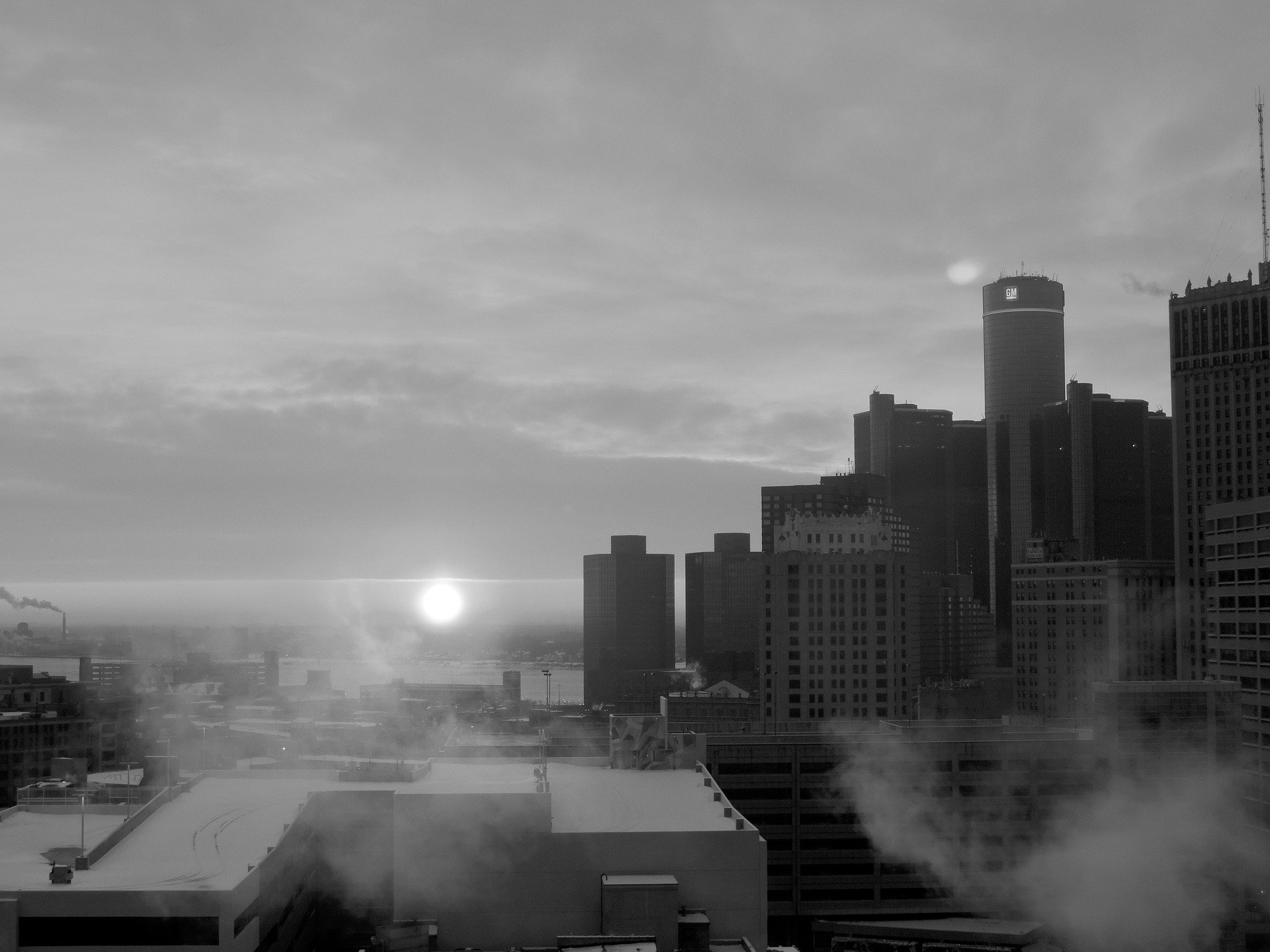
PHOTO: Detroit, Michigan. Photo by Pixabay, used by permission.

detroit-1919050_1920

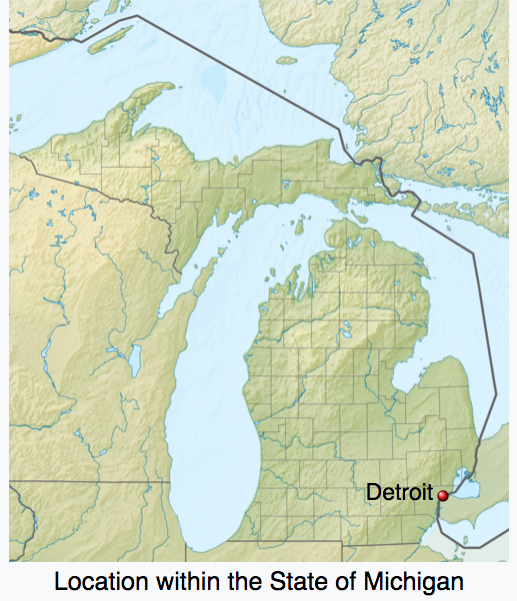
detroit map

NOTE: Detroit is the largest and most-populous city in Michigan, with a metropolitan area that’s home to 4.3 million people. The city was founded on July 24, 1701, by the French explorer and nobleman Antoine de la Mothe, sieur de Cadillac. The word “detroit” is French for “strait,” a reference to the Detroit River, which flows west and south for 24 nautical miles from Lake St. Clair to Lake Erie as a strait in the Great Lakes system. Detroit and its neighboring Canadian city, Windsor, are connected through a highway tunnel, railway  tunnel, and the Ambassador Bridge. The Detroit River International Wildlife Refuge is the only international wildlife preserve in North America, and is uniquely located in the heart of a major metropolitan area. Detroit is best known as the center of the U.S. automobile industry, which originated in the early 1900s and led to the city’s increased population and prosperity. In the late 20th Century, plant closures resulted in the loss of jobs and decreased population.  A leading influence in art and culture, particularly music, Detroit has given rise to the genres of Motown and techno, and has played a significant role in the development of jazz, hip-hop, rock, and punk. Since the 2000s, conservation efforts have led to large-scale revitalizations, including the restoration of historic theaters and entertainment venues, high-rise renovations, new sports stadiums, and a riverfront revitalization project. In recent years, the population of Downtown Detroit, Midtown Detroit, and other neighborhoods has increased. In 2015, Detroit was named a “City of Design” by UNESCO, the first U.S. city to receive that designation, which recognizes creativity as a major factor in a city’s urban development.

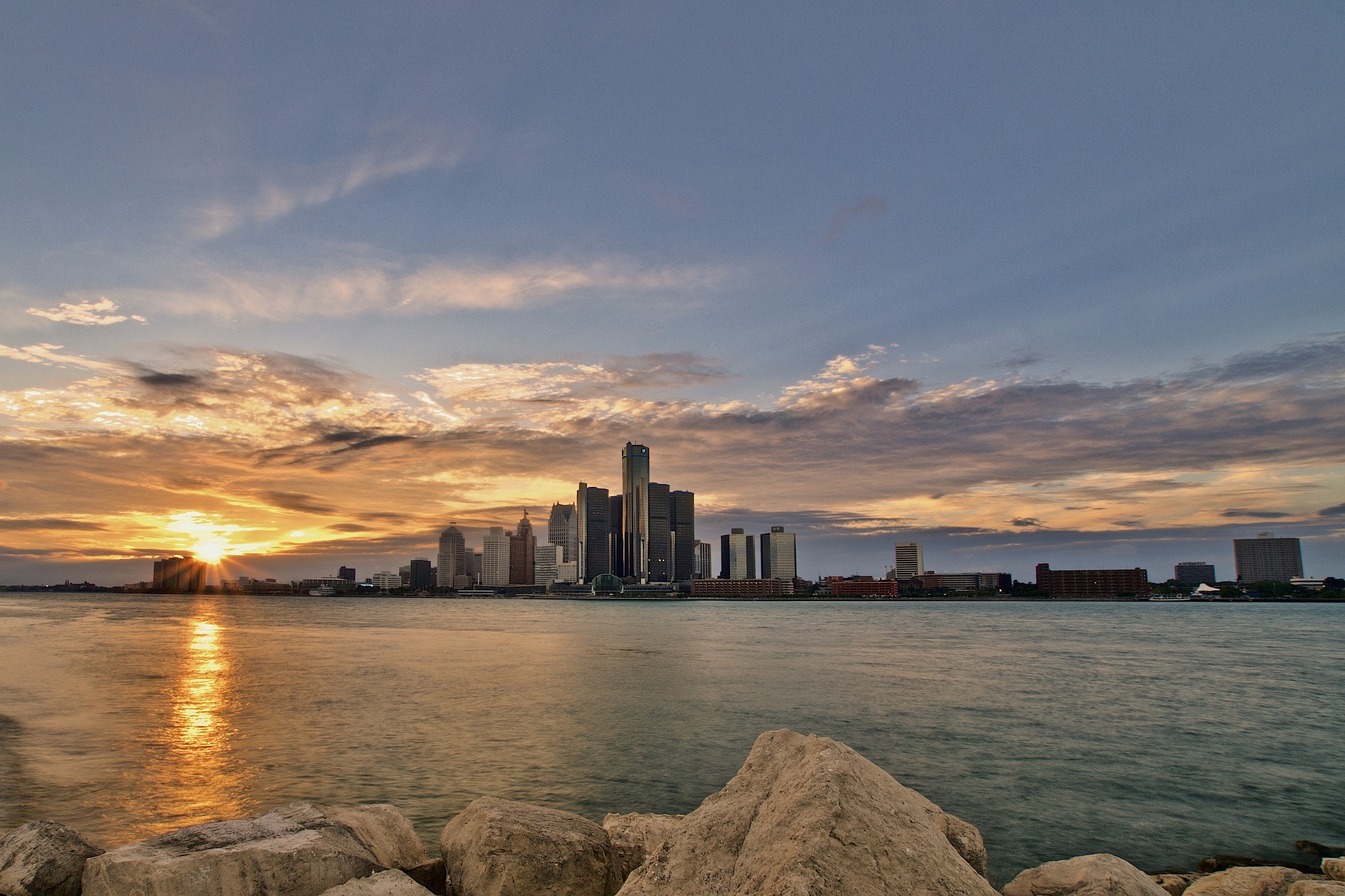
PHOTO: Detroit, Michigan, skyline and Detroit River. Photo by Peter Mol, used by permission.

ken mikolowski

ABOUT THE AUTHOR: Born and raised in Detroit, poet and editor Ken Mikolowski earned a BA at Wayne State University. He is the author of several poetry collections, including Big Enigmas (1991), Little Mysteries (1979), and Thank You Call Again (1973). During the 1960s Mikolowski founded the Alternative Press in Detroit’s Cass Corridor with his late wife, the painter Ann Mikolowski. As the press’s editor for 30 years, Mikolowski published—as unbound letterpress-printed mail art—the work of local Detroit poets as well as nationally recognized Beat and Black Mountain poets, including Charles Bukowski and Allen Ginsberg. In 1983 the Mikolowskis’ work with the Alternative Press was recognized with an Arts Achievement Award from Wayne State University. In the catalog for the exhibit Time and Place: Art of Detroit’s Cass Corridor at the Elaine L. Jacob Gallery, Mikolowski discussed his motivation for starting a poetry press in post-riot Detroit: “We lived in ‘one of the worst cities in the history of the world’ and we were survivors, but more than that we reveled in it, and we swaggered when we walked. We didn’t own much, but we owned this, and we made art with it.” From 1977-2015, Mikolowski taught at the University of Michigan, and currently serves as Lecturer Emeritus, Creative Writing.

American Colossus by Yvette Viets Flaten

licensed david evison

American Colossus
by Yvette Viets Flaten

Chiseled out of native rock,
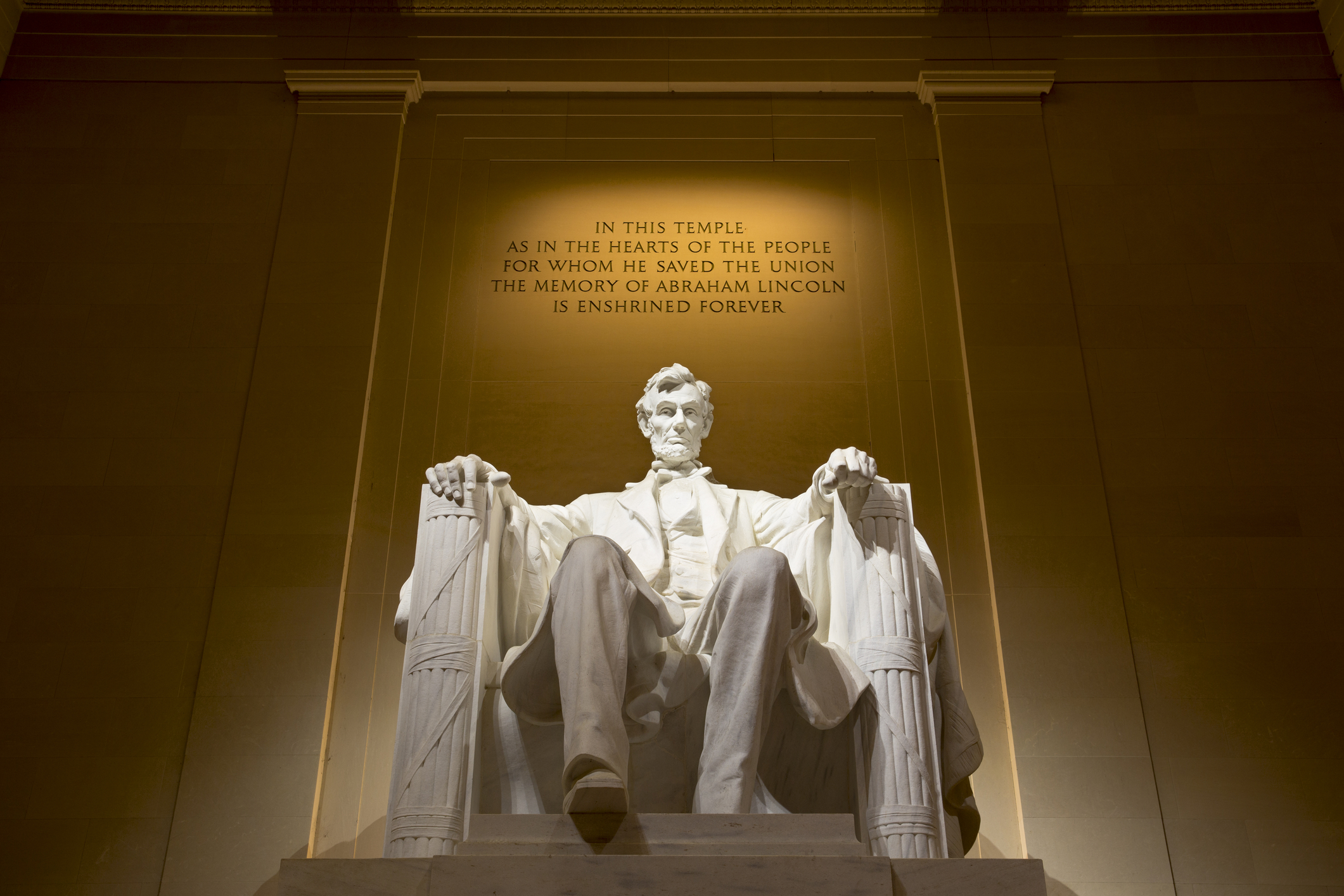
I don’t expect this seated colossus
to spring to life before me.
Not in any mobile way. But it’s as if
the stone catches breath and his eyes
take light, and although I am among
a throng, I am not. Just he and I,
alone, it seems, the tramp of others
tramped across the echoing hall.

I feel I’ve met this man before, have seen
those hands at a feed store or farm supply.
At the farmers’ market, shucking corn,
or setting up a table with his prize honey.
He’ll give you a taste, from a plate, straight
from the comb, and shoo a wandering bee
aside, a gentle sweep.

I recognize the slope of his shoulders
against his seat, a man tired from his day
of work, but not cowed down. In need
of rest, but without defeat. I expect his
chair to rock.

His eyes shake me most. That level gaze.
The steady bead he draws upon my soul.
I hear his mute exhortation, to me, to sort out
what is right, and his incandescent charge
to walk down the steps, resolved.

PHOTO: The Lincoln Memorial, Washington, DC. Photo by David Evison, used by permission.

NOTE: The Lincoln Memorial honors the 16th President of the United States, Abraham Lincoln. Dedicated in May 1922, the neoclassical site is a major tourist attraction, and since the 1930s has been a symbolic center focused on race relations. Abraham Lincoln (1809-1865) served as president of the United States from 1861 to 1865. He led the nation through its greatest moral, constitutional, and political crisis in the American Civil War — and succeeded in preserving the Union, abolishing slavery, bolstering the federal government, and modernizing the U.S. economy. Lincoln is considered America’s greatest president.

Flaten1

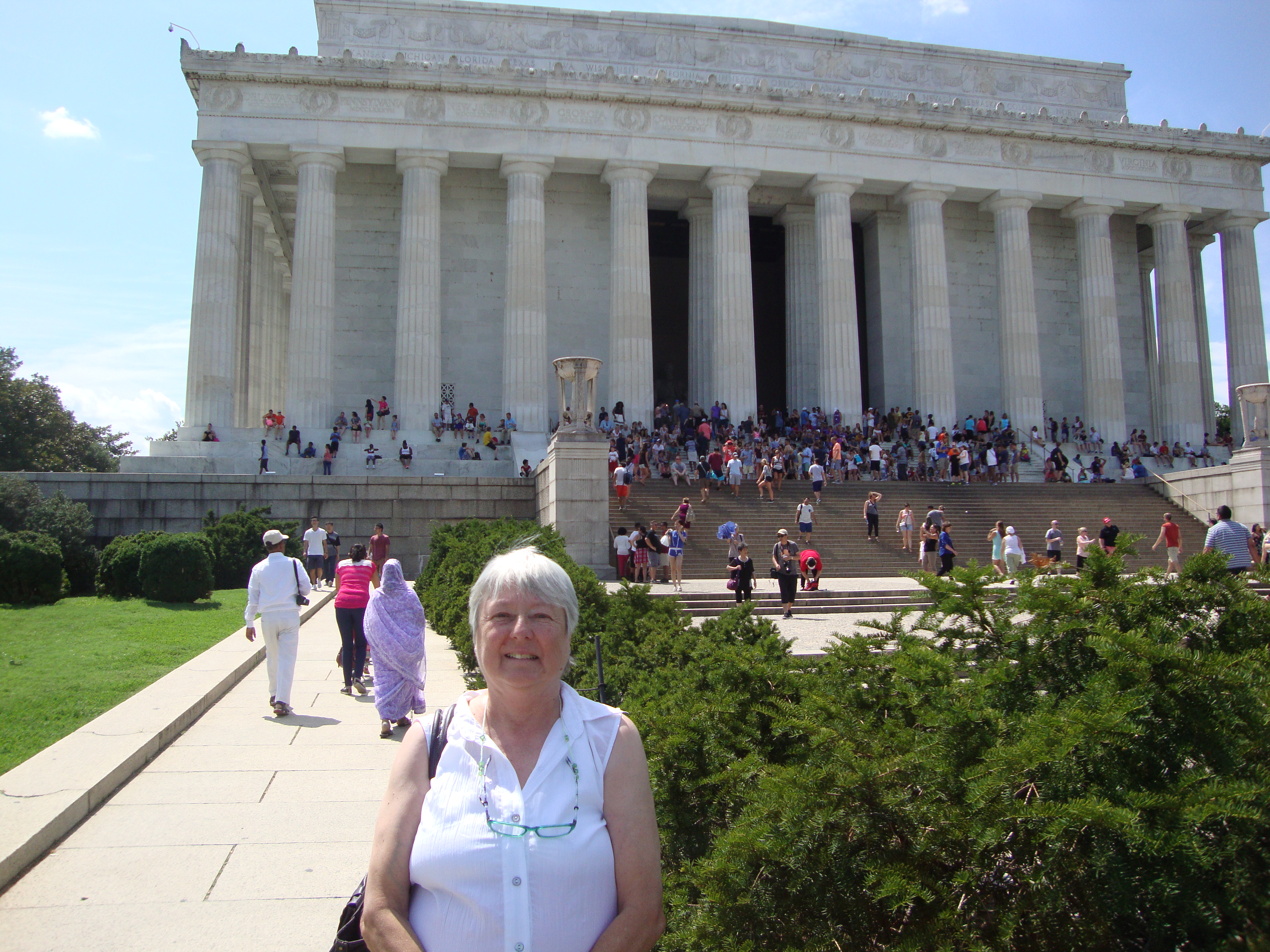
NOTE FROM THE AUTHOR: In July 2016, my husband and I visited our son and daughter-in-law during the summer they lived in Washington, DC. From their small apartment in Georgetown, Dan and I would ride the Circulator on a daily adventure to discover something of our nation’s capital. Of all the monuments we toured, the Lincoln Memorial impressed me deeply. It was neither as remote as the Washington obelisk, nor as meditative as the Jefferson Memorial. It was vibrantly alive with humanity. And this photo captures it exactly. The memory of the humanness of that monument and the humanity of Lincoln himself was overwhelming and sparked my work.

Flaten2

ABOUT THE AUTHOR: Yvette Viets Flaten was born in Denver, Colorado, and grew up in an Air Force family, living in Nevada, North Dakota, and Washington State, as well as France, England, and Spain. She holds a Bachelor of Arts in Spanish (1974) and a Master of Arts in History (1982) from the University of Wisconsin-Eau Claire. She writes both fiction and poetry. Her award-winning poetry (Muse Prize, Jade Ring, Triad) has appeared widely in numerous journals, including the Wisconsin Academy Review, Rag Mag, Midwest Review, Free Verse, Red Cedar Review, and Barstow and Grand. In May 2020, she was interviewed by Garrison Keillor as part of his Pandemic Poetry Contest. Yvette’s poem, “Riding It Out,” was one of 10 winners. Find her interview with Garrison Keillor here.

Tell Me a Story by Robert Penn Warren

mathew-schwartz-DUPITwoxXJE-unsplash

Tell Me a Story (Part A)
by Robert Penn Warren

Long ago, in Kentucky, I, a boy, stood
By a dirt road, in first dark, and heard
The great geese hoot northward.
I could not see them, there being no moon
And the stars sparse. I heard them.
I did not know what was happening in my heart.
It was the season before the elderberry blooms,
Therefore they were going north.
The sound was passing northward.

SOURCE: “Tell Me a Story” appears in The Collected Poems of Robert Penn Warren (1998).

PHOTO: A massive migration of snow geese, United States. Photo by Mathew Schwartz on Unsplash. NOTE: The photo is reminiscent of the painting Day and Night by M.C. Escher (1938), National Gallery of Art, Washington, DC.

gary-bendig-WPmPsdX2ySw-unsplash

FROM nationalgeographic.com: In the classic migration pattern, flocks of Canada geese that wintered in the southern United States fly north in the spring, returning to the same spots in the high and sub-Arctic to breed and nest. In September and October, these flocks head south again—with a new generation in tow. With an average lifespan of 24 years, members of this species may make two dozen migrations in a lifetime, using the same “rest stops” along the way. Migrating Canada geese, in their iconic V-formations, can fly an astonishing 1,500 miles in just 24 hours. Nearly wiped out by over-hunting in the early 1900s, conservationists and government agencies reintroduced captive-bred birds across their former northern U.S. range, and, boosted by a few surviving flocks, resident Canada geese made an astonishing comeback. Today the nine-pound birds live in every Canadian province and state in the continental U.S.—and their populations continue to grow. In the 1950s, about a million called North America home; that number has since grown to seven million, according to estimates by the Canadian Wildlife Service. (National Geographic, Dec. 16, 2020. Read entire article here.)

PHOTO: Canada geese taking flight. Photo by Gary Bendig on Unsplash

geese-5254694_1920

FROM PETA: Geese mate for life and are protective of their partners and offspring. They’ll often refuse to leave the side of a sick or injured mate or chick, even if winter is approaching and the other geese in the group are flying south. When a goose’s mate dies, that bird will mourn in seclusion—and some geese spend the rest of their lives as widows or widowers, refusing to mate again.  Female geese lay eggs once a year in the spring and incubate them for 30 days while their mates guard their well-concealed homes. When possible, some birds use the same nest each year.

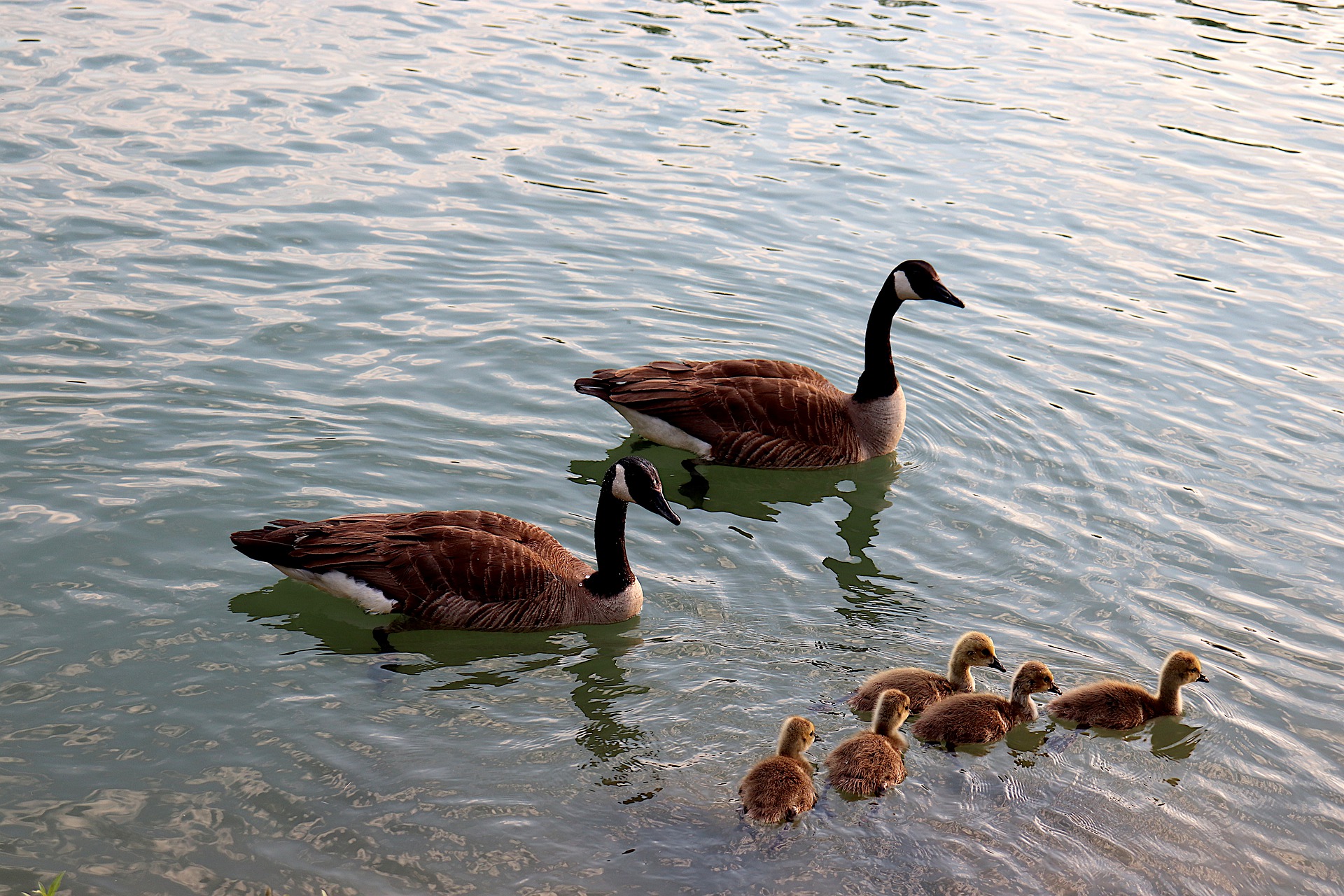
PHOTO: Family of Canada geese. Photo by Jacques Gaimard, used by permission. 

bird-migration-3945719_1920

FROM The U.S. Library of Congress: Scientists have determined that the V-shaped formation that geese use when migrating serves two important purposes. First, it conserves their energy. Each bird flies slightly above the bird directly in front, resulting in a reduction of wind resistance. The birds take turns in the front spot, falling back when they get tired. In this way, the geese can fly for a long time before stopping for rest. The second benefit to the V-formation is that it facilitates keeping track of every bird in the group, assisting with communication and coordination. For the same reason, fighter pilots often use this formation.

PHOTO: Canada geese migrating north in V-formation. Photo by Kranich17, used by permission. 

Robert_Penn_Warren

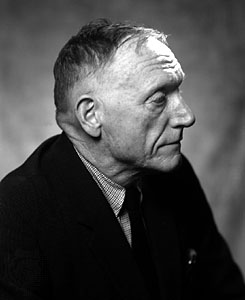
ABOUT THE AUTHOR:  Robert Penn Warren (1905-1989)—a poet-novelist-essayist-editor-critic—is the only person to win a Pulitzer Prize for both fiction and poetry, and considered the most decorated American author of all time. He received the 1947 Pulitzer Prize for his novel All the King’s Men and the Pulitzer Prize for Poetry in 1958 and 1979. From 1944-1945, Warren served as Consultant in Poetry to the Library of Congress. His other honors and awards include Presidential Medal of Freedom (1980), MacArthur Fellowship (1981), designation as first U.S. Poet Laureate (1986), and National Medal of Arts (1987).

The Catfish by David Bottoms

st simons ga

The Catfish
by David Bottoms

From a traffic jam on St. Simons bridge
I watched a fisherman break down his rod,
take bait-bucket in hand, and throw
to the pavement a catfish too small to keep.
As he walked to his car at the end of the bridge,
the fish jumped like a crippled frog, stopped
and sucked hard, straining to gill air.
Mud gathered on the belly. Sun dried the scaleless back.

I took a beach towel from the back seat
and opened the car door, walked to the curb
where the catfish swimming on the sidewalk
lay like a document on evolution.
I picked it up in the towel
and watched the quiver of its pre-crawling,
felt the whiskers groping in the darkness of the alien light,
then threw it high above the concrete railing
back to the current of our breathable past.

SOURCE: Poetry (November 1978).

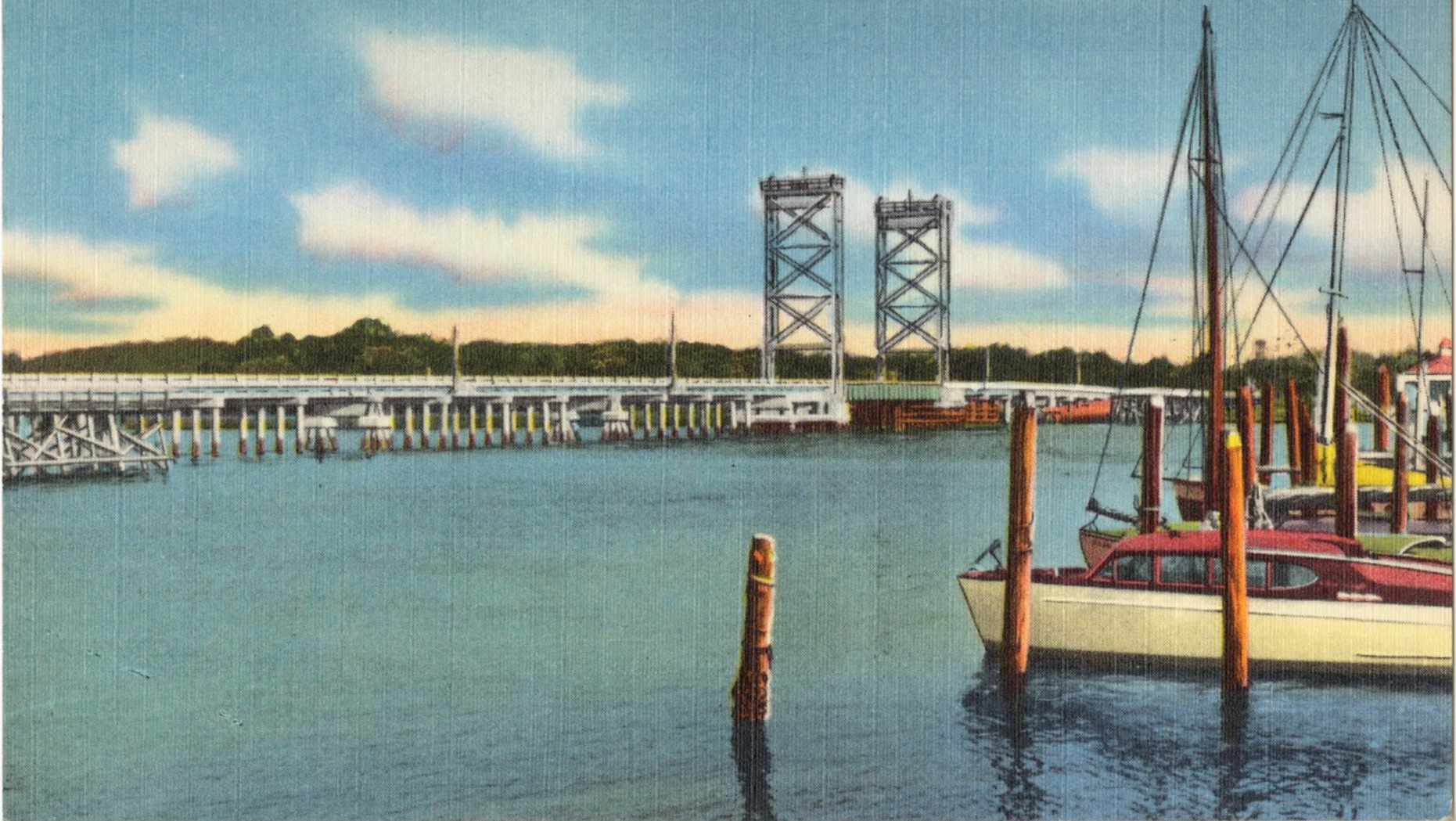
IMAGE: Vintage postcard showing drawbridge across the Frederica River, connecting Brunswick and St. Simons Island, Georgia. SOURCE: The Tichnor Brothers Collection, Georgia Postcards, Boston Public Library, used by permission.

georgia darryl brooks licensed

NOTE: St. Simons is a barrier island off Georgia’s Atlantic Coast midway between Savannah, Georgia, and Jacksonville, Florida. It is the largest of Georgia’s Golden Isles (along with Sea Island, Jekyll Island, and privately owned Little St. Simons Island). Visitors are drawn to the Island for its warm climate, beaches, outdoor activities, shops and restaurants, historical sites, and its natural environment. Originally inhabited by tribes of the Creek Nation, the area of South Georgia that includes St. Simons Island was contested by the Spaniards, English and French. After securing the Georgia colony, the English cultivated the land for rice and cotton plantations worked by large numbers of African slaves, who created the unique Gullah culture that survives to this day.

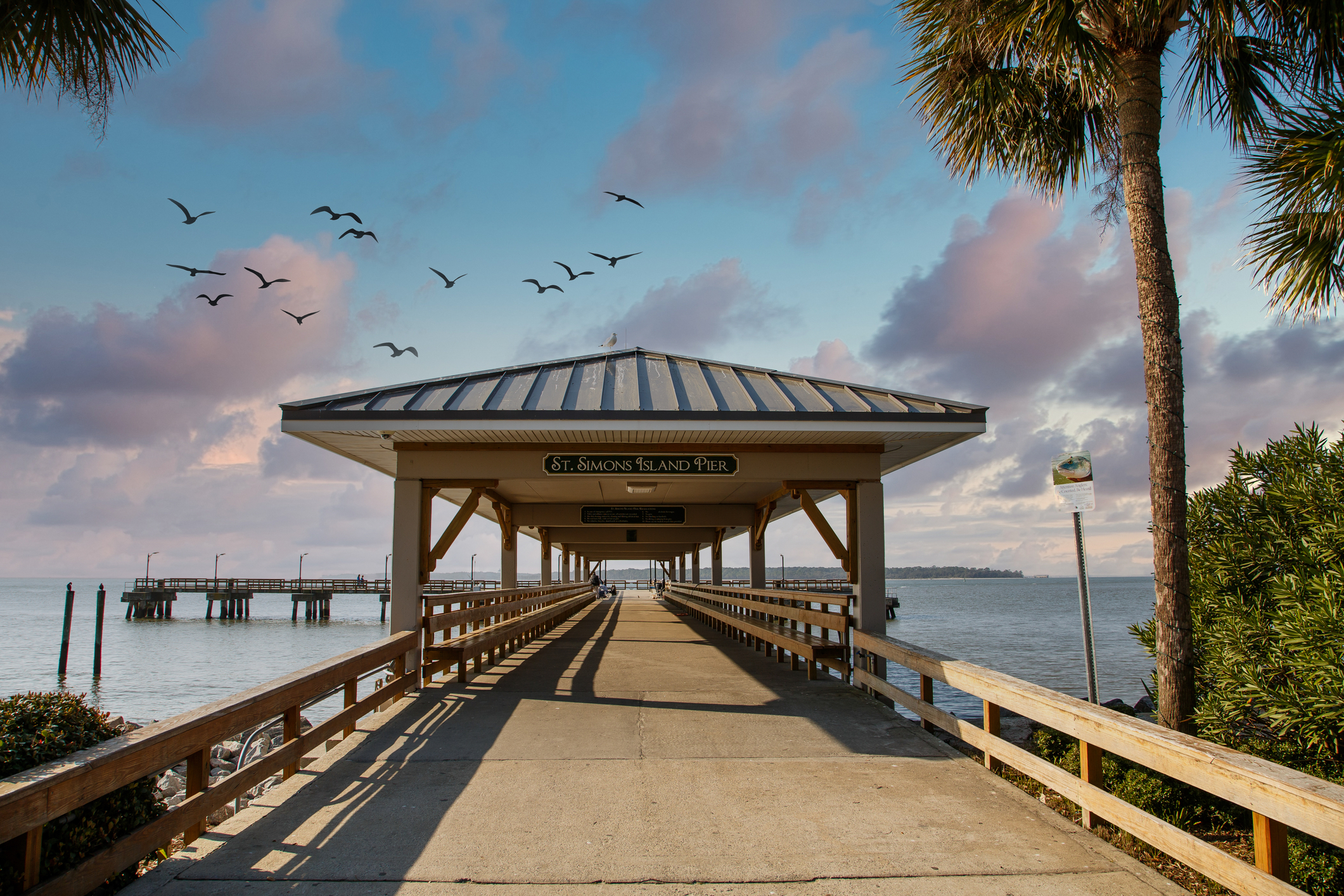
PHOTO: Pier, St. Simons Island, Georgia (2013). Photo by Darryl Brooks, used by permission.

2-channel-catfish-fish-animal-watercolor-painting-juan-bosco

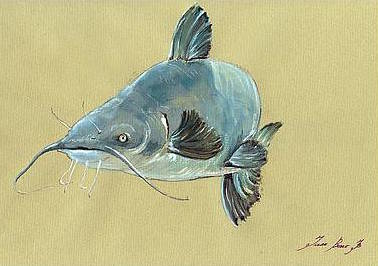
NOTE: Catfish are a diverse group of ray-finned fish. Named for their prominent barbels, which resemble a cat’s whiskers, catfish species live inland or in coastal waters of every continent except Antarctica.

IMAGE: “Catfish,” watercolor by Juan Bosco. Prints available at fineartamerica.com.

david bottoms

ABOUT THE AUTHOR: David Bottoms was born in Canton, Georgia, in 1949. He earned an MA from the University of West Georgia and a PhD from Florida State University. His poetry collections include Otherworld, Underworld, Prayer Porch (2018), We Almost Disappear (2011), Waltzing through the Endtime (2004), Vagrant Grace (1999), Armored Hearts: Selected and New Poems (1995), and In a U-Haul North of Damascus (1982). His awards and honors include the Levinson Prize, an American Academy and Institute of Arts and Letters Award, an Ingram-Merrill Award, and fellowships from the National Endowment for the Arts and the Guggenheim Foundation. In 1979, Bottoms won the prestigious Walt Whitman Award from the Academy of American Poets for his first poetry collection Shooting Rats at the Bibb County Dump. Robert Penn Warren, the contest’s judge, described Bottoms as “a strong poet, and much of his strength emerges from the fact that he is temperamentally a realist. In his vision the actual world is not transformed but illuminated.” Poet laureate of Georgia from 2000 to 2012, Bottoms lives in Atlanta, Georgia, where he holds the John B. and Elena Diaz-Amos Distinguished Chair in English Letters at Georgia State University.

Author photo by Rachael Bottoms

Paris Stories: One by Diana Rosen

paris Karayuschij licensed

Paris Stories: One
by Diana Rosen

On the lush green slope to the side
of Cimetière du Père-Lachaise
where the crumbling concrete
tombstones of Molière, Colette,
Hugo rest, I find myself seriously
Lost, wave down a solitary figure
to whom I plead,
“Sortie, s’il vous plaît, sortie,”
cobbled from the words for Please
(a must in every language)
and Exit, which I learned
riding the Metropolitain.
He giggles,
bobs his index finger down and up
and down again toward the earth,
like dipping his tea bag in hot water
to release the flavor of oolong.

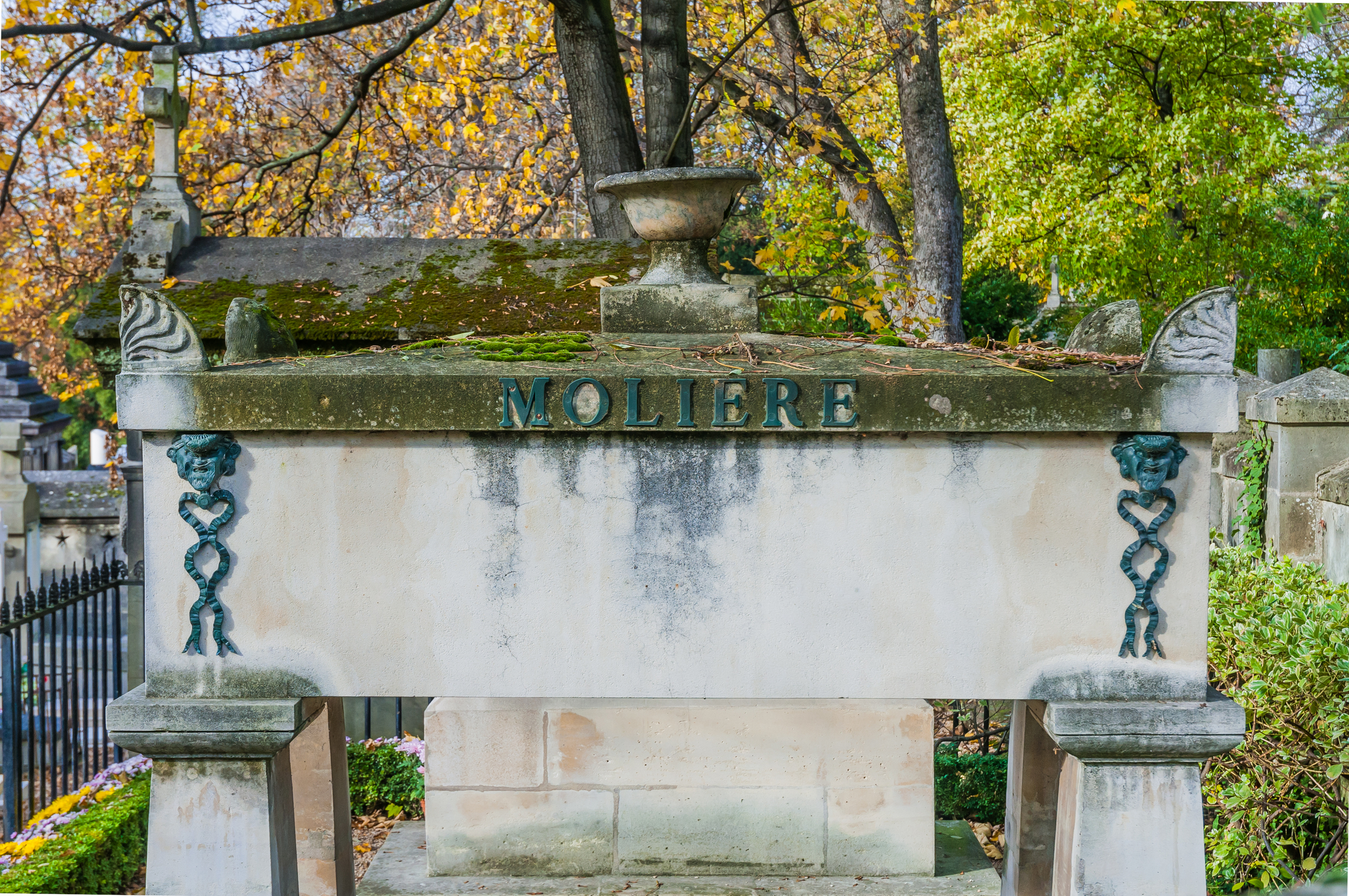
PHOTO: Molière’s grave, Père Lachaise Cemetery, Paris, France.  Photo by Karayuschij, used by permission.

WorksMoliere1739Vol01

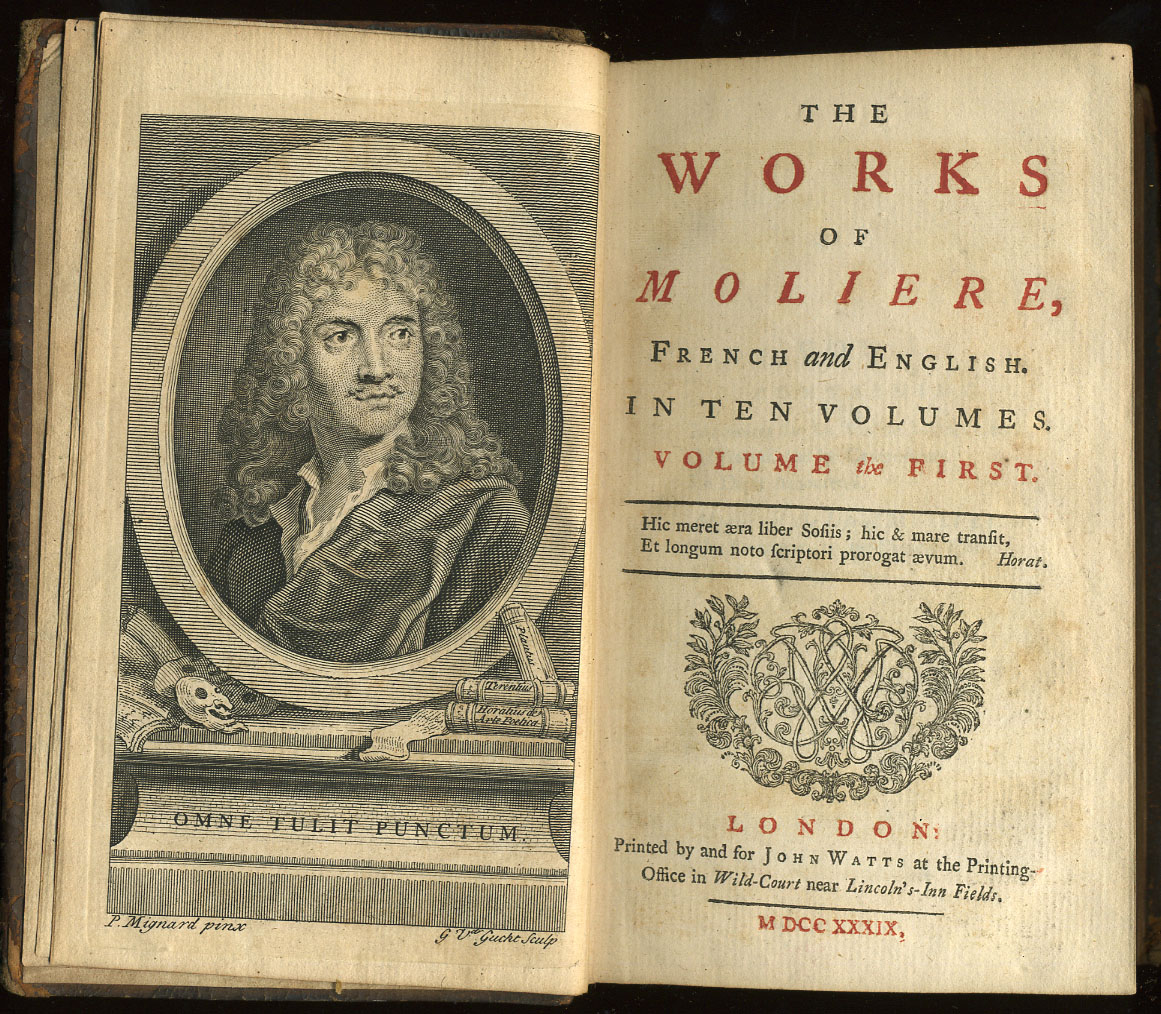
NOTE: Molière, the stage name of Jean-Baptiste Poquelin (1622-1673), was a French playwright, actor, and poet, widely regarded as one of the greatest writers in world literature. His works include comedies, farces, tragicomedies, comédie-ballets, and more. When Molière was 21, he abandoned his affluent social circle and pursued a career on the stage, where he spent the next thirty years of his life—and became a favorite among the populace. Under French law at the time of Molière’s death in 1673, actors were not allowed to be buried in sacred ground, as they were viewed as dangerous, immoral, and pagan.  Molière’s widow, actress Armande Béjart, sent a plea to the King, Louis XIV, requesting a traditional burial for her spouse. The King made a formal request to the Archbishop of Paris, who authorized a nighttime burial, without ceremony, in the section of St. Joseph’s Cemetery reserved for unbaptized infants. During the French Revolution, in 1792, Molière’s remains were brought to the Museum of French Monuments, and in 1817 they were transferred to Père Lachaise Cemetery in Paris.

IMAGE: Frontispiece and title page from the first volume of Moliere’s works translated into English printed by John Watts in 1739.

Entrance_gate,_Père_Lachaise_Cemetery,_Paris_4_December_2016_002

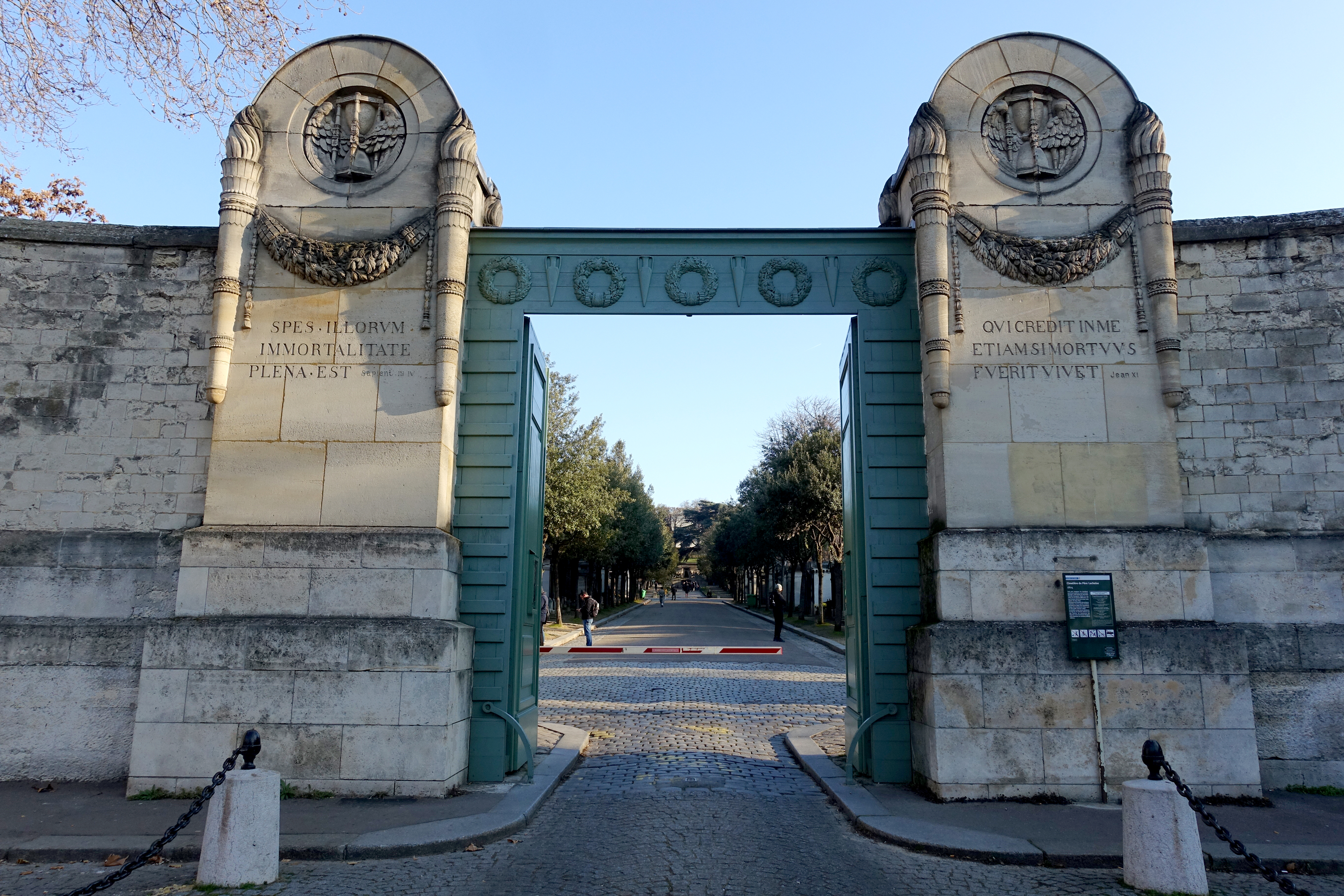
NOTE: Père Lachaise Cemetery, the largest cemetery in Paris, France, is visited by more than 3.5 million people each year. Established as a cemetery by Napoleon in 1804, it is named for the confessor to Louis XIVPère François de la Chaise (1624–1709).  Père Lachaise is still an operating cemetery, but will only accommodate individuals who die in Paris or have lived there. Many renowned people are buried in Père Lachaise.

PHOTO: Entrance to Père-Lachaise Cemetery, 16 Rue du Repos, 75020 Paris, France. Photo by Guilhem Vellut (2016) used by permission.

rosen copy

ABOUT THE AUTHOR: Diana Rosen is a poet/essayist/flash fiction writer with credits in Tiferet Journal, RATTLE, Existere Journal of Arts & Literature, among more than 70 publications in Canada, the UK, Australia, and the U.S. She is also the author of 13 nonfiction books on food, beverage, and lifestyle topics in the U.S. Find more of her work at authory.com.

The Cranes, Texas January by Mark Sanders

texas cheryl allison licensed

The Cranes, Texas January
by Mark Sanders

I call my wife outdoors to have her listen,
to turn her ears upward, beyond the cloud-veiled
sky where the moon dances thin light,
to tell her, “Don’t hear the cars on the freeway—

it’s not the truck-rumble. It is and is not
the sirens.” She stands there, on deck
a rocking boat, wanting to please the captain
who would have her hear the inaudible.

Her eyes, so blue the day sky is envious,
fix blackly on me, her mouth poised on question
like a stone. But, she hears, after all.
                                                         January on the Gulf,
warm wind washing over us,
we stand chilled in the winter of those voices.

Copyright ©2011 by Mark Sanders from his collection Conditions of Grace: New and Selected Poems, Stephen F. Austin State University Press, 2011, used by permission of the author. 

PHOTO: Whooping Cranes, Aransas National Wildlife Refuge, Austwell, Texas. Photo by Cheryl Allison, used by permission. 

20110214-USDA-JN-0001

NOTE: The whooping crane, one of the largest North American birds—standing five feet tall, with a wingspan of over seven feet—is an endangered crane species named for its “whooping” sound. In the wild, the whooping crane’s lifespan is estimated at 22 to 24 years. Pushed to the brink of extinction in 1941 by unregulated hunting and loss of habitat to 21 wild and two captive whooping cranes, conservation efforts have led to a limited recovery. The total number of cranes in the surviving migratory population, plus three reintroduced flocks and in captivity, is estimated at 800 birds, according to a March 2018 U.S. Fish and Wildlife Service report. Learn how you can help at whoopingcrane.com

PHOTO: Whooping crane in flight over Texas, 2011. Photo by John Noll, U.S. Department of Agriculture, used by permission. 

Guadalupe

NOTE: Aransas National Wildlife Refuge is a 115,324 acre protected area in Austwell, Texas, situated on the southwest side of San Antonio Bay along the Gulf Coast. It also includes the majority of Matagorda Island, a 38-mile barrier island. The site was established on December 31, 1937 by Executive Order of President Franklin Delano Roosevelt as a refuge and breeding ground for migratory birds and other wildlife.  Bird life includes ducks, herons, egrets, ibises, roseate spoonbills, and the whooping crane, whose population has recovered significantly since the 1940s, but remains endangered. Watch a short video about conservation efforts at Aransas National Wildlife Refuge at youtube.com

IMAGE: Map showing location of Aransas National Wildlife Refuge on the Gulf Coast of Texas. 

Sanders

ABOUT THE AUTHOR: Mark Sanders is a poet, creative essayist, fiction writer, and literary critic with more than 500 publications in journals in the United States, Great Britain, Australia, and Canada. His collection Landscapes, with Horses, won the Western Heritage Award in the category of Outstanding Book of Poetry for 2019, His short story, “Why Guineas Fly,” was selected as one of 100 outstanding short stories for 2007 by Stephen King in Best American Short Stories, and his essay, “Homecoming Parade,” was selected as one of the outstanding works of the year in the 2016 edition of Best American Essays. His writing has been nominated for Pushcart Prizes more than a dozen times and been listed among the notable works in Pushcart. His poetry has been featured in American Life in Poetry, a syndicated series published by former U.S. Poet Laureate Ted Kooser, and on the Poetry Foundation website. Sanders is the long-time editor of Sandhills Press, a small, independent press he started in 1979. His most recent collection, In a Good Time, was published by WSC Press in 2019. He is associate dean and professor of English in the College of Liberal and Applied Arts at Stephen F. Austin State University in Nacogdoches, Texas.

January in Paris by Billy Collins

paris-112440_1920

January in Paris
by Billy Collins

A poem is never finished, only abandoned.
—Paul Valéry

That winter I had nothing to do
but tend the kettle in my shuttered room
on the top floor of a pensione near a cemetery,

but I would sometimes descend the stairs,
unlock my bicycle, and pedal along the cold city streets

often turning from a wide boulevard
down a narrow side street
bearing the name of an obscure patriot.

I followed a few private rules,
never crossing a bridge without stopping
mid-point to lean my bike on the railing
and observe the flow of the river below
as I tried to better understand the French.

In my pale coat and my Basque cap
I pedaled past the windows of a patisserie
or sat up tall in the seat, arms folded,
and clicked downhill filling my nose with winter air.

I would see beggars and street cleaners
in their bright uniforms, and sometimes
I would see the poems of Valéry,
the ones he never finished but abandoned,
wandering the streets of the city half-clothed.

Most of them needed only a final line
or two, a little verbal flourish at the end,
but whenever I approached,
they would retreat from their ashcan fires
into the shadows—thin specters of incompletion,

forsaken for so many long decades
how could they ever trust another man with a pen?

I came across the one I wanted to tell you about
sitting with a glass of rosé at a café table—
beautiful, emaciated, unfinished,
cruelly abandoned with a flick of panache

by Monsieur Paul Valéry himself,
big fish in the school of Symbolism
and for a time, president of the Committee of Arts and Letters
of the League of Nations if you please.

Never mind how I got her out of the café,
past the concierge and up the flights of stairs—
remember that Paris is the capital of public kissing.

And never mind the holding and the pressing.
It is enough to know that I moved my pen
in such a way as to bring her to completion,

a simple, final stanza, which ended,
as this poem will, with the image
of a gorgeous orphan lying on a rumpled bed,
her large eyes closed,
a painting of cows in a valley over her head,

and off to the side, me in a window seat
blowing smoke from a cigarette at dawn.

From the author’s collection Aimless Love © Random House 2013

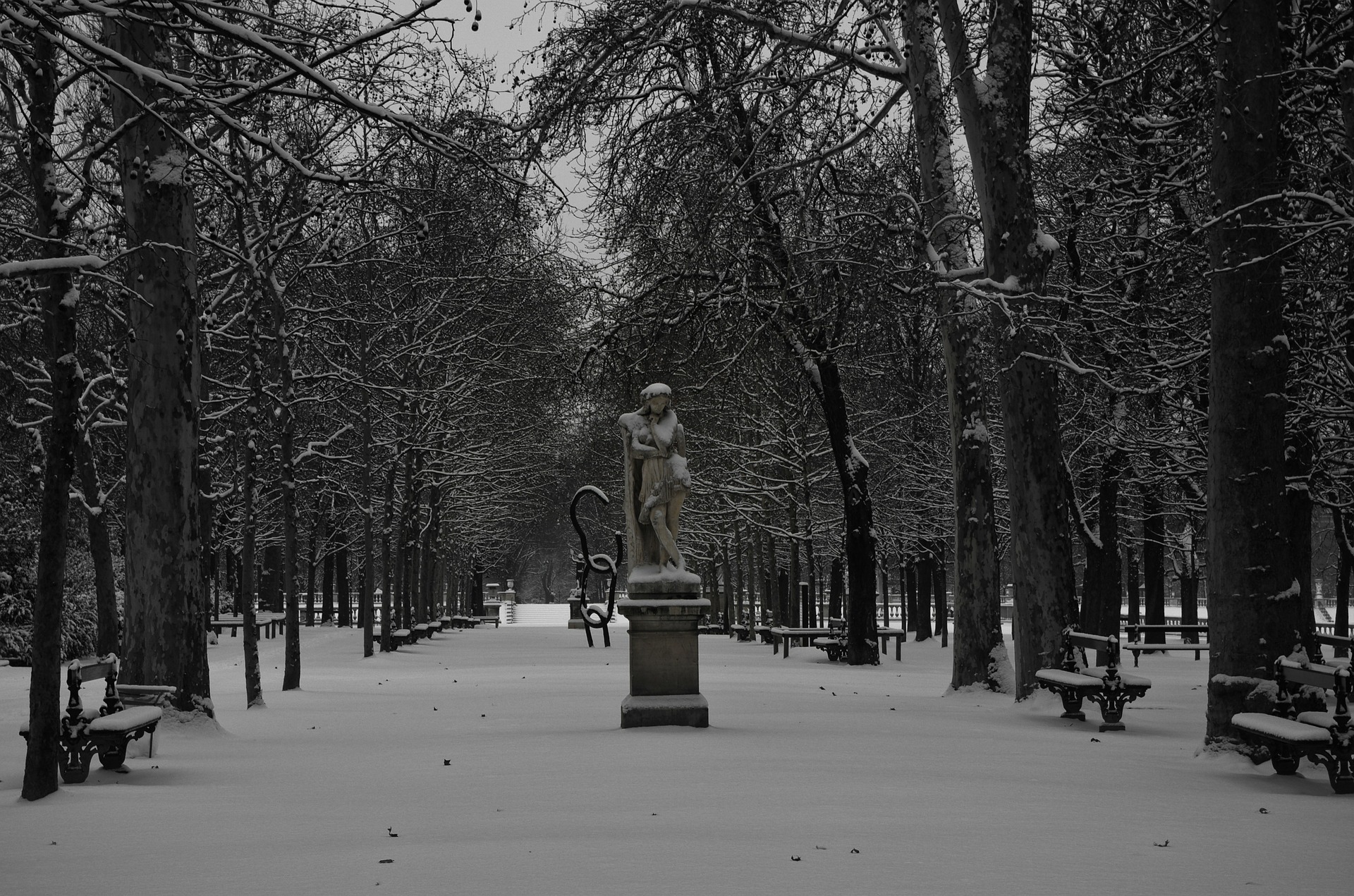
PHOTO: Statue of the prophetess Veleda by Étienne Hippolyte Maindron (1844), winter, Jardin du Luxembourg, Paris, France. Photo by David Mark, used by permission.

NOTE ON PHOTO: Jardin du Luxembourg, known in English as the Luxembourg Gardens, was created beginning in 1612 by Marie de’ Medici, the widow of King Henry IV of France, for a new residence she constructed, the Luxembourg Palace. The site, which covers about 56 acres, is known for its lawns, tree-lined promenades, flowerbeds, model sailboats on its circular basin, and Medici Fountain, built in 1620. Admission to Jardin du Luxembourg is free, with opening and closing times that vary, depending on the time of year. 

1200px-Paul_Valéry_-_photo_Henri_Manuel

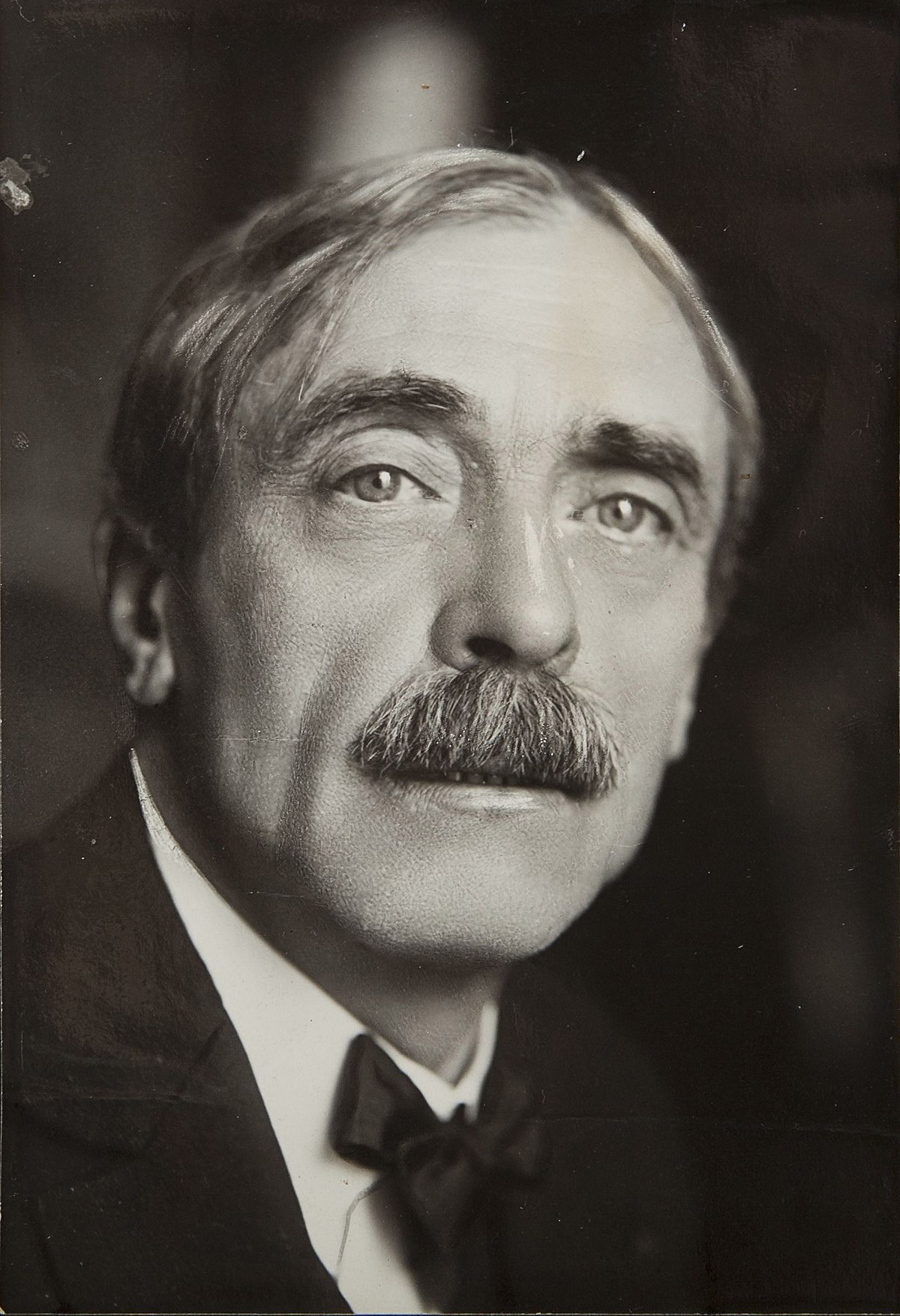
NOTE: Paul Valéry (1871-1945) was a French poet, essayist, and philosopher. Nominated for the Nobel Prize in Literature in 12 different years, Valéry is best known as a poet, and is sometimes considered the last of the French symbolists. In 1898, at age 27, he quit writing and didn’t publish a word for nearly 20 years. When, in 1917, he finally broke his “great silence” with the publication of La Jeune Parque, he was 46. Composed of 512 alexandrine lines in rhyming couplets, which had taken him four years to complete, the poem secured his immediate fame—and is considered one of the greatest French poems of the twentieth century. A collection of Paul Valéry’s work is available in The Idea of Perfection: The Poetry and Prose of Paul Valéry; A Bilingual Edition (Farrar, Straus and Giroux, 2020).

PHOTO: Portrait of Paul Valéry by Henri Manuel (1925).

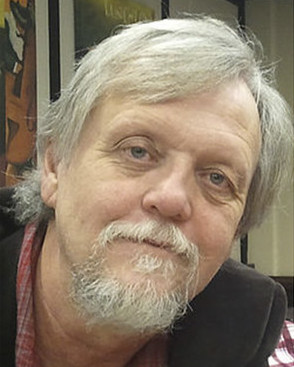
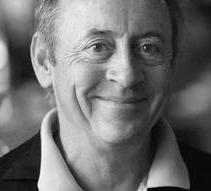
billy-collins-

ABOUT THE AUTHOR: Billy Collins, named U.S. Poet Laureate in June 2001 and reappointed to the post in 2002, has published seven collections of poetry, including The Art of DrowningPicnic, Lightning; and Questions about Angels. He is a Distinguished Professor at Lehman College of the City University of New York (retired, 2016). Collins was recognized as a Literary Lion of the New York Public Library (1992) and selected as the New York State Poet for 2004 through 2006. In 2016, Collins was inducted into the American Academy of Arts and Letters. As of 2020, he is a teacher in the MFA program at Stony Brook Southampton.

New Year’s Haiku by Matsuo Bashō

Japan tampatra 1 licensed

New Year’s Haiku
by Matsuo Bashō

New Year’s Day—
sun on every field
is beloved

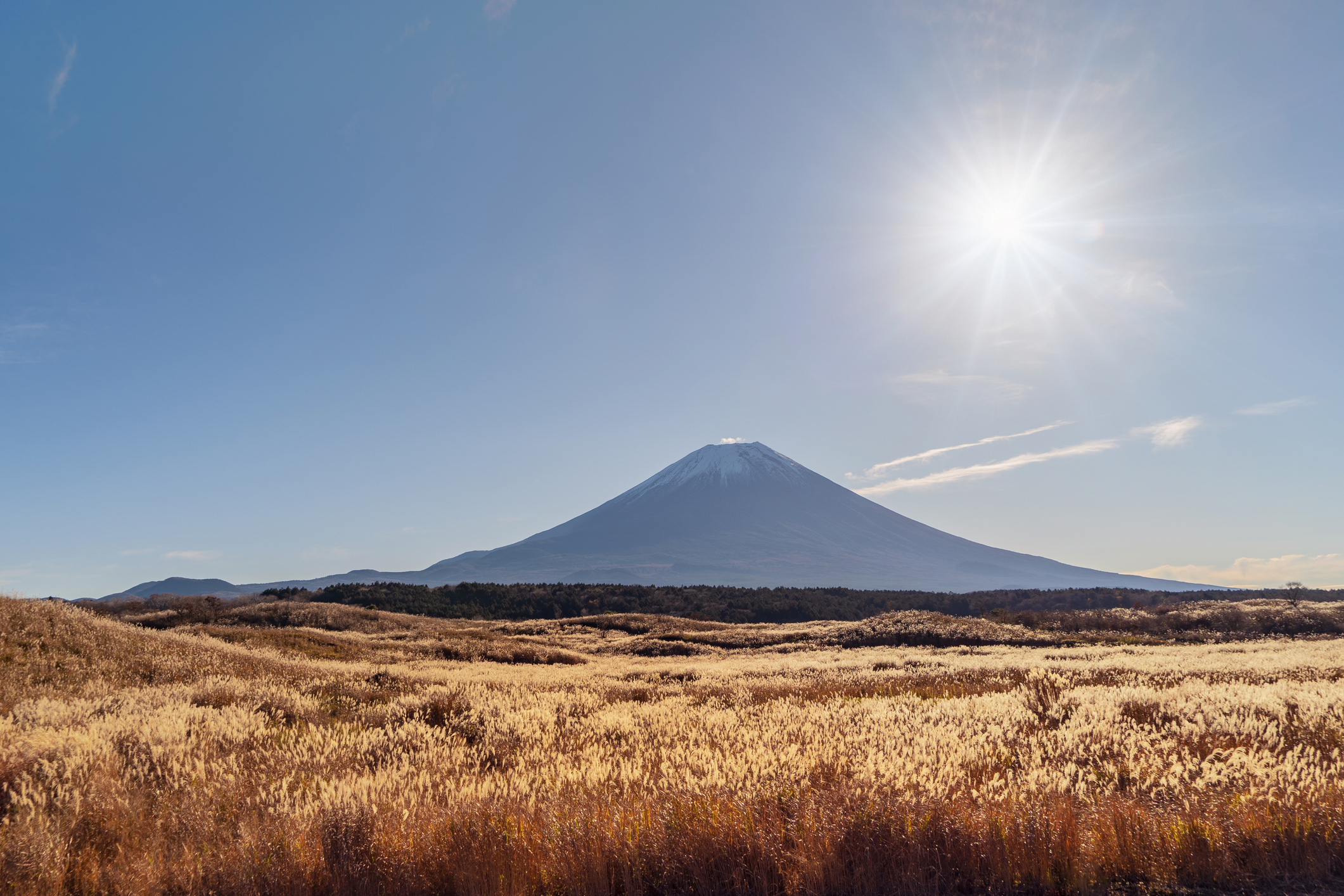
PHOTO: Mount Fuji, the sun, and a field in Fujikawaguchiko, Yamanashi, Japan. Photo by Tampatra1, used by permission.

NOTE: Mount Fuji is the highest mountain in Japan, standing 12,389.2 feet. An active stratovolcano, Mount Fuji last erupted from 1707 to 1708. The mountain stands about 62 miles southwest of Tokyo and can be seen from there on clear days. Mount Fuji’s exceptionally symmetrical cone, which is snow-capped for about five months of the year, is commonly used as a cultural icon of Japan. In 2013, Mt. Fuji was added to the World Heritage List as a Cultural Site. According to UNESCO, Mount Fuji has “inspired artists and poets and has been the object of pilgrimage for centuries.”

Poet-Basho1-and-Moon_Festival-Tsukioka-Yoshitoshi-1891 copy

ABOUT THE AUTHOR: Matsuo Bashō was the most famous poet of the Edo period in Japan. His poems were influenced by his firsthand experience of the world around him, often encapsulating the feeling of a scene in a few simple elements. During his lifetime, Bashō was recognized for his works in the collaborative haikai no renga form; today, he is recognized as the greatest master of haiku (then called hokku). He is also well known for his travel essays beginning with “Records of a Weather-Exposed Skeleton” (1684), written after his journey to Kyoto and Nara. Bashō believed his best work lay in leading and participating in renku, saying, “Many of my followers can write hokku as well as I can. Where I show who I really am is in linking haikai verses.”

IMAGE: Poet Matsuo Bashō meets two farmers celebrating the mid-autumn moon festival in a print from Tsukioka Yoshitoshi‘s Hundred Aspects of the Moon (1891). The haiku reads: “Since the crescent moon, I have been waiting for tonight.” (SOURCE: Toyko Metropolitan Museum of Art, used by permission)