Things to Do Around Seattle by Gary Snyder

luca-micheli-RpvC77-exG0-unsplash

Things to Do Around Seattle
by Gary Snyder

Hear phone poles hum.
Catch garter snakes. Make lizard tails fall off.
Biking to Lake Washington, see muddy little fish.
Peeling old bark off Madrone to see the clean red new bark.
Cleaning fir pitch off your hands.
Reading books in the back of the University District goodwill.
Swimming in Puget Sound below the railroad tracks.
Dig clams.
Ride the Kalakala to Bremerton.
See Mt. Constance from the water tower up by the art museum.
Fudgsicles in Woodland park zoo, the Eagle and the Camel.
The mummy Eskimo baby in the University Anthropology museum.
Hung up deep sea canoes, red cedar log.
Eating old style oatmeal mush cookt in double boiler or cracked wheat cereal with dates.
Sway in the wind in the top of the cedar in the middle of the swamp—
Walking off through the swamp and over the ridge to the pine woods.
Picking wild blackberries all around stumps.
Peeling cascara
Feeding chickens
Feeling Penelope’s udder, one teat small
Oregon grape and salal.

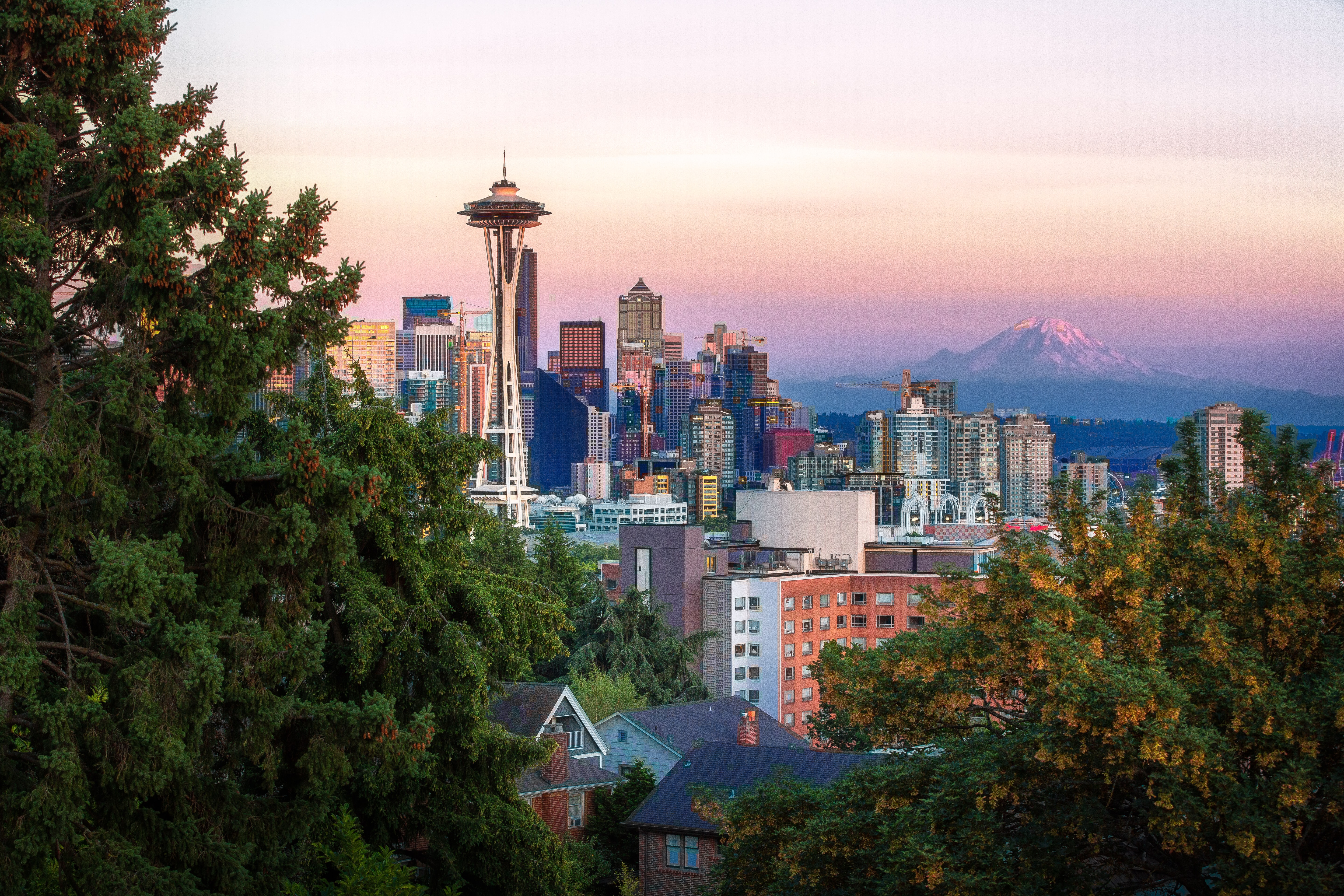
PHOTO: Seattle, Washington, with Mt. Rainier in the background. Photo by Luca Micheli on Unsplash

NOTE: Mount Rainier, also known as Tahoma or Tacoma, is a large active stratovolcano in the Cascade Range of the Pacific Northwest United States, located about 59 miles south-southeast of Seattle, Washington. With a summit elevation of 14,411 feet, it is the highest mountain in the state of Washington. With a high probability of eruption in the near future, Mt. Rainier is considered one of the most dangerous volcanoes in the world, and it is on the Decade Volcano list. 
Fairbanks Under the Solstice by John Haines

tommy-tang-C_Fr8yUq5yY-unsplash

Fairbanks Under the Solstice
by John Haines

Slowly, without sun, the day sinks
toward the close of December.
It is minus sixty degrees.

Over the sleeping houses a dense
fog rises—smoke from banked fires,
and the snowy breath of an abyss
through which the cold town
is perceptibly falling.

As if Death were a voice made visible,
with the power of illumination…

Now, in the white shadow
of those streets, ghostly newsboys
make their rounds, delivering
to the homes of those
who have died of the frost
word of the resurrection of Silence.

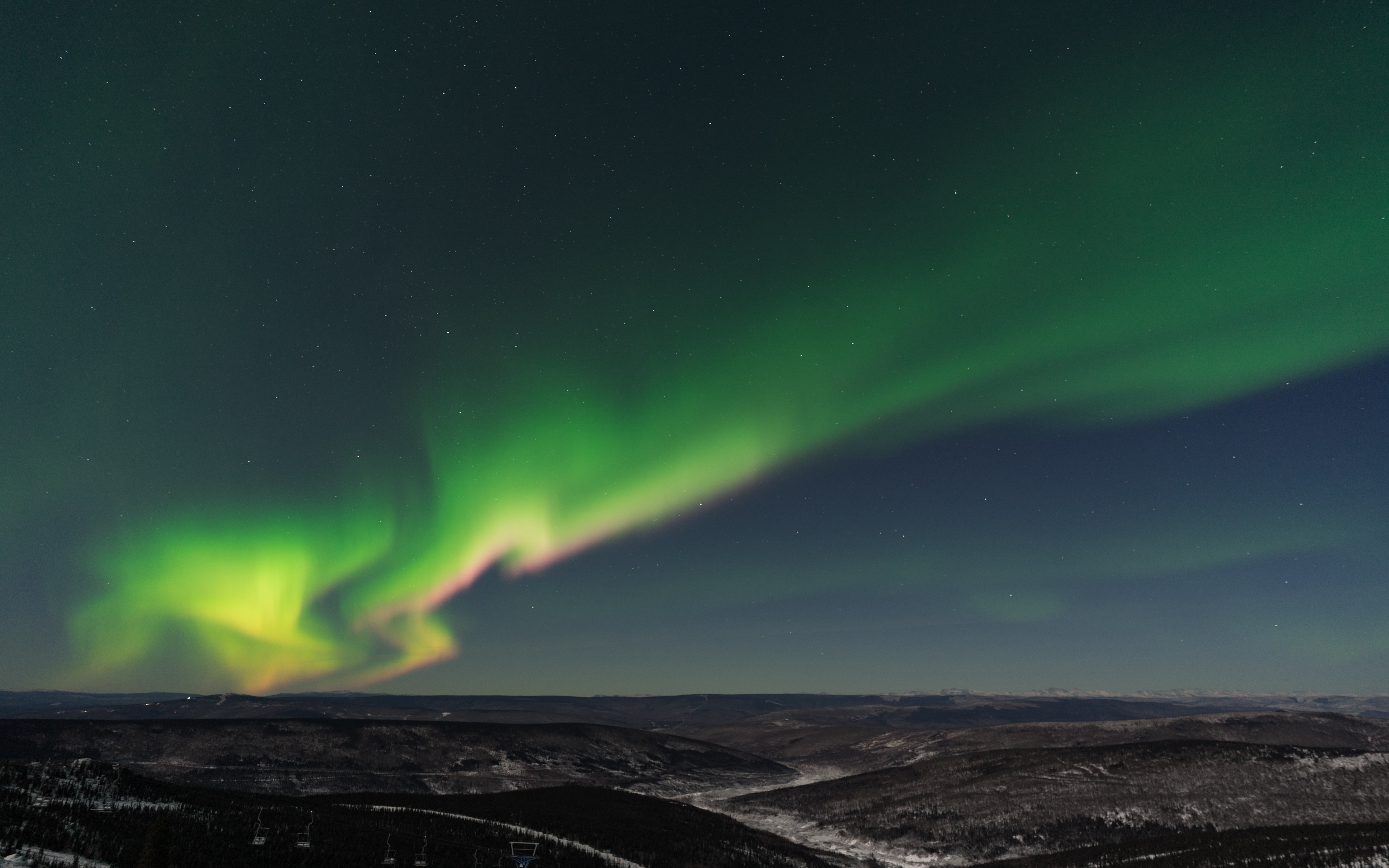
PHOTO: Cleary Summit, aurora viewing area, Fairbanks, Alaska. Fairbanks’ Aurora Season occurs from August 21 to April 21.  The aurora is present year-round, but can only be seen during the Aurora Season when the skies are dark enough. Photo by Tommy Tang on Unsplash.

A Walrus Tusk from Alaska by Alfred Corn

Inuit_man_by_Curtis_-_Noatak_AK

A Walrus Tusk from Alaska
by Alfred Corn

Arp might have done a version of it in white marble,
the model held aloft, in approximate awe:
this touch cross-section oval of tusk,
dense and cool as fossil cranium—

preliminary bloodshed condonable
if Inupiat hunters on King Island may
follow as their fathers did the bark of a husky,
echoes ricocheted from roughed-up eskers

on the glacier, a resonance salt cured
and stained deep green by Arctic seas, whose tilting floor
mirrors the mainland’s snowcapped amphitheater.
Which of his elders set Mike Sclamana the task

and taught him to decide, in scrimshaw, what was so?
Netted incisions black as an etching
saw a way to scratch in living infinitives
known since the Miocene to have animated

the Bering Strait: one humpbacked whale, plump,
and bardic; an Orca caught on the ascending arc,
salt droplets flung from a flange of soot-black fin…
Farther along the bone conveyor belt a small

ringed seal will never not be swimming, part-time
landlubber, who may feel overshadowed by the donor
walrus ahead. And by his scribal tusk, which stands
in direct correspondence with the draughtsman’s burin,

skillful enough to score their tapeloop ostinato,
no harp sonata, but, instead, the humpbacked whale’s
yearning bassoon (still audible if you cup
the keepsake to your ear and let it sound the depths).

PHOTO: Inupiat hunter in kayak, Noatak, Alaska, by Edward Curtis (1929). Courtesy of the U.S. Library of Congress.

Letter from Shuyak Island, Alaska by Helena Minton

Augustine_volcano_Jan_24_2006_-_Cyrus_Read

Letter from Shuyak Island, Alaska
by Helena Minton
     To my grandmother

I liked to sit at your dressing table.
Whiskey-colored perfumes smelled of dust.
The photograph beside the mirror showed
a serious face, a man in pince-nez
who died the year I was born.

Nights, lying on the fold-out couch,
I was surrounded: mahogany, Chinese lamps,
and paintings of forests
boxed in by big gold frames.
Nature felt confining,
closing in as you grew old.

This summer I sleep on a barge,
stare at spruce and sky
as I walk on this island which hasn’t changed
since our Celtic ancestors invaded Ireland.

1909 you were twenty-two
I picture you in Boston
practicing piano scales
the day Mount Augustine—the volcano
I see from the beach—spilled lava into the sea.

Perhaps you saw it in the paper, perhaps
not, concerned with music or men or money,
gold-rimmed plates and goblets of your future.
If you thought of any other world
it was Europe, Strauss waltzes,
a honeymoon tour before the war.

PHOTO: The 2006 eruption of Augustine Volcano, which forms Augustine Island in south central coastal Alaska, 174 miles southwest of Anchorage. Photo by Cyrus Read Geophysicist USGS, Alaska Volcano Observatory.

Hokusai in Iowa by Dan Campion

          I no longer remember I am here
     there being no mountain
and I at its foot

          reading the sea-level poems about me
    to Grant Wood whose denim bib
rustles like a skiff’s sail

          perhaps waves in dirt and tassels
     really are like waves of the sea
so long as we do not think about

          whose prairie if I may be forgiven
     a figure of speech furrowing
at the least disturbance

          craft can always prevail
     provided spokes stick out
from the crucial nubs

          and the eye composes this space
     with composure sun setting
or sun rising

          close to the ground
     nothing fancy, you know
simple beyond comprehension

          austere without being witless
     here folk over there scholars
keeping droll actors’ suspicions

          drawing themselves out
     into schoolhouse murals
and innkeepers’ commissions

          as if after lofty effort
     earth-rubbing lines
fashioned a style

IMAGE: Iowa farm (left) by David Mark, used by permission; The Great Wave Off Kanagawa by Katsushika Hokusai (c. 1830). 

Indian Summer by Diane Glancy

monochrome-1445311_1920

Indian Summer
by Diane Glancy

There’s a farm auction up the road.
Wind has its bid in for the leaves.
Already bugs flurry the headlights
between cornfields at night.
If this world were permanent,
I could dance full as the squaw dress
on the clothesline.
I would not see winter
in the square of white yard-light on the wall.
But something tugs at me.
The world is at a loss and I am part of it
migrating daily.
Everything is up for grabs
like a box of farm tools broken open.
I hear the spirits often in the garden
and along the shore of corn.
I know this place is not mine.
I hear them up the road again.
This world is a horizon, an open sea.
Behind the house, the white iceberg of the barn.

PHOTO: White barn by Michael Vines, used by permission.

Indian River by Wallace Stevens

IRL-Background

Indian River
by Wallace Stevens

The trade-wind jingles the rings in the nets around racks by the docks on Indian River.
It is the same jingle of the water among roots under the banks of the palmettoes,
It is the same jingle of the red-bird breasting the orange-trees out of the cedars.
Yet there is no spring in Florida, neither in boskage perdu, nor on the nunnery beaches.

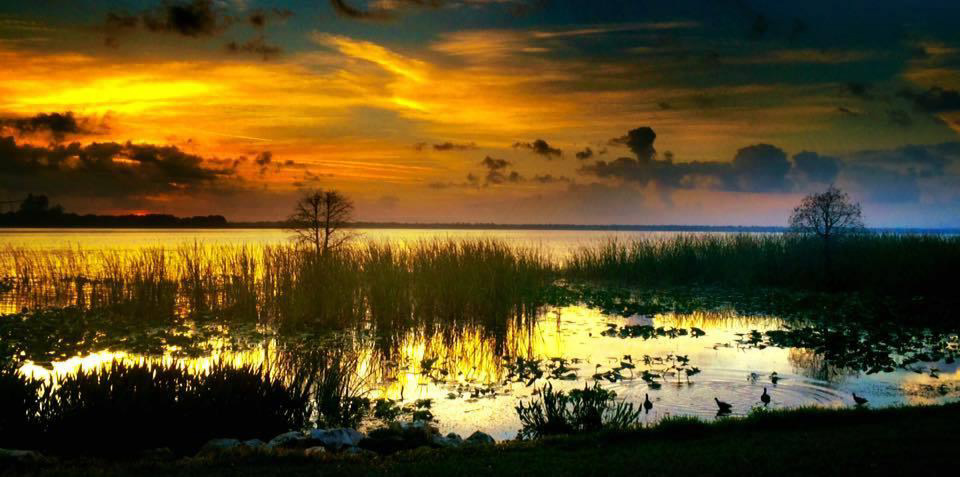
PHOTO: Indian River Lagoon (Florida). Photo by Florida Institute of Technology. Check out their research and work on the site here.

NOTE: The Indian River Lagoon is a grouping of three lagoons on the Atlantic Coast of Florida. During the last glacial period, which ended 15,000 years ago, the ocean receded. The area that is now the lagoon was grassland, 30 miles from the shore. When the glacier melted, the sea rose, and the lagoon remained as captured water. Indian River Lagoon is one of the most biodiverse estuaries in the Northern Hemisphere, and is home to more than 4,300 species of plants and animals.

A Postcard from Greece by A.E. Stallings

village-3317294_1920

A Postcard from Greece
by A.E. Stallings

Hatched from sleep, as we slipped out of orbit
Round a clothespin curve new-watered with the rain,
I saw the sea, the sky, as bright as pain,
That outer space through which we were to plummet.
No guardrails hemmed the road, no way to stop it,
The only warning, here and there, a shrine:
Some tended still, some antique and forgotten,
Empty of oil, but all were consecrated
To those who lost their wild race with the road
And sliced the tedious sea once, like a knife.
Somehow we struck an olive tree instead.
Our car stopped on the cliff’s brow. Suddenly safe,
We clung together, shade to pagan shade,
Surprised by sunlight, air, this afterlife.

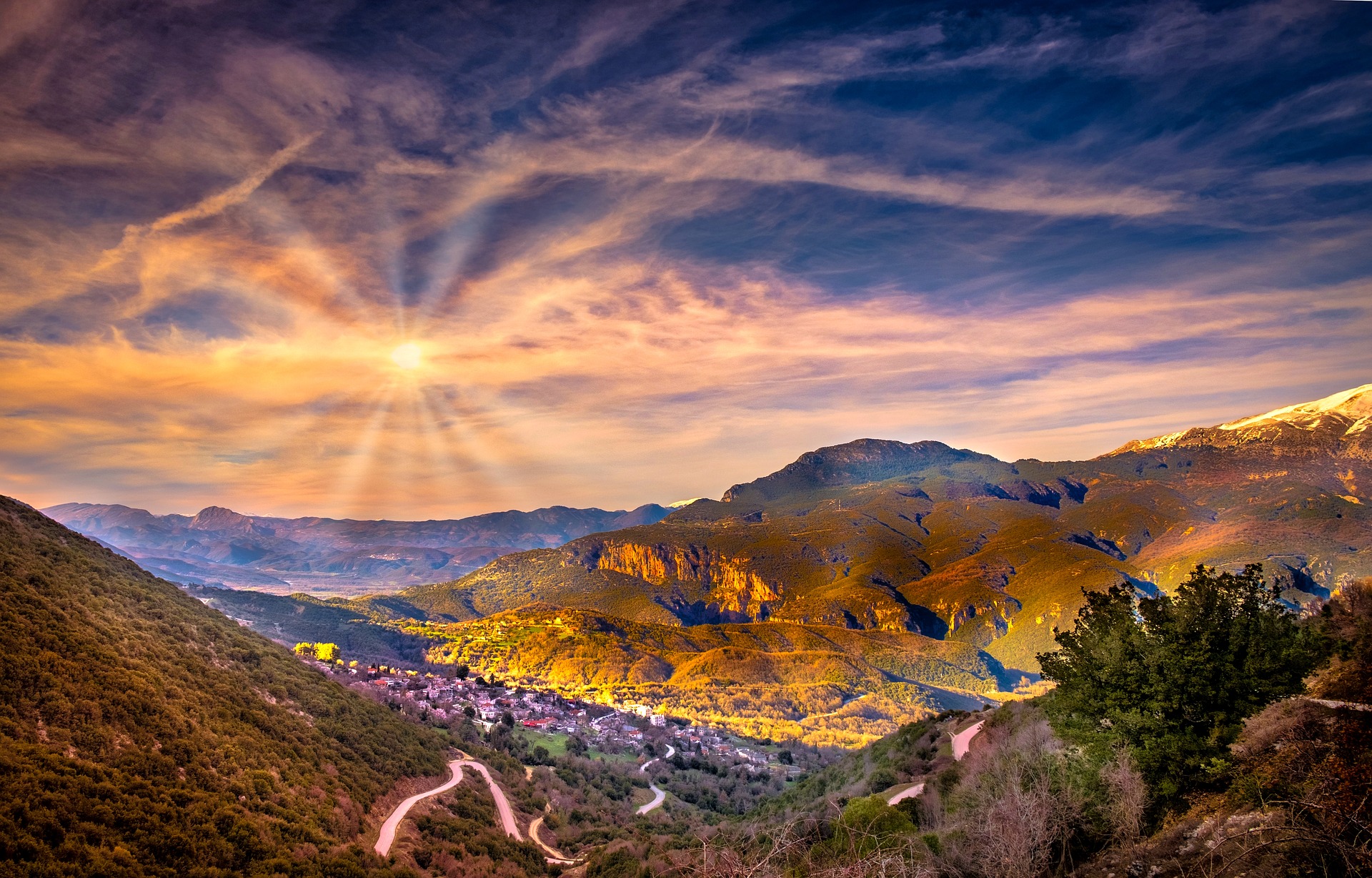
PHOTO: Village in Greece by Antonios Ntoumas, used by permission. 

Jim’s All-Night Diner by James Tate

john-matychuk-fX2WyHHeAUY-unsplash

Jim’s All-Night Diner
by James Tate

Solemnity around the samovar
warms the old interlopers:

grief is momentarily rinsed
away. They wait as if for
a certain invitation.

The voices outside are
a panoply of scorn.

These yellow thumbs haul up
the hot liquid, but when
the cup’s drunk it is more

like an orphanage.
The dead letter department,
the salvation army,

the animal rescue league—
these are the only destinations.
One desires to touch

their lowly shoulders
with a plastic spoon

and change them into green rabbits
on a white Alpine mountain
their gauzy faces exhilarated.

Photo by John Matychuk on Unsplash

Return to Florence by Geoffrey Grigson

Florence Cathedral at Night in Florence - Italy

Return to Florence
by Geoffrey Grigson

A theatre-sky, of navy blue, at night:
traffic of the night, it darts, it screams,
it is straight swifts of night with lighted
eyes: upwards I read on a new building’s

Face, Here P.B. Shelley wrote
Ode to the West Wind. Your poet, no. Nor
mine, yet saw wind as he will or wind,
oh, I say willkommen, welcome, ben-

Venuto, oh, bienvenu; and I—I am
here again, after fourteen years: I-you.
I-you shall in a minute see the Duomo’s
domino sides enormous up into the night,

I-you shall past our latteria stroll—there,
that corner ship where, look–for your
sake—the kind man scented my hair. Soon
must Il Bianco come into view,

The Loggia lighted, Dante again in the night,
reading, on walls. I-you. Sleeping. To swifts
of morning tomorrow waking. Dead and to come,
oh, welcome, willkommen, benvenuti, oh, bienvenus!

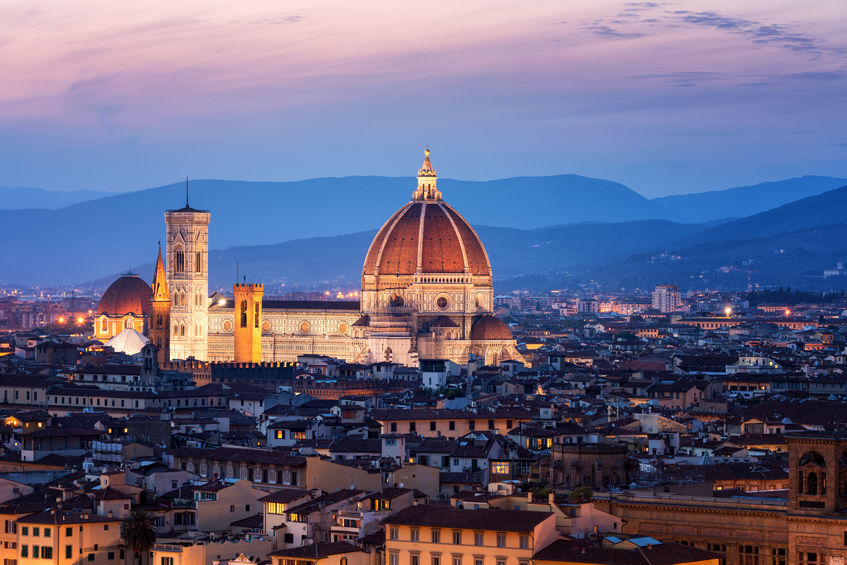
PHOTO: Florence, Italy, by pitinan, used by permission.