A Reflection of Beauty in Washington by Jimmy Carter

washington dc lane erickson licensed

A Reflection of Beauty in Washington
by Jimmy Carter

I recall one winter night
going to the White House roof
to study the Orion nebulae,
but we could barely see the stars,
their images so paled by city lights.

Suddenly we heard a sound
primeval in its tone and rhythm
coming from the northern sky.
We turned to watch in silence
long wavering V’s,
breasts transformed to brilliance
by the lights we would have dimmed.
The geese passed overhead,
and then without a word
we went down to a peaceful sleep,
marveling at what we’d seen and heard.

NOTE: “A Reflection of Beauty in Washington” appears in Jimmy Carter’s poetry collection Always a Reckoning and Other Poems (1994).

PHOTO: Geese flying over Washington, DC, with the Washington Monument, right, and the United States Capitol in the background. Photo by Lance Erickson, used by permission.

carter-1-1

ABOUT THE AUTHOR: Jimmy Carter is an American politician, philanthropist, and former farmer who served as the 39th president of the United States from 1977 to 1981. In 2002, he was awarded the Nobel Peace Prize for his work in co-founding the Carter Center, which he established in 1982 to promote and expand human rights. He has written over 30 books, ranging from political memoirs to poetry, while continuing to actively comment on ongoing American and global affairs.

How to Regain Your Soul by William E. Stafford

canyon 2

How to Regain Your Soul
by William E. Stafford

Come down Canyon Creek trail on a summer afternoon
that one place where the valley floor opens out. You will see
the white butterflies. Because of the way shadows
come off those vertical rocks in the west, there are
shafts of sunlight hitting the river and a deep
long purple gorge straight ahead. Put down your pack.

Above, air sighs the pines. It was this way
when Rome was clanging, when Troy was being built,
when campfires lighted caves. The white butterflies dance
by the thousands in the still sunshine. Suddenly, anything
could happen to you. Your soul pulls toward the canyon
and then shines back through the white wings to be you again.

“How to Regain Your Soul” by William E. Stafford from The Darkness Around Us is Deep  ©Harper Perennial, 1994.

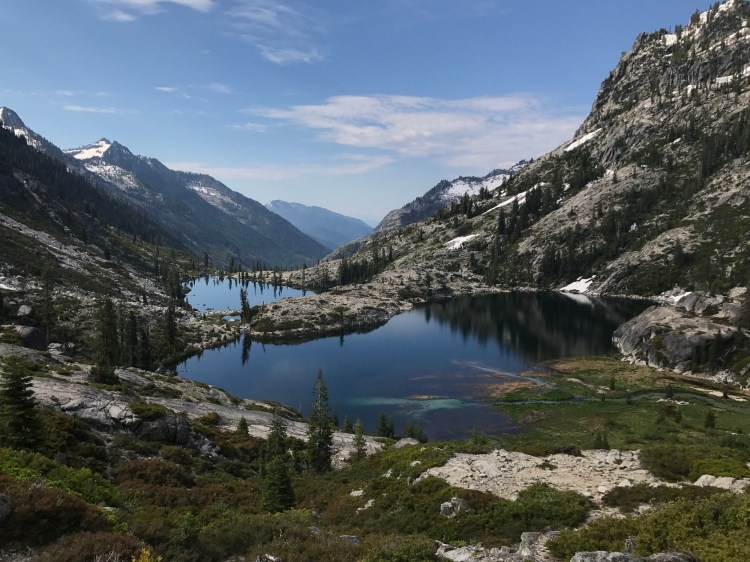
PHOTO: Canyon Creek Lakes from Little Lakes Trail in Trinity Alps Wilderness, near Weaverville, California. Photo ©Dara Zimmerman, All Rights Reserved.

california trinity alps clay shannon licensed

NOTE: The Trinity Alps are a mountain range in Siskiyou County and Trinity County, in Northern California. They are a subrange of the Klamath Mountains and located to the north of Weaverville, California. The Trinity Alps are noted for their scenic views and alpine environment. The Trinity Alps Wilderness covers 517,000 acres, and features hiking trails, backcountry camping, and breathtaking scenery—including mountains, gorges, glaciers, forests, lakes, and rivers. James Hilton, author of the novel Lost Horizons about the Himalayan utopia “Shangri-la,” said that the area around Weaverville, California, came closest to the definition of an earthly paradise than anywhere else on the planet.

PHOTO: Trinity Alps, Pacific Crest Trail, Northern California. Photo by Clay Shannon, used by permission.

william-stafford

ABOUT THE AUTHOR: William Edgar Stafford (1914-1993) was appointed the twentieth United States Poet Laureate in 1970, at the time referred to as Consultant in Poetry to the Library of Congress. He received a B.A. from the University of Kansas in 1937. In 1941, he was drafted into the United States armed forces, but declared himself a pacifist. As a conscientious objector, he performed alternative service from 1942 to 1946 in the Civilian Public Service camps. The work consisted of forestry and soil conservation work in Arkansas, California, and Illinois.  He received his M.A. from the University of Kansas in 1947, and in 1954 received a Ph.D. from the University of Iowa. Stafford’s poems are typically short, focusing on details of daily life. He kept a daily journal for 50 years, and composed nearly 22,000 poems—about 3,000 of these were published. Ask Me: 100 Essential Poems of William Stafford was released by Graywolf Press in 2014.

Autumn at Owen Beach by Carl “Papa” Palmer

owen beach 1 voxstar

Autumn at Owen Beach
by Carl “Papa” Palmer

Tacoma Washington rains
a foggy mist I breathe
in cadence
with soft whispers
of Puget Sound surf
heard front row center
sitting on this sand-locked log
all to myself at Owen Beach.

Seeking similes for birds
behaving like birds
as I float a morning prayer
toward the Tahlequah ferry
crossing for Vashon Island
from Point Defiance Park
sailing the horizon between
gray water and gray sky.

First published in Quill and Parchment, Nov 2019.

PHOTO: Owen Beach, Point Defiance Park, Puget Sound, Tacoma, Washington, with ferries and Cascade Range in the background. The logs on the beach are driftwood from logging operations in the area. Photo © Voxstar, All Rights Reserved.

map_of_tacoma_wa

NOTE: Tacoma is located on Washington’s Puget Sound, 32 miles southwest of Seattle. In the 2010 census, the population was recorded as 191,704. Tacoma adopted its name after the nearby Mount Rainier, originally called Takhoma or Tahoma. Commencement Bay serves the Port of Tacoma, a center of international trade on the Pacific Coast and Washington’s largest port. Since the 1990s, downtown Tacoma has undergone a revitalization effort, with the state’s highest density of art and history museums and a restored urban waterfront. Named one of the most livable areas in the United States, in 2006 Tacoma was listed as one of the “most walkable” cities in the country.

Map by TownMapUSA.com.

Washington tacoma david gn licensed

NOTE FROM THE AUTHOR: The Puget Sound of Western Washington State offers so many places to visit COVID-free without your mask, but keep it in your pocket anyway, in case someone else is escaping stay-at-home, too. Next time you’re in town give us a visit. Owen Beach is in Point Defiance Park, Tacoma Washington. Until then, be safe—wear a mask.

PHOTO: Tacoma, Washington, waterfront at dusk, with Mount Ranier in the background. Photo by Davidgn, used by permission.

palmer 1

ABOUT THE AUTHOR: Carl “Papa” Palmer of Old Mill Road in Ridgeway, Virginia, lives in University Place, Washington. He is retired from the military and Federal Aviation Administration (FAA), enjoying life as “Papa” to his grand descendants and being a Franciscan Hospice volunteer.  Papa’s Motto: Long Weekends Forever!

Granada Park Love by Don Kingfisher Campbell

les s granada copy

Granada Park Love
by Don Kingfisher Campbell

My life has been a series of trees planted in soil
One has purple flowers now
Amidst the abandoned Stonehenge picnic area of my past
Columns rise but there is no roof, no shelter
A tall tree has found its hugger
A lone lamp in a green field
The only pathway surrounded by other arranged arbors
Sun shines on their leaves
An old crown, a monument to age
Young sprouts admire the view upward
She stands waiting to be photographed
Laughs because a bench to rest upon has been discovered
White wisps in the sky signal fleeting time
Light fills dark structures
Trash can tagged and documented
Flowers ignite red, orange, lavender, and magenta
The blue welkin is streaked with feeling
Palms reach for each other
Yellow beacons spark home
Distant city lives its own lives
A single trunk tries to tell its story
Scattered needles on the ground
A belt of sunlight turns the evening
As a plane splits through the void
The Cube has brought us here reflecting hues
Branches lose color in the night
Yet there is a smile on my face
Next to the dear honey of this day’s glaze

PHOTO: Granada Park, 2000 W Hellman Ave, Alhambra, California, 91803. Photo © Bryan Zhang, All Rights Reserved.

california leong licensed

NOTE: Alhambra is a city located in the western San Gabriel Valley region of Los Angeles County, California, approximately eight miles from downtown Los Angeles. As of the 2010 census, the population was 83,089. During the early 1800s, Bernardo Yorba named the land he owned as “Alhambra,” after a book his daughter Ruth was reading, Washington IrvingTales of the Alhambra, which the author wrote after an his extended visit to the Alhambra palace in Granada, Spain. Alhambra was founded as a suburb of Los Angeles, originally promoted as a “city of homes,” and many of its dwellings have historical significance, with 26 residential areas designated as historic neighborhoods. Alhambra has experienced waves of new immigrants, beginning with Italians in the 1950s, Mexicans in the 1960s, and Chinese in the 1980s. An active Chinese business district has developed on Valley Boulevard, including Chinese supermarkets, restaurants, shops, banks, realtors, and medical offices.

PHOTO: Arch located at Valley Boulevard and Fremont Avenue representing Alhambra, California, as the “Gateway to the San Gabriel Valley.” The San Gabriel Mountains appear in the background. The 26-foot arch, modeled after the Arc de Triomphe in Paris, was designed by Lawrence Moss and installed in 2010. Photo by Chon Kit Leong, used by permission. 

tree 1

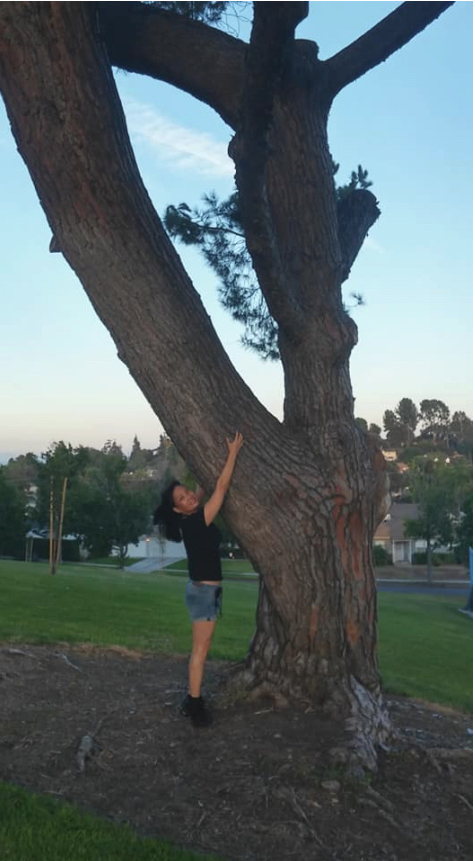
NOTE FROM THE AUTHOR: Granada Park is a local neighborhood park on a hill with a wonderful view of surrounding cities.

PHOTO: The author’s fiancée hugging a tree in Granada Park, Alhambra, California. 

dkc-headshot-1

ABOUT THE AUTHOR: Don Kingfisher Campbell, MFA in Creative Writing from Antioch University Los Angeles, has taught Writers Seminar at Occidental College Upward Bound for 36 years, been a coach and judge for Poetry Out Loud, a performing poet/teacher for Red Hen Press Youth Writing Workshops, Los Angeles Area Coordinator and Board Member of California Poets In The Schools, poetry editor of the Angel City Review, publisher of Spectrum and the San Gabriel Valley Poetry Quarterly, leader of the Emerging Urban Poets writing and Deep Critique workshops, organizer of the San Gabriel Valley Poetry Festival, and host of the Saturday Afternoon Poetry reading series in Pasadena, California. For awards, features, and publication credits,  visit dkc1031.blogspot.com.

In Bayfield by Kenneth Pobo

wisconsin dale scott licensed

In Bayfield
by Kenneth Pobo

The sun trips over
a red rock and breaks.
The Madeline Island ferry
carries dusk shards.

At night Bayfield shines
little lights on Lake Superior.
The town closes down. Wind
makes me shiver even
in June. The Lake

is like my Aunt Stokesia,
chilly even in summer,
strong in any season.

We fall asleep to waves—
they like when people go away
so they can talk about us.

In the morning, motel doors
and stores open. The sun drops
a gold staircase that we climb—
we look down on boats
tied to the dock,
dead fish floating toward shore.

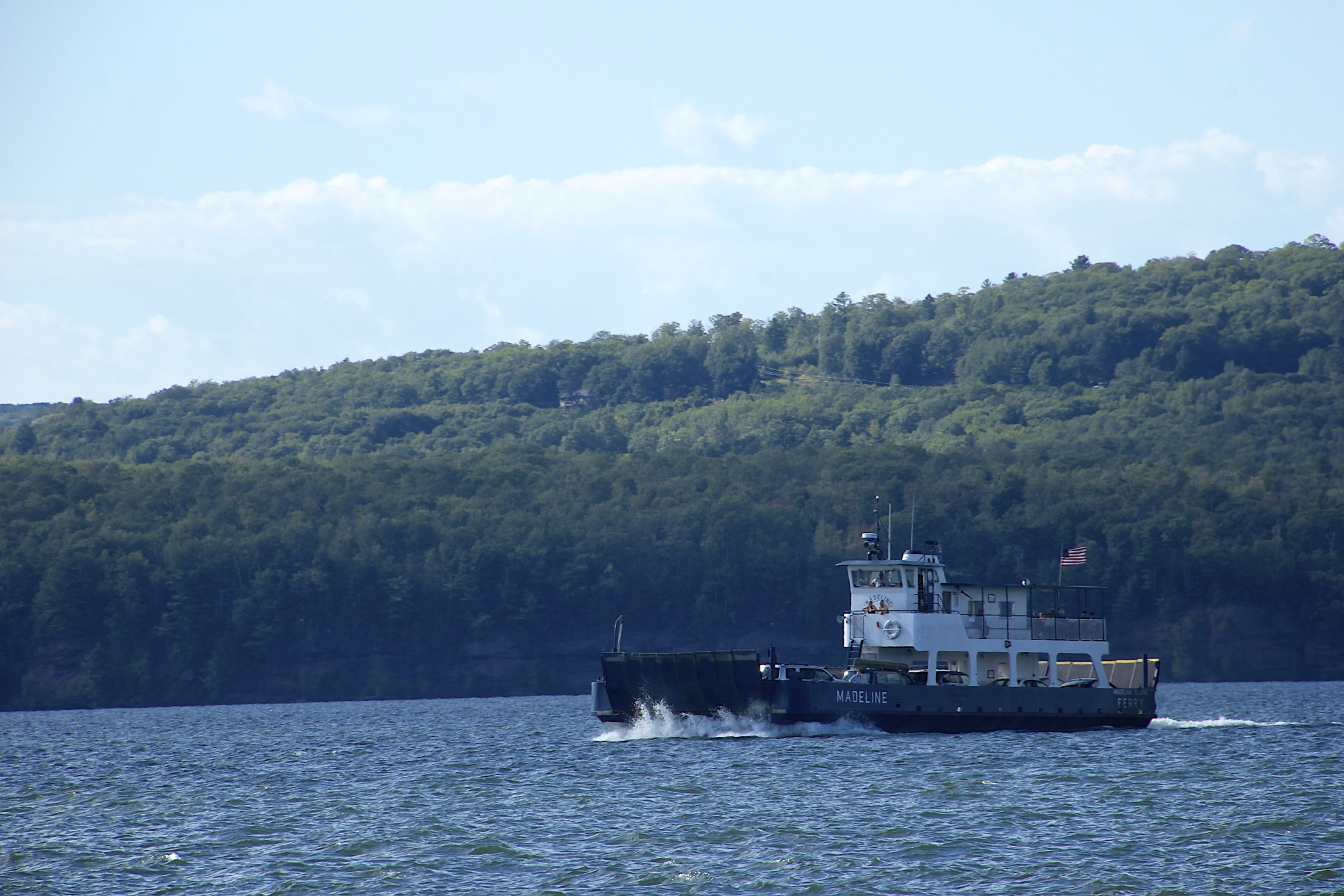
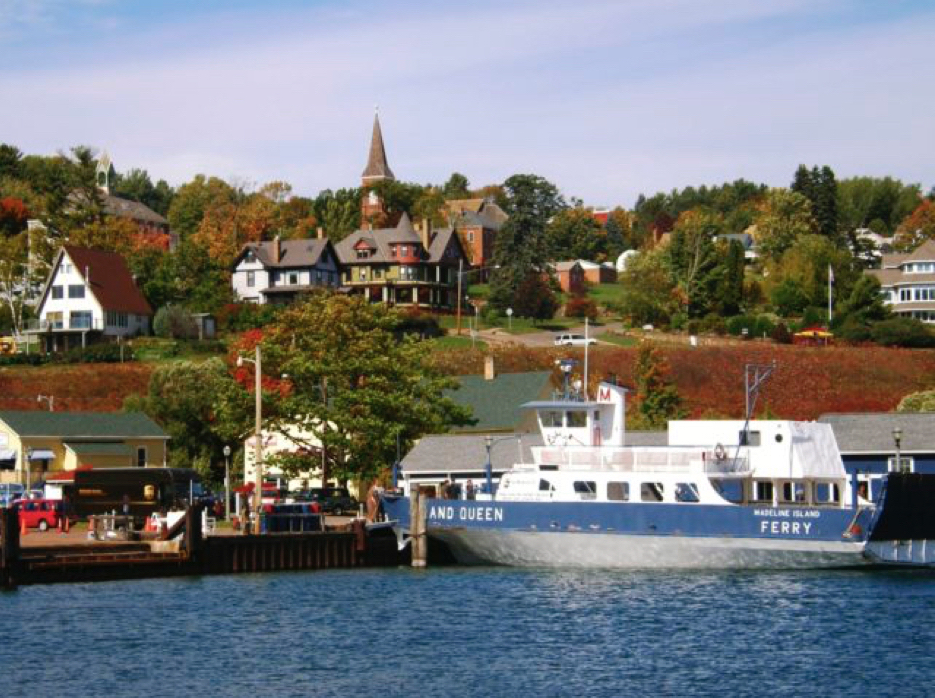
PHOTO: The Madeline ferry in Lake Superior en route from mainland Bayfield, Wisconsin, to Madeline Island, Wisconsin, the largest of the 22 Apostle Islands. Photo by Dale Scott, used by permission.

Apostle islands 1

bayfield 3

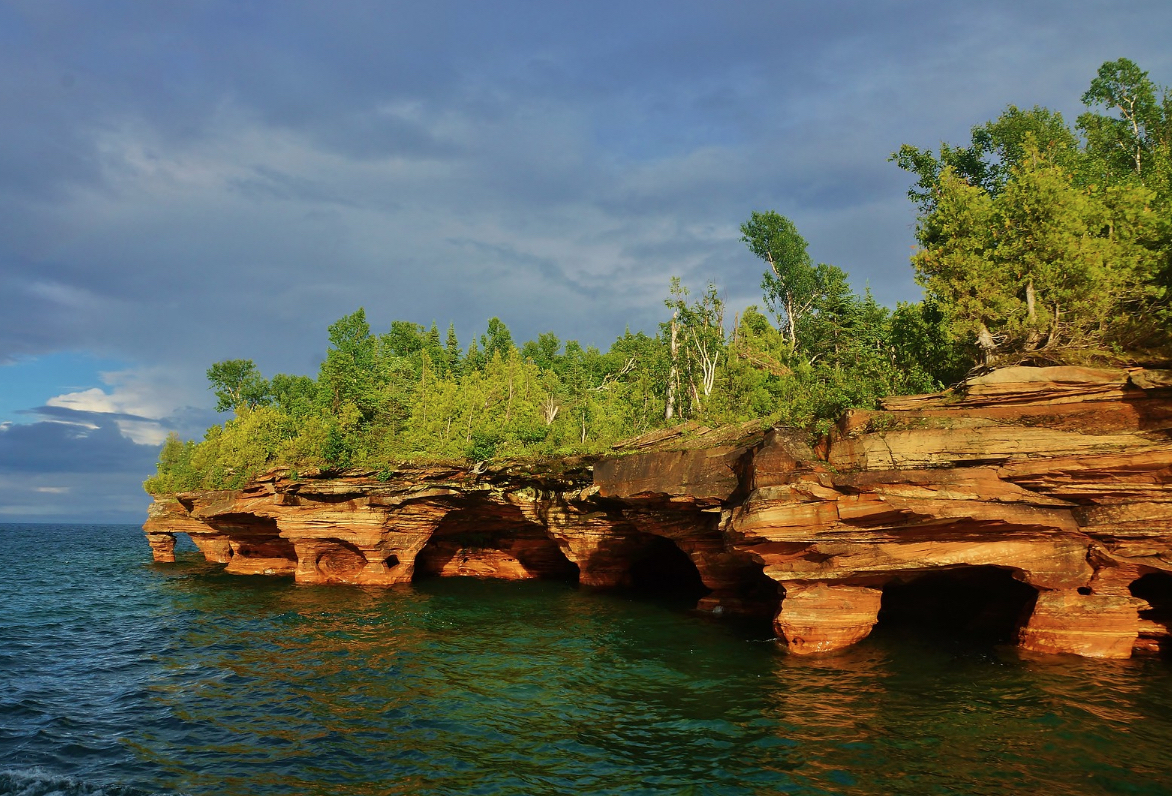
NOTE: The Apostle Islands are a group of 22 islands in Lake Superior, off the Bayfield Peninsula in northern Wisconsin. All the islands except for Madeline Island are part of the Apostle Islands National Lakeshore. The Apostles are dominated by boreal forest, composed largely of white spruce and balsam fir. Examples of the sea caves of the Great Lakes are located on the shorelines of the Apostle Islands, including the North Shore of Devils Island (pictured above). One of the greatest concentrations of black bears in North America is found on Stockton Island. The Apostle Islands National Lakeshore serves as an important habitat for nesting birds, including great blue herons and cliff swallows. 

PHOTO:  The sea caves on Devils Island, one of 22 Apostle Islands off the shore of Wisconsin in Lake Superior. Photo by chumlee10, used by permission.

bayfield wi 8 copy

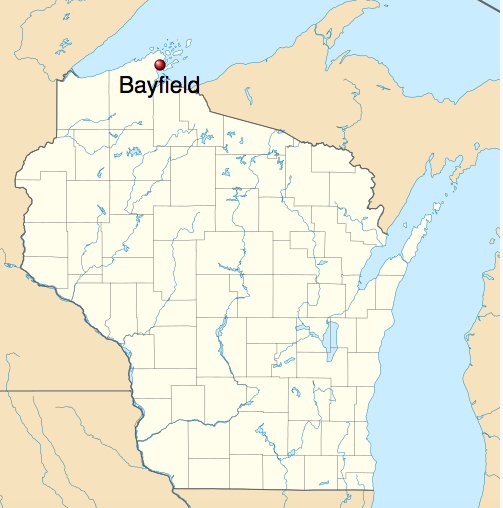
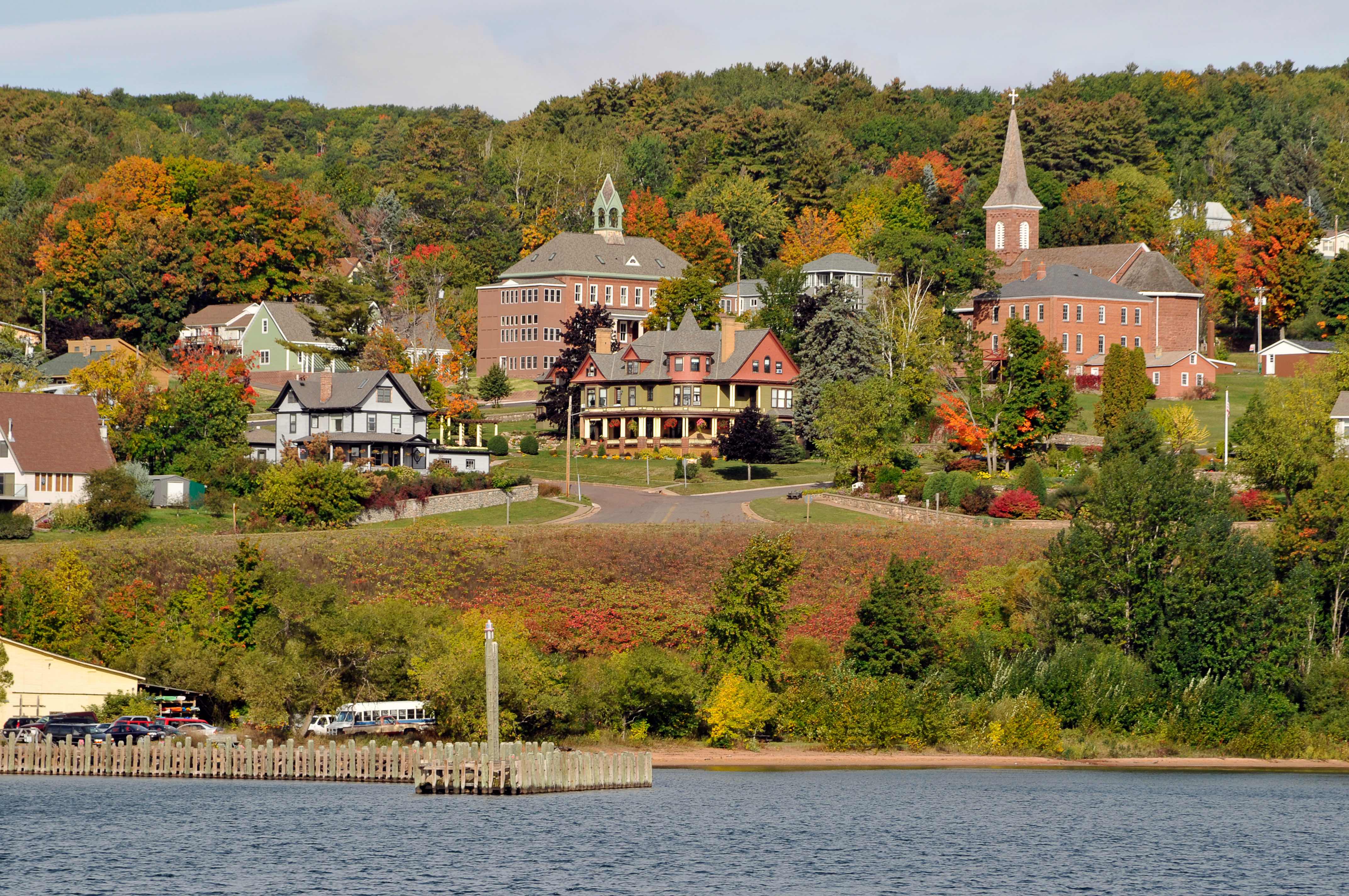
NOTE: In the 2010 census, Bayfield had a population of 487, making it the city with the smallest population in Wisconsin.  A former lumbering town and commercial fishing community, today Bayfield is a tourist and resort destination. This tourism industry is built around Bayfield’s status as the “gateway to the Apostle Islands.”

PHOTO: Bayfield, Wisconsin, as seen from the harbor on Sept. 30, 2008. Photo by Dls4832, used by permission.

bayfield 9

NOTE FROM THE AUTHOR: We have been to Bayfield, Wisconsin, a few times. We enjoy the Apostle Islands. The ferry offers various excursions; the one we take most often is back and forth from Madeline Island, about a 20-minute trip. We’ve never seen Bayfield in winter, and I’d like to see Lake Superior in such a cold time. This lake fascinates me. It is indeed a “Great” lake. 

PHOTO: Bayfield, Wisconsin, showing docked Madeline Island Ferry, the Island Queen. Courtesy of rittenhouseinn.com, All Rights Reserved.

Kenneth Pobo Photo copy

ABOUT THE AUTHOR: Kenneth Pobo is the author of 21 chapbooks and nine full-length collections. Recent books include Bend of Quiet (Blue Light Press), Loplop in a Red City (Circling Rivers), and Uneven Steven (Assure Press). Opening is forthcoming from Rectos Y Versos Editions. Lavender Fire, Lavender Rose is forthcoming from Brick/House Books.

Harrisburg, PA, in the Night by Julene Waffle

Pennsylvania Sean Pavone licensed

Harrisburg, PA, in the Night
by Julene Waffle

The city crawls out from under the hills,
sprawling, tempered, reposing under the cool autumn sky.
From valley edge to valley edge,
it waits for something to happen.

Underpass sighs the passing traffic.
I breathe it in: frictioned tires, exhaust, catalytic sulfur.
Highways circle, rhythmic rumbling above,
Scribbling misty messages that blink before being read.
Susquehanna cuts cliffs in valley walls.
Its expanse bridged, wide armed, and amputated.

Harrisburg, Marysville, Summerdale,
Enola Rail Yard, lucky girl,
happier with her rust-bellied
cargo containers than other Enolas.

I’m here below the center of an almost perfect
four-leafed clover for this brief moment,
in the middle of motion, anticipation, and cars, and go,
but I’d much rather be sitting, hidden in the wild,
in the tawny pampas grass that bends in highway winds
like full-bellied-lions, tails on end flicking,
at the edges of the road or backwaters of the Susquehanna.

PHOTO: Harrisburg, Pennsylvania, skyline on the Susquehanna River, with the Capitol dome in the background. The Pennsylvania State Capitol was designed by architect Joseph Miller Huston in 1902 and completed in 1906 in a Beaux-Arts style with decorative Renaissance themes throughout. Pennsylvania’s seat of government was originally in Philadelphia, then relocated to Lancaster in 1799, and finally to Harrisburg in 1812. The current building is the third state capitol built in Harrisburg. Photo by Sean Pavone, used by permission.
harrisburg map

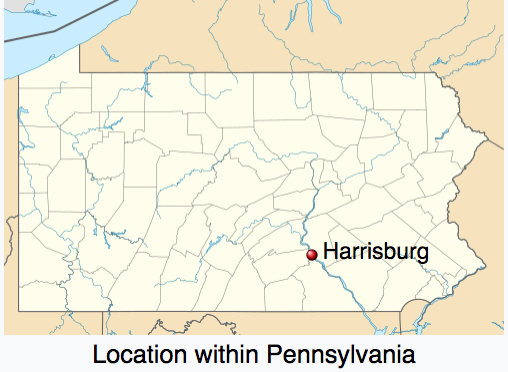
NOTE: Harrisburg is the capital city of the Commonwealth of Pennsylvania, with a population of 49,271. The city lies on the east bank of the Susquehanna River, 107 miles  west of Philadelphia. In 2019, the Harrisburg metropolitan area had an estimated population of 577,941. Directly to the north of Harrisburg is the Blue Mountain ridge of the Appalachian Mountains. The Cumberland Valley lies directly to the west and the fertile Lebanon Valley lies to the east. Harrisburg is the northern fringe of the historic Pennsylvania Dutch CountryIn 2010 Forbes rated Harrisburg as the second best place in the U.S. to raise a family.
Asylum_Township

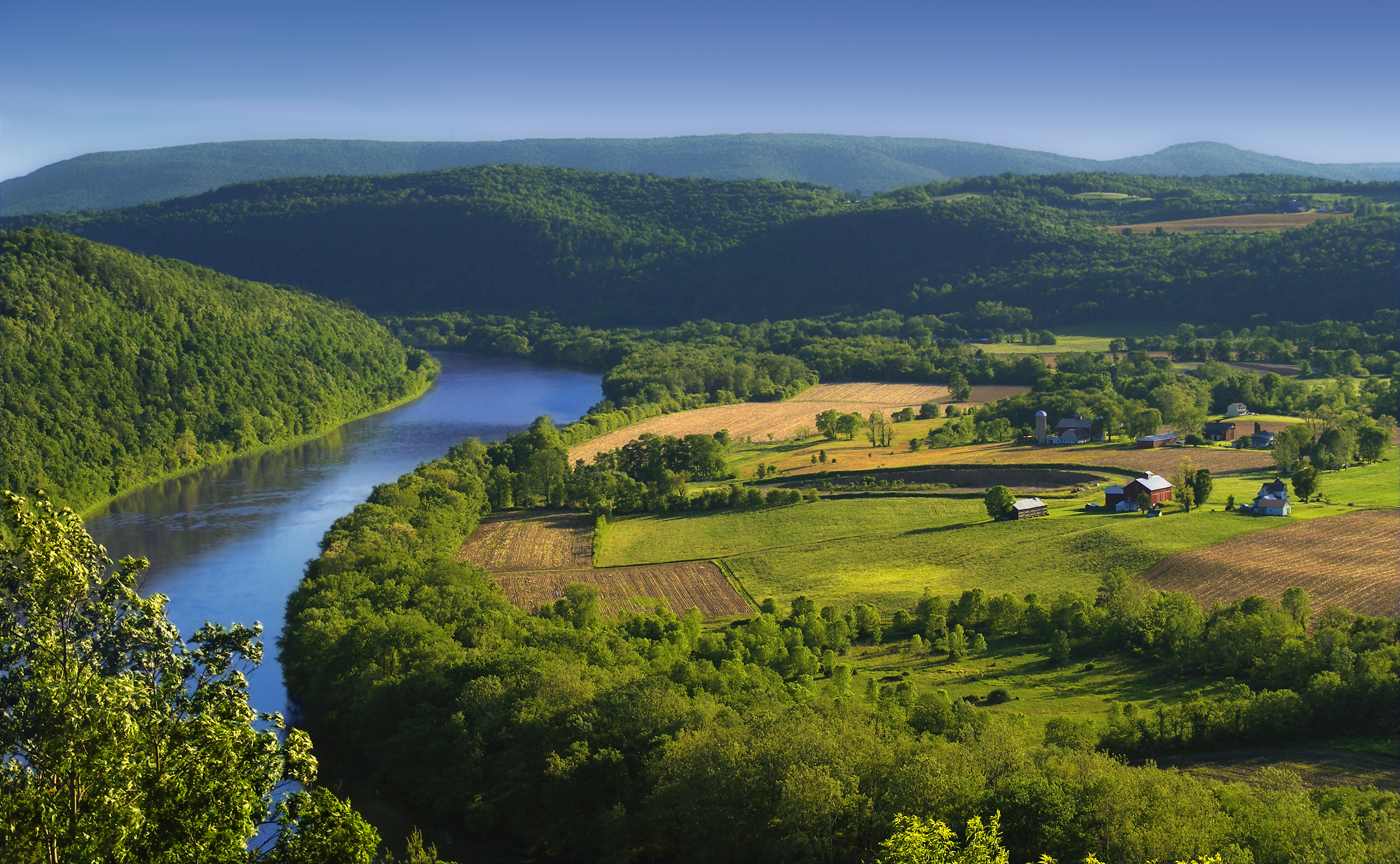
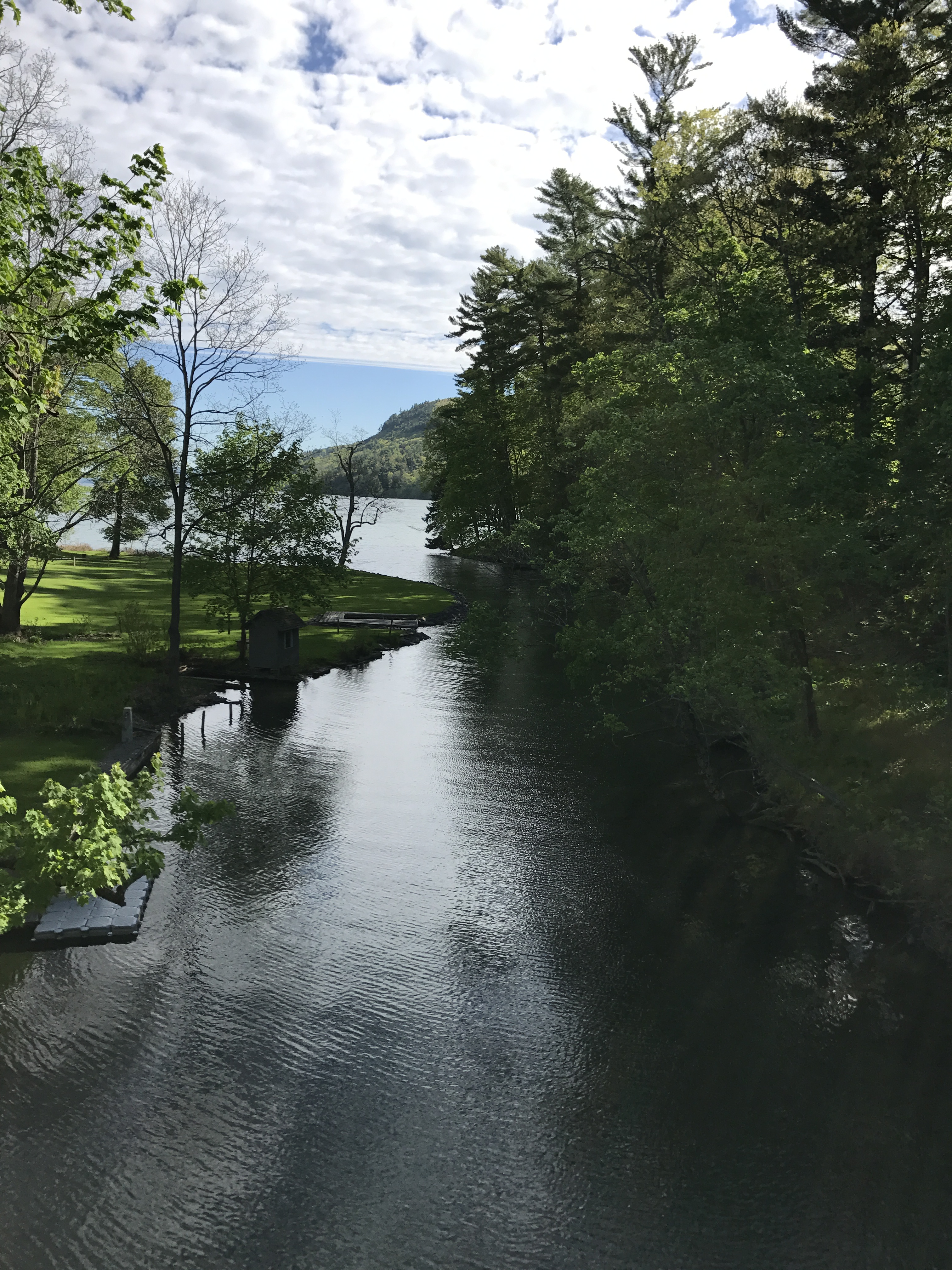
NOTE: The Susquehanna River, at 444 miles long, is the longest river on the East Coast of the United States. The Susquehanna forms from two main branches: the North Branch, which rises in Cooperstown, New York, and is regarded by federal mapmakers as the main branch or headwaters, and the West Branch, which rises in western Pennsylvania and joins the main branch near Northumberland in central Pennsylvania. The river empties into the northern end of the Chesapeake Bay at Perryville and Havre de Grace, Maryland.

PHOTO: The Susquehanna River, Asylum Township, Bradford County, as seen from the Marie Antoinette Lookout off of US Route 6 near Wyalusing, Pennsylvania. Photo by Nicholas A. Tonelli, used by permission.
Susquehanna_source

NOTE FROM THE AUTHOR: This poem was inspired by a trip to Myrtle Beach, South Carolina, that my family and I took in 2018. We drove there. I was struck by the fact that I loved my Upstate New York home and the fact that the Susquehanna River started near my hometown and traveled 444 miles south.

PHOTO: Main Branch Susquehanna River (in foreground), which rises at the outlet of Otsego Lake (in background) in Cooperstown, New York.  Photo by Tripp155, used by permission.

waffle-1

ABOUT THE AUTHOR: Julene Waffle is a teacher in a rural New York State public school, a business owner, a wife, a mother of three boys, and writer. She has degrees from Hartwick College and Binghamton University. Her work has appeared in The Daily Star, The English Journal, The English Record, River, Blood, and Corn: Literary Journal, A Community of Voices, plus anthologies of poetry entitled Planet in Crisis (FootHills Publishing, 2020) and Seeing Things: Anthology of Poetry (Woodland Arts Editions, 2020), and a chapbook So I Will Remember (Woodland Arts Editions, 2020).  She finds inspiration in nature and her family, which includes her dogs. Visit her at wafflepoetry.com and on Twitter @JuleneWaffle.

Winter Sunrise Outside a Café by Joseph Hutchison

Vintage Blue Eat Sign with Sunset

Winter Sunrise Outside a Café
by Joseph Hutchison

Near Butte, Montana

A crazed sizzle of blazing bees
in the word EAT. Beyond it,

thousands of stars have faded
like deserted flowers in the thin

light washing up in the distance,
flooding the snowy mountains

bluff by bluff. Moments later,
the sign blinks, winks dark,

and a white-aproned cook—
surfacing in the murky sheen

of the window—leans awhile
like a cut lily . . . staring out

into the famished blankness
he knows he must go home to.

Poem copyright ©2012 by Joseph Hutchison, featured in Thread of the Real (Conundrum Press, 2012). 

Photo by trekandshoot, used by permission. 

montana casey keller licensed

map_of_butte_mt

NOTE: Butte is the county seat of Silver Bow County, Montana. In 1977, the city and county governments consolidated to form the sole entity of Butte-Silver Bow. The city covers 718 square miles, and, according to the 2010 census, has a population of 33,503. Established in 1864 as a mining camp in the northern Rocky Mountains on the Continental Divide, Butte experienced rapid development in the late-nineteenth century, and was Montana’s first major industrial city. In its heyday between the late-nineteenth and early-twentieth centuries, it was one of the largest copper boomtowns in the American West. Employment opportunities in the mines attracted surges of Asian and European immigrants, particularly the Irish; as of 2017, Butte has the largest population of Irish Americans per capita of any city in the United States. Butte’s mining and smelting operations have generated in excess of $48 billion worth of ore, but have also resulted in environmental implications. The upper Clark Fork River, with headwaters at Butte, is the largest Superfund site in the United States. The city’s Uptown Historic District, on the National Register of Historic Places, is one of the largest National Historic Landmark Districts in the United States, containing nearly 6,000 contributing properties.

PHOTO: The highlands of Butte, Montana, with the Rocky Mountains in the background and mining equipment in the foreground (center, right). Photo by Casey Keller, used by permission. 

MAP: Location of Butte within Montana. Designed by TownMapsUSA.com, used by permission. 

hutchison

ABOUT THE AUTHOR: Joseph Hutchison served as poet laureate of Colorado from 2014 to 2019. He is the author of 19 poetry collections, including The World As Is: New & Selected Poems, 1972-2015Eyes of the Cuervo/Ojos del Crow (a bilingual edition of his Mexico poems translated by Patricia Herminia), Marked MenThread of the Real, Bed of Coals (winner of the Colorado Poetry Award), and the Colorado Governor’s Award volume, Shadow-Light. He has also translated Ephemeral, a collection of flash fictions by Mexican author Miguel Lupián. His poems have appeared in over 100 journals and several anthologies, including New Poets of the American West, and he has co-edited three anthologies: Malala: Poems for Malala Yousafzai (all profits benefit the Malala Fund for girls’ education worldwide), Legions of the Sun: Poems of the Great War, and A Song for Occupations: Poems About the American Way of Work. He directs the Arts & Culture Management and Professional Creative Writing program at the University of Denver’s University College. For more about the author and his work, visit jhwriter.com

Author photo by Kimberly Anderson

Three Deer in Oquossoc by Sonja Johanson

maine jeffrey holcombe licensed

Three Deer in Oquossoc
by Sonja Johanson

East will take me back. I drive
west. I wend between snowbanks,
until the road delivers me
to a sleeping boat launch.

They stand on the frozen ramp;
watch me with coats that are
better than mine. Ice houses
and snowmobiles edge the distance.

I have to turn around, I say
to them, I went the wrong
way. They stamp and chuff.
No, they tell me, this is the way.

Poem copyright ©2015 by Sonja Johanson, “Three Deer in Oquossoc,” from Plum Tree Tavern, (2015). 

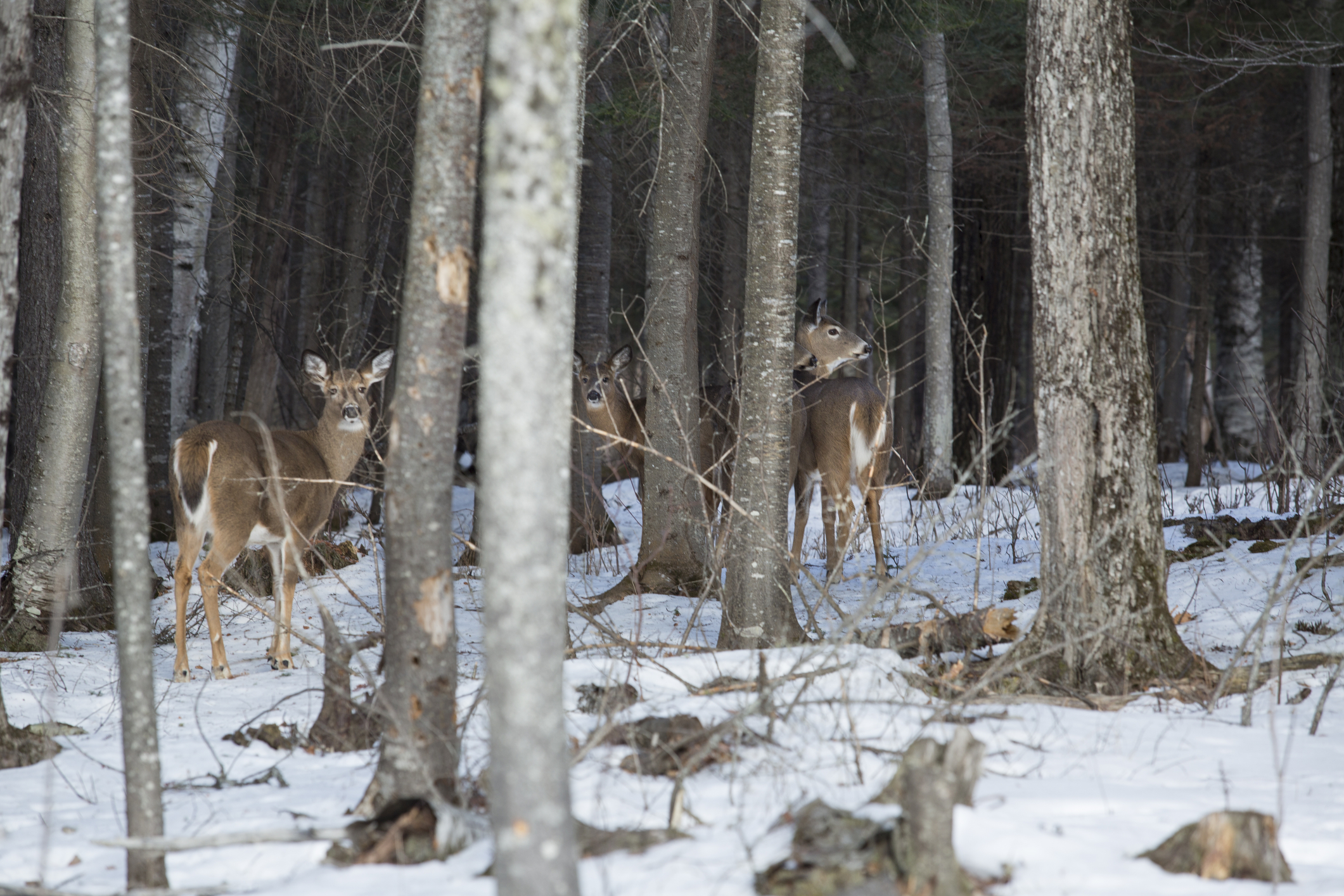
PHOTO: Group of white-tailed deer in the woods of Rangeley, Maine. Photo by Jeffrey Holcombe, used by permission.

Oquossoc 1

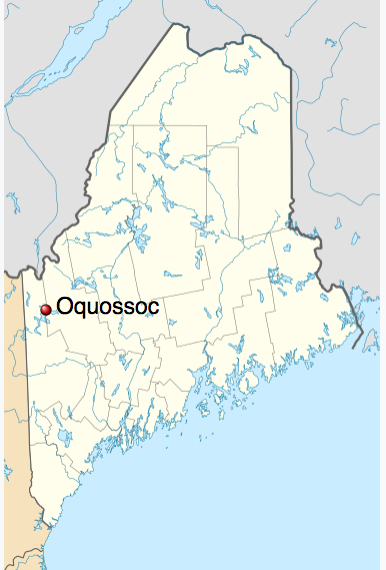
NOTE: Oquossoc is an unincorporated village in the town of Rangeley, Franklin County, Maine. The community is located at the junction of Maine State Route 4 and Maine State Route 17 at the northwest tip of Rangeley Lake. 

IMAGE: Location of Oquossoc within the State of Maine.

maine yan xiang licensed

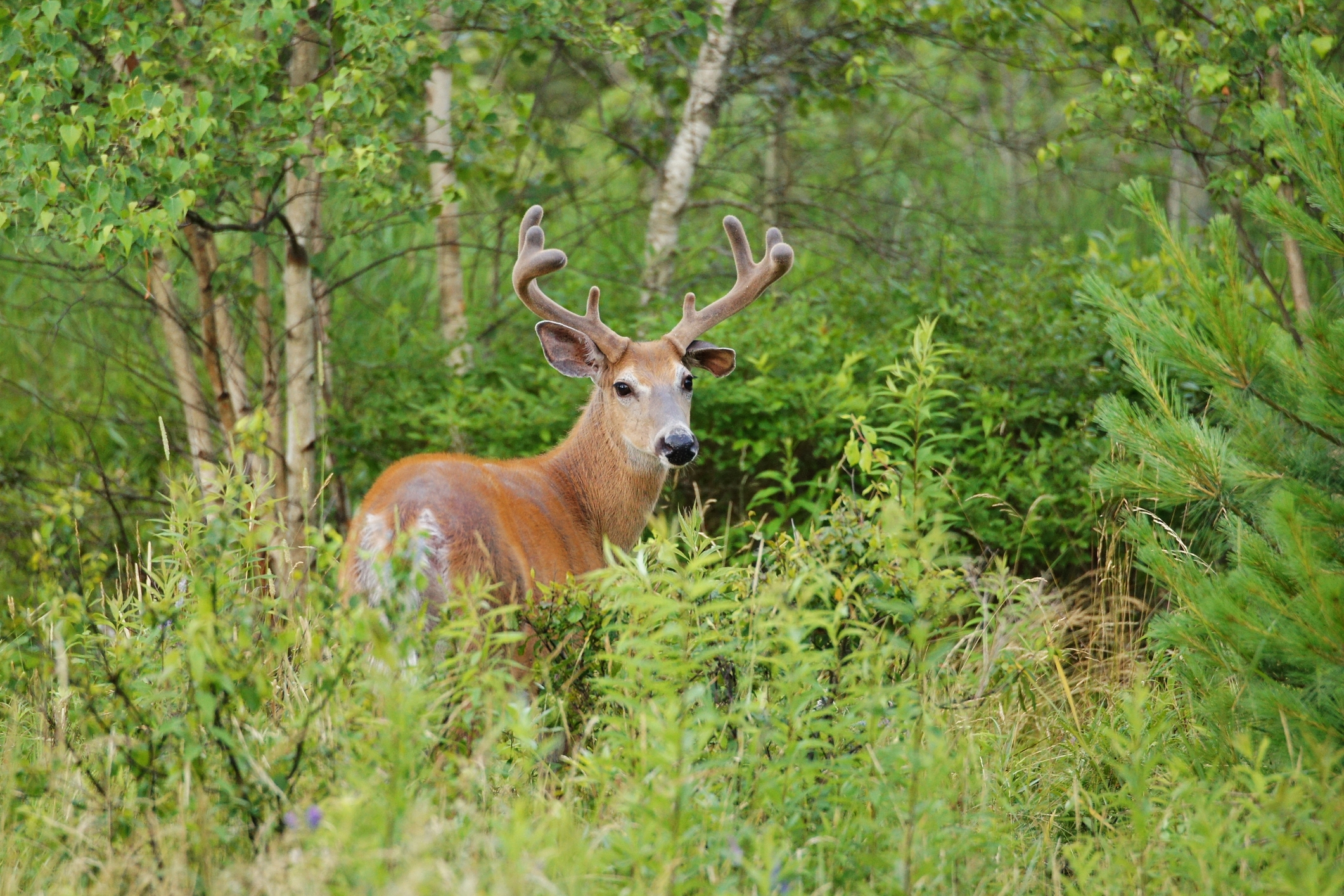
NOTE: Maine is home to one of the largest of the 30 recognized subspecies of white-tailed deer. After reaching maturity at age five, bucks can achieve weights of nearly 400 pounds, but average 200 to 300 pounds, while standing 36 to 40″ at the shoulder. Does weigh 120 to 175 pounds, with newborn fawns starting life at 4 to 10 pounds and growing to about 85 pounds during their first six months. White-tailed deer are herbivores, grazing on most available plant foods. Their stomachs allow them to digest a varied diet, including leaves, twigs, fruits and nuts, grass, corn, alfalfa, and even lichens and other fungi. Whitetails have reddish brown fur in the summer switching to a grayish brown in winter. Their trademark white tail, when raised, flashes a danger signal to other deer in the vicinity. Whitetails have keen hearing, made possible by large ears that can rotate toward suspicious sounds. They have wide-set eyes, enabling them to focus on subtle movements while maintaining an excellent sense of depth perception. Whitetails have a keen sense of smell, enabling them to sense danger, even when visibility is poor. They have long graceful legs, enabling them to cover ground quickly by leaping, bounding, turning, and running at speeds up to 40 miles per hour. Deer are very expressive; they employ a large repertoire of signals using facial expressions and body language. Deer have a life expectancy of 18 years, but rarely achieve that in the wild, due to human and animal predators. (SOURCE: maine.gov)

PHOTO: Young buck in Maine woods, spring. Photo by Yan Xiang, used by permission.

sonja-johanson

ABOUT THE AUTHOR: Sonja Johanson is a New England poet whose work focuses on ecology and feminism. She has work appearing in numerous journals and anthologies, including American Life in Poetry, BOAATMid-American Review, Poet LoreTHRUSH, and the Best American Poetry blog, and has served as a contributing editor at the Found Poetry Review and Eastern Iowa Review. Her poetry chapbooks include Impossible Dovetail (IDES, Silver Birch Press), all those ragged scars (Choose the Sword Press), and Trees in Our Dooryards (Redbird Chapbooks).  She divides her time between work in Massachusetts and her home in the mountains of western Maine. Visit her at sonjajohanson.net.

Deer Fording the Missouri in Early Afternoon by Kevin L. Cole

rusty r smith

Deer Fording the Missouri in Early Afternoon
by Kevin L. Cole

Perhaps to those familiar with their ways
The sight would not have been so startling:
A deer fording the Missouri in the early afternoon.

Perhaps they would not have worried as much
As I about the fragility of it all:
Her agonizingly slow pace, the tender ears
And beatific face just above the water.

At one point she hit upon a shoal
And appeared to walk upon a mantle,
The light glancing off her thin legs and black hooves.

I thought she might pause for a while to rest,
To gain some bearings, but instead she bound
Back in, mindful I suppose
Of the vulnerability of open water.

When she finally reached the island
And leapt into dark stands
Of cottonwoods and Russian olives,
I swear I almost fell down in prayer.

And now I long to bear witness of such things,
To tell someone in need the story
Of a deer fording the Missouri in the early afternoon.

Poem copyright ©2015 by Kevin L. Cole, “Deer Fording the Missouri in Early Afternoon,” (Third Wednesday, Vol. VIII, No. 4, 2015). The poem appears in the author’s collection Late Summer Plums (2016).

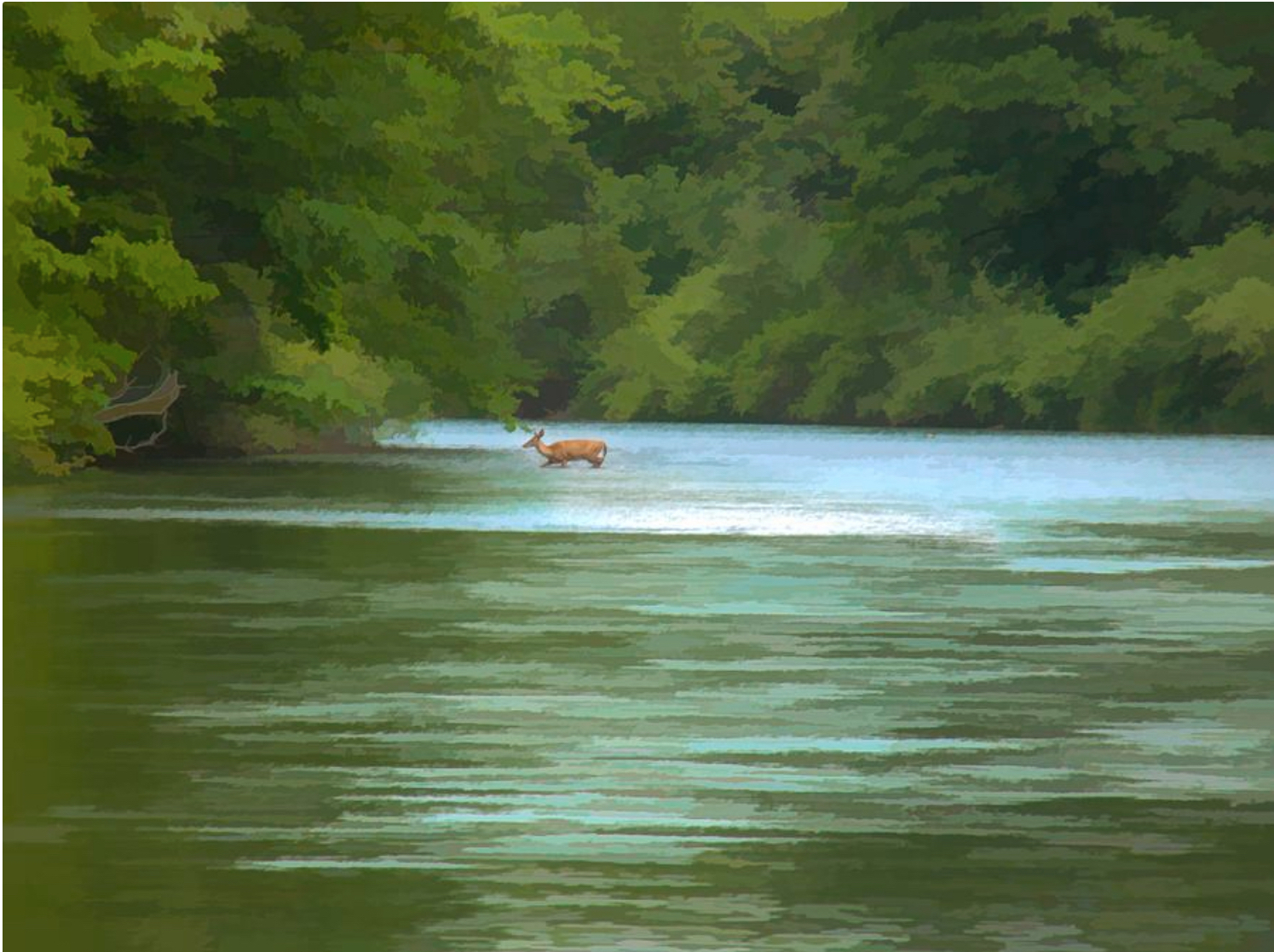
IMAGE: Crossing the River, digital photo art ©Rusty R. Smith, All Rights Reserved. Prints available at rustysmithphotoartist.com.

Missouri_River_basin_map copy

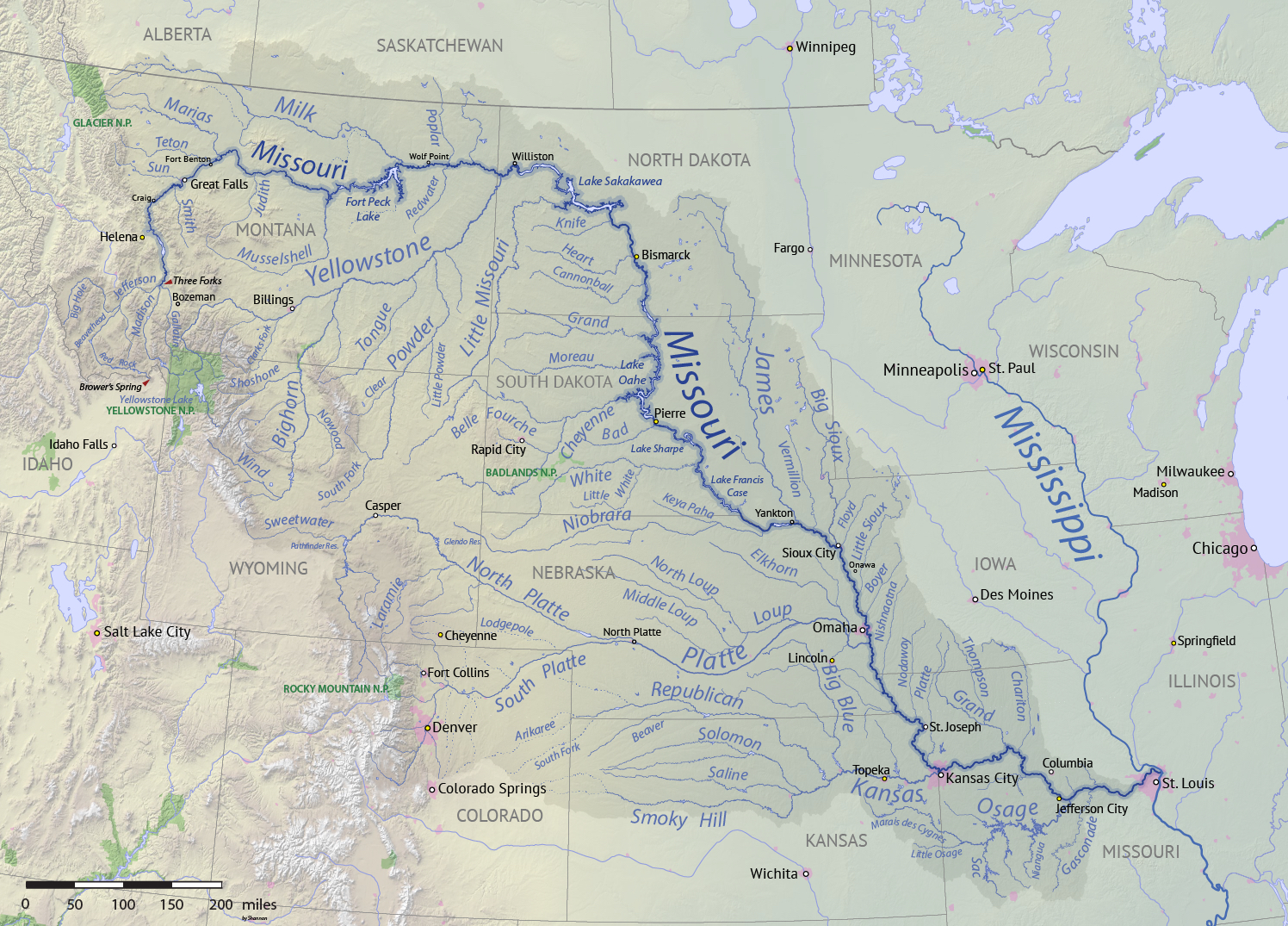
NOTE: The Missouri River is the longest river in North America. Rising in the Rocky Mountains of western Montana, the Missouri flows east and south for 2,341 miles before entering the Mississippi River north of St. Louis, Missouri. The river drains a sparsely populated, semi-arid watershed of more than 500,000 square miles, which includes parts of ten U.S. states and two Canadian provinces. When combined with the lower Mississippi River, it forms the world’s fourth longest river system. For over 12,000 years, people have depended on the Missouri River and its tributaries as a source of sustenance and transportation. Many groups of Native Americans populated the watershed, most leading a nomadic lifestyle dependent on bison herds that roamed the Great Plains. The first Europeans encountered the river in the late seventeenth century, and the region passed through Spanish and French hands before becoming part of the United States through the Louisiana Purchase.

IMAGE: Map of the Missouri River and its tributaries in North America. Made by Shannon1 using USGS and Natural Earth data.

cole 1

ABOUT THE AUTHOR: Kevin L. Cole grew up in Corpus Christi, Texas, and earned bachelor’s and master’s degrees in English at Texas A&M and a doctorate at Baylor. A professor of English at the University of Sioux Falls (South Dakota), he has received fellowships from the National Endowment for the Arts and South Dakota Arts Council, the National Endowment for the Humanities, and the Council of Independent Colleges. Cole’s first poetry collection, Late Summer Plums, was published in 2016. Poems in the collection include latitude and longitude coordinates—clues to the places that inspired each section. He says, “The book is definitely about place. I really wanted to emphasize the importance of place. I think in American culture we’re losing that more and more, whether that’s because of urbanization or the forces of technology. I also wanted to emphasize just how rich a very small piece of ground can be, and its potential for art—painting, composing music, or, in my case, writing poetry.” When not teaching or writing, he’s probably walking through the countryside looking for birds. Cole credits Rachel Carson’s Silent Spring—the iconic 1962 book about the environmental dangers of pesticides—as inspiration for his work. “If I had to choose a book that’s been more influential on me than any other, it’s Silent Spring, he says. “Rachel Carson is the inspiration for a lot of what I do, but also thinking about conservation as a poetic act. A poem conserves language, and that’s what a conservationist does. They’re trying to conserve the land. There’s something sacred about it. I see the two as mutual forces in celebrating and sometimes lamenting the land.”

Off A Side Road Near Staunton by Stanley Plumly

Virginia svecchiotti licenses

Off A Side Road Near Staunton
by Stanley Plumly

Some nothing afternoon, no one anywhere,
an early autumn stillness in the air,
the kind of empty day you fill by taking in
the full size of the valley and its layers leading
slowly to the Blue Ridge, the quality of country,
if you stand here long enough, you could stay
for, step into, the way a landscape, even on a wall,
pulls you in, one field at a time, pasture and fall
meadow, high above the harvest, perfect
to the tree line, then spirit clouds and intermittent
sunlit smoky rain riding the tops of the mountains,
though you could walk until it’s dark and not reach those rains—
you could walk the rest of the day into the picture
and not know why, at any given moment, you’re there.

Reprinted from Old Heart, by Stanley Plumly (W.W. Norton & Company, Inc.).  Copyright ©2007 by Stanley Plumly.  The collection won the Los Angeles Times Book Prize and the Paterson Poetry Prize, and was a finalist for the National Book Award.

PHOTO: Shenandoah Valley, Virginia, in autumn. Photo by Svecchiotti, used by permission.  

NOTE: Named for the river that stretches much of its length, the Shenandoah Valley encompasses eight counties in Virginia and two counties in West Virginia. The most popular belief is that the name comes from a Native American expression for “Beautiful Daughter of the Stars.” The valley is bounded to the east by the Blue Ridge Mountains, to the west by the eastern front of the Ridge-and-Valley Appalachians, to the north by the Potomac River,and to the south by the James River

City-Scape-Sunrise_slideshow

President_Woodrow_Wilson

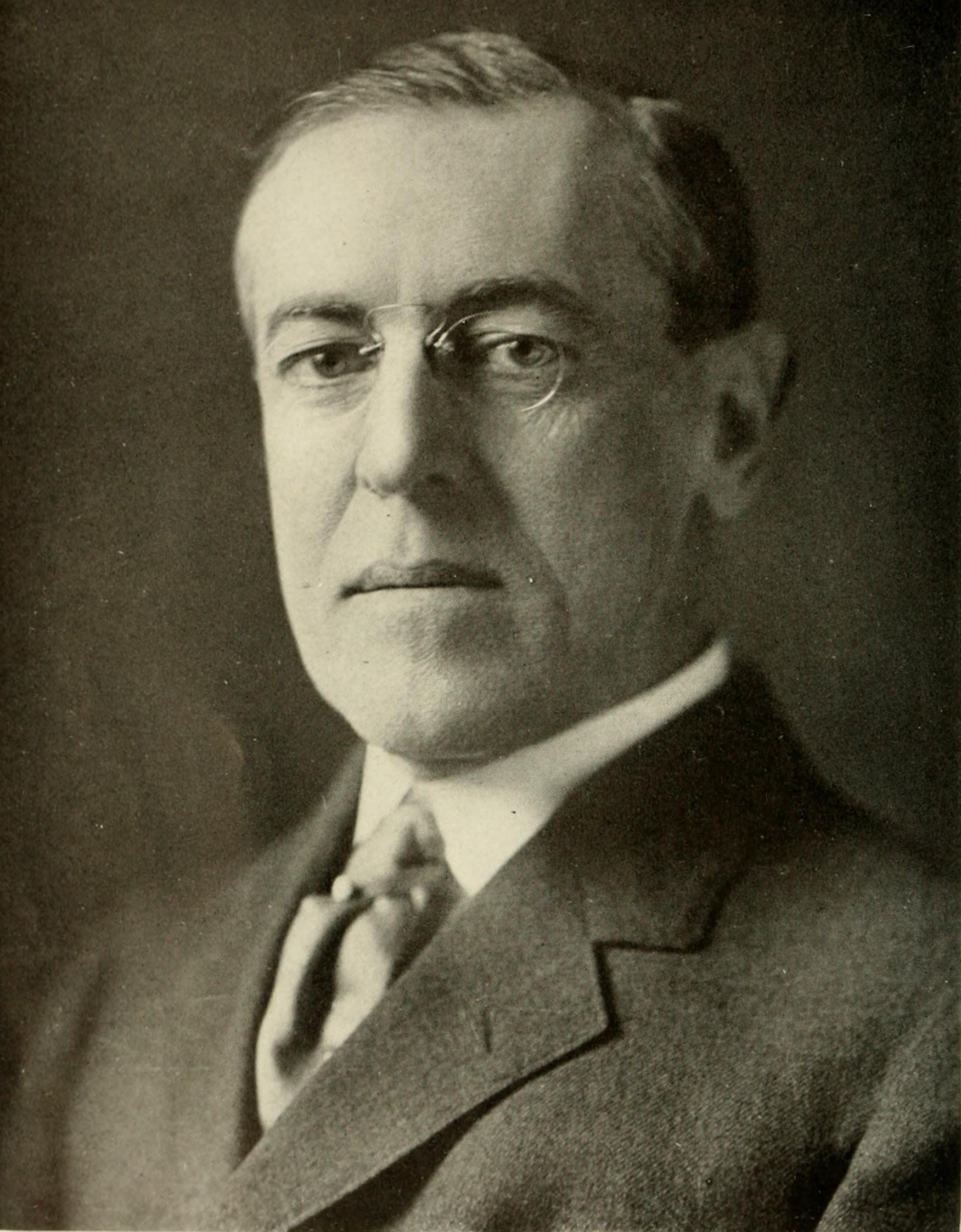
NOTE: Staunton is a city in the Commonwealth of Virginia located about 15 miles southwest of Shenandoah National Park. As of the 2010 census, the population was 23,746. Staunton is best known as the birthplace of Woodrow Wilson, the 28th President of the United States who served from 1913-1921.  A member of the Democratic Party, Wilson served as the president of Princeton University and as the 34th governor of New Jersey before winning the 1912 presidential election. As U.S. President, he oversaw the passage of progressive legislative policies unparalleled until the New Deal in 1933. Following the end of WWI in 1919, he was the leading architect of the League of Nations, an international organization established to maintain world peace. 

PHOTO: Staunton, Virginia, sunrise. Photo by Kent Plowman, used by permission. 

PHOTO: Woodrow Wilson, 28th President of the United States (1913-1921).

plumly_s

ABOUT THE AUTHOR: Stanley Plumly was born in Barnesville, Ohio, and grew up in the lumber and farming regions of Virginia and Ohio. He earned a BA at Wilmington College and a PhD at Ohio University. His numerous collections of poetry include In the Outer Dark (1970), winner of the Delmore Schwartz Memorial Award, and Out-of-the-Body Travel (1978), nominated for the National Book Critics Circle Award. Other collections include Summer Celestial (1983), Boy on the Step (1989), The Marriage in the Trees (1997), and Now That My Father Lies Down Beside Me: New and Selected Poems 1970-2000 (2000), Against Sunset (2017), and the posthumous Middle Distance (2020). His collection, Orphan Hours (2013), confronted his cancer diagnosis as well as the possibilities of mortality, including the creative potential of memory.  Plumly’s honors and awards include fellowships from the Guggenheim Foundation, the Rockefeller Foundation, the Ingram-Merrill Foundation, and the National Endowment for the Arts. A member of the American Academy of Arts and Sciences, he taught at the University of Iowa and at the Bread Loaf Writers’ Conference. In 1985, he joined the faculty at the University of Maryland, where he founded the graduate program in creative writing, which he led until shortly before his death in 2019 at age 79.  He served as Maryland’s poet laureate from 2009-2018. 

Author photo by Star Black.