Water Under the Bridge by Lynn White

licensed wales berndbrueggemann

Water Under the Bridge
by Lynn White

The Canadian canoe submerged as we got in
too clumsily.
The cushions, brought thoughtfully for comfort
were soaked
along with everything else.
Then we discovered that we were unable to co-ordinate
our paddling
so moving along the narrow canal in a straight line
was impossible.
Thus we made slow progress.
And then we came to the long tunnel.
The sign at the entrance was disconcerting,
forbidding entry
except with a torch.
Of course, we had no torch,
just spluttering roll ups
made in darkness
from damp tobacco,
and five loud voices.
Yes, we were five.
Four adults who should have known better
and a thirteen-year-old
in despair as usual
of his out of control parents.
All water under the bridge
when we emerged
into the light to tell
a survivor’s tale,
now a memory.

First published by Ugly Writers, June 2018

PHOTO: Chirk Tunnel, Wales. Photo by Berndbrueggemann, used by permission. 

NOTE: Chirk Tunnel is a canal tunnel near ChirkWales. It lies on the Llangollen Canal, immediately northwards of the Chirk Aqueduct. It is 460 yards long and has a complete towpath inside. The tunnel is designed for a single standard narrowboat, so passing is not possible. The tunnel is straight enough to be able to see if a boat is already inside the tunnel, and boats are required to show a light. Northbound boats must maintain power and momentum in order to push through, due to the shallow, narrow nature of the canal in the tunnel (water has little space to pass around the displacement of the boat), and the relatively fast two miles per hour southbound current of the canal. Over two centuries old, the Chirk Tunnel opened in June 1802.

NOTE FROM THE AUTHOR: This poem was about a trip along the canal from Christleton to Nantwich, England, in the late 1970s. The tunnel is at Chirk. I don’t have a photo. I doubt that a camera would have survived the journey!

white2

ABOUT THE AUTHOR: Lynn White lives in north Wales. Her work is influenced by issues of social justice and events, places and people she has known or imagined. She is especially interested in exploring the boundaries of dream, fantasy, and reality. She was shortlisted in the Theatre Cloud “War Poetry for Today” competition and has been nominated for a Pushcart Prize and a Rhysling Award. Her poetry has appeared in many publications, including Apogee, Firewords, Capsule Stories, Light Journal, and So It Goes. Find Lynn at lynnwhitepoetry.blogspot.com and on Facebook.

On the Altiplano by Robert Coats

volcano on Altiplano

On the Altiplano
by Robert Coats

Awake early, I saw the green flash as the sun
rose behind the Cordillera de Chichas,
glare of the Salar de Uyuni.
After a simple breakfast we loaded up,
my son in back with the three Argentinos,
I up front with our Bolivian guide.

Higher into the arid Andes on a gravel road,
a snow-cloaked volcano on our right,
before us a wide open, uninhabited valley.
Shy guanacos on the road shoulder.
Above, the vibrant blue sky…

In the driver’s CD player
Violeta Parra singing
“Gracias a la Vida”:

“…que me ha dado tanto
Me ha dado la marcha de mis pies cansados
Con ellos anduve ciudades y charcos
Playas y desiertos, montañas y llanos…”

I turn, meet eyes.
Everyone’s face is lit up, grinning,
the woman blinking back tears.
No one speaks.

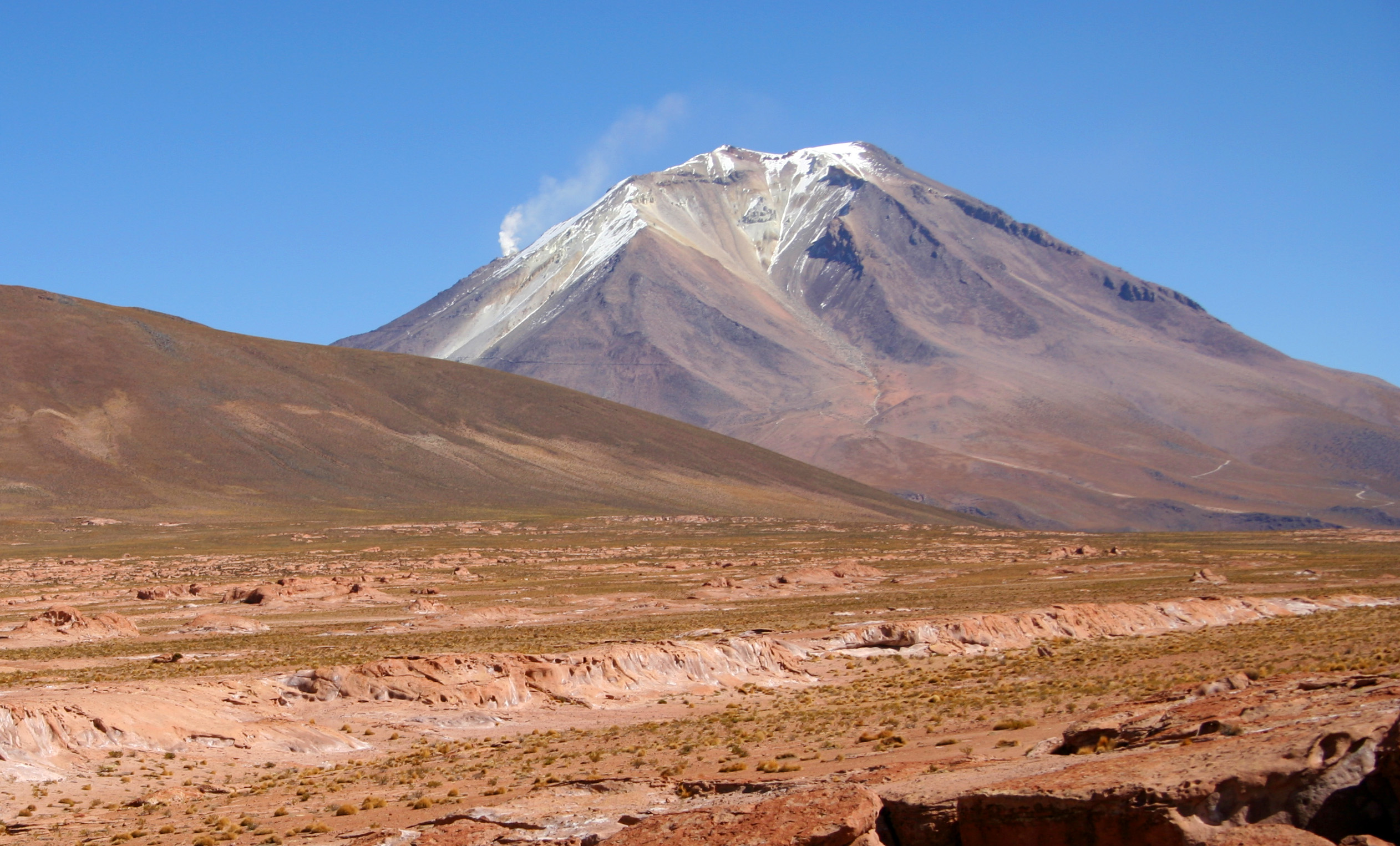
PHOTO:  Volcano on Bolivia’s Altiplano. Photo by author.

NOTE FROM THE AUTHOR: Violeta Parra was a popular Chilean folksinger. Her song “Gracias a la Vida” is well-known throughout Latin America. The lyric fragment in the poem says: 

“Thanks to life
that has given me so much.
It has given me the march of my tired feet.
With them I walked through cities and puddles,
on beaches and deserts, mountains and plains.”

The Salar de Uyuni is the world’s largest salt flat, with an area of 3,900 square miles.  It lies at an elevation of about 12,000 ft. in southwest Bolivia.

RNC with Yareta

ABOUT THE AUTHOR: Robert Coats  has been writing poetry for more than 40 years. His poems have appeared on the Canary Website, in Orion, Zone 3, Windfall, Song of the San Joaquin, in two anthologies (Fresh Water: Poems from the Rivers, Lakes and Streams and Fire and Rain: Ecopoetry of California, and in his book The Harsh Green World, published by Sugartown Publishing.  He is a Research Associate with the University of California Davis Tahoe Environmental Research Center.

PHOTO: The author with Yareta (Azorella compacta) on the Altiplano (Bolivia). 

NOTE: Yareta is a flowering plant native to South America. It grows in the Puna grasslands of the Andes in Peru, Bolivia, northern Chile, and western Argentina at altitudes between 10,500 and 17,220 ft.

Recoleta by Lorraine Caputo

recoleta-4702366_1920

Recoleta
by Lorraine Caputo

In this gated
     city within
          the city
     narrow calles
          labyrinthine
Rest eternal souls of
     doctors & founders
          business moghuls
     politicians, presidents
          & heroes of forgotten wars
(Their grumbling yet
     resounds about, around
          Evita’s tomb
     where fresh flowers
          are lain)

Beneath their
     Gothic spires, domes
          beyond Doric columns
     fine sculpture
          Art Deco reliefs
Behind façades of
     dimmed black granite
          of façades now crumbled
     revealing eroded brick
          eroded mortar
Bronze honor plaques
     deep-greened
          wrought-iron doors
    rusting & cobweb-woven
          panes shattered

Stained glass windows still
     kaleidoscope across
          fallen plaster, dust of
     long-gone flowers
          covering
White marble altars
     & carved caskets
          decaying
     in sultry
          porteño summers

PHOTO: La Recoleta Cemetery, Buenos Aires, Argentina. Photo by DPKelly07, used by permission.

NOTE: La Recoleta Cemetery  is located in the Recoleta neighborhood of Buenos AiresArgentina. It contains the graves of notable people, including Eva Perón, presidents of Argentina, Nobel Prize winners, and a granddaughter of Napoleon. In 2011, the BBC hailed it as one of the world’s best cemeteries, and in 2013, CNN listed it among the 10 most beautiful cemeteries in the world. Franciscan Recollect monks (los recoletos) from Spain arrived in this area, then the outskirts of Buenos Aires, in the early eighteenth century. The cemetery is built around the Recollect Convent and a church, Our Lady of Pilar built in 1732.

Caputo01

ABOUT THE AUTHOR: Lorraine Caputo is a documentary poet, translator, and travel writer. Her work appears in over 180 journals in Canada, the US, Latin America, Europe, Asia, Australia, and Africa, as well as in 12 chapbooks of poetry – including Caribbean Nights (Red Bird Chapbooks, 2014), Notes from the Patagonia (dancing girl press, 2017), and On Galápagos Shores (dancing girl press, 2019). She also pens travel pieces, with stories appearing in the anthologies Drive: Women’s True Stories from the Open Road (Seal Press, 2002) and Far-Flung and Foreign (Lowestoft Chronicle Press, 2012), and travel articles and guidebooks. In March 2011, the Parliamentary Poet Laureate of Canada honored her verse. She has done over 200 literary readings, from Alaska to the Patagonia, and journeys through Latin America, listening to the voices of the pueblos and Earth. You may follow her Latin America Wander travels on Facebook and at latinamericawander.wordpresscom.

Ballad of Forgotten Places by Olga Orozco

geronimo-giqueaux-FUgSkvrbGWU-unsplash

Ballad of Forgotten Places
by Olga Orozco

translated by Mary Crow

My most beautiful hiding places,
places that best fit my soul’s deepest colors,
are made of all that others forgot.

They are solitary sites hollowed out in the grass’s caress,
in a shadow of wings, in a passing song;
regions whose limits swirl with the ghostly carriages
that transport the mist in the dawn,
and in whose skies names are sketched, ancient words of love,
vows burning like constellations of drunken fireflies.

Sometimes earthly villages pass, hoarse trains make camp,
a couple piles marvelous oranges at the edge of the sea,
a single relic is spread through all space.
My places would look like broken mirages,
clippings of photographs torn from an album to orient nostalgia,
but they have roots deeper than this sinking ground,
these fleeing doors, these vanishing walls.

They are enchanted islands where only I can be the magician.

And who else, if not I, is climbing the stairs towards those attics in the clouds
where the light, aflame, used to hum in the siesta’s honey,
who else will open again the big chest where the remains of an unhappy story lie,
sacrificed a thousand times only to fantasy, only to foam,
and try on the rags again
like those costumes of invincible heroes,
circle of fire that inflamed time’s scorpion?

Who cleans the windowpane with her breath and stirs the fire of the afternoon
in those rooms where the table was an altar of idolatry,
each chair, a landscape folded up after every trip,
and the bed, a stormy shortcut to the other shore of dreams,
rooms deep as nets hung from the sky,
like endless embraces I slid down till I brushed the feathers of death,
until I overturned the laws of knowledge and the fall of man?

Who goes into the parks with the golden breath of each Christmas
and washes the foliage with a little gray rag that was the handkerchief for waving goodbye,
and reweaves the garlands with a thread of tears,
repeating a fantastic ritual among smashed wine glasses and guests lost in thought,
while she savors the twelve green grapes of redemption—
one for each month, one for each year, one for each century of empty indulgence—
a taste acid but not as sharp as the bread of forgetfulness?

Because who but I changes the water for all the memories?
Who inserts the present like a slash into the dreams of the past?
Who switches my ancient lamps for new ones?

My most beautiful hiding places are solitary sites where no one goes,
and where there are shadows that only come to life when I am the magician.

Balada de Lugares Olvidados

Mis refugios más bellos,
los lugares que se adaptan mejor a los colores últimos de mi alma,
están hechos de todo lo que los otros olvidaron.

Son sitios solitarios excavados en la caricia de la hierba,
en una sombra de alas; en una canción que pasa;
regiones cuyos límites giran con los carruajes fantasmales
que transportan la niebla en el amanecer
y en cuyos cielos se dibujan nombres, viejas frases de amor,
juramentos ardientes como constelaciones de luciérnagas ebrias.

Algunas veces pasan poblaciones terrosas, acampan roncos trenes,
una pareja junta naranjas prodigiosas en el borde del mar,
una sola reliquia se propaga por toda la extensión.
Parecerían espejismos rotos,
recortes de fotografías arrancados de un álbum para orientar a la nostalgia,
pero tienen raíces más profundas que este suelo que se hunde,
estas puertas que huyen, estas paredes que se borran.

Son islas encantadas en las que sólo yo puedo ser la hechicera.

¿Y quién si no, sube las escaleras hacia aquellos desvanes entre nubes
donde la luz zumbaba enardecida en la miel de la siesta,
vuelve a abrir el arcón donde yacen los restos de una historia inclemente,
mil veces inmolada nada más que a delirios, nada más que a espumas,
y se prueba de nuevo los pedazos
como aquellos disfraces de las protagonistas invencibles,
el círculo de fuego con el que encandilaba al escorpión del tiempo?

¿Quién limpia con su aliento los cristales y remueve la lumbre del atardecer
en aquellas habitaciones donde la mesa era un altar de idolatría,
cada silla, un paisaje replegado después de cada viaje,
y el lecho, un tormentoso atajo hacia la otra orilla de los sueños;
aposentos profundos como redes suspendidas del cielo,
como los abrazos sin fin donde me deslizaba hasta rozar las plumas de la muerte,
hasta invertir las leyes del conocimiento y la caída?

¿Quién se interna en los parques con el soplo dorado de cada Navidad
y lava los follajes con un trapito gris que fue el pañuelo de las despedidas,
y entrelaza de nuevo los guirnaldas con un hilo de lágrimas,
repitiendo un fantástico ritual entre copas trizadas y absortos comensales,
mientras paleada en las doce uvas verdes de la redención—
una por cada mes, una por cada año, una por cada siglo de vacía indulgencia—
un ácido sabor menos mordiente que el del pan del olvido?

¿Por qué quién sino yo les cambia el agua a todos los recuerdos?
¿Quién incrusta el presente como un tajo ante las proyecciones del pasado?
¿Alguien trueca mis lámparas antiguas por sus lámparas nuevas?

Mis refugios más bellos son sitios solitarios a los que nadie va
y en los que sólo hay sombras que se animan cuando soy la hechicera.

PHOTO: Mirador Lago Gutiérrez, Bariloche, Argentina. Photo by Geronimo Giqueaux on Unsplash
Olga_Orozco_(1920-1999)

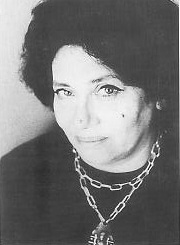
ABOUT THE AUTHOR: Olga Orozco (1920-1999) was a poet from Argentina. She studied at  the University of Buenos Aires, and later worked as a journalist and writer. While working as a journalist, she directed literary publications using pseudonyms. Her poetic works were influenced by Rimbaud, Nerval, Baudelaire, Miłosz and Rilke.

The Narrow Houses of Amsterdam by Megan Sexton

amsterdam licensed 1 housesjpg

The Narrow Houses of Amsterdam
by Megan Sexton

To get to them, think in circles,
think of the skinny streets of dreams,
of paintings before the discovery of perspective,
before the first Baedeker was written,
roving at dusk, then midnight
along rows of café shelved like antique books;
think past the narrow houses of Amsterdam,
first spring, then summer, in a toy city,
a pop-up city with glass windows,
the linden trees, their leaves tarnished filigree,
the bicycles choking the streets,
and bells ringing out from handlebars,
bells ringing out from church towers,
past the houseboats bobbing on their anchors,
and the tulips spare in their beauty,
under street lamps where Spinoza polished his spectacles,
where none of my family ever visited,
where I came ten years ago and am now with you
standing in front of the narrow houses of Amsterdam.
Gezelling. My guide calls this warmth, well-being
seeing behind the wimple of open drapes
we are supposed to, allowed to, expected to,
look through each window, each wind’s eye.

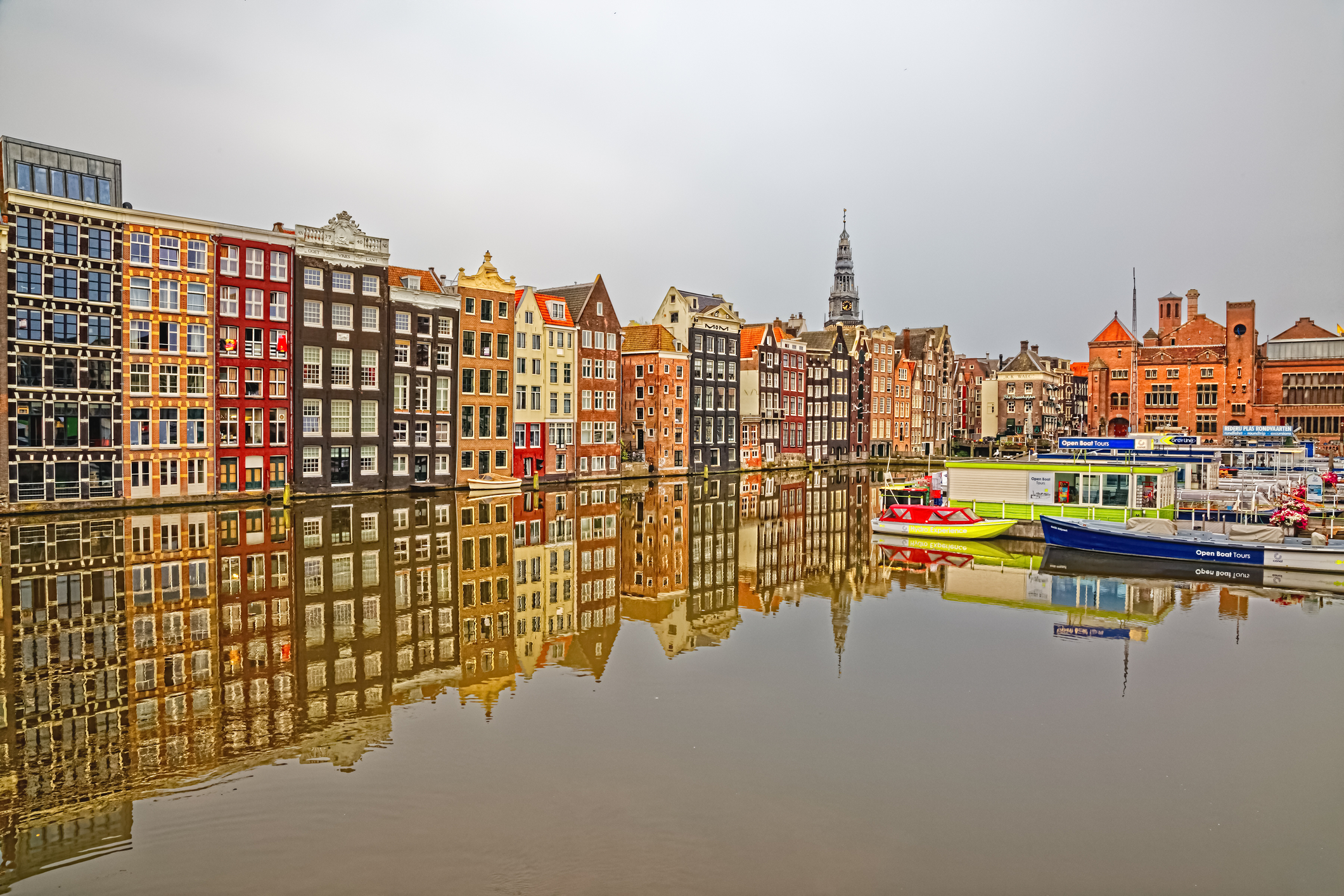
PHOTO: Narrow houses, Amsterdam, Netherlands, on canal of River Amstel. Photo by Dbajurin, used by permission.

NOTE: Read more about the narrow canal houses of Amsterdam at theculturetrip.com.

Amsterdam (excerpt) by Megan Fernandes

amsterdam licensed

Amsterdam (excerpt)
by Megan Fernandes

Sometimes the mythologies of a city are true—
like when I see a blond man bob for red apples
in the street selling records side by side with a black cat
wound in a cushion, deep in dream. Josh says
he does not want to go see Anne Frank, that this kind of tourism
depresses him, the one where the demonstration of grief
is like a voyeuristic tug at suffering
that is not yours to possess. How do you eat after that,
he seems sad today. How do you stay alive.
When he was young, he visited Auschwitz and told
me not to go because it had a gift shop and that
made him angry and nobody knows how to grieve
in public, how to make public space for loss
unless you can make money off of it but really
there is something else to his anger, the child
abandoned, the residue of a young girl’s life turned
into a petting zoo—this he cannot take.
I have become like my mother where I don’t
need sleep in a new city anymore, immune to
time shifts, I just wander and buy fruit
and almonds and a good loaf
of bread and today, some fresh juice, skipping museums
though I want to go back to see Anne Frank’s
house this time, because this time,
I am a woman and last time, I was a girl
and when you are a girl, all you see is another girl
and when you are a woman, all you see is history
careening towards a girl who you cannot protect.

Read the poem in its entirety at poets.org.

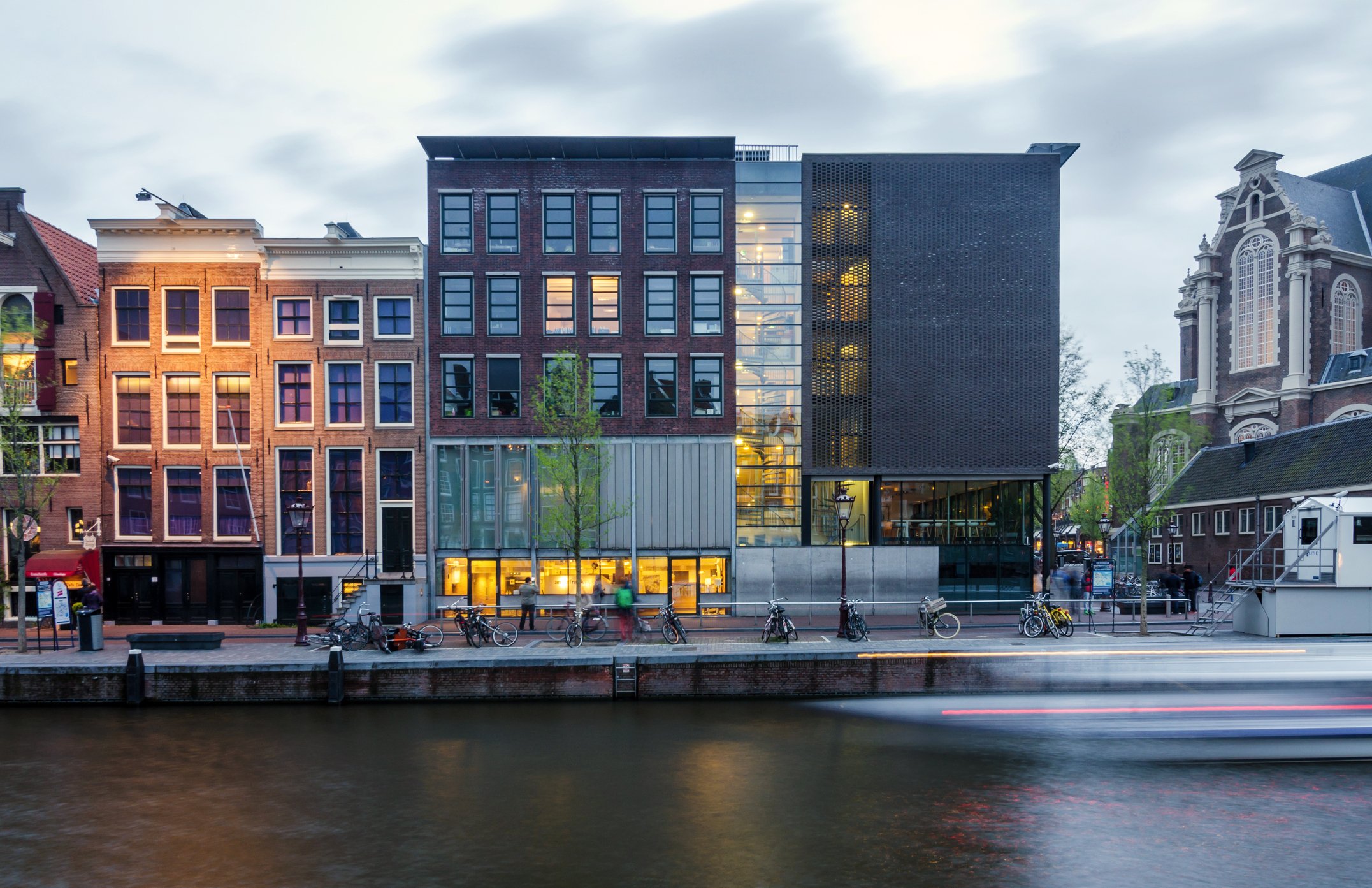
PHOTO: Anne Frank house and holocaust museum, Amsterdam, Netherlands. Photo by Siraanamwong, used by permission.

NOTE: The Anne Frank House is located on a canal called the Prinsengracht, in central Amsterdam. During World War II, Anne Frank hid from Nazi persecution with her family and four other people in hidden rooms at the rear of a 17th-century canal house, known as the Secret Annex. She did not survive the war but her wartime diary was published in 1947. Ten years later, the Anne Frank Foundation was established to protect the property from developers, and the museum opened on May 3, 1960. The site preserves the hiding place, features a permanent exhibition on the life and times of Anne Frank, and includes an exhibition space about persecution and discrimination.  Millions of people visit the museum each year. 

Fragment 9: The Netherlands by Samuel Taylor Coleridge

giuseppe-bandiera-YNYsiP5SiFo-unsplash

Fragment 9: The Netherlands
by Samuel Taylor Coleridge (1772-1834)

Water and windmills, greenness, Islets green;—
Willows whose trunks beside the shadows stood
Of their own higher half, and willowy swamp:—
Farmhouses that at anchor seem’d—in the inland sky
The fog-transfixing spires
Water, wide water, greenness and green banks,
And water seen—

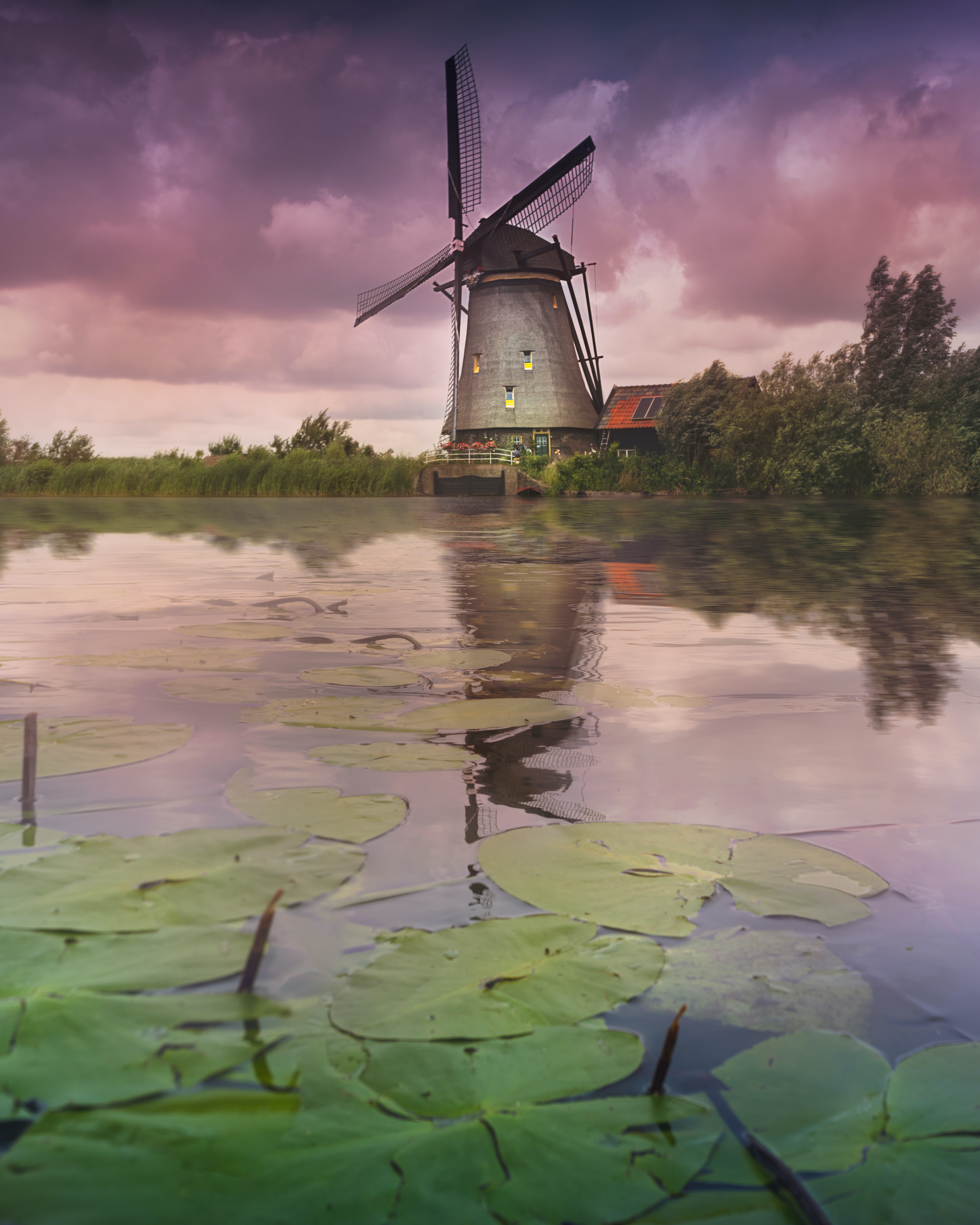
PHOTO: Kinderdijk, Netherlands. Photo by Giuseppe Bandiera on Unsplash.

NOTE: Kinderdijk is a village in the municipality of Molenlanden, in the province of South Holland, Netherlands. Kinderdijk is situated in the Alblasserwaard polder (a piece of low-lying land reclaimed from the sea or a river and protected by dikes) at the confluence of the Lek and Noord rivers. To drain the polder, a system of 19 windmills was built around 1740. This group of mills is the largest concentration of old windmills in the Netherlands. The windmills of Kinderdijk are one of the best-known Dutch tourist sites. They have been a UNESCO World Heritage site since 1997.

4. Rare School Bell, Long Walnut Handle by Kelley White

pixabay canterbury-shaker-village-4068135_1920

4. Rare School Bell, Long Walnut Handle
by Kelley White

finely turned, exceptional patina, turned
and flared brass bell with iron clapper,
Canterbury, NH, C. 1850, 28” h $2100

The ledger tells how I came to be here.
A man, my father, called Charles Thomas,
though it may have been Thompson,
or Thomson, or Tomas, (this is Eldress
Cora’s hand, surely, recording, but the names
are blurred and dimmed with ninety
years) and five children, four boys, one
‘infant girl,’ came to the North Family
in November in the year I may have turned
two, 1879. The sisters gave me May 1st
as a birthday for it is a pleasant day
to picnic beside one of our little brooks
or bring short chairs into the orchard.
I have a picture of that here in my box.
A birthday. Perhaps mine. 1885. But three
girls wear flower crowns. Perhaps our
Elders gave all the orphans May Day
to begin new lives. But I am not an orphan.
My father and brothers may still be living.
Though I admit it is unlikely. They stayed
‘winter Shakers’ three years, leaving
to look for work, when landwork
began each spring and returning ragged
each fall. I do not know what happened
to my mother. There may have been
yellow fever. Perhaps another child and both
lost in the birthing. That was common. We
who live without the fury of begetting and bearing
live long lives.

From TWO BIRDS IN FLAME, Beech River Books, 2010

PHOTO: Shaker village, Canterbury, New Hampshire. Photo by Pixabay, used by permission.  

NOTE FROM THE AUTHOR: The poems in TWO BIRDS IN FLAME began with items related to the Shakers that I found were for sale by auction in New Hampshire when I was looking for information about a woman who served as beekeeper there—I typed in “beekeeper Canterbury” and up came a picture of her gloves! The images truly seemed to speak to me. I felt as if I was (as the Shaker might have said) “receiving’ their voices.” I was fortunate to receive a Pennsylvania Council of the Arts grant, ironically just as I was leaving Philadelphia to return to my native New Hampshire, which helped support completion of the series of poems that became TWO BIRDS. .  . I was extremely honored and grateful that poems from the book (as well as its cover by artist Dawn Marion) were included in two exhibits (2014 & 2015) titled, “Village Rising, Contemporary Responses to Shaker Traditions,” at the museum site, paired with historic Shaker items. A decade later I’ve somewhat unexpectedly returned to Philadelphia. I dearly wish I could return to that quiet New Hampshire village during these difficult days and look across the millponds toward the early changing autumn trees. The Canterbury Shaker Village in New Hampshire remains one of my favorite places.

11-16 Evelyn with Kelley in gray

ABOUT THE AUTHOR: Pediatrician Kelley White has worked in inner city Philadelphia and rural New Hampshire. Her poems have appeared in Exquisite Corpse, Rattle and JAMA. Her recent books are Toxic Environment (Boston Poet Press) and Two Birds in Flame (Beech River Books.) She received a 2008 Pennsylvania Council on the Arts grant.

PHOTO: The author with granddaughter Evelyn.

Shaker Orchard by Mark Doty

Sabbathday_Lake_Shaker_Village

Shaker Orchard
by Mark Doty

Holding even flowers subject
to the principle of use,
the Shakers invented
the notion of packaged seeds
and a steam-powered
distiller for rosewater.
They uncluttered rooms
till space filled
with Universal Light—
white walls, a chest, a chair
hung on pegs beside a broom
so perfect in its simplicity
as to become a pure channel:
there was nothing in those lines
to impede the flow
of the divine, no ornament
to distract the mind from Love.
Work, Ann Lee said, as though
you had a thousand years to live;
thus the tiny stitches
in a sister’s cotton cap, the exact lid
of a pine box. Pestered
by holy doves delivering
gifts—exotic telegrams of fruit,
flower and verse—Mother Ann danced
to come to terms with the demands
of angels. In one print
the brothers and sisters
in their separate portions of the room
thunder on the polished floorboards.
They swept clean. Clear
the excess, they knew,
and light will pour in
as in certain American landscapes
where light itself occupies space,
whole regions of luminosity.
Seeing the turn of things
and unwilling to propagate,
they were swept away.
The last,
four elderly sisters,
live at Sabbathday Lake;
the brothers are twenty years gone.
In October their grapes yield,
suspended from the arbor
as if to recall a paradise of ease
where we had only to look upward
to be fed, and the apple trees
hold out their thousands of small victories,
having managed both to contain light
and to bear.

PHOTO: Sabbathday Lake Shaker Village, 707 Shaker Rd, New Gloucester, Maine. Photo by Jamie Ribisi-Braley, used by permission. 

NOTE: Learn more about the Shakers at nps.com

A Covered Bridge in Littleton, New Hampshire by Stephanie Burt

nh licensed cowleydac

A Covered Bridge in Littleton, New Hampshire
by Stephanie Burt

I can remember when I wanted X
more than anything ever—for X fill in
from your own childhood

[balloon, pencil lead, trading card, shoelaces, a bow
or not to have to wear a bow]

and now I am moved to action, when I am moved,
principally by a memory of what to want.

The point is to be, in your own eyes, what you are,

or to keep your own tools, so that you can pretend.

And so it was no surprise,
to me at least, when Cooper, who is two,
collapsed in fortissimo fits when he could not have
a $20, three-foot-long stuffed frog
in the image of Frog from Frog and Toad, since he is Toad.

That morning, needing a nap,
he had thrown, from the third-story balcony
of Miller’s Cafe and Bakery, into the whistling
rapids and shallows
of the Ammonoosuc River, with its arrowheads and caravans of stones,
his Red Sox cap. His hair was shining like
another planet’s second sun,
as he explained, looking up, “I threw my hat in the river.
I would like my hat back now.”

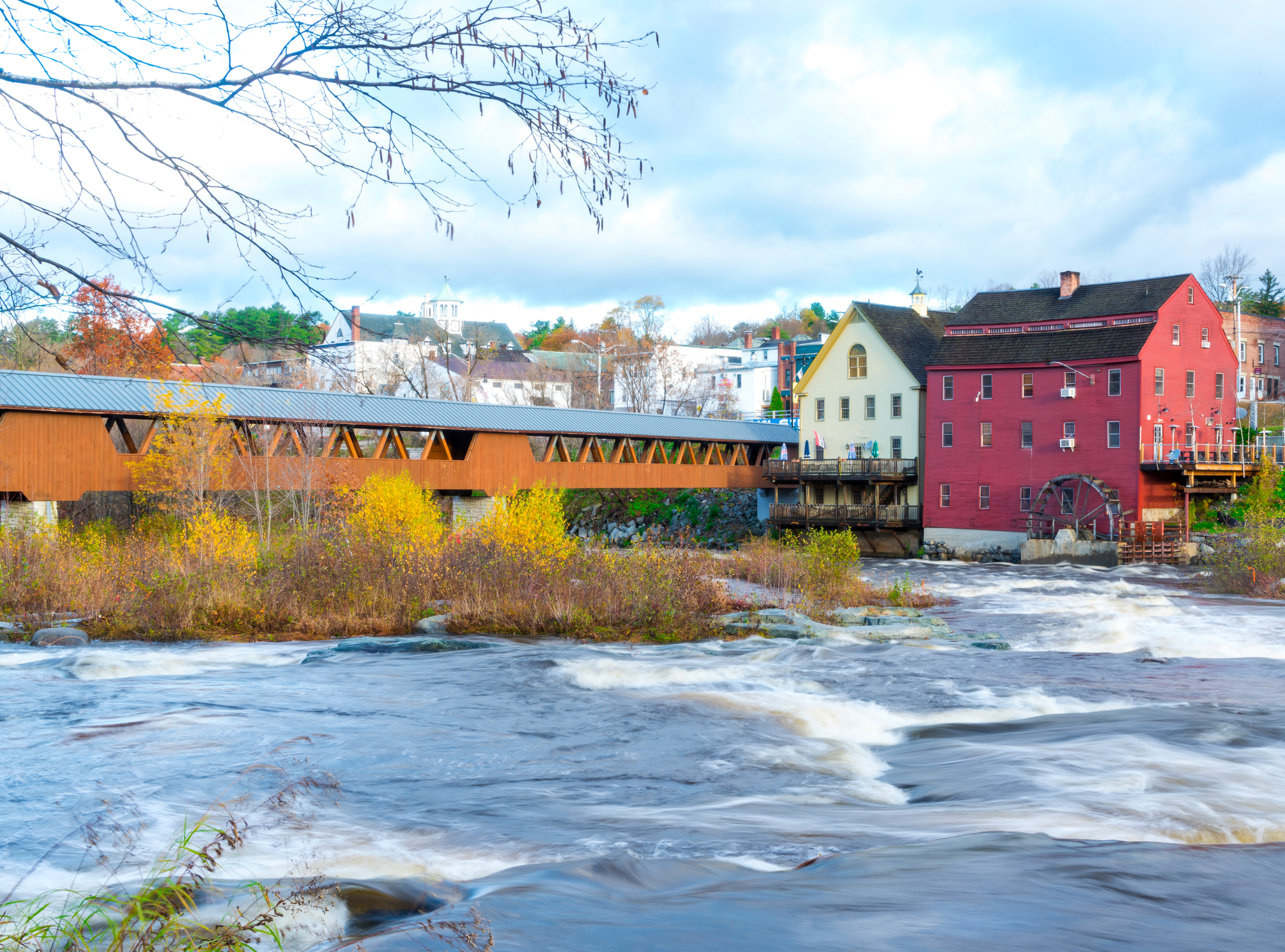
PHOTO:  Covered bridge and grist mill along Ammonoosuc River in Littleton, New Hampshire.  Photo by Cowleydac, used by permission. 

NOTE: Find out more about the covered bridges of New Hampshire at visit-newhampshire.com