It rained last night by Kanchan Chatterjee

nepal richie chan licensed

It rained last night
by Kanchan Chatterjee

The plastic bins look new

&

the grass smells fresh
& sparrows chirp . . .

I’m missing the cobbled alleys of
Durbar Square, Kathmandu

Sujata,
when will you return?

PHOTO: Durbar Square, Kathmandu, Nepal. Photo by Richie Chan, used by permission. 

KTM_SKYLINE

NOTE: Kathmandu is the capital and largest city of Nepal, with a population of around one million. Known as the city of temples, Kathmandu is approximately 4,600 feet above sea level in the Kathmandu valley in central Nepal. The city was the royal capital of the Kingdom of Nepal and features palaces, mansions, and gardens of the Nepalese aristocracy. In 2013, Kathmandu was ranked third among the top ten  travel destinations in the world by TripAdvisor, and ranked first in Asia. The city is considered the gateway to the Nepalese Himalayas and home to several world heritage sites, including Durbar Square. the site of palaces of the Malla and Shah kings who ruled over the city.

PHOTO: Skyline of Kathmandu, Nepal, with Himalayas in the background. Photo by Sarscov2020, used by permission.  

kanchan 1 copy

ABOUT THE AUTHOR: Kanchan Chatterjee lives in Jamshedpur, Jharkhand, India. He loves traveling and writing, mainly haiku. Scattered Leaves, his first book of haiku, was published in January 2020. His poems have appeared in online journals, including Shanghai Literary Review, Eclectic Eel, and Shot Glass Journal. His haiku have appeared in The Heron’s Nest, Frogpond, Modern Haiku, Golden Haiku, and NHK World (special episode Haiku Masters in Tokyo), and many others. He has won several haiku and photo haiku awards from Japan, USA, Romania, Croatia, and other countries. 
Kericho Gold by Ann Christine Tabaka

Kenya-Tealand-Near-Kericho-2012

Kericho Gold
               Kenya, Africa
by Ann Christine Tabaka

Morning tea, brewed with memories of a place I have been.
I can taste the shade and mountain breeze. Delicate upon
the tongue, flavors of earth and sun combine. The bright
aroma of cool rain fills my cup, as I sip the rich amber liquid.
A splash of milk, as tradition proclaims. On the air, chanting
of a time, long past. Impressions of wildlife, and lazy afternoons
under an acacia tree flash through my mind. Friendly banter
with native people, the exchange of a gift of new words. A
land of beauty and mystery that lives forever in my morning
ritual, holding warmth within my hands.
Tea time in Kenya.

Previously published in Gideon Poetry Review, July 2019

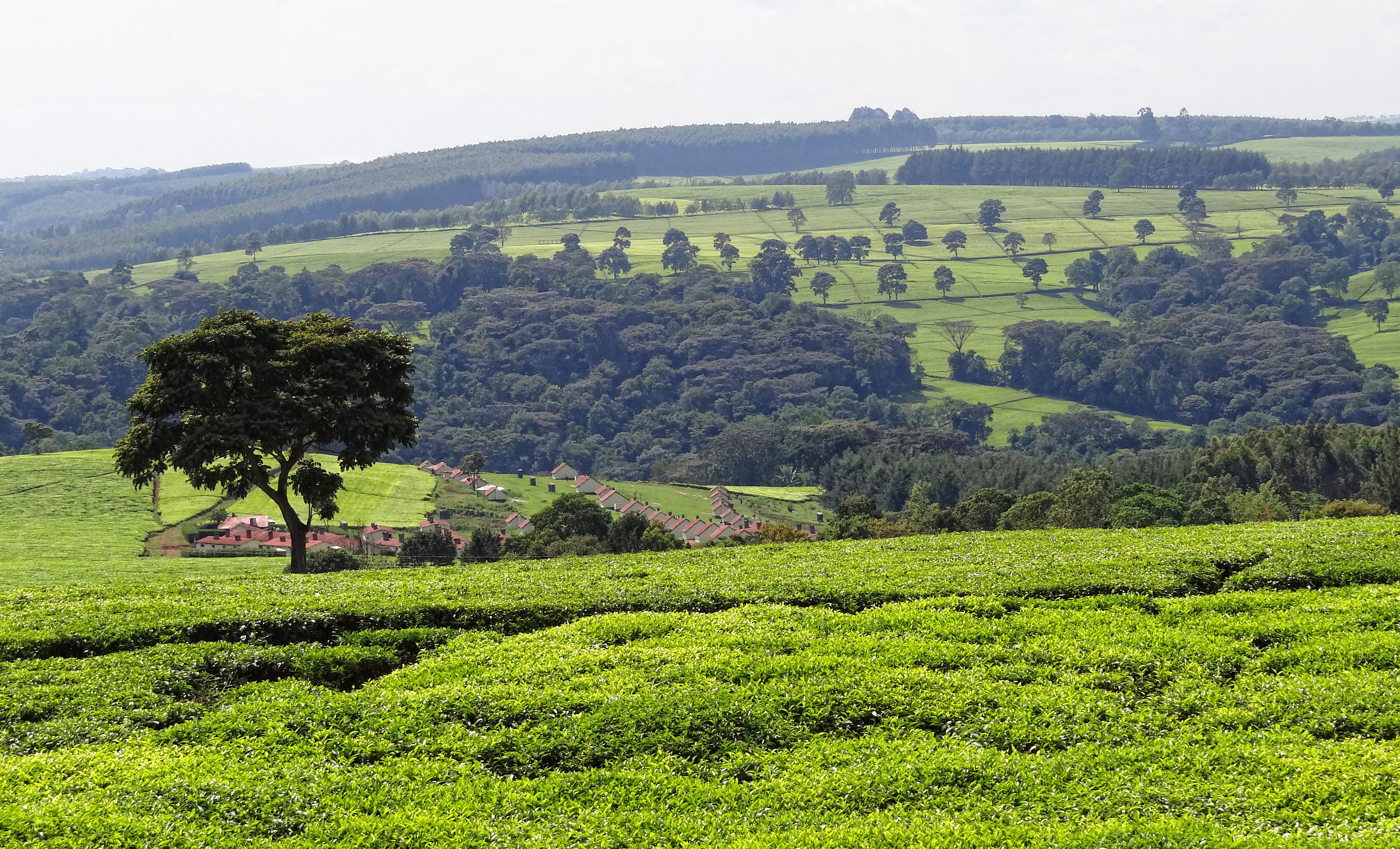
PHOTO:  A tea plantation near Kericho in the Kenyan highlands. Photo by Bjørn Christian Tørrissen, used by permission.

NOTE:  Kericho is located in the highlands west of the Kenyan Rift Valley in the Republic of Kenya, Africa. Situated on the edge of the Mau Forest, Kericho has a warm and temperate climate, making it an ideal location for agriculture and, in particular, the large-scale cultivation of tea.  The town is strategically located along Kenya’s western tourism circuit with access to Lake Victoria, the Maasai Mara National Reserve, and Ruma National Park. As of the 1999 census, the town has a population of 150,000. Kericho is the hometown of the Kipsigis, who are part of the Kalenjin people.

kericho g1

Kericho Gold is a premium tea brand in Kenya.  Launched in 2002, it is a brand of Gold Crown Beverages (K) Ltd, a subsidiary of Global Tea & Commodities (K) Ltd, one of the largest exporters of Black Tea in Kenya. Blends range from Black Teas, Green Teas, Fruit and Herb Infusions.

Kericho Gold-Kenya, Africa copy

NOTE FROM THE AUTHOR: In 2018 my adult son and I embarked on a safari tour of Kenya. I do not usually travel much, and almost never fly, so it was the adventure of a lifetime. The local nature center sponsored the trip, so everything was arranged. It was a special time together with my son, but also an amazing experience. I ended up writing four poems about the county. This is one of them.  The tea and coffee grown in Kenya is so delightful, that I brought some home with me, and still continue to order it today.

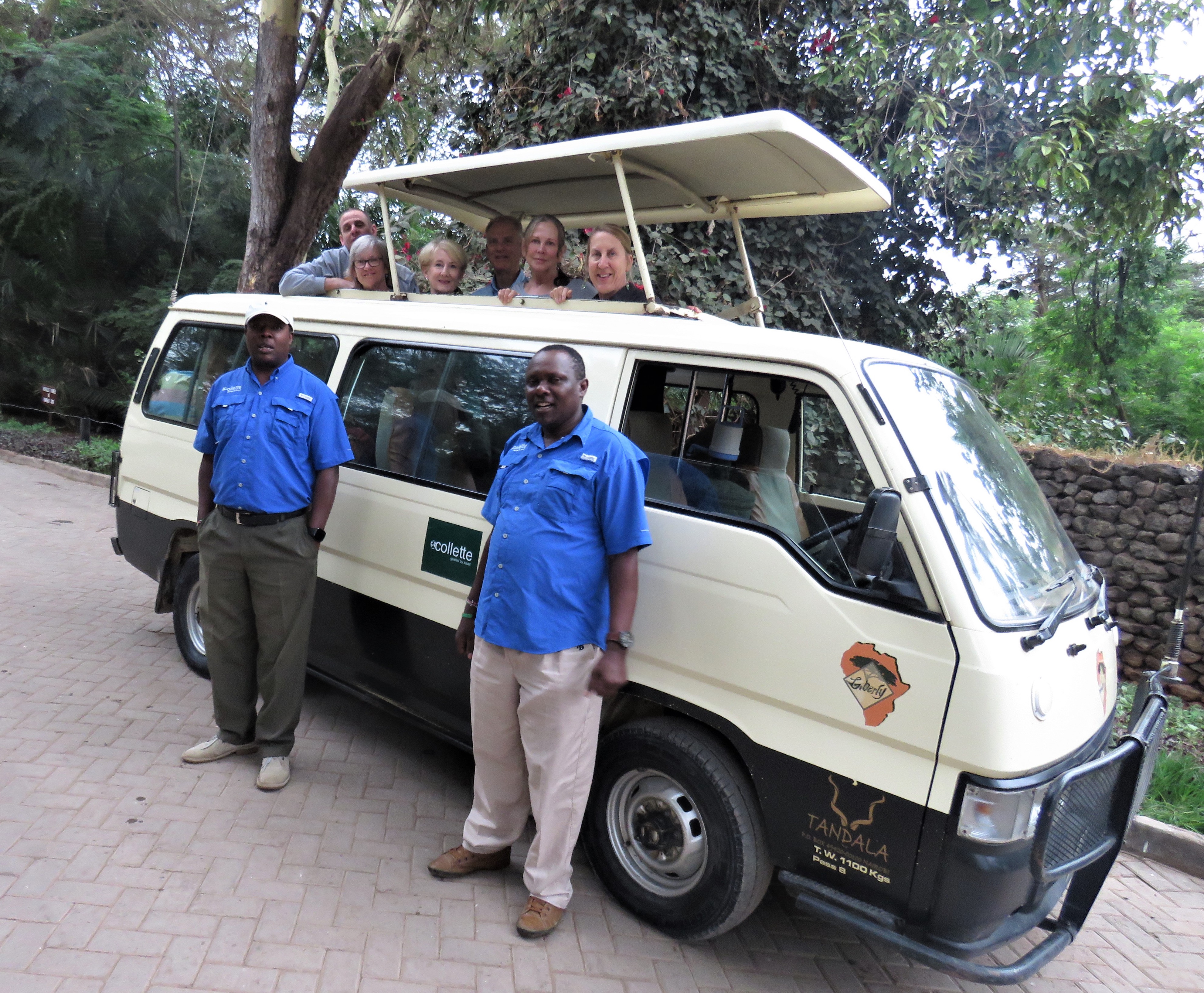
PHOTO: The author, second from right in van, with fellow travelers and guides during her 2018 tour of Kenya.

Ann Christine Tabaka

ABOUT THE AUTHOR: Ann Christine Tabaka was nominated for the 2017 Pushcart Prize in Poetry. She is the winner of Spillwords Press 2020 Publication of the Year, and her bio is featured in the “Who’s Who of Emerging Writers 2020,” published by Sweetycat Press. Internationally published, she has won poetry awards from numerous publications. Her work has been translated into Sequoyah-Cherokee Syllabics and into Spanish. She is the author of 12 poetry books and has recently been published in several micro-fiction anthologies and short story publications.  A resident of Delaware, where she lives with her husband and four cats, she loves gardening and cooking. Her most recent credits are The American Writers Review; The Phoenix; Burningword Literary Journal; Muddy River Poetry Review; The Write Connection; The Scribe, North of Oxford, Pomona Valley Review, Page & Spine, West Texas Literary Review, The Hungry Chimera, Sheila-Na-Gig, Foliate Oak Review, The Stray Branch, The McKinley Review, and Fourth & Sycamore. Visit her at annchristinetabaka.com and on her Amazon author’s page.

Interlude by John Hicks

deer-17830_1920 copy

Interlude
by John Hicks

I’m driving home for the weekend,
toward sunset fading eastern Nebraska.
Leaving the world of data mapping and test design.
Route 44. County seat to county seat across Iowa.
The last stop sign half an hour ago,
I’m still an hour from the Missouri.
Farmyard lights coming on encase
barns and silos in crystal cold.

Ahead of me, a whitetail in flight.
Approaches the two-lane. I pull over and stop
as she climbs from the swale, beauty
compromised by urgency. Hooves slip
on the pavement until she reaches
the left shoulder. She leaps the guardrail
and slants down the embankment into the trees.

As the light leaves, each farm appears
like a snow globe set out on the prairie.

Before leaving I check for more deer.
There’s a small movement
a quarter mile behind her.
A buck with a magnificent spread.
Tips point upward as though supporting the sky.
He trots across the field, head erect,
nostrils blowing vapor, his pace steady.

I lower my window as he skids to a stop
in front of me, each leg independently
muscling his body’s balance. His head
tilted back, he searches for scent,
the antlers moving side to side across his back.
Shoulder fur sticks out like an engorged collar.

Then the snort—a loud hissing blast.
Black hooves clack on the road
as he struts across, steps over the rail,
plunges head first down the slope.

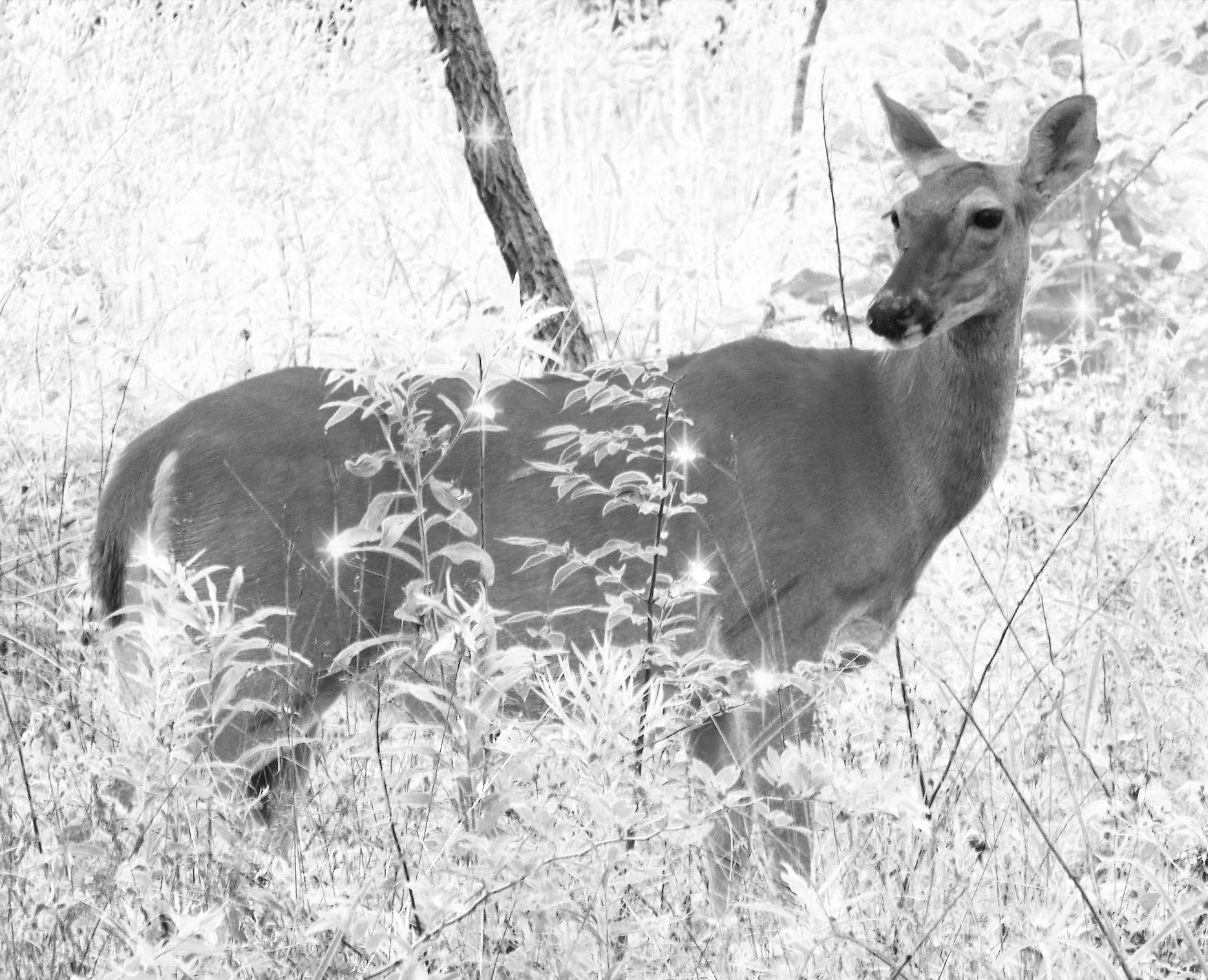
PHOTO: Doe in the forest. Photo by Pixabay, used by permission.

NOTE FROM THE AUTHOR: “Interlude” describes an encounter in rural Iowa six or seven years ago.

Hicks

ABOUT THE AUTHOR: John Hicks, an emerging poet, has been published or accepted for publication by I-70 Review, Valparaiso Poetry Review, Consequence Magazine, Sheila-Na-GigBlue Nib, and others. In 2016, he completed an MFA in Creative Writing at the University of Nebraska-Omaha.  He writes in the thin air of northern New Mexico.

Strandhill Beach in May by M.J. Iuppa

Ireland sligo Michael Walsh licensed

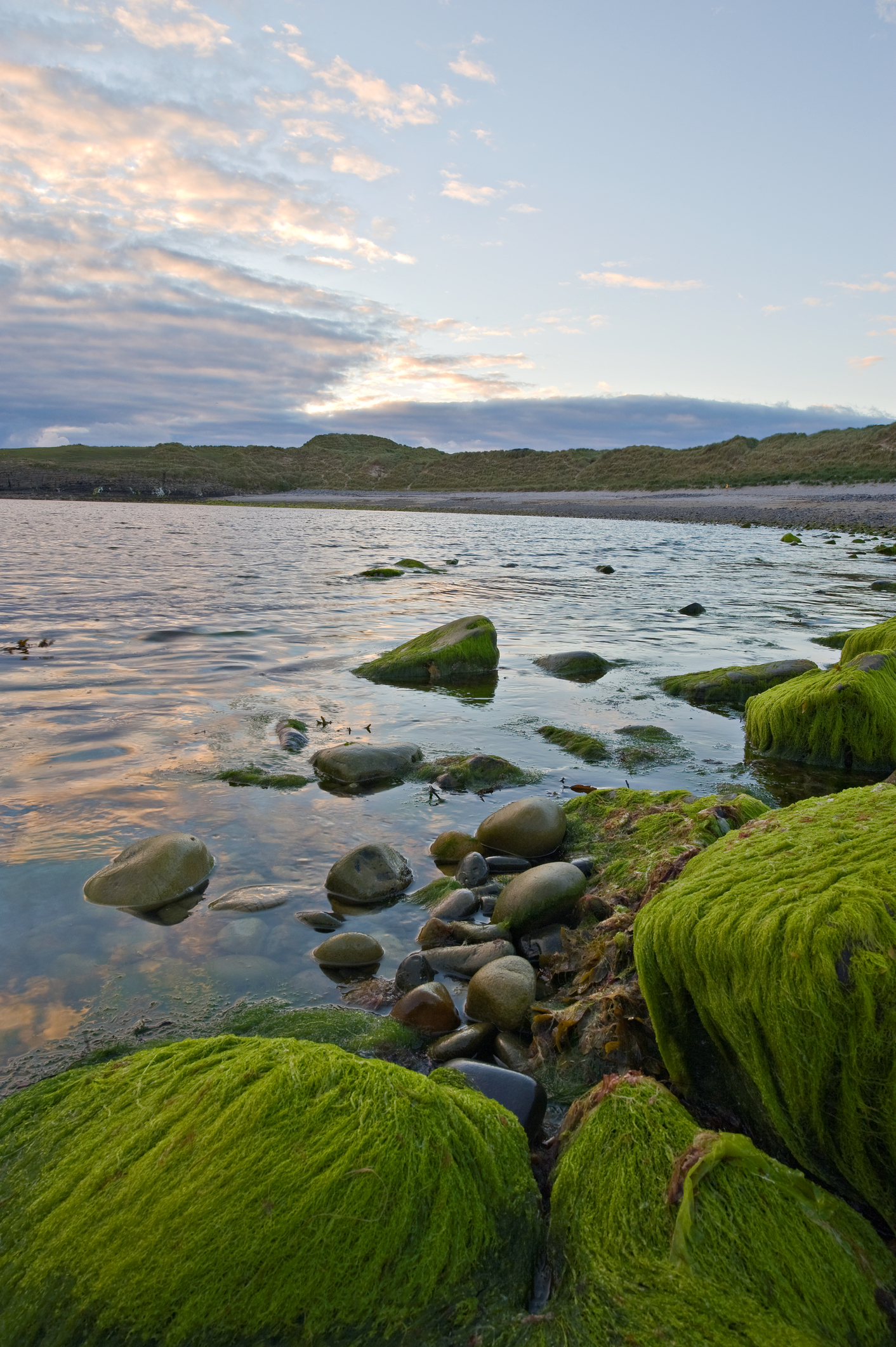
Strandhill Beach in May
                                  ~  Sligo, 2019
by M.J. Iuppa

Instantly my breath is lost in this Atlantic air, in
its steady wind swirling around my figure as if
I could be worn down to bits of sand whispering

off the dunes —I look back over my shoulder
to see the Irish Sea, muscular and taut, rising
in its infantry of waves, ready to sweep this

expanse of beach— its 15,000 years
of privacy— of barnacles and cockle shells
and God’s tears unearthed—those black stones

I pick one by one, only to lose them, with-
out knowing how they fell back to the hard-packed
sand and disappear behind me as if they were

meant to stay here, in my lack of knowledge
of who God is and the impossibility of
keeping what no one else sees.

Previously appeared in The Blue Nib (Ireland) December, 2019

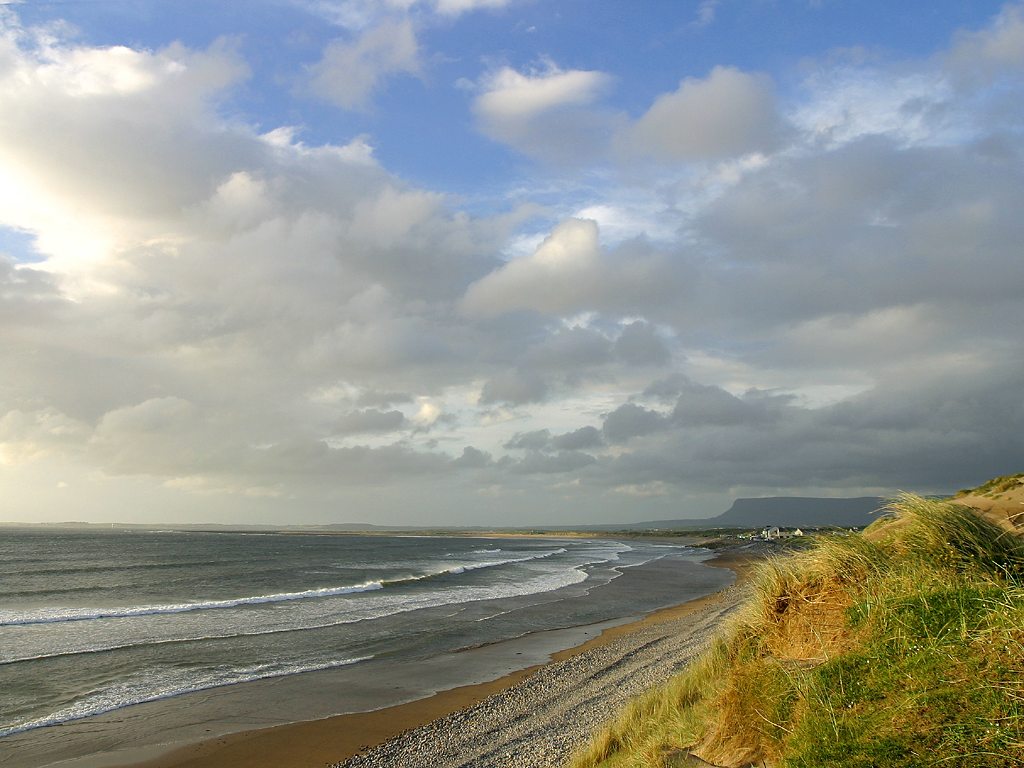
PHOTO: Strandhill Beach, County Sligo, Ireland. Photo by Michael Walsh, used by permission. 

Strandhill_Ireland

NOTE: Strandhill is a coastal town and townland in County Sligo, Ireland. With a vast beach break capable of holding huge waves in the right conditions, Strandhill Beach is renowned for surfing, but not safe for swimming.

PHOTO: Strandhill Beach, County Sligo, Ireland. Photo Commons.Wikimedia.org

MJ Mais Oui copy

ABOUT THE AUTHOR: M. J. Iuppa’s fourth poetry collection is This Thirst (Kelsay Books, 2017). For the past 31 years, she has lived on a small farm near the shores of Lake Ontario. Visit her at mjiuppa.blogspot.com for musings on writing, sustainability, and life’s stew.

Long Road to the Sugar Shack for Sugar on Snow by Tricia Knoll

vermont james boardman licensed

Long Road to the Sugar Shack for Sugar on Snow
by Tricia Knoll

I stop my car in mud ruts from a thaw
after a blizzard. Halfway to the shack
where white vapor will be the happiest sight
in Vermont in late March, last night’s
snowfall droops heavy limbs.

The sun, our star of white on white,
glares full strength in up-above blue. Alone
on a road within this snow lattice I wonder
how soon it falls to pieces.

At the end of the road, a young boy
stands in a blue parka and black boots,
his job to point out where I should park.
I confess. I don’t back up well.
His nod is almost complicit, forgiving.
Maybe he has things he does not do well.
His easiness hints that he is out here for love
of his family’s sugarbush. Sun sparkle on snow.

I say I’ve come to try fresh maple syrup on
shaved ice with a pickle and a doughnut.
My first. He follows me, an old lady
who can’t reverse well and doesn’t know
what’s inside the weathered shack—
perfume of maple and scurried work.
The mother in me tells his brother
how well the boy does as valet.
The sugar season treat is sweet
and sour, sticky and wet. Thumbs up
to my watcher. He vanishes
to give more directions

and waves me out as I lurch back
down his road with one bottle of Amber A
just-rendered syrup, yesterday’s sap.
Whatever thought I had of snow marvels
melting nothing has. Yet. My way back
is as fragile and elegant as the way in,
laced with that boy’s sweetness
and white drizzled on naked woods.

First published in Verse Virtual, March 2020

PHOTO: Maple trees with buckets collecting sap in Vermont. Photo by James Boardman, used by permission. 

sugar-shack

NOTE: Maple syrup is made from the sap of various species of maple trees. In cold climates, these trees store starch in their trunks and roots before winter; the starch is  converted to sugar that rises in the sap in late winter and early spring. Maple trees are tapped by drilling holes into their trunks and collecting the sap, which is processed by heating to evaporate much of the water, leaving the concentrated syrup. Most trees can produce 5 to 15 gallons of sap per season. Maple syrup was first made and used by the indigenous peoples of North America, and the practice was adopted by European settlers. Maples are usually tapped beginning at 30 to 40 years of age. Each tree can support between one and three taps, depending on its trunk diameter. Seasons last for four to eight weeks, depending on the weather. Maples can continue to be tapped for sap until they are over 100 years old. From 20 to 60 gallons of sap are required to produce one gallon of finished syrup, depending on the sap sugar content. 

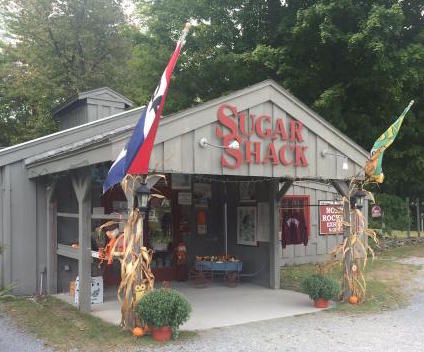
PHOTO: The Sugar Shack in Arlington, Vermont, where the author enjoyed Sugar on Snow. 

sugar on snow

From 1939 issue of Yankee Magazine:

MAPLE SYRUP ON SNOW RECIPE

1. Have ready a pan of hard packed snow ready. A pie pan or dish works well here. Keep the pan outside to keep cold while you prepare the syrup.

2.  Boil 1/2 cup of pure maple syrup until it reaches 235°F on a candy thermometer (the soft-ball stage).

3.  Remove the syrup from the heat and immediate drizzle it over the packed snow. Be careful — the syrup will be very hot. Allow it to cool for a moment, and then enjoy!

Serve with doughnuts and pickles. The doughnuts may be used for dunking in coffee, and the pickles are eaten to overcome the sweet taste so that one may begin all over again.

Watch a video about this regional treat at foodnetwork.com

PHOTO: Sugar on Snow, consisting of snow (or shaved ice), thickened maple syrup, dill pickle, and yeast donut. 

tricia-knoll

ABOUT THE AUTHOR: Tricia Knoll is a Vermont poet who like many Vermonters finds winter to be very long, maybe too long—until the sugar shacks start boiling down maple sap and the steam flies out the roof as a kind of promise that spring will come. She has several poetry collections that qualify as  eco-poetry with descriptions at her website triciaknoll.com. Her poetry collections include Urban Wild (human interactions with wildlife in urban habitat), Ocean’s Laughter (change over time in Manzanita, Oregon), Broadfork Farm (the people and creatures of a small organic farm in Trout Lake, Washington), and How I Learned To Be White which received the 2018 Indie Book Award for Motivational Poetry. Read more of her work at triciaknoll.com. Find her on Amazon and Twitter.

A Spell of Enchantment by Maureen Grady

chronis-yan-o6bmv2NShro-unsplash

A Spell of Enchantment
by Maureen Grady

Of mint tea and dates,
of Casbah and Medina,
of rugs and calls to prayer,
of minarets and plums,
of green figs and honey,
of Medrassa and holy bread,
of the music of Arabic,
of all tastes of tagines,
of hammam and black soap,
of Roman ruins and silence,
of orange flower oil and coffee scrub,
of cinammon and palm fronds
of henna hands and devotion,
of African drums,
of silversmiths and apricots,
of feral cats among ruins,
of water-bearers and olive-sellers,
of gratitude and the Eid,
of gardens of Eden,
of vast plains and sheltering sky,
of the alchemy of Fez.

PHOTO: Fez, Morocco. Photo by Chronis Yan on Unsplash

Fes_Bab_Bou_Jeloud_2011

NOTE: Fez is a city in northern inland Morocco, the country’s second largest city after Casablanca, with a population of 1.22 million (2020). The city is home to the University of Al Quaraouiyine founded in 859—considered the oldest continuously functioning institute of higher education in the world. Fez’s Chouara Tannery from the 11th century is one of the oldest tanneries in the world. The city has been called the “Mecca of the West” and the “Athens of Africa.”

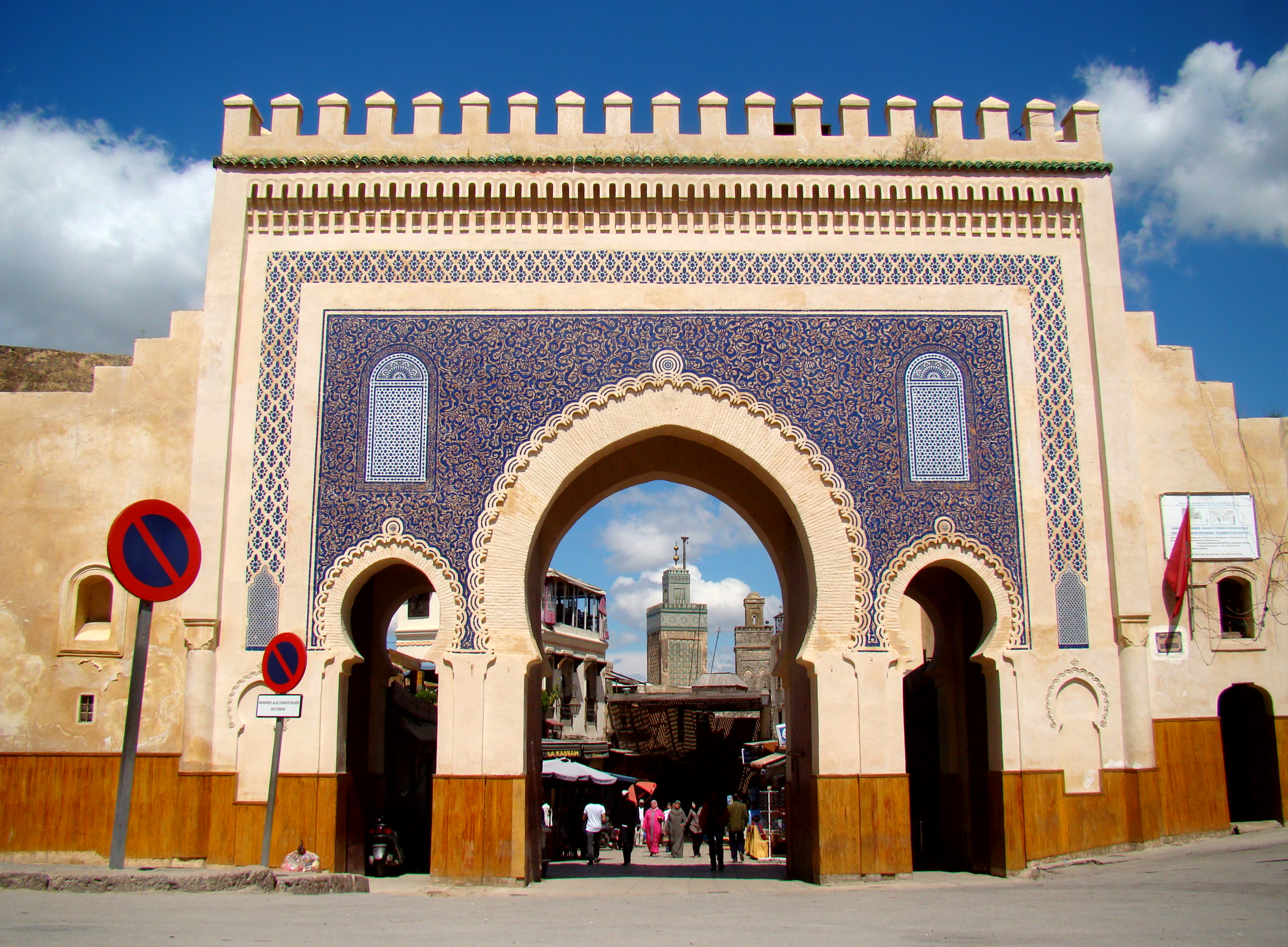
PHOTO: The gate Bab Bou Jeloud (The Blue Gate to Fez)  leads into the old medina in Fez, Morocco, Fez el Bali. Photo by Bjørn Christian Tørrissen, used by permission.

IMG_4357

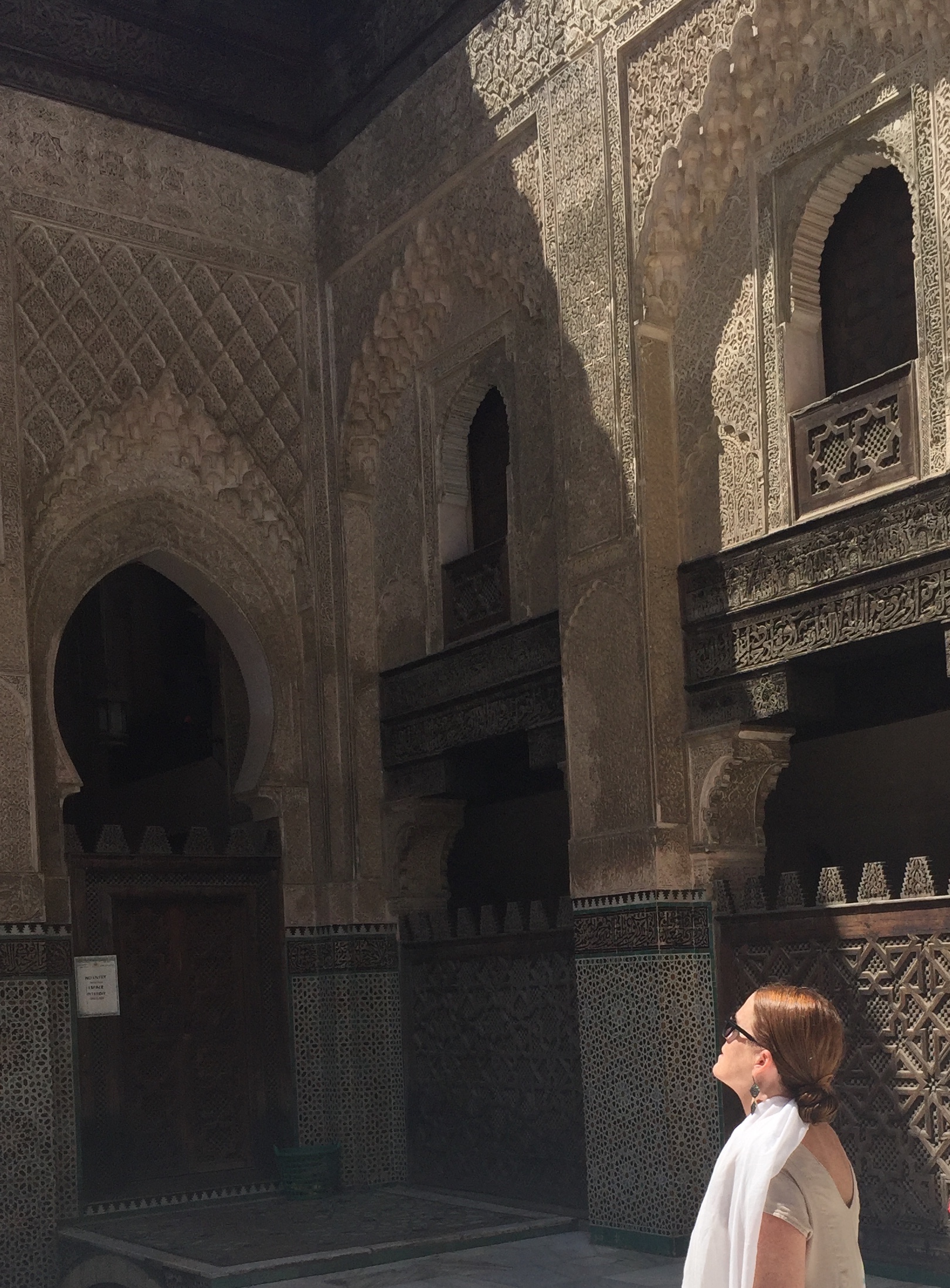
NOTE FROM THE AUTHOR: A dear friend Kim LeBlanc, working in Morocco, took me to Fez, a singular gift. The pure alchemy of Fez deeply affected me. Though I had long imagined it, the sensory details were overwhelming, magical and mysterious. I often dream of it.

PHOTO: The author in Fez, Morocco.

IMG_9733

ABOUT THE AUTHOR:  Maureen Grady is author of two books of poetry: Unpack My Heart With Words (2015), and Land of Dream and Dreamer, Poems of Ireland (2019).  Maureen is a writer, teacher, actor, producer, and private writing coach.  She has taught British and Irish Literature, Shakespeare, and Creative Writing for many years. Her private creative writing conservatory has nurtured many young women writers. Maureen was fortunate to have John L’Heureux as a mentor at Stanford, and studied with Seamus Heaney and Eavan Boland.  She has won two teaching prizes: the student-nominated “One of LA’s Most Inspiring Teachers,” and a national recognition for teaching Creative Writing from Scholastic Books given at Carnegie Hall by Tony Kushner. Maureen is a graduate of Stanford University with a BA in Literature, minor in History/Art History. She also has a Masters in Theatre. Maureen is an Irish and US citizen and divides her time between Ireland, Italy, and America, and longs to see all the world.

Gonaïves Friday by Kyle Laws

michael laughlin haiti

Gonaïves Friday
by Kyle Laws

In dining room, on formal Haitian couch,
high back carved with flowers & leaves,
I read George Sand’s Lettres D’un Voyageur.
Ever present goat baas under the window
heavily draped in lace until I tie it with
twine in hope of 3 o’clock breeze, hottest
part of the day, after lunch of rice and
a Gonaives green cooked with goat & crab
& onion, served with limeade, not sweetened,
and thick bread.

Around neck, a green fan with blue shield,
recommended to sleep with propped on chest,
needed less during night than listless afternoons.
Hours each morning on balcony of old prison,
now school, overlooking Independence Square.
Today, with Prestige, Haitian beer, party day
at school. Speakers blare in schoolyard,
and we dance before walking to University.
They would like a written promise of money,
or willing to agree.

The dog scratches at fleas, less hair on back
than when we arrived, and kittens leave
when drawn curtains are unavailable to climb.
Birds twitter from palms. Gate to courtyard
always closed, and path through wall to front
door is bricked by concrete block of which all
is constructed, holes carved for ventilation.

In shed, Celinianna’s begun dinner, after
hanging wash on the line, sleeveless T-shirts
we sweat into each day and shorts we wear
around house, long skirts for public view.
The gate creaks open; the red Isuzu Trooper
diesel cranks over; Pere Max leaves for Friday
cooking school. I replace batteries in neck fan;
it vibrates against my Prestige belly with new life.

“Gonaïves Friday” appeared in Exit 13 and in George Sand’s Haiti (Poetry West, 2013, co-winner of their chapbook award).

PHOTO: Gonaïves, Haiti, by Michael Laughlin, All Rights reserved. 

Jean-Jacques-Dessalines

NOTE: Gonaïves is a commune in northern Haiti, with a population of about 300,000 people (2011 census). Gonaïves is known as Haiti’s city of independence, because it was the location of Jean-Jacques Dessalines declaring Haiti independent from France on January 1, 1804. Dessalines was a leader of the Haitian Revolution and the first ruler of an independent Haiti under the 1805 constitution. Under Dessalines, Haiti became the first country to permanently abolish slavery. He is regarded as one of the founding fathers of Haiti.

IMAGE: Jean-Jacques Dessalines (1758-1806) depicted as Emperor Jacques 1 in mural, Port-au-Prince, Haiti (19th century). 

NOTE FROM THE AUTHOR: I made four trips to Haiti, both before and after the 2010 earthquake. During my first visit, I had only one French book on my shelf, George Sand’s Lettres D’un Voyageur, that seemed appropriate to the trip. George Sand was born the same year, 1804, that Haiti gained independence from France. I was to spend most of my time in Gonaïves, birthplace of the revolution. I was born in Philadelphia. The juxtapositions were interesting. I stayed in the rectory of an Episcopal priest in Gonaïves, a former retreat in Montrouis, and housing for aid workers in Port-au-Prince.   

laws2

ABOUT THE AUTHOR: Kyle Laws is based out of Steel City Art Works in Pueblo, Colorado, where she directs Line/Circle: Women Poets in Performance. Her collections include Ride the Pink Horse (Stubborn Mule Press, 2019), Faces of Fishing Creek (Middle Creek Publishing, 2018), This Town: Poems of Correspondence coauthored with Jared Smith (Liquid Light Press, 2017), So Bright to Blind (Five Oaks Press, 2015), and Wildwood (Lummox Press, 2014). With eight nominations for a Pushcart Prize and one for Best of the Net, her poems and essays have appeared in magazines and anthologies in the U.S., U.K., Canada, and Germany. She is editor and publisher of Casa de Cinco Hermanas Press. Visit her on Facebook.       

Union Street by Miriam Levine

NH Joe Sohm licensed

Union Street
by Miriam Levine

The calm fall night when blazing leaves were invisible
and the curtain of the living room window
blurred the gold dome of the capitol building
recognizable though beautifully clouded;
and three windows of the house on Centre Street
also came through but these in pale blue;
and I thought everything is in its place—
hushed and muted, even the street.
There was enough light in the room to see
the carpet edge and the arm of your chair;
I did not have to do anything but rest.
The door to your bedroom was open,
and your nightlight showed a familiar path
I might have taken to watch you dreaming.

Previously published in 2020 in On the Sea Wall.

PHOTO: New Hampshire State House at sunset (Concord, New Hampshire). Photo by Joe Sohm, used by permission. 

New_Hampshire_State_House_5

NOTE: Concord, the capital of New Hampshire, has a population of about 40,000.The New Hampshire State House, designed by architect Stuart Park and constructed between 1815 and 1818, is the oldest state house in which the legislature meets in its original chambers. The building was remodeled in 1866, and the third story and west wing were added in 1910.

PHOTO: New Hampshire State House (Concord, NH). Photo by Alexius Horatius, used by permission. 

levine 1 copy

ABOUT THE AUTHOR: Miriam Levine is the author of Saving Daylight, her fifth collection of poetry.  Another collection, The Dark Opens, was chosen by Mark Doty for the Autumn House Poetry Prize.  Her other books include, Devotion, a memoir, and In Paterson, a novel.  Her work has appeared in American Poetry Review, The Kenyon Review, The Paris Review, and Ploughshares.  A fellow of the NEA and a grantee of the Massachusetts Artists Foundation, she lives in Florida and New Hampshire.  For more information about her work, please visit miriamlevine.com.

On the Murrumbidgee River by Oormila Vijayakrishnan Prahlad

Murrumbidgee River

On the Murrumbidgee River
by Oormila Vijayakrishnan Prahlad

Through sacred lands
the waters of the Murrumbidgee
course in crimson sheets
thousand year old River Red Gums
mirrored in its depths.

A wedge of magpie geese
spear through the skies
brown bitterns and freckled ducks
jostle with white-faced herons
wading among schools
of bream and golden perch.

The primordial river glides
in a Dreamtime reverie
dusted with ludwigia blooms
and high up in the coolibah trees
the koalas’ eyes follow
the edge of the canoe
foaming lace through water.

First published in Plum Tree Tavern (July 15, 2020)

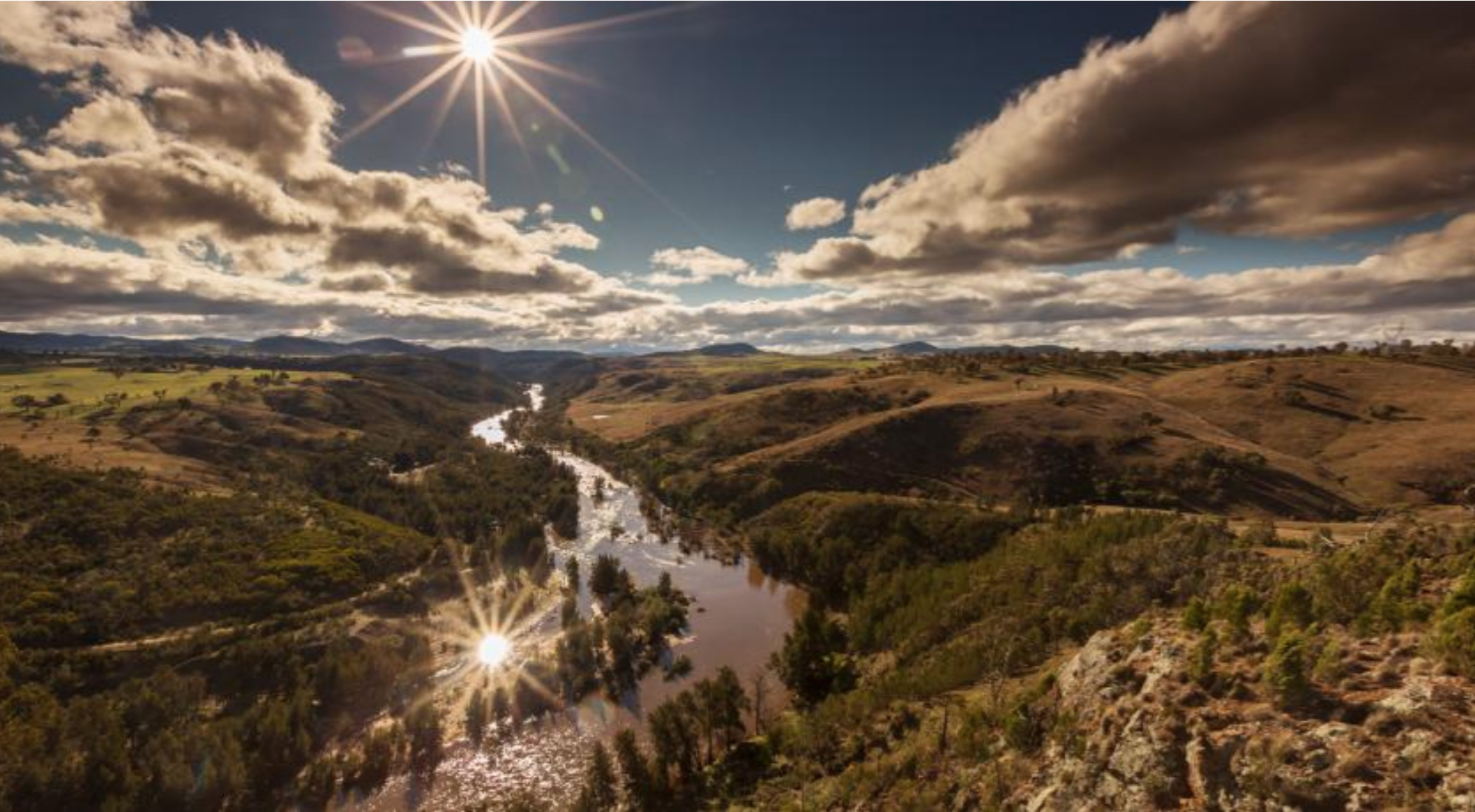
PHOTO: Murrumbidgee River, Australia. Photo by smarttravelapp.com

black-winged-stilts-himantopus-himantopus-nl

NOTE: Murrumbidgee River is the second longest river in Australia, flowing over 900 miles through the state of New South Wales and the Australian Capital Territory, which includes nature reserves.

PHOTO: Black-winged stilts, Murrumbidgee River wetlands (Australia) . Photo by Mike Todd/DPIE, all rights reserved. 

On the Murrumbidgee river

NOTE FROM THE AUTHOR: In the days before lockdown, I used to spend a lot of time painting en plein air.  This poem was inspired by one of my painting trips. Above is the painting.

prahlad-copy

ABOUT THE AUTHOR: Oormila Vijayakrishnan Prahlad is an artist, poet, and pianist of Indian heritage. She was raised in the Middle East. She started writing poetry at the age of seven. In 1990, during the Iraqi invasion of Kuwait, she was a war refugee in Operation Desert Storm. She holds a Masters in English, and is a member of The North Shore Poetry Project. Her recent works have been published in Neologism Poetry, The Ekphrastic Review, Nigerian Voices Anthology, Poetica Review, and several other print and online international literary journals and anthologies. Her poem “Mizpah,” about a mother who hopes for the return of her son who was taken as a prisoner of war, was awarded an Honorable Mention in the Glass House Poetry Awards 2020. She is the co-editor of the Australian literary journal Authora Australis. She regularly performs her poetry and exhibits her art at shows in Sydney.

On the Osa by Anne Whitehouse

costa rica bob hilscher licensed

On the Osa
by Anne Whitehouse

I

Into the forest, we follow a river
up to a waterfall. Slowly twirling,
green and yellow, leaves fall
in the heavy air, and from on high
a toucan trills thrillingly.
Perched on a dead branch,
backlit by the sky,
we glimpse the bird in profile.

Spider monkeys noisily eat
berries by the handful,
dropping refuse on the ground,
scattering, chattering—
and everywhere the emphasis on color—
a lizard called silvana with a stripe
of neon green down its back,
river crayfish with claws of deep blue,
but surely there is nothing bluer
than the blue Morphos butterflies
seeking refuge in the cool shade
that hovers above the river,
their fluttering wings like scraps of sky.

II

After noon, stillness shimmers.
Scarlet Macaws fly up and down in pairs,
tracing vees side by side,
long feathery tails curving gracefully.
Like the heat, their harsh cries are an assault.
The Kingfisher hides in the shadows of the lagoon;
Cherrie’s Tanagers flit in the jacaranda.

Rocky ledges and loose stones
magnify the echo of the crashing surf.
I float in the warm waters of the Golfo Dulce
where the tide ripples onto a beach,
almost asleep, as in a bath.
Dreaming of ice, waiting for nightfall,
I run across the burning sand.

III

I met a woman in flight from her previous life,
foreigner to this tropical coast,
younger than I but no longer young.
The connection we shared
was not quite friendship.

Bare-footed, in her orange caftan,
she sang to her warped guitar,
Listen to the rain, change your mind and dreams.
Eat saucy things with your fingers,
share star fruit and sacred space.

I was born in New York
and grew up all over the world,
inflicted with a permanent sense
of wanderlust. In my city nights,
I shut down bars at the open mike.
Now I wake with howler monkeys
and go to sleep when darkness falls.

From her list of rhymeless words
that have crept into her songs:
Wolf, wasp, almond, rhythm,
Silver, angel, walrus, month,
purple, orange, bulb, music,
false husband.

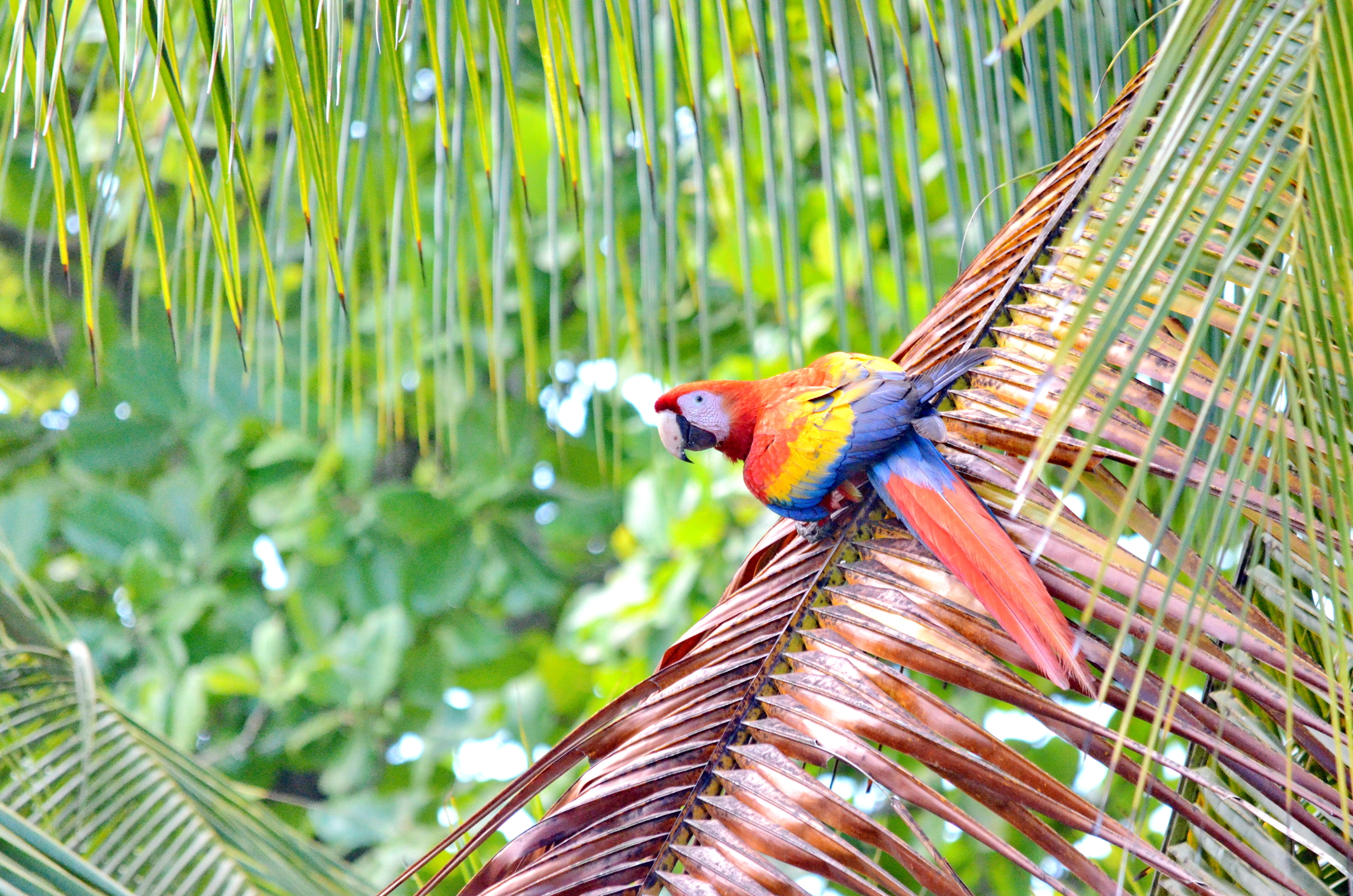
PHOTO: Scarlet macaw, Osa Peninsula, Costa Rica. Photo by Bob Hilscher, used by permission.

costa rica hotshotwrorldwide licensed

NOTE: The Osa Peninsula  is located in southwestern Costa Rica, with the Pacific Ocean to the west and the Golfo Dulce to the east. The peninsula is home to at least half of all species living in Costa Rica. The main town on the peninsula is Puerto Jimenez provides access to Corcovado National Park, which National Geographic has called “the most biologically intense place on Earth in terms of biodiversity.”

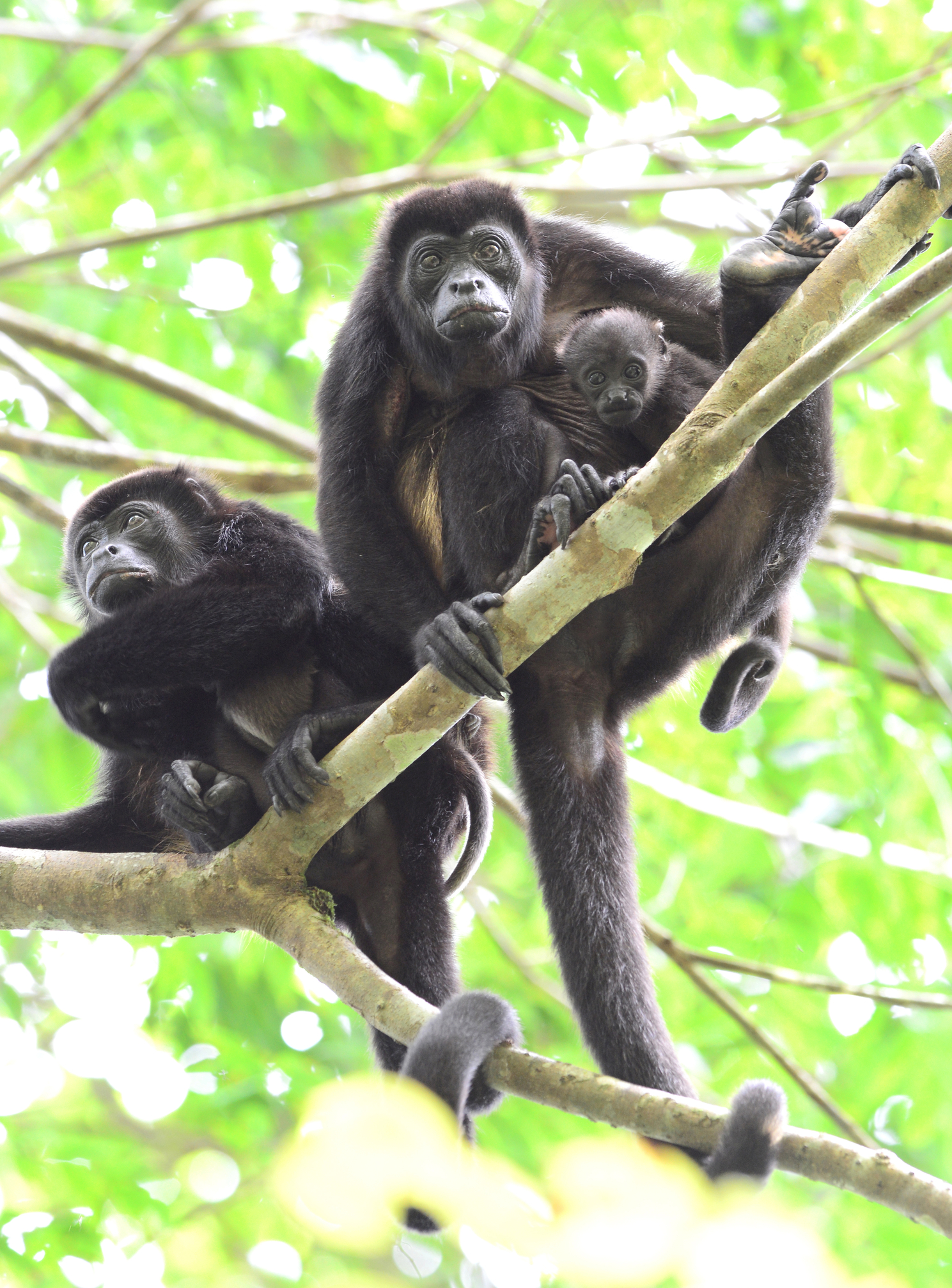
PHOTO: Mantled howler monkeys, Corcovado National Park, Osa Peninsula, Costa Rica. Photo by hotshotsworldwide, used by permission.

NOTE FROM THE AUTHOR: “On the Osa” was inspired by a trip four years ago to the Osa peninsula of Costa Rica.

Country_201407126765_Anne copy

ABOUT THE AUTHOR: Anne Whitehouse is the author of seven poetry collections, most recently Outside from the Inside, recently released by Dos Madres Press, as well as a novel, Fall Love..