Kabul by Shakila Azizzada

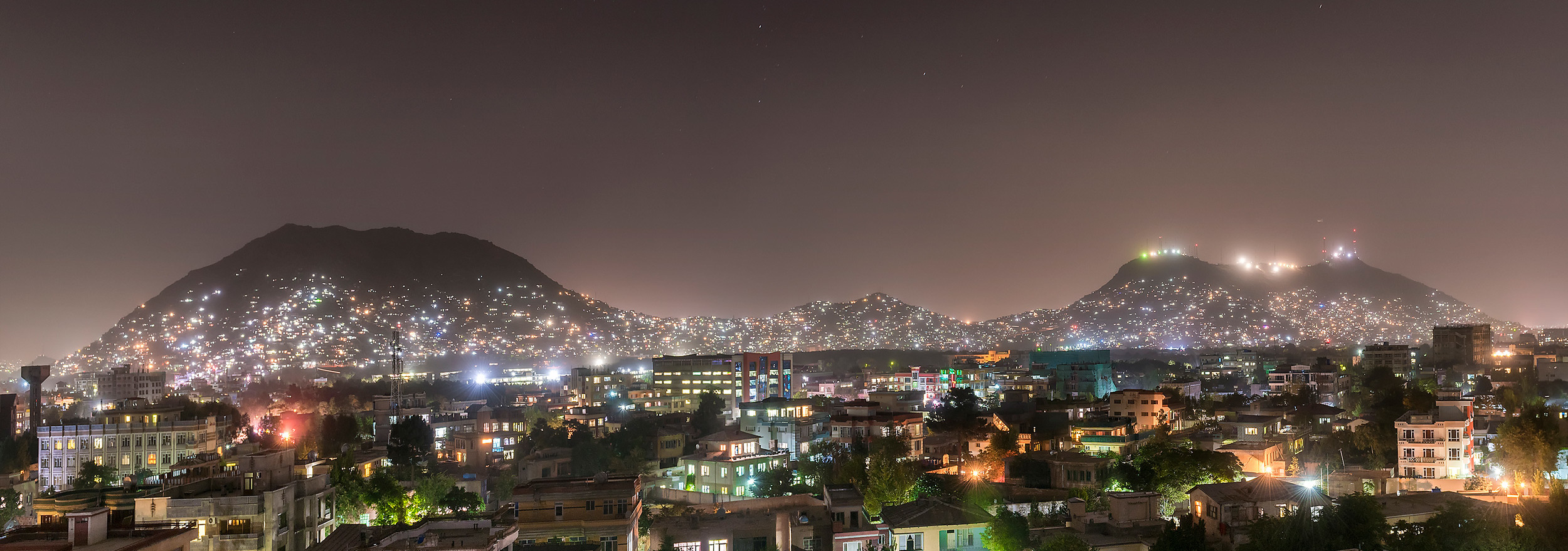
Kabul-Pano_By_Dani_(psvoy)

Kabul
by Shakila Azizzada

Translated by Zuzanna Olszewska with Mimi Khalvati

If my heart beats
for Kabul,
it’s for the slopes of Bala Hissar,
holding my dead
in its foothills.

Though not one, not one
of those wretched hearts
ever beat for me.

If my heart grieves
for Kabul,
it’s for Leyla’s sighs of
“Oh, dear God!”
and my grandmother’s heart
set pounding.

It’s for Golnar’s eyes
scanning the paths
from dawn to dusk, spring to autumn,
staring so long
that all the roads fall apart
and in my teenage nightmares
side roads
suddenly shed their skins.

If my heart trembles
for Kabul,
it’s for the slow step of summer noons,
siestas in my father’s house which,
heavy with mid-day sleep,
still weighs on my ribs.
For the playful Angel of the Right Shoulder
who keeps forgetting
to ward away stray bullets.

It’s for the hawker’s cry
of the vegetable seller doing his rounds,
lost in my neighbours’ troubled dreams,
that my heart’s trembling.

PHOTO: Kabul, Afghanistan, at night (2016) by Dani, used by permission. 

Afghan_fort_(60_of_69)

NOTE: Bala Hissar (“High Fort”) is an ancient fortress located in the south of the old city of Kabul, Afghanistan, constructed around the 5th century AD.

PHOTO: Bala Hissar, 2010 (Afghanistan) by LarkAbroad, used by permission. 
shakila-azizzada_285x0_264_320_90_s

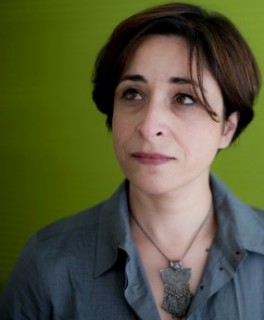
ABOUT THE AUTHOR: Shakila Azizzada was born in Kabul, Afghanistan, in 1964. During her middle school and university years in Kabul, she started writing stories and poems, many of which were published in magazines. After studying Law at Kabul University,  Shakila read Oriental Languages and Cultures at Utrecht University in The Netherlands, where she now lives. She regularly publishes tales, short stories, plays and poems. Her first collection of poems, Herinnering aan niets (Memories About Nothing), was published in Dutch and Dari. Several of her plays have been both published and performed, including De geur van verlangen (The Scent of Desire). She frequently performs her poems at well-established forums in The Netherlands and abroad.  
Dropping Acid in the Hindu Kush, 1967 by Rafaella Del Bourgo

afghanistan torsten pursche licensed

Dropping Acid in the Hindu Kush, 1967
by Rafaella Del Bourgo

Early afternoon.
We eat milky Afghan caramels,
ignore the view below, the town, its river, the valley,
lie, instead, on our backs. Cobalt mountains,
the enormity overhead,
cloud parades:
columns of arabi sheep, camels with bright ornaments,
fanged and tawny cats.
A lone barbary falcon perched on a nearby outcropping,
its cry sharp and piercing.

Silent departure of the sun.
Confusion of night. We’re hungry
and there is no map
for how to get back to where we were.
The path, narrow and rocky,
threads down into Kabul,
through tiny villages,
clumps of mud homes, dimly lit,
a few laundry lines,
a communal well.

United in a chain, laughing,
we stumble past barking dogs
near where those German boys had been stoned
to death last year.
The barking becomes louder, closer.
Men emerge with lanterns,
yelling.
We stop, breath held,
but they can see us and continue calling;

Come, come. We feed you supper.

Tomorrow, we reply.
Thank you, tomorrow. Thank you.

Come, my wife make you supper.
That’s what they yell at us,
every one.

Back in town at our favorite restaurant,
western-style booths, cracked plastic,
and all the other customers local men.
Rice, lamb and hot tea,
the radio crackling out Afghani songs,
one after another.

Barb and I exchange a glance,
amazed that we know this next tune from folk-dance class.
We stand up, join hands,
begin to tap-step in the aisles,
fast, complicated kicks and turns
we never mastered in college.
We are perfect. We are flawless,
two bodies in unison, the music
coloring the air, drifting up
to the hookah-stained ceiling.

When it’s finished, we are still, panting.
Two young and careless American girls
eating in a neighborhood cafe
with our faces, our ankles showing.
Holding hands
and, in front of men,
forgetting ourselves in dance.
We do not know
that the Afghan culture is 3,000 years old,
but we do know all their women
are hidden away at home.

The men whisper among themselves
as if we could understand and be insulted
if they spoke out loud.
How much time passes? Many moments.
One man sighs, then claps. A second.
Some smile, their teeth brown, several missing.
Then, they all give in
and clap.

First published by The Ledge, fall 2014.

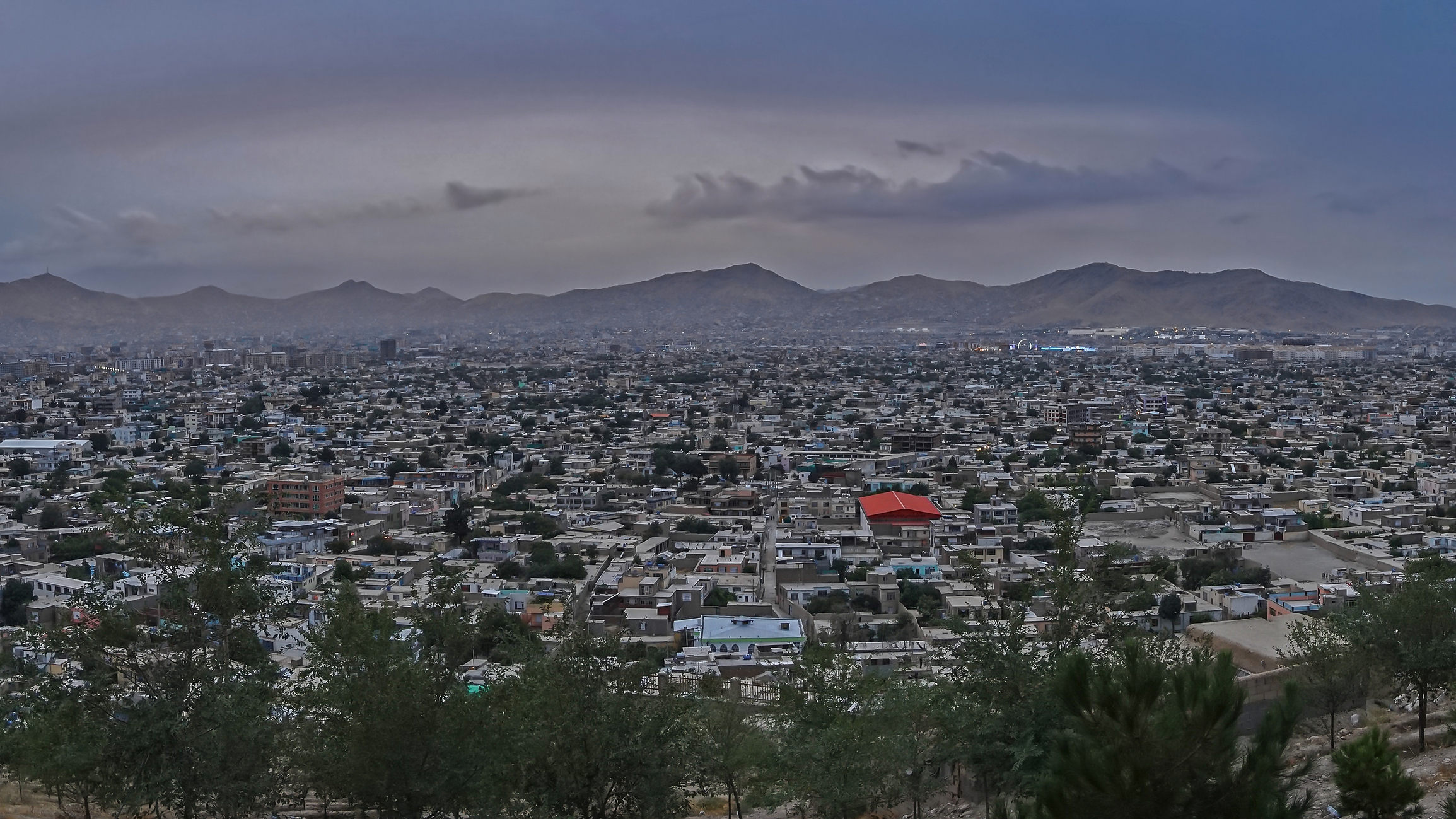
PHOTO: Kabul, Afghanistan, with Hindu Kush Mountains in the background. Photo by Torsten Pursche, used by permission. 

NOTE: The Hindu Kush is an 500-mile-long mountain range that stretches through Afghanistan, from its center to Northern Pakistan and into Tajikistan. Afghanistan is a landlocked country of about 32 million at the crossroads of Central and South Asia. Afghanistan is bordered by Pakistan to the east and south; Iran to the west; Turkmenistan, Uzbekistan, and Tajikistan to the north; and China to the northeast. Occupying 252,000 square miles, it is a mountainous country with plains in the north and southwest. Kabul is the capital and largest city. 

NOTE FROM THE AUTHOR: I’ve traveled quite a bit.  The events in this poem happened during my first trip abroad after I graduated from UC Berkeley. I spent nine months in the Middle East with a group of friends.  

Del Bourgo

ABOUT THE AUTHOR: Rafaella Del Bourgo’s writing has appeared in Puerto Del Sol, Rattle, Oberon, Nimrod, and The Bitter Oleander. She has won many awards including the League of Minnesota Poets Prize in 2009. In 2010, she won the Alan Ginsberg Poetry Award. She was also the 2010 winner of the Grandmother Earth Poetry Award.  In 2012 she won the Paumanok Poetry Award.  In 2013 she was the recipient of the Northern Colorado Writers first prize for poetry and in 2014, the New Millennium Prize for Poetry.  In 2017 she won the Mudfish Poetry Prize and was nominated for the third time for a Pushcart Prize.  Her chapbook Inexplicable Business: Poems Domestic and Wild was published by Finishing Line Press.  She lives in Berkeley with her husband and cat.

Beijing Ascending by Graham Wood

the-great-wall-2190047_1920

Beijing Ascending
by Graham Wood

For Rosemary and Laura

We spent all day getting to the top of things —
climbing stairs, hauling on balustrades
lifting our aching legs
up one incline and then another:
the pagoda
the drum tower
the bell tower
the emperor’s favourite resting place
on top of the wooded mountain …
So that, by the end of the day
with dusk descending, exhausted
we realised too late that though we’d climbed
the tourist climbs and come down again
in one mad skelter, we’d failed completely
to get to the bottom of anything at all.

© Graham Wood

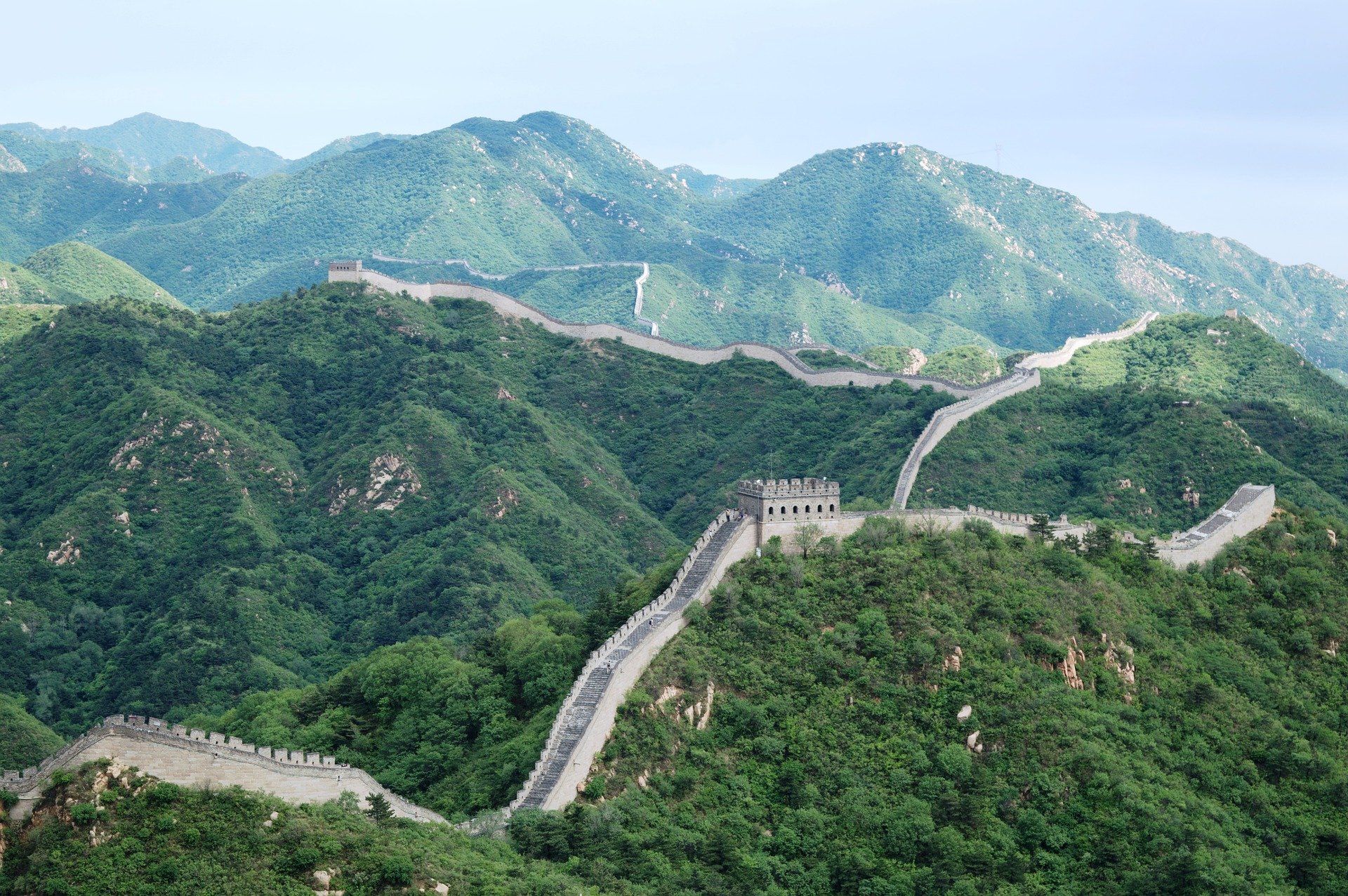
PHOTO: The Great Wall of China. Photo by panayota, used by permission.

NOTE: The Great Wall of China is the collective name of a series of fortification systems  built across the historical northern borders of China to protect and consolidate territories of Chinese states and empires against various nomadic groups. Several walls were built from as early as the 7th century BC, and sections were later joined by Qin Shi Huang (220–206 BC), the first emperor of China. Many successive dynasties built and maintained multiple stretches of border walls. The most well-known sections of the wall were built by the Ming dynasty (1368–1644). The wall is about 45 miles north of Beijing, the capital of China and the world’s most populous city, with 21 million residents.

NOTE FROM THE AUTHOR: This poem was written in Beijing during a family trip to China some years ago. On our final day, we spent a very interesting but exhausting time visiting as many as possible of the remaining sites on our list. In the preceding days, our sightseeing had included two separate sections of the Great Wall, one less well-preserved, less often visited and even more interesting than the other. Many of the sites involved a considerable number of stairs and an exhausting amount of climbing …

IMG_2652

ABOUT THE AUTHOR: Graham Wood lives in the northern suburbs of Sydney, New South Wales, Australia, and has worked in a variety of occupations. These include high school teacher, film classifier, and public servant, the latter mainly in the field of higher education policy and planning. His poems have been published in a range of Australian and international journals and anthologies, including WesterlyfourW, and The Sydney Morning Herald in Australia, and Silver Birch Press and Vita Brevis Press in the USA. He is a member of the North Shore Poetry Project in Sydney.

Yellow Fruit Tree Waterfall Park by Don Kingfisher Campbell

Huangguoshu_Waterfall_Guizhou_Province

Yellow Fruit Tree Waterfall Park
by Don Kingfisher Campbell

Refreshing turbulent spray on passersby

A piano of stepping stones ford wide river

Leafy detritus lines asphalt paths

Reflection of sky and trees in tranquil water

Dark branches reach up from flowery ground

Leaves spread out like fingers to catch sunlight

Take a photo, paint a painting, write a poem

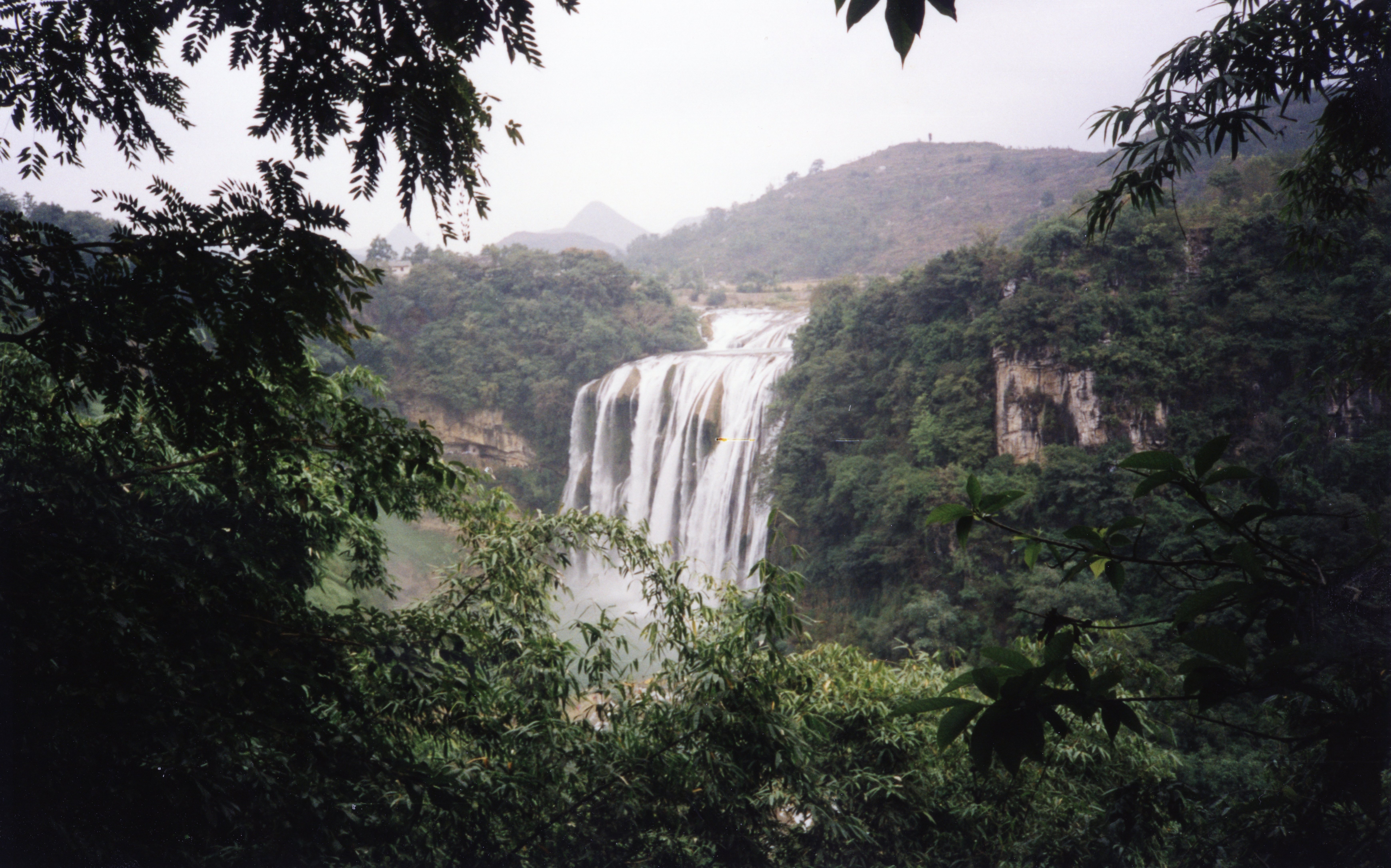
PHOTO: Huangguoshu Waterfall,  Guizhou Province, China. Photo by whoisgalt, used by permission.

NOTE: Huangguoshu Waterfall (Yellow-Fruit Tree Waterfall), is one of the largest waterfalls in China. Located in Southwest China on the Baishui River in AnshunGuizhou Province, it is 255 feet high and 331 feet wide. The waterfall is a natural tourist draw, classified as a AAAAA scenic area by the China National Tourism Administration. Author Xu Xiake (1587-1641) described the waterfall as “the foams rise from the rocks like a mist.”

Yellow Fruit Tree Waterfall Park

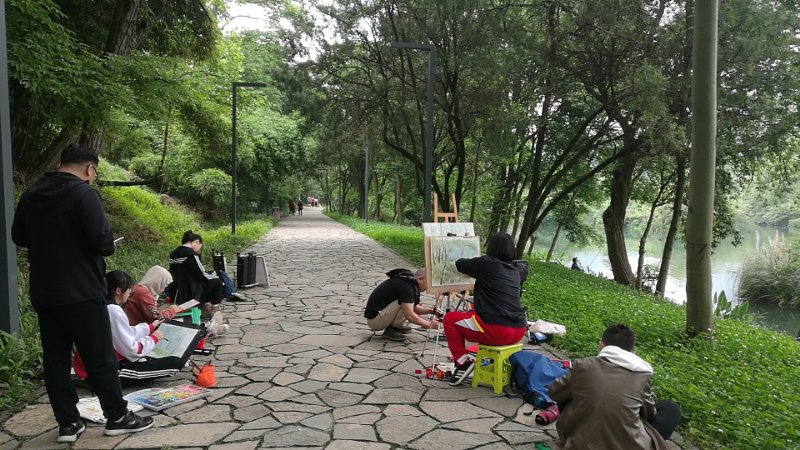
NOTE FROM THE AUTHOR: A well-designed park made for contemplation, or should I say a well-made park designed for contemplation?

Photo of artists at work provided by the author. 

DKC headshot

ABOUT THE AUTHOR: Don Kingfisher Campbell, MFA in Creative Writing from Antioch University Los Angeles, has taught Writers Seminar at Occidental College Upward Bound for 36 years, been a coach and judge for Poetry Out Loud, a performing poet/teacher for Red Hen Press Youth Writing Workshops, Los Angeles Area Coordinator and Board Member of California Poets In The Schools, poetry editor of the Angel City Review, publisher of Spectrum and the San Gabriel Valley Poetry Quarterly, leader of the Emerging Urban Poets writing and Deep Critique workshops, organizer of the San Gabriel Valley Poetry Festival, and host of the Saturday Afternoon Poetry reading series in Pasadena, California. For awards, features, and publication credits,  visit dkc1031.blogspot.com.

Written on the Wall of West Forest Temple by Su Shi

Mount_Lushan_-_fog

Written on the Wall of West Forest Temple
by Su Shi

translated by Burton Weston

From the side, a whole range; from the end, a single peak:
Far, near, high, low, no two parts alike.
Why can’t I tell the true shape of Lushan?
Because I myself am in the mountain.

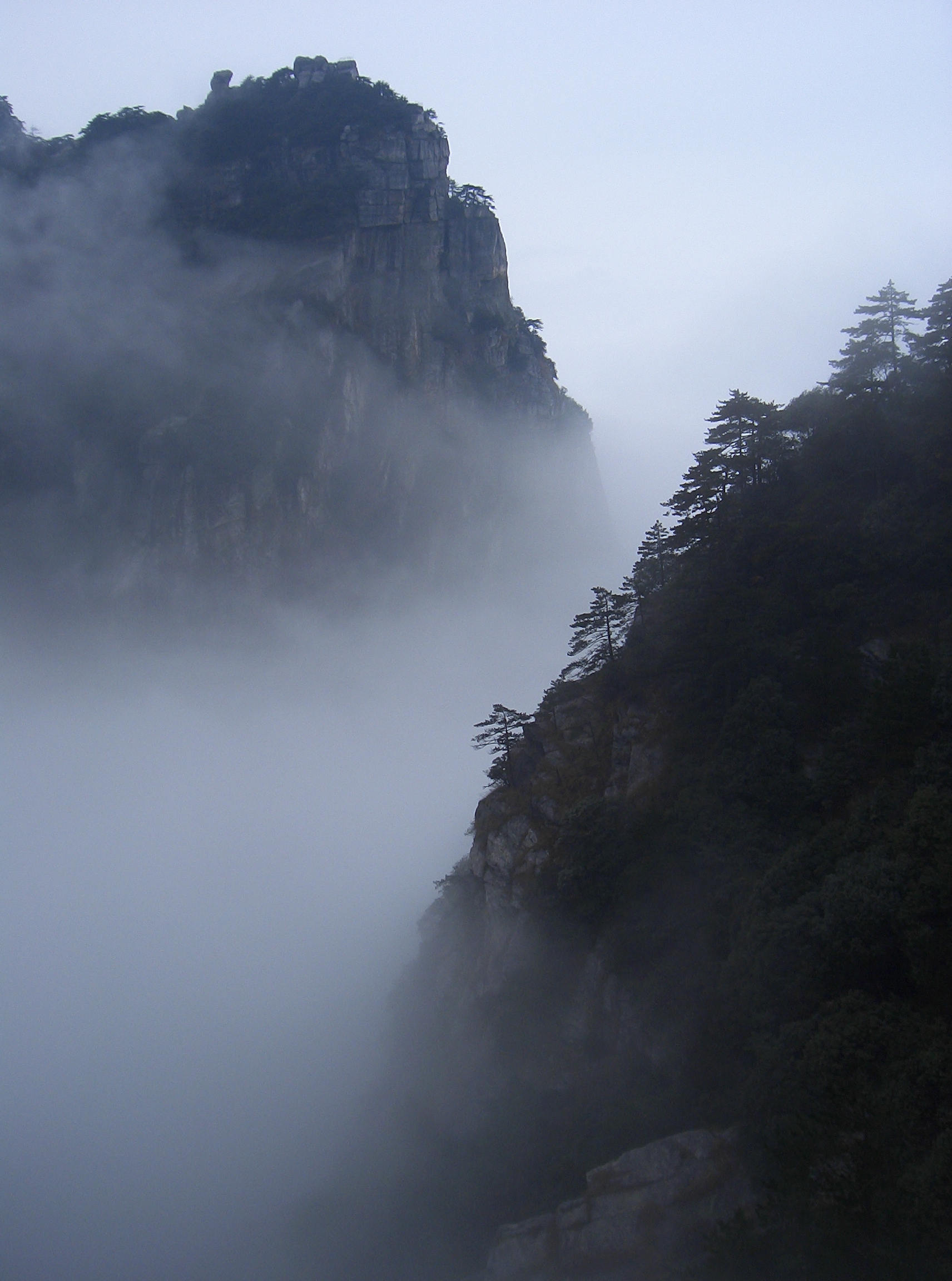
PHOTO: Fog curls around the peaks of Mt Lu (Lushan) in Jiangxi province, China. The trees are Huangshan Pine. Photo by pfcdayelise, used by permission.

NOTE: Mount Lu or Lushan situated in the northern part of Jiangxi province in Central China, is one of the most renowned mountains in the country. Its highest point reaches close to 5,000 feet above sea level, towering above clouds that encompass the mountain for about 200 days each year. Mount Lu is known for its grandeur, steepness, and beauty, and is part of Lushan National Park, a UNESCO World Heritage Site since 1996.

ABOUT THE AUTHOR: Su Shi (1037-1101) is one of the most accomplished figures in classical Chinese literature for his poems, lyrics, prose, and essays. His prose writings contribute to the understanding of topics such as 11th-century Chinese travel literature. His poetry has a long history of popularity and influence in China, Japan, and other nearby areas, and is well known in the English-speaking world through translations by Arthur Waley, among others.

Rider’s Song by Federico García Lorca

spain licensed adreslebedev

Rider’s Song
by Federico García Lorca

Cordova, far and lonely.

Black pony, full moon,
And olives in my pocket:
Although I know the roads,
I’ll never reach Cordova.

For the plain, for the wind,
Black pony, red moon,
And death is watching for me
Beside Cordova’s towers.

Alas! the long, long highway,
Alas! my valiant pony,
Alas, that death is waiting
Before I reach Cordova.

Cordova, far and lonely.

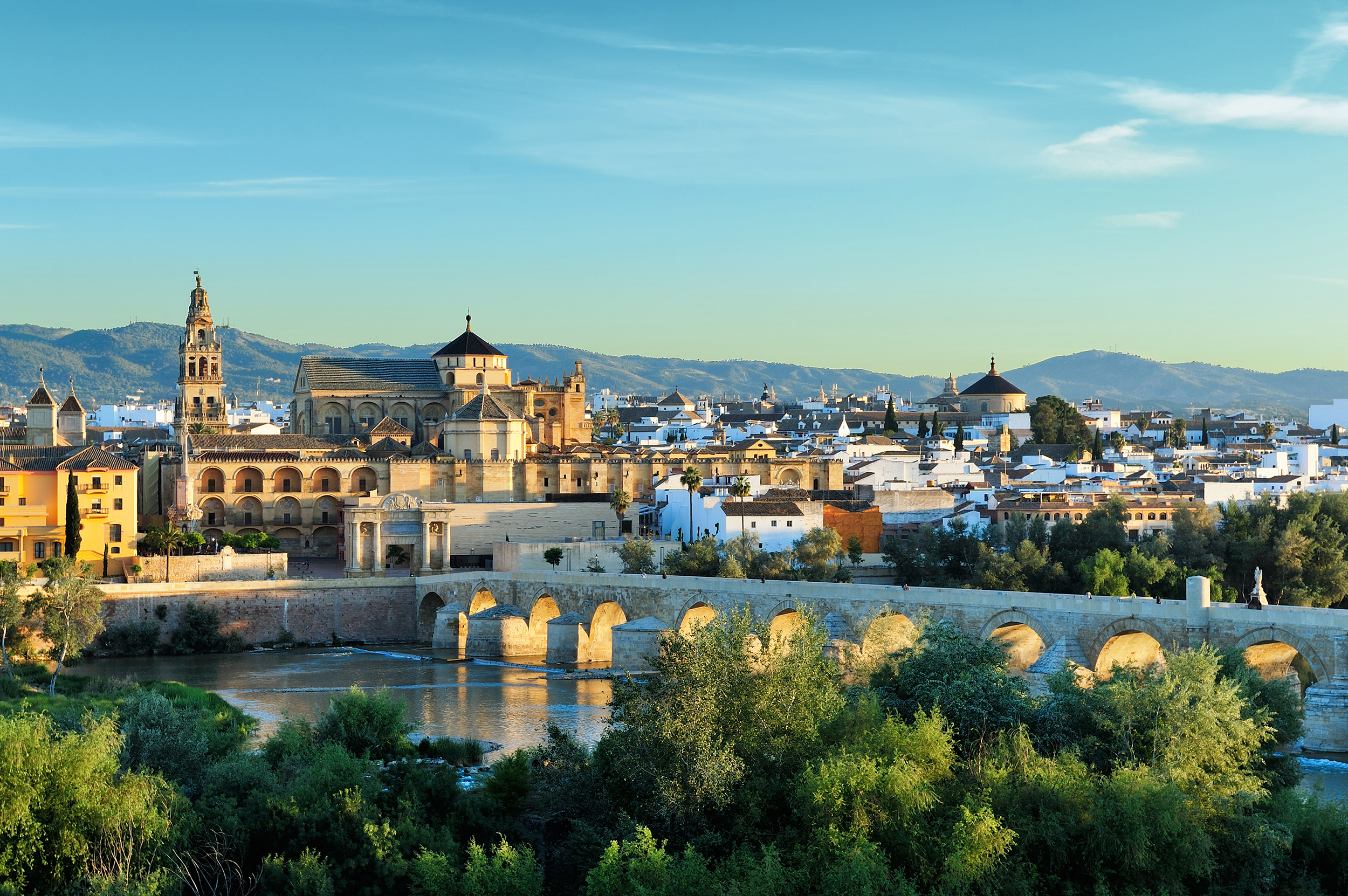
Originally published in Poetry magazine, April 1937, less than a year after the author’s murder during the Spanish Civil War. 

PHOTO: Cordova, Andalusia, Spain. Photo by Adreslebedev, used by permission.

lorca 4

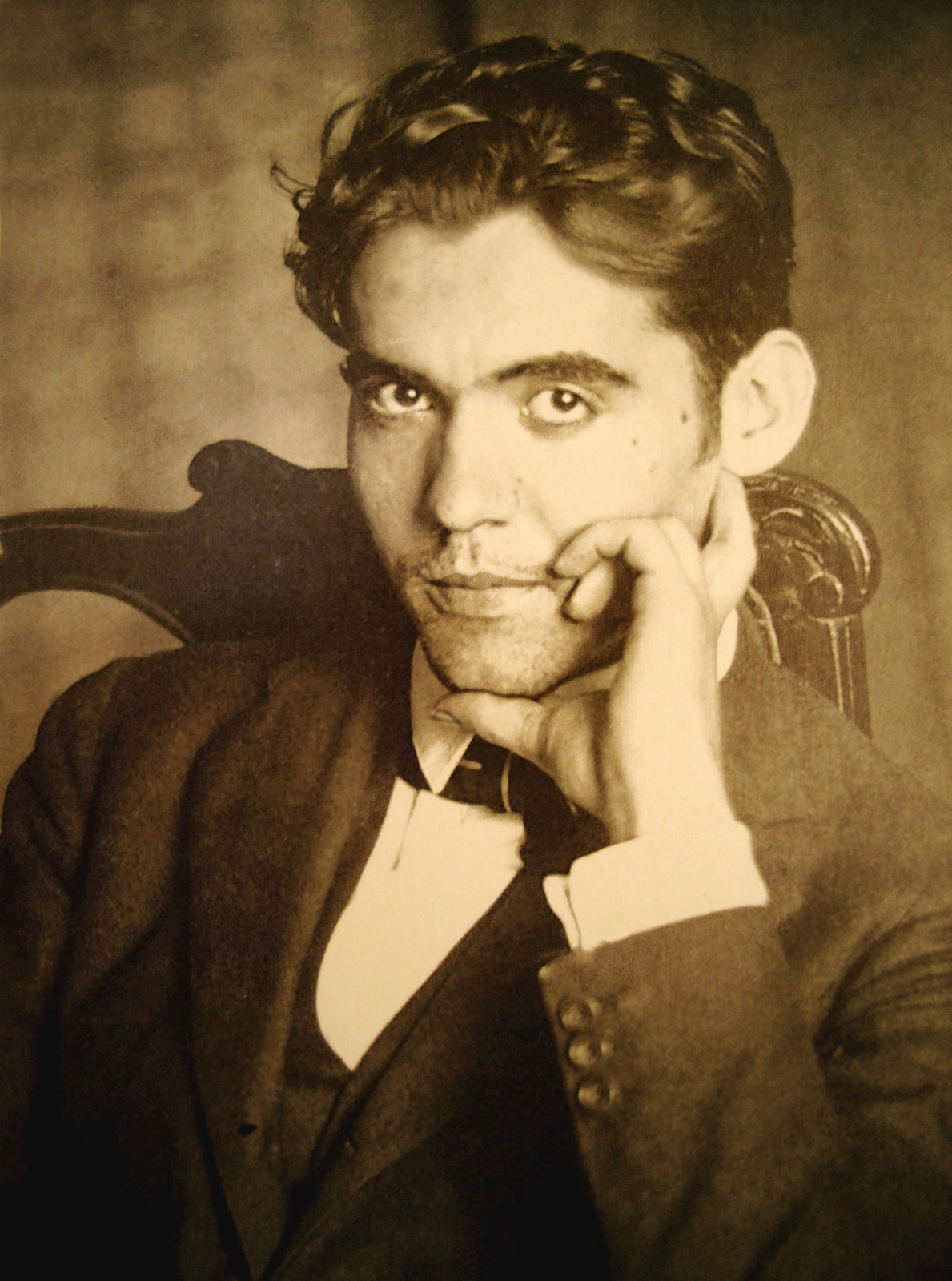
ABOUT THE AUTHOR: Federico García Lorca  (June 5, 1898-August 19, 1936) was a Spanish poet, playwright, and theatre director. García Lorca achieved international recognition as an emblematic member of the Generation of ’27, a group consisting of mostly poets who introduced the tenets of European movements (such as symbolism, futurism, and surrealism) into Spanish literature. He is believed to have been killed by Nationalist forces at the beginning of the Spanish Civil War. His remains have never been found. 

Roadside Poppies in Andalusia by Joan Leotta

spain aagje de jong licensed

Roadside Poppies in Andalusia
by Joan Leotta

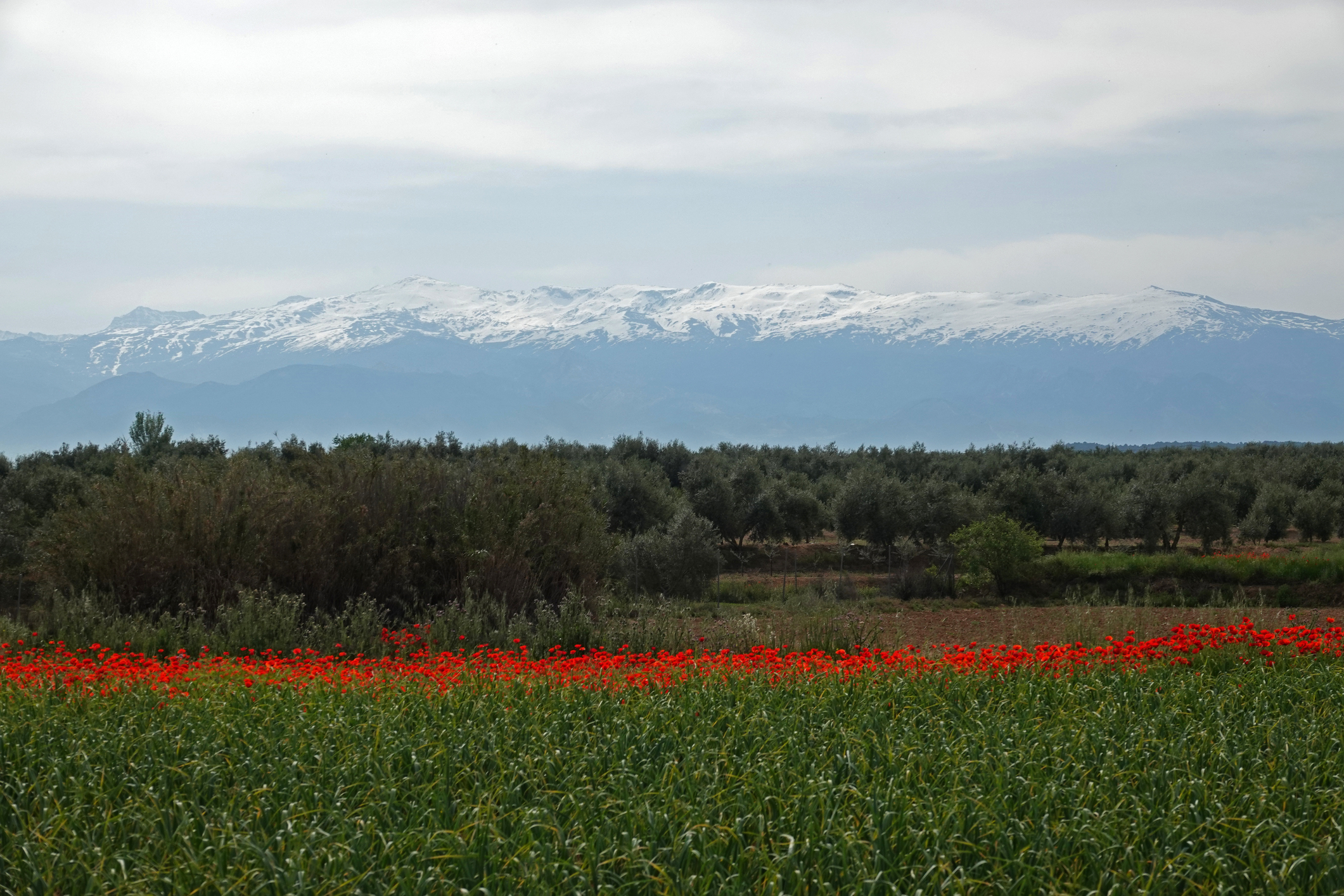
Poppies cluster near the road
after cutting wide red swaths
through olive groves and pastures.
Blood- red, the poppies drape
fields and barrows
like matador capes,
marking, covering,
scarred places on the land
where blood once flowed.
Their beauty makes a
bright balm for those lost-
in-battle souls while
quietly crying out for
remembrance of those who
shouted, shot, and died here.

PHOTO: Poppy field near Granada, Andalusia, Spain, during spring with snow on the Sierra Nevada Mountains. Photo by Aagje De Jong, used by permission.

NOTE FROM THE AUTHOR: This poem was written as I watched the road go by on a recent trip (2016) to Spain. I lived in Spain under Franco, in 1969, and was acutely aware, especially in the south, of the ravages wrought by the Civil War of the 1930s.

NOTE: Andalusia region is an autonomous community in southern Spain. Citizens of Andalusia experienced repression, torture, and death during Francisco Franco‘s reign of White Terror during and after the Spanish Civil War (1936-1939). The Nationalist rebels bombed and seized the working-class districts of the main Andalusian cities in the first days of the war, and afterwards went on to execute thousands of workers and militants.  Francisco Franco (1892–1975) was a Spanish general who led the Nationalist forces in overthrowing the Second Spanish Republic during the Spanish Civil War, and ruled Spain from 1936 to 1975 as a dictator. This period in Spanish history, from the Nationalist victory to Franco’s death, is commonly known as Francoist Spain or the Francoist dictatorship.

joan-leotta-seaglass-necklace

ABOUT THE AUTHOR: Joan Leotta is a writer and story performer. Her poems have appeared in Silver Birch, When Women Write, Verse Visual, Verse Virtual, The Ekphrastic Review, Yassou, Stanzaic Stylings, read at the Ashmolean, and have won an award at the Wilda Morris Challenge. Her first chapbook, Languid Lusciousness with Lemon, is available from Finishing Line Press. Her essays, articles, and stories are also widely published. On stage, she presents folk and personal tales of food, family, and strong women. She loves to walk the beach, cook, and browse through her many travel photos. Visit her at joanleotta.wordpress.com and on Facebook.

The Fishermen by Lynn White

neil-martin-mr0ZT9gWEI0-unsplash

The Fishermen
by Lynn White

The wall ran all along one side of the bay,
steps up from the port at one end,
down to the beach at the other.
I climbed up the steps
and looked over.
So many fish.
Huge fish.
Swirling silver moons in a day blue sky.
A net would have scooped them up
and broken with the weight.
The fishermen were there with their rods set up,
like the fish almost touching,
so many and so close,
making
parallel black lines against the sky
like a blueprint for lunch provision.
I walked down the steps to the beach.
Few people were there so early.
Morning was the fisherman’s time
of day,
not the sunbather’s.
I went back along the wall
when the fishermen were packing up,
heading home for lunch.
Carrying their fish,
I thought.
But no,
it was a delusion
to imagine
they would eat fish for dinner.
Not those fish, anyway.
All were returned to the sea.
Such is the sport of the fisherman.

First published in Scarlet Leaf Review (January 2018)

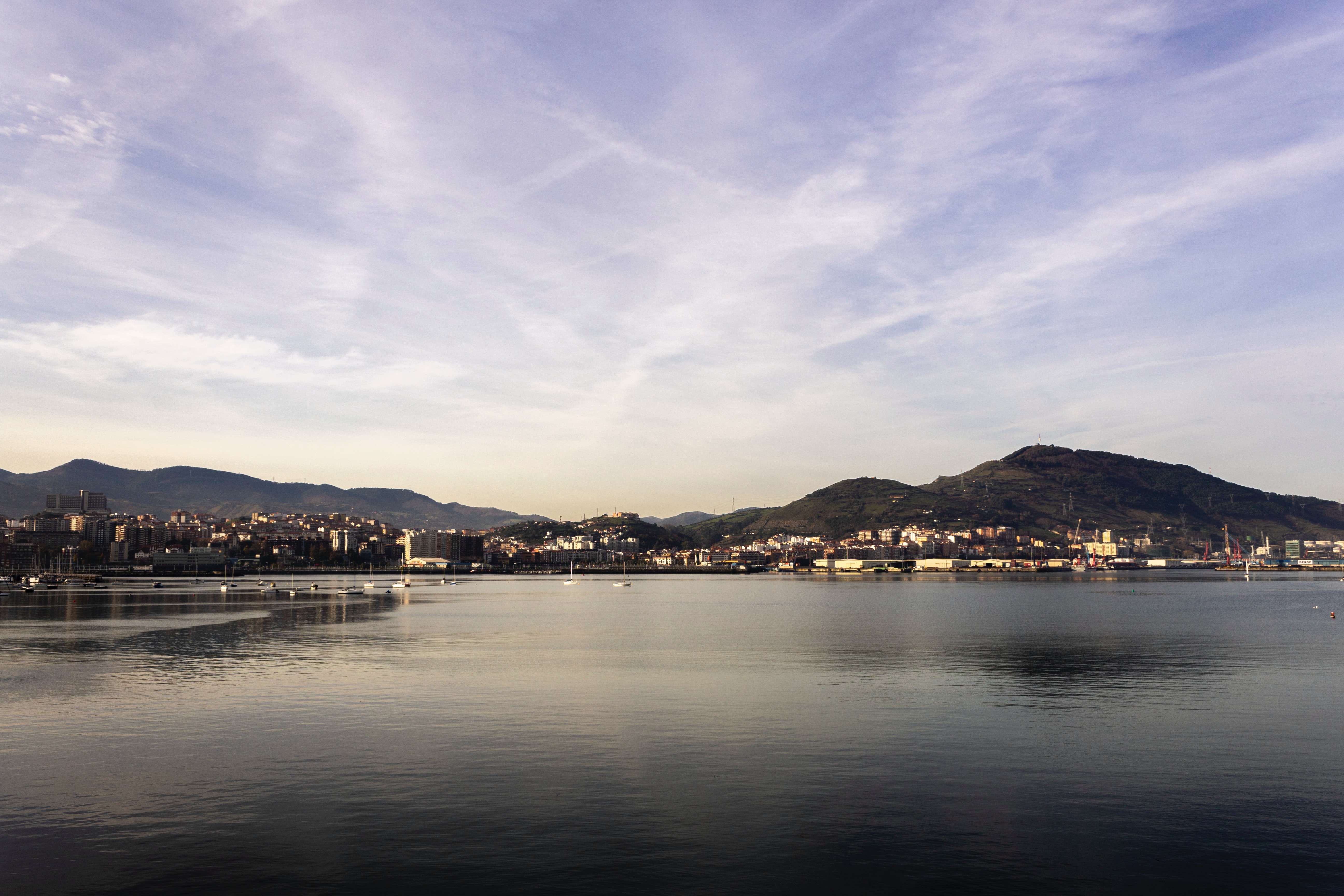
NOTE FROM THE AUTHOR: The fishermen were in Getxo near Bilbao, Spain. I was there about 2016.

NOTE: Getxo is located in the province of Biscay, in the Basque Country, in northern Spain.

Photo of Getxo, Spain, by Neil Martin on Unsplash

white2

ABOUT THE AUTHOR: Lynn White lives in north Wales. Her work is influenced by issues of social justice and events, places and people she has known or imagined. She is especially interested in exploring the boundaries of dream, fantasy, and reality. She was shortlisted in the Theatre Cloud “War Poetry for Today” competition and has been nominated for a Pushcart Prize and a Rhysling Award. Her poetry has appeared in many publications, including Apogee, Firewords, Capsule Stories, Light Journal, and So It Goes. Find Lynn at lynnwhitepoetry.blogspot.com and on Facebook.

Hadrian’s Wall by Jonathan Yungkans

UK licensed manan fredriksson

Hadrian’s Wall
by Jonathan Yungkans

January snow had melted but wind’s frigid razors shaved away clothes,
skin and blood, until white bones stood in our place. Grass and heather

would stretch long and green in spring but for now, under a brackish sky
it glowered before us brown, solid as a wooden wall in standoffishness—

a wall surrounding a wall. A spine of rocks stretched head-high, straight
and aimless, each vertebra cut square, fitted precise. Naked as a Roman

beneath his tunic, I could see the land hostile, imagine the Picts beyond
more tempest than this morning’s roiling atmosphere. Clouds with arrows

to menace rain on any watch, invisible and piercing. Frost to stick blades
inside scabbards to keep them from drawing. Wariness to harden armor

into a dead person’s embrace. Hadrian drew a line in the land for lichen
to root amid stones. Rome froze here. We returned to the coach to thaw.

PHOTO: Hadrian’s Wall on a cold, misty day. Photo by Manan Fredriksson, used by permission.

NOTE: Hadrian’s Wall is a former defensive fortification of the Roman province of Britannia, begun in AD 122 during the reign of the emperor Hadrian.  A significant portion of the wall still stands and can be followed on foot along the adjoining Hadrian’s Wall Path. The largest Roman archaeological feature in Britain, it runs a total of 73 miles in northern England. Regarded as a British cultural icon, Hadrian’s Wall is one of Britain’s major ancient tourist attractions. It was designated as a UNESCO World Heritage Site in 1987. 

NOTE FROM THE AUTHOR:  I visited the Scottish border on an undergraduate tour of Britain in January 1980—a squally, bitter-cold morning. The wall was a ruin. The land had a wildness to it, timeless and a little frightening. It may look more inviting in the spring and summer. That day, it made me feel like an unwanted invader.

yungkans_author_pic

ABOUT THE AUTHOR: Jonathan Yungkans is a Los Angeles-based writer and photographer with an MFA from California State University, Long Beach. His work has appeared in San Pedro Poetry Review, Synkroniciti, West Texas Literary Review and other publications. His second poetry chapbook, Beneath a Glazed Shimmer, won the 2019 Clockwise Chapbook Prize and is slated for release by Tebot Bach Publishing in 2020.

London by Kim Whysall-Hammond

london licensed london UK

London
by Kim Whysall-Hammond

Emerging from the Tube you clothe me
with dusty breath and ambient noise
I feel you living restlessly
lifeforce surging through centuries
pulsing through busy streets
I turn a corner and a garden churchyard
filled with lunchers and tourists
leads me to rest.
When leaving you I reach down
pet your raised questioning head
sooth and smooth your black silky fur
I have run from you but you still
prey upon my soul my heart.
your begging eyes always
bring my return

PHOTO: London Underground station, Piccadilly Circus, and statue of Anteros. Photo by London UK, used by permission.

NOTE: Piccadilly Circus is a road junction and public space of London’s West End in the City of Westminster. In this context, a circus, from the Latin word meaning “circle,” is a round open space at a street junction. The Circus is close to major shopping and entertainment areas in the West End, and a busy meeting place and a tourist attraction in its own right. Directly underneath the plaza is Piccadilly Circus Underground station, part of the London Underground system.

NOTE FROM THE AUTHOR: This is my love poem to my home town. I may be in exile in rural England, but I will always be a Londoner. I can’t visit at present, but will be back walking her streets and feeling her energy as soon as it is safe.

kim headshot

ABOUT THE AUTHOR: Kim Whysall-Hammond is a Londoner living in a country town in Southern England. She has been published by Ink, Sweat and Tears, Amaryllis, Allegro, Fourth and Sycamore, The Blue Nib, London Grip, and Crannóg among others.  She has two poems, “Winter in Concrete” and “Glimpse,” in the anthology New Towns edited by Robert Francis,  published by Wild Pressed Books.  She shares poetry on her blog, thecheesesellerswife.wordpress.com.